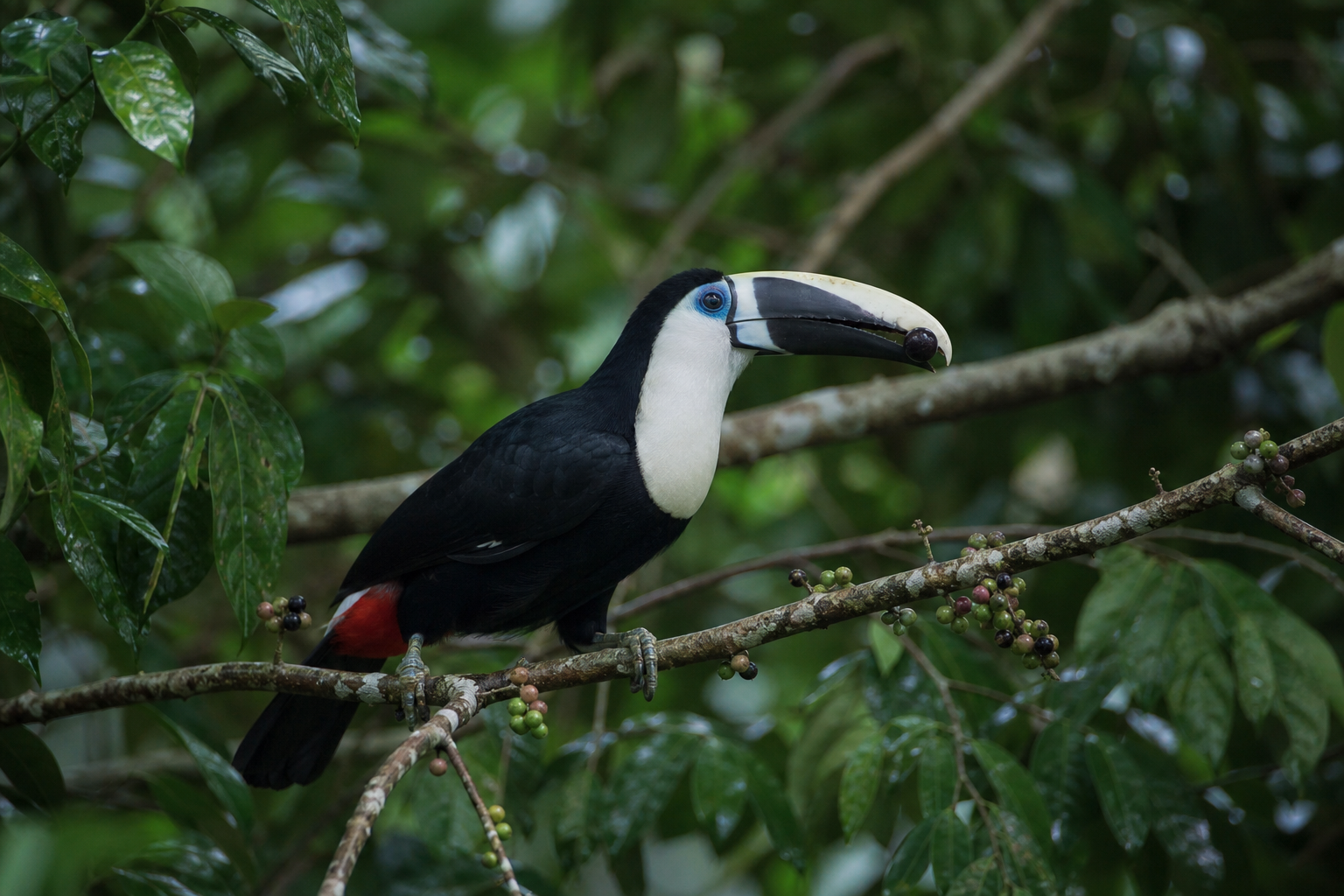
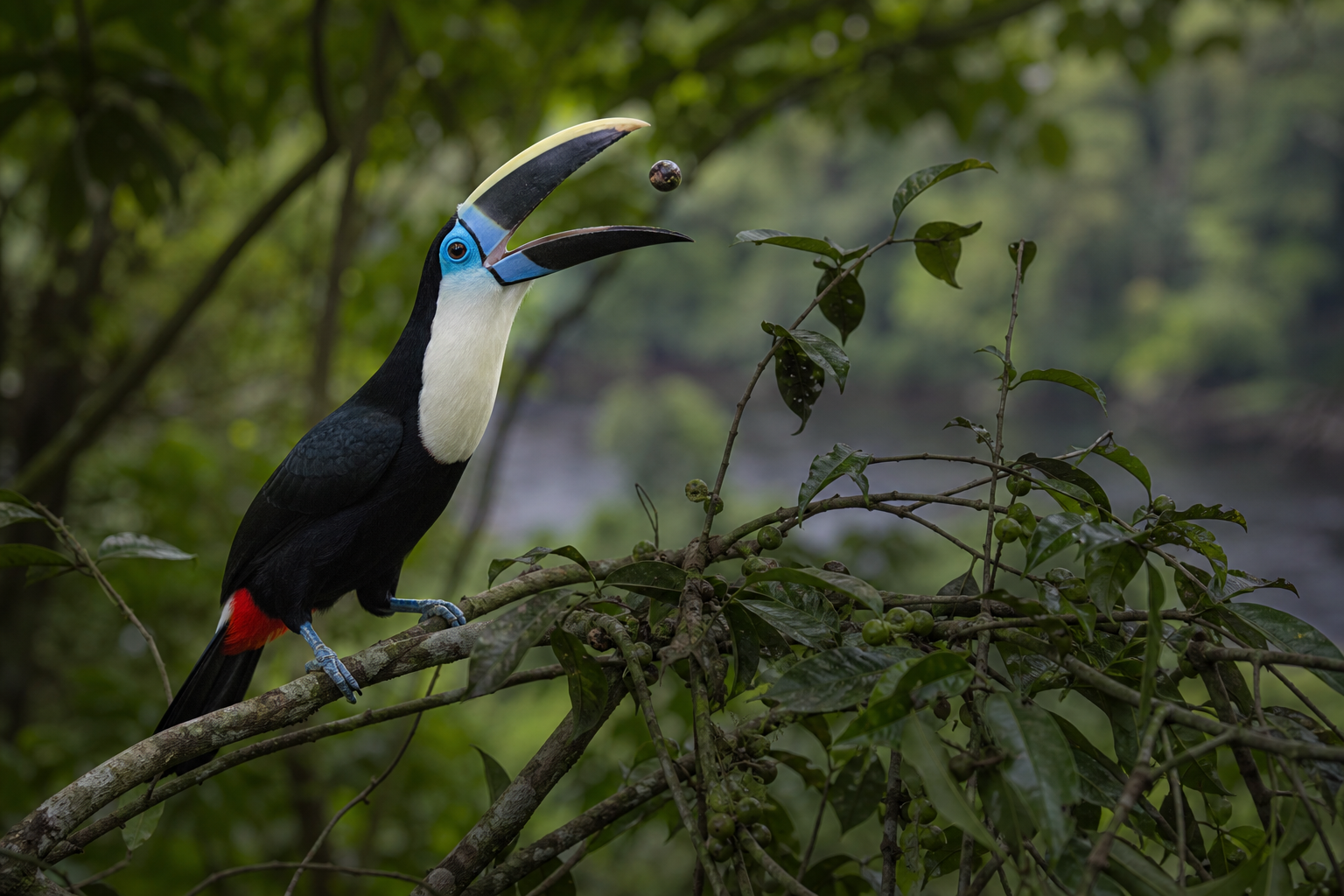
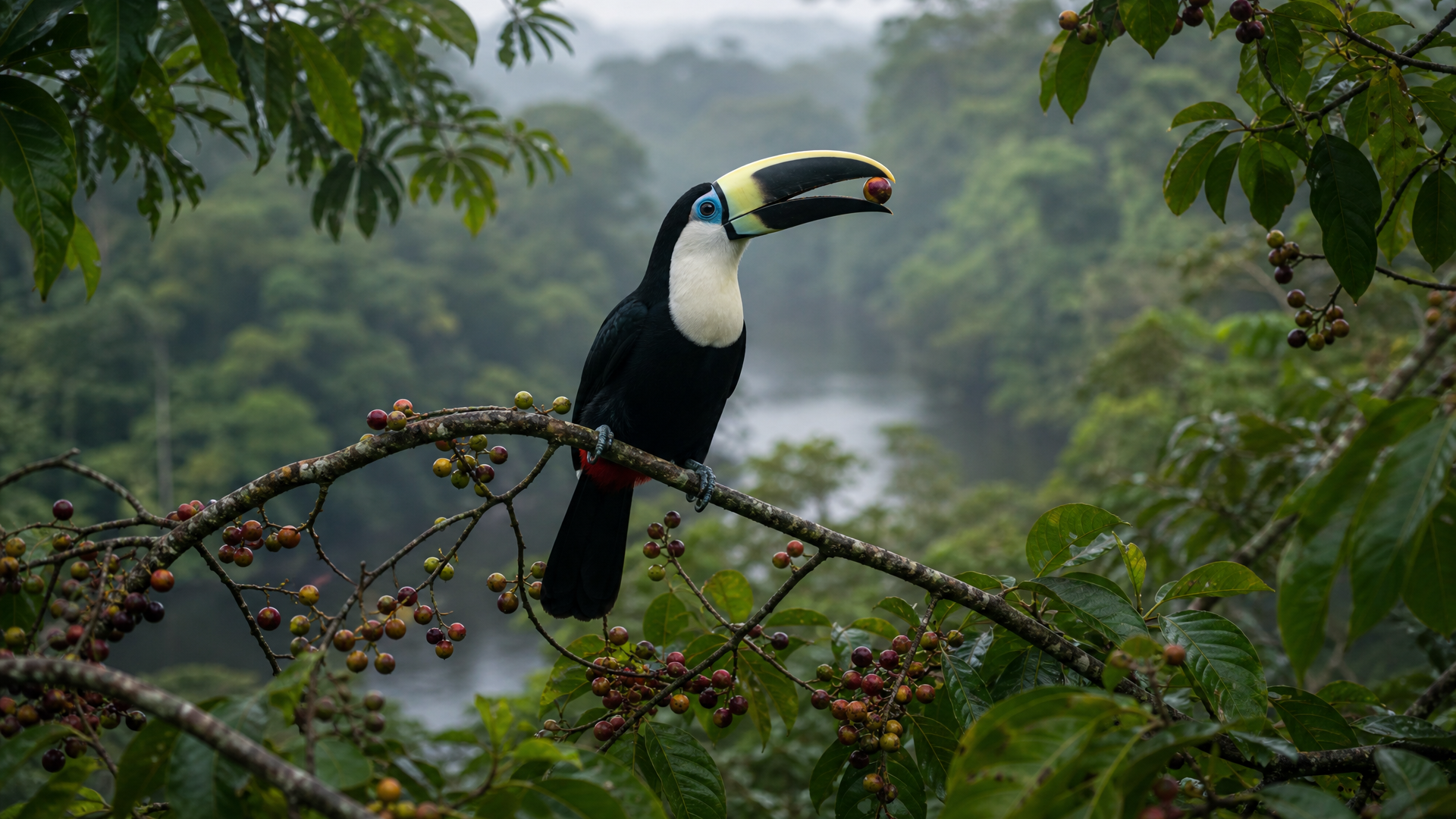
A fruiting tree shakes near the crown, though no wind has reached it. A large bill emerges from behind leaves, ivory and dark, impossibly light for its size. The toucan tilts its head, plucks a fruit, tosses it back, and the seed begins a journey the tree could never make alone.
The white-throated toucan gives the Amazon a different kind of abundance than the macaw. It is less flame-colored, more forest-bound, its voice carrying through humid canopy in yelps and croaks that seem to come from several directions at once. The bill is a tool of reach and balance, a way to take fruit from places the body cannot enter. A bird moves along a branch with surprising care, black body and pale throat broken by flashes of red and yellow near the tail. It feeds, calls, shifts, and moves on, leaving the crown altered in small ways.
Toucans are among the forest's restless couriers. They swallow fruit and move seeds through the canopy, helping trees escape their own shade. Where old forest gives way to broken patches, those routes shorten. The bird still calls from a branch, but the distance its seeds can travel may already be less than the forest needs.