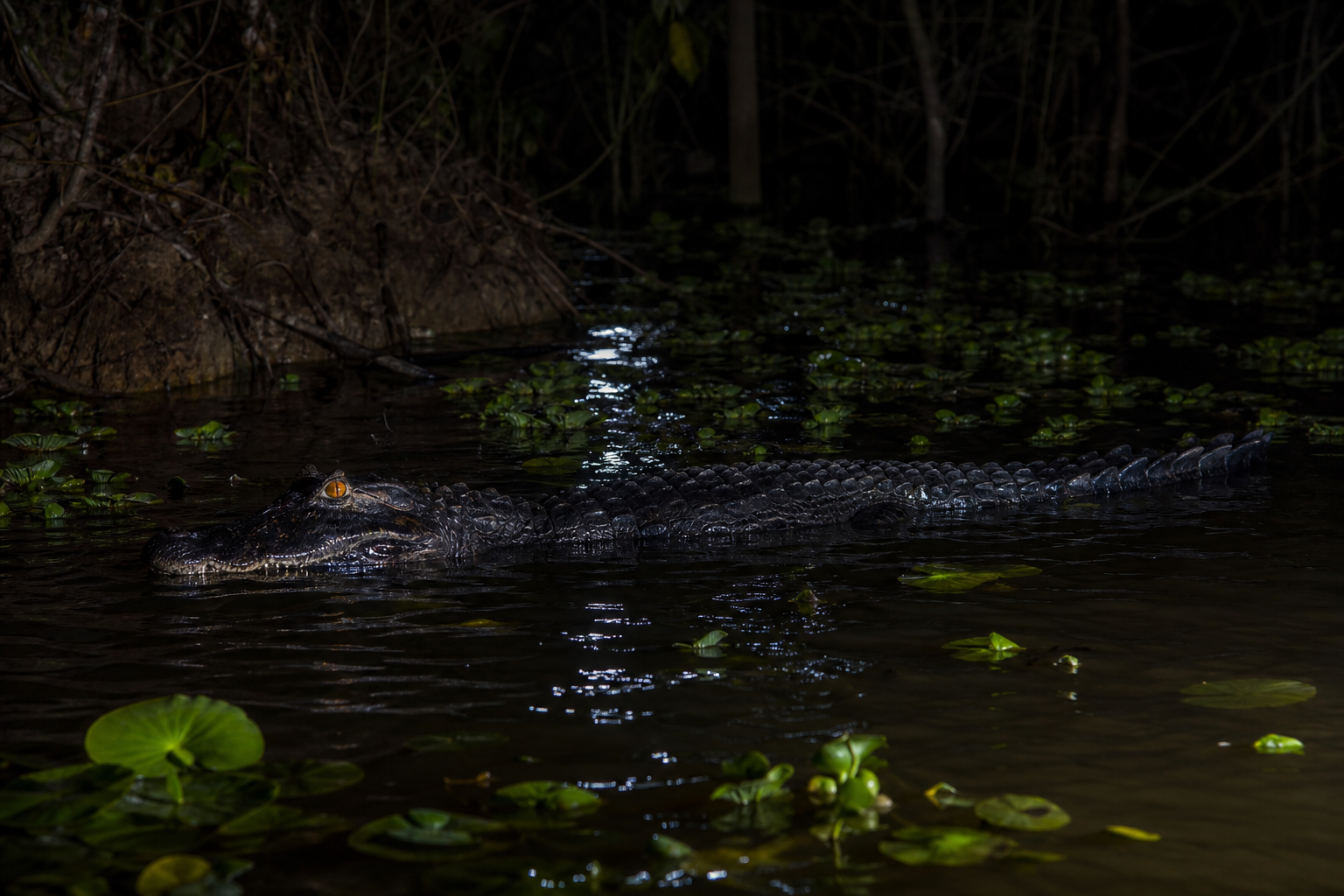
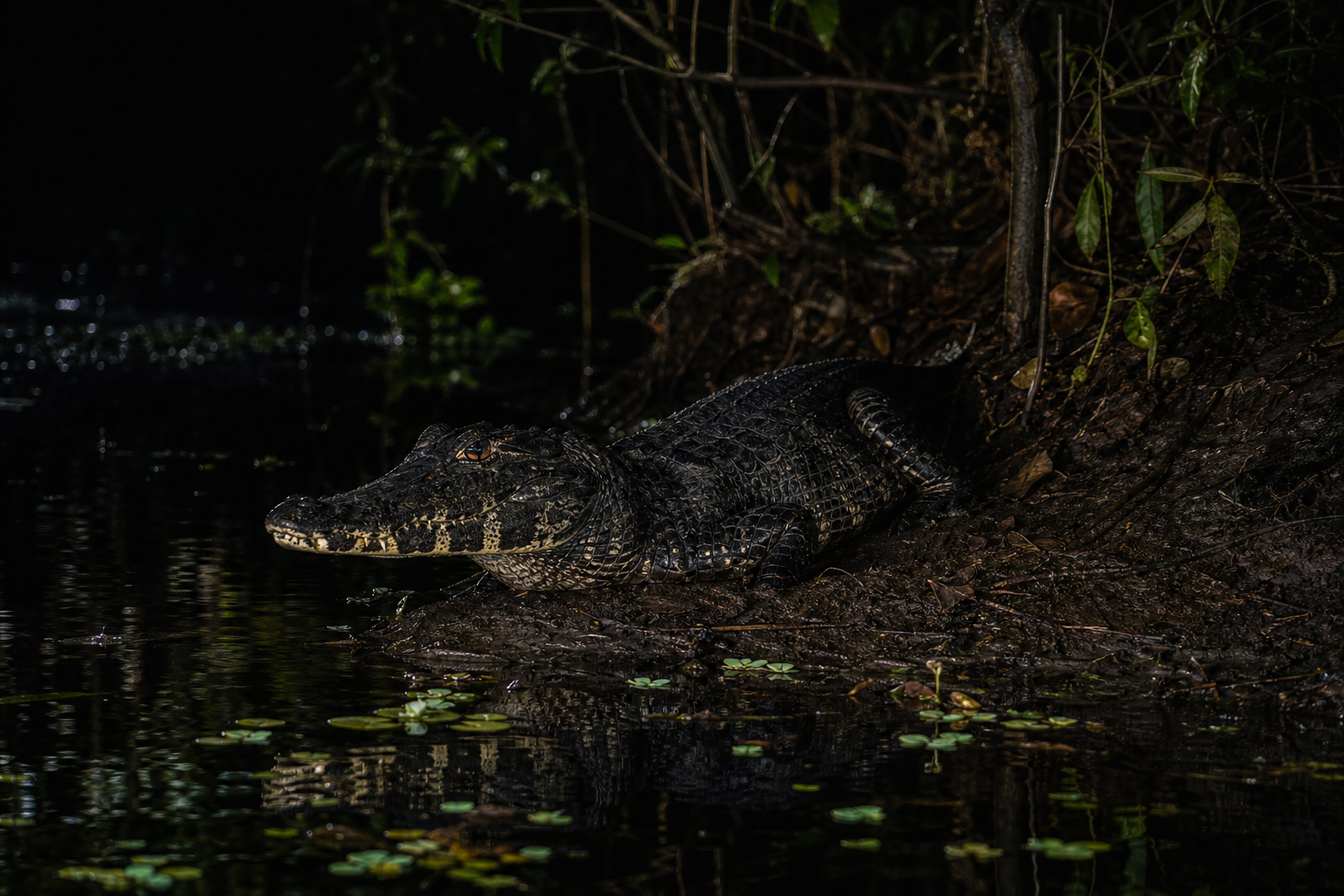
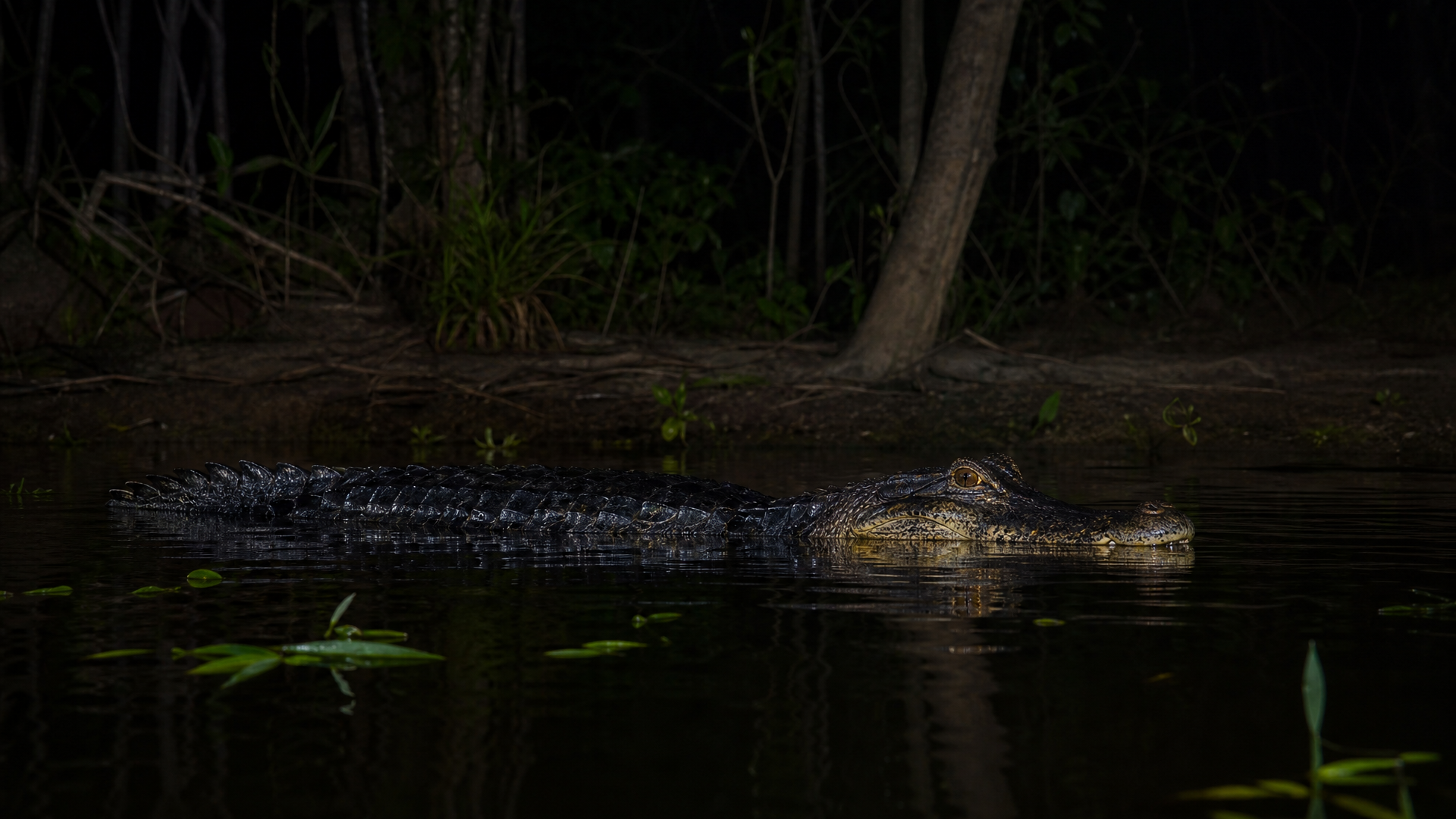
After sunset, the lake changes ownership. The parrots are gone, the insects rise, and a line of orange points begins to burn along the blackwater margin. One pair of eyes drifts closer without a sound, low as floating bark, steady as an old thought.
The black caiman carries night in its body. Dark scales take on the color of deep water, and the pale banding along the jaw appears only when the head turns through a trace of moonlight. It can wait for hours. Fish pass. Birds settle too low. A mammal steps into mud. Then the stillness ends so quickly that the lake seems to close over the event before the mind can assemble it. Young caimans live at the edges of danger, calling softly from vegetation while larger hunters patrol the channels, lakes, and flooded banks.
This animal gives the Amazon's water a top predator older in feeling than the trees around it. It shapes where prey drink, where birds roost, and how night is used by everything near the shore. It has survived hunting and pressure, but survival is not the same as abundance everywhere. In the dark, only the eyes show. Then even they sink.