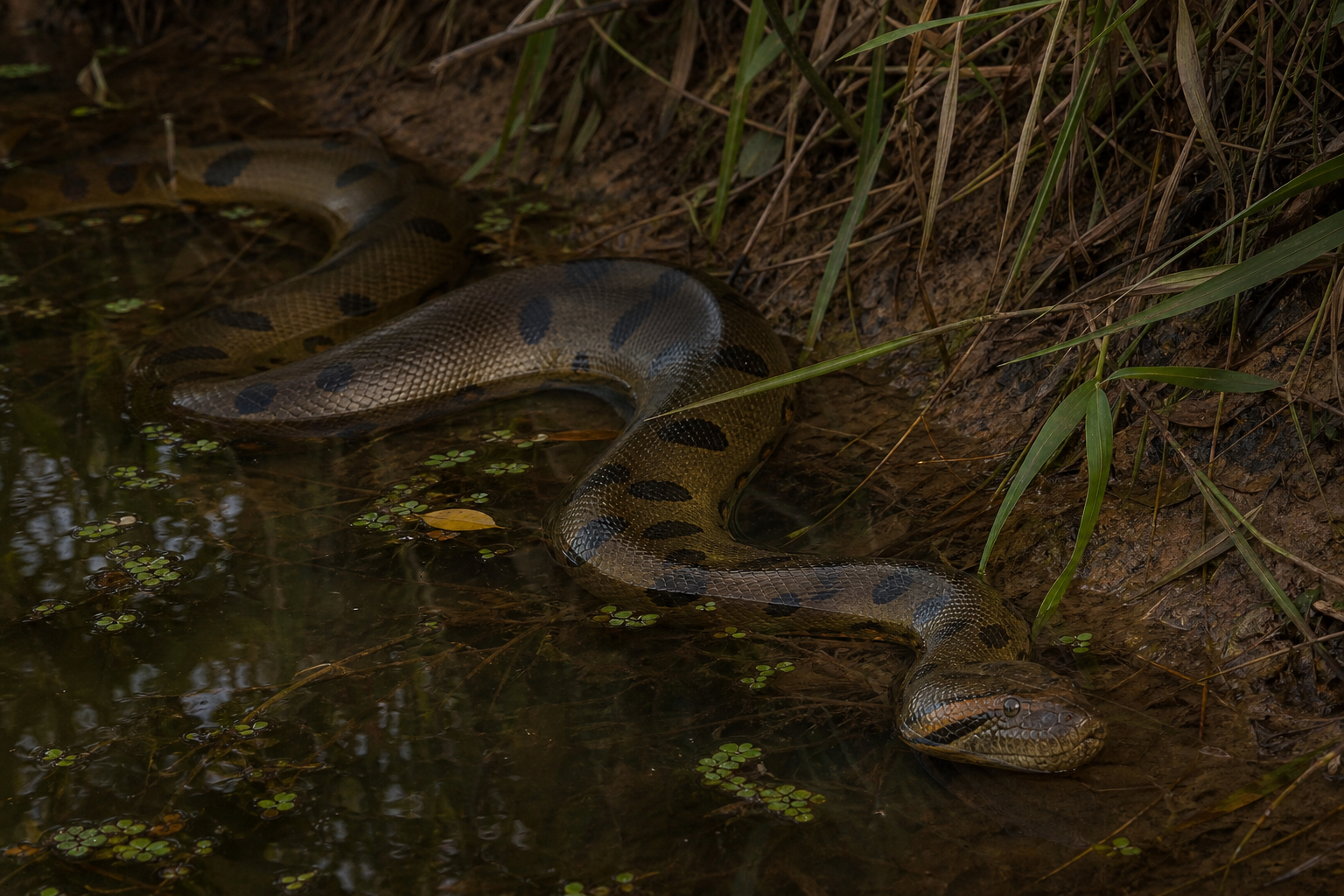
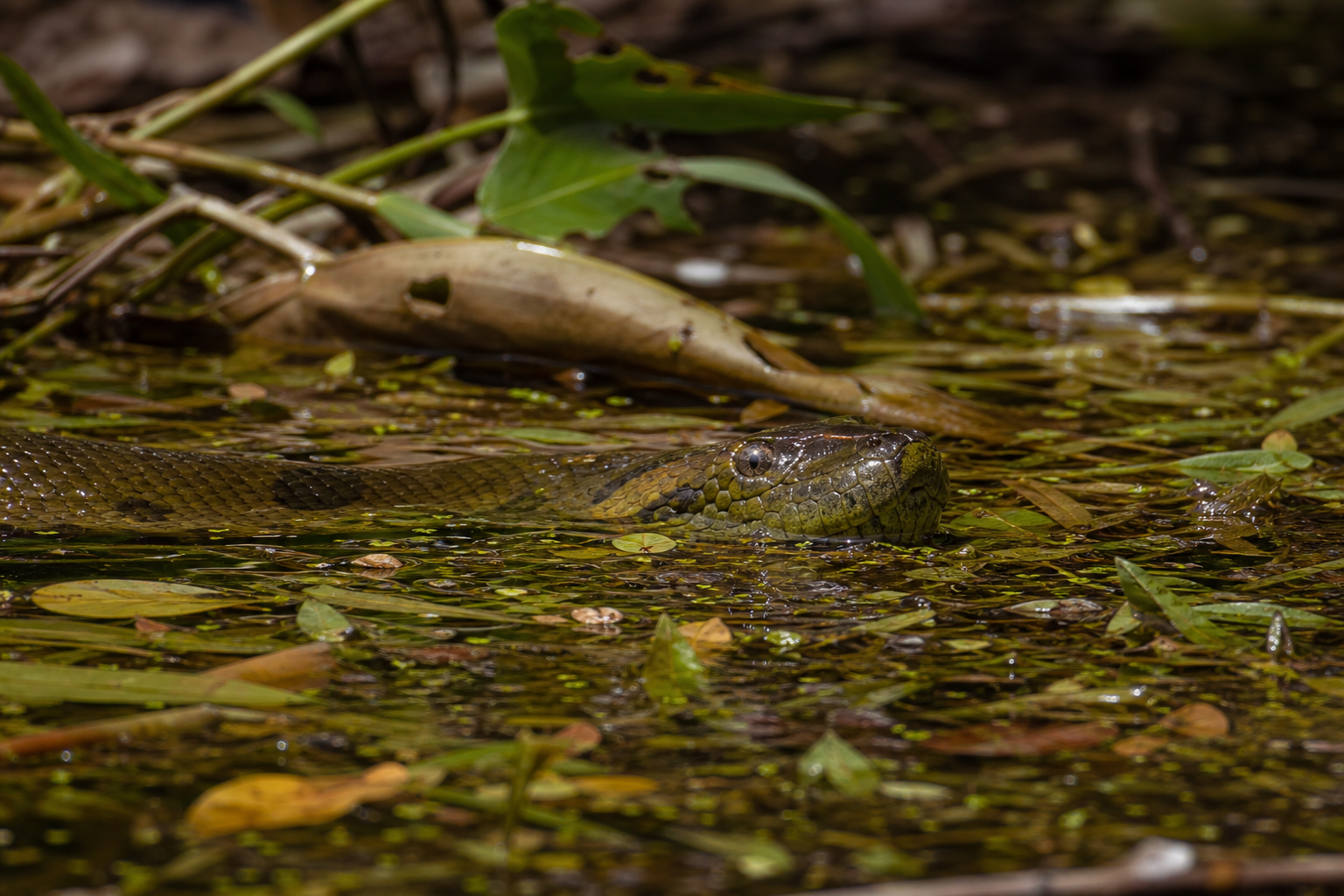
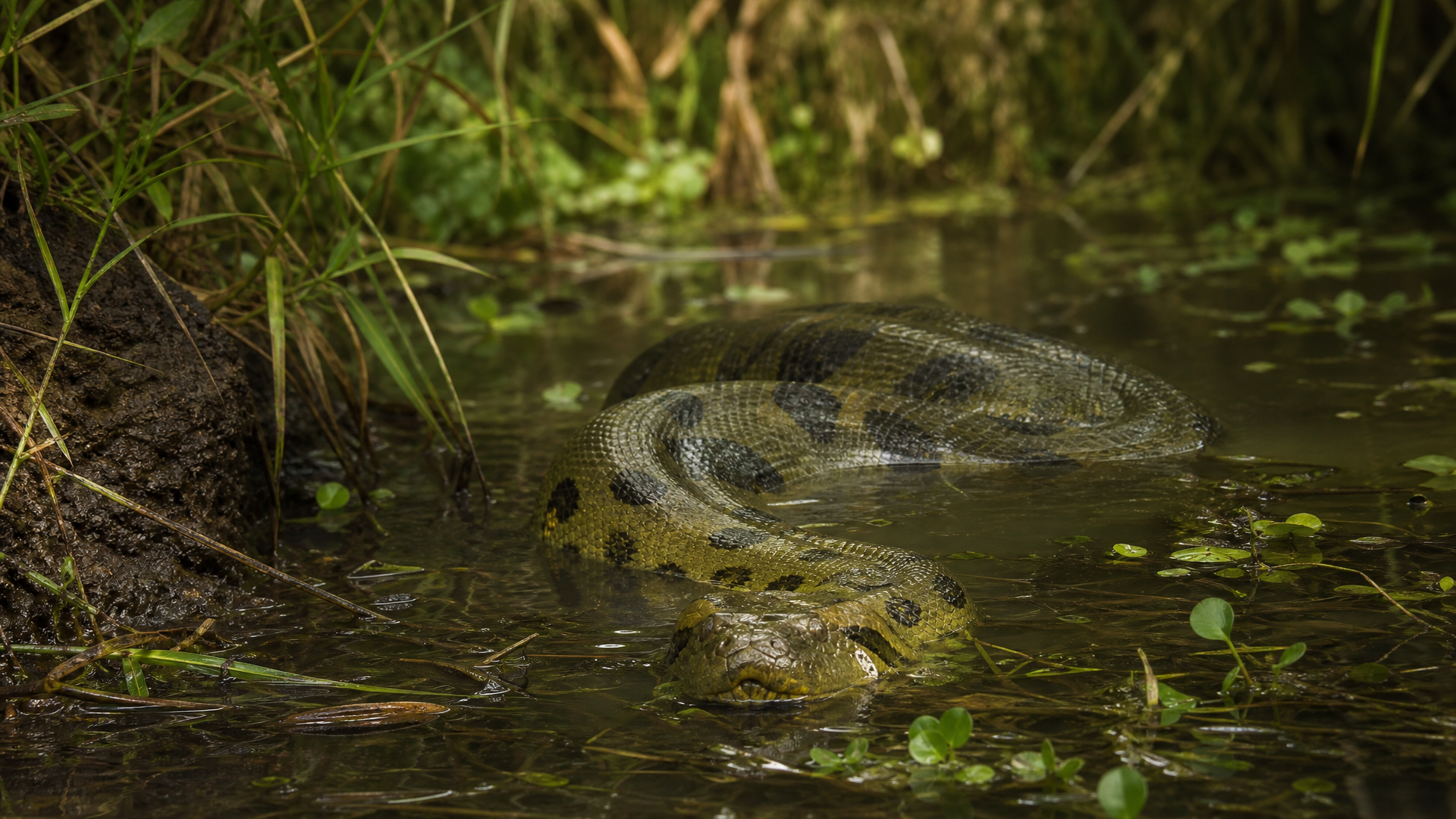
At the edge of a flooded channel, the water holds a pattern that could be weed, shadow, or old leaves. A fly settles. A small ripple touches the bank. Then the pattern tightens almost imperceptibly, and a head lifts just enough for eyes and nostrils to read the air.
The green anaconda is not the monster of campfire exaggeration. Its strength is quieter and more unsettling than that. It belongs to water heavy with plants, mud, and waiting. The body is immense, but it does not need to announce itself. It lies along the margin where animals come to drink, or moves below the surface with muscular slowness, every scale taking on the color of the channel. Females can grow far larger than males, and in that size there is a kind of gravity. Capybaras, birds, caimans, and other animals share a landscape where the line between bank and river is never entirely safe.
In the Amazon Basin, the anaconda is patience made physical. It helps keep crowded water edges in balance, removing the unwary and the weak without drama. Fear has wrapped it in too many false stories. The real animal is stranger: a living weight in brown water, almost invisible until the river itself seems to breathe.