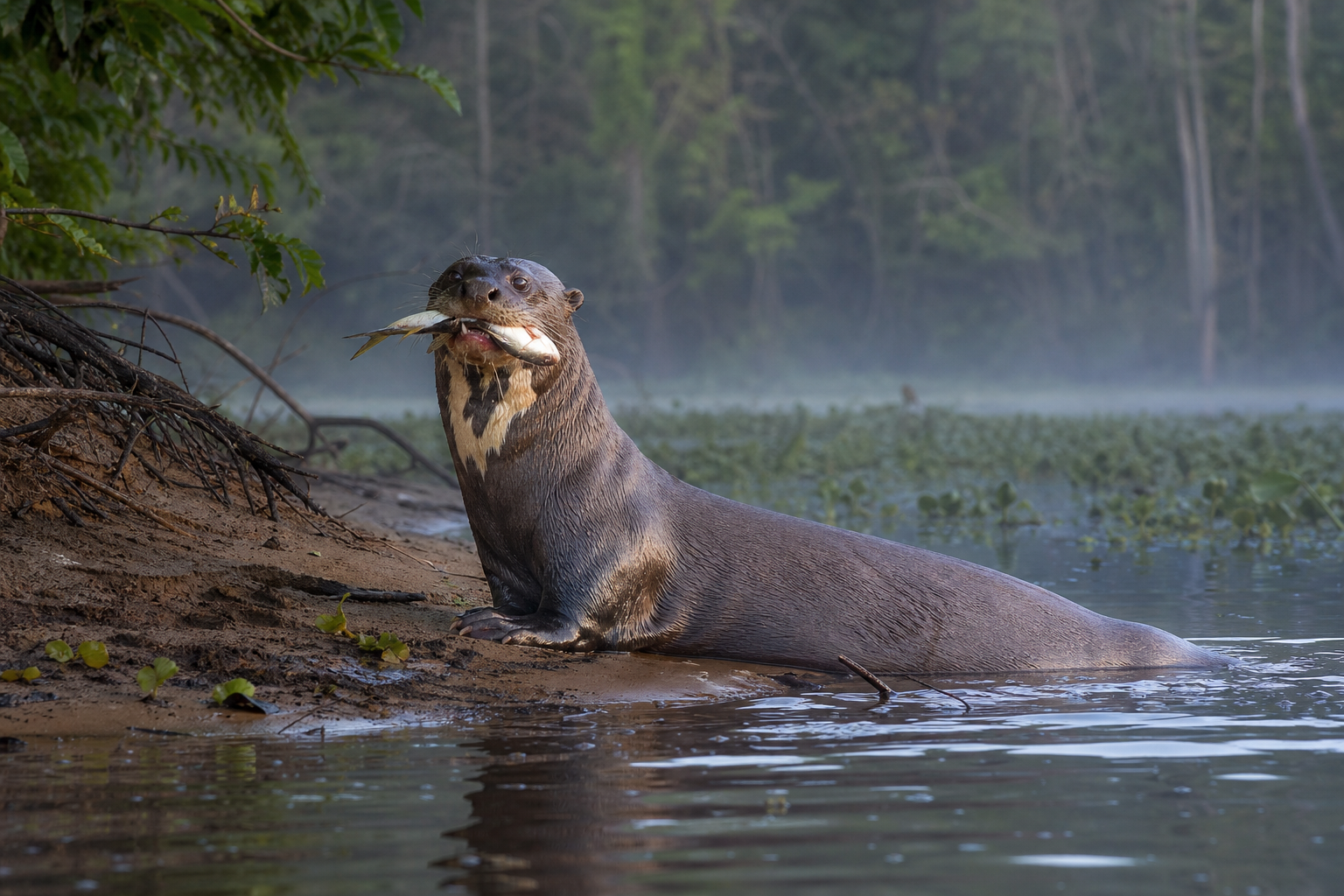
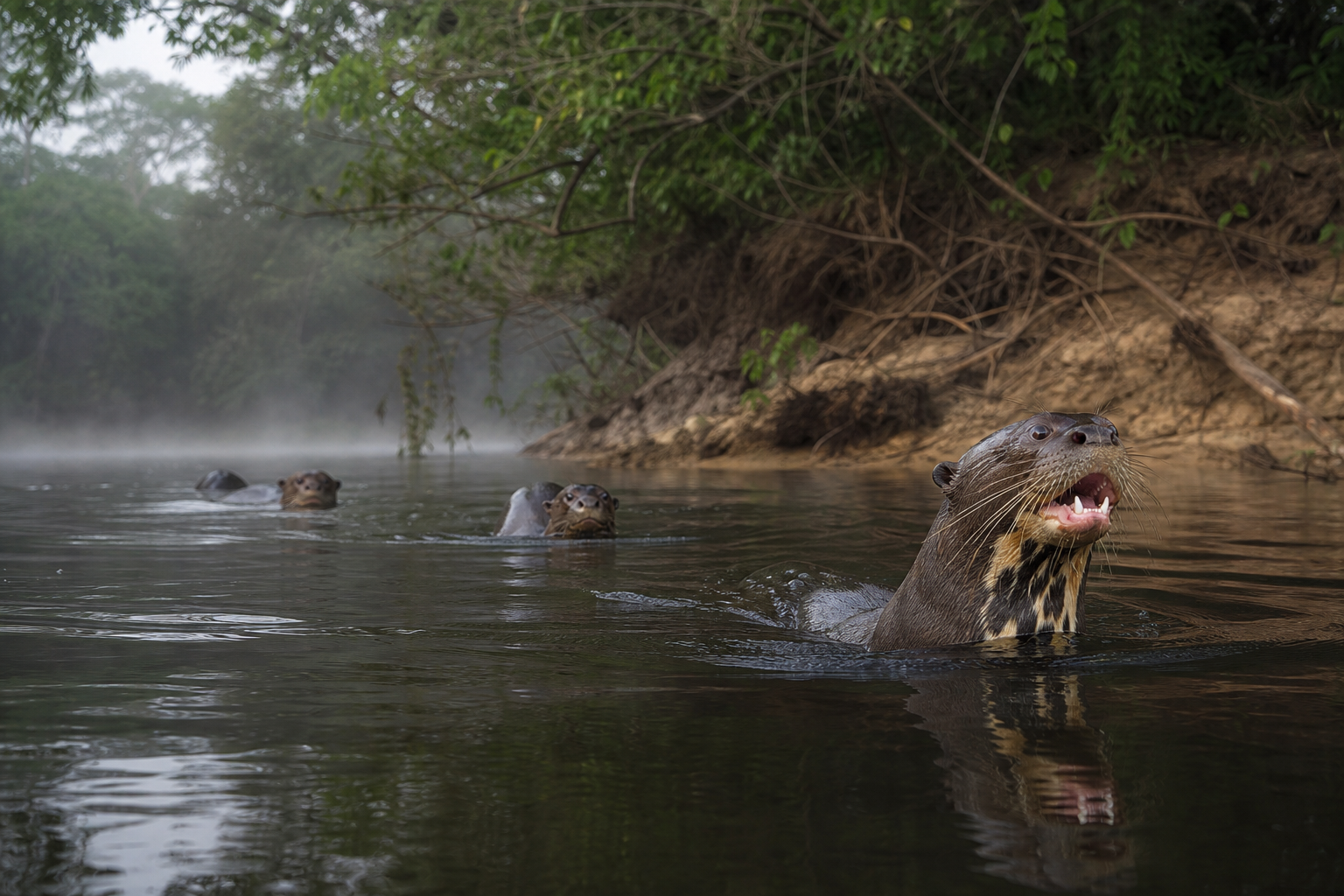
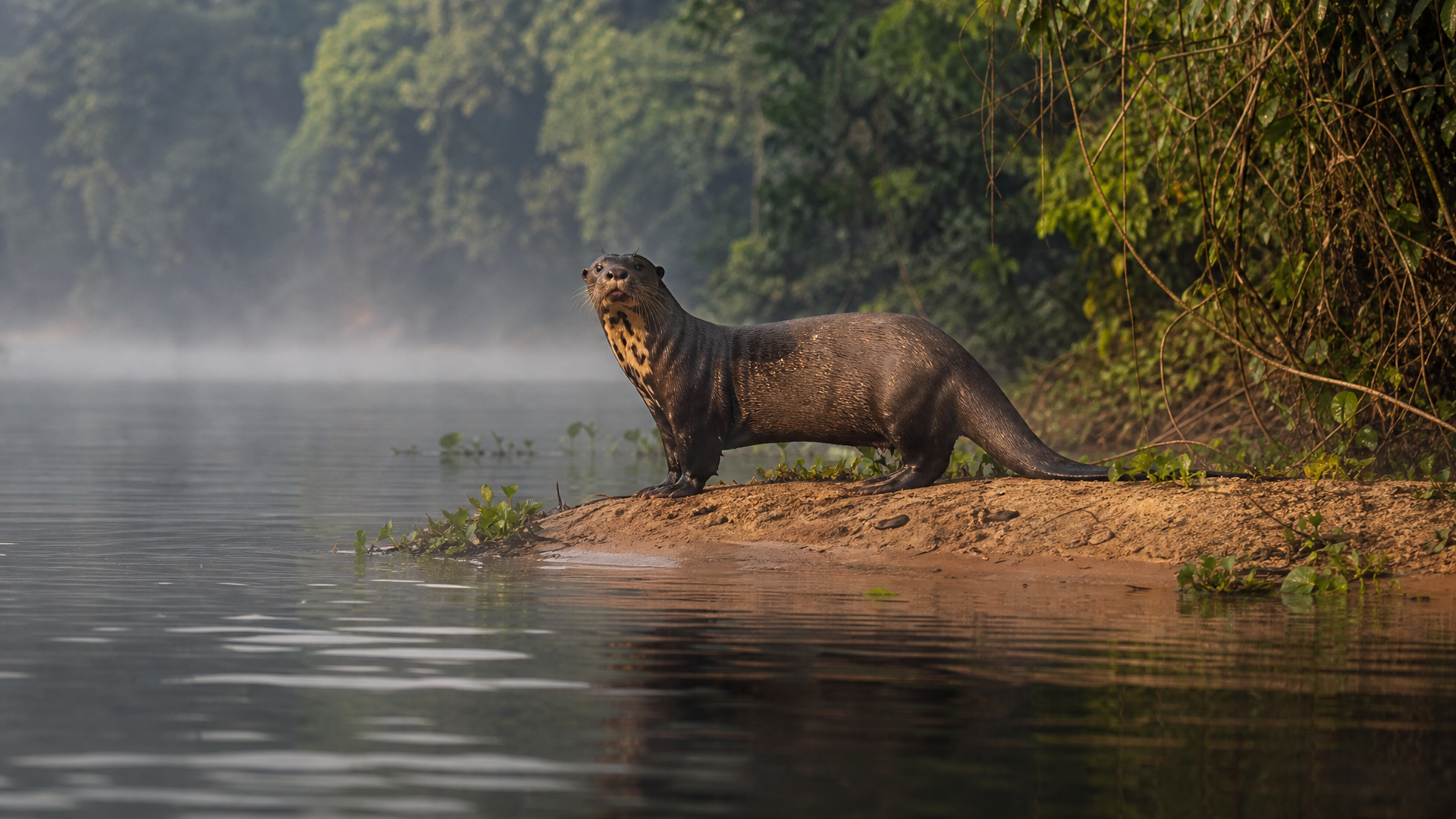
An oxbow lake lies flat in the morning, black as polished wood. Then the surface breaks into whistles, splashes, and sharp bright calls. A long head appears, then another, and the giant otter family pours into the day like a single restless animal made of many bodies.
There is nothing shy about them once they decide the river is theirs. They patrol in a line, dive in bursts, surface with fish twisting between their teeth, and keep up a running conversation that carries across the water. The body is built for speed under the surface: webbed feet, dense fur, muscular tail, neck stretched forward like an arrow. Yet the face is almost theatrical in its attention. Each otter watches the others, watches the bank, watches the sky. At a den entrance cut into the earth, pups learn the grammar of the group: call, answer, dive, return.
The giant otter turns quiet water social. It links fish, banks, old burrows, sandbars, and family memory into one territory. Mining pollution, disturbed dens, fish pressure, and old hunting losses have made many rivers emptier than they look. When the family disappears around a bend, the lake remains bright, but its voice goes with them.