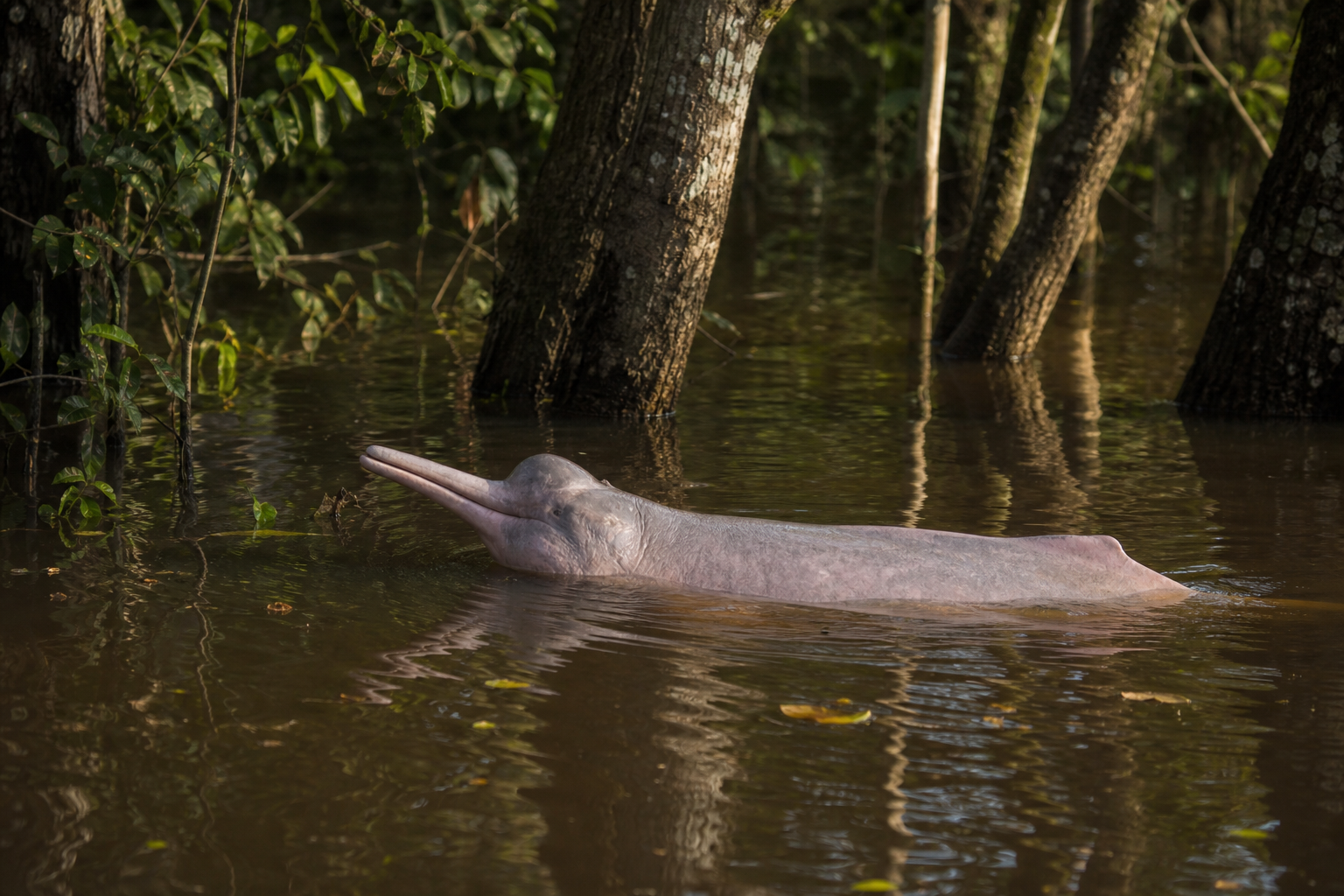
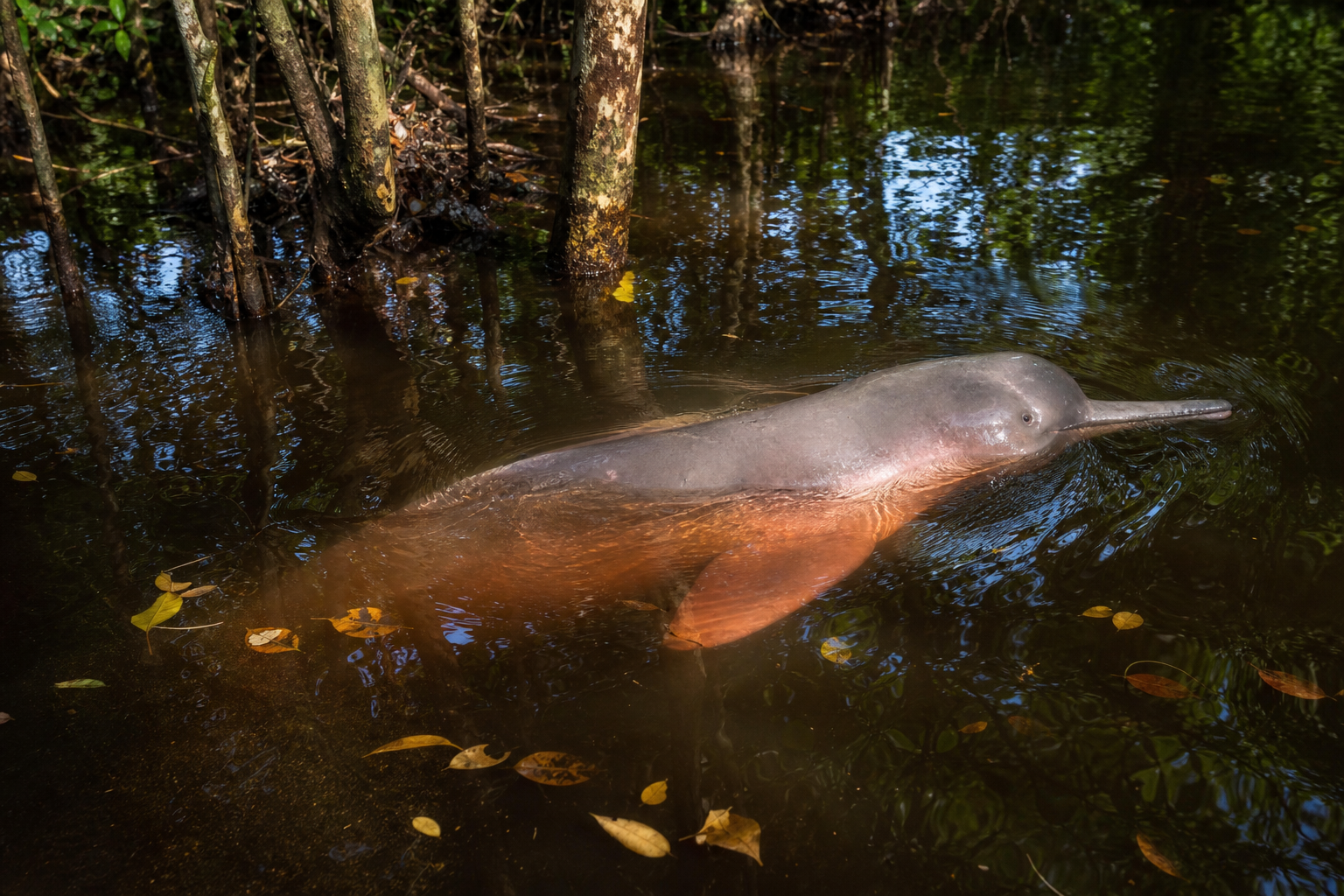
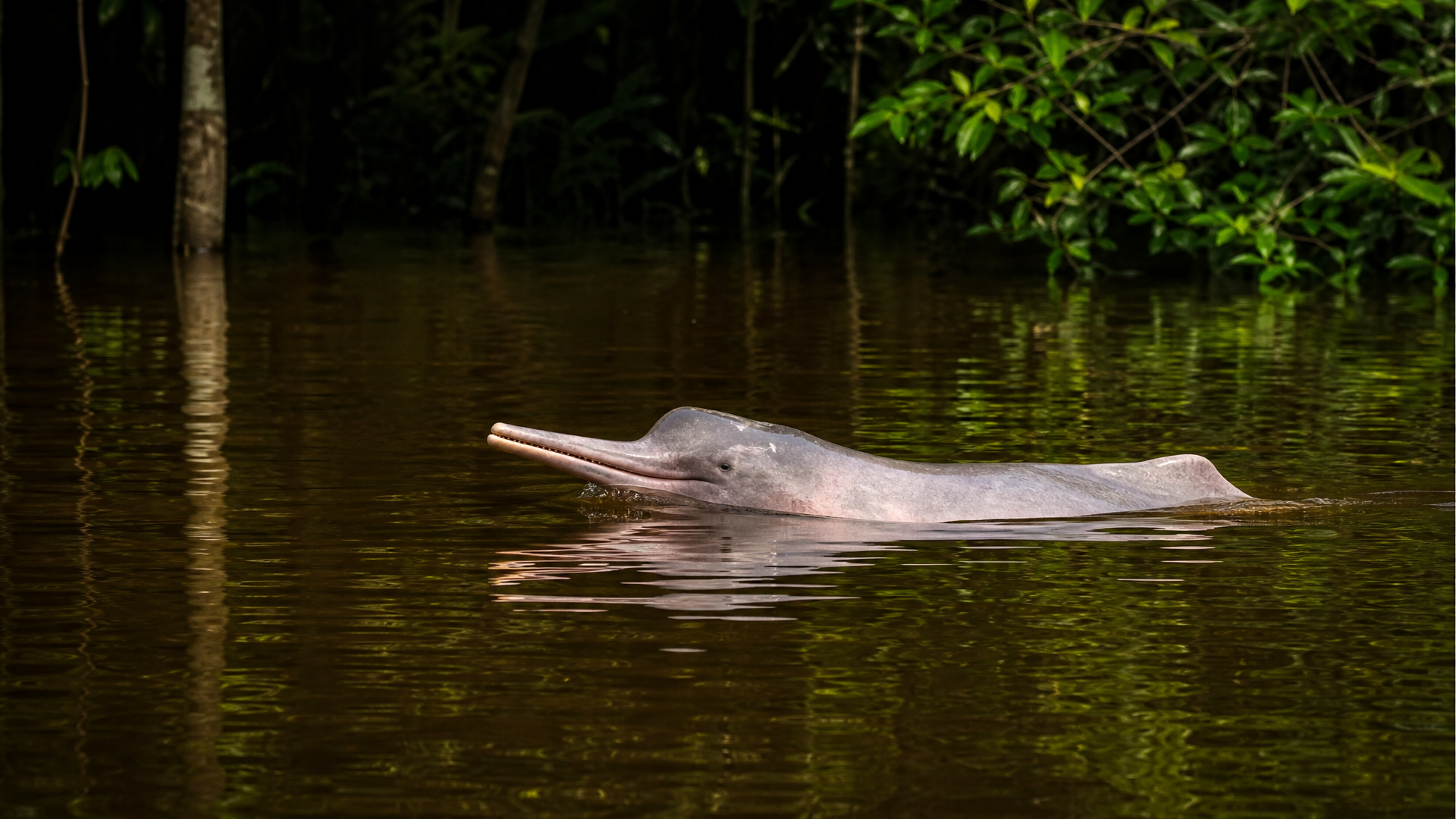
When the forest floods, the river forgets its banks. Water slides between trunks, lifts leaves from the understory, and turns the woods into a dim green room. A pale shape rises where a trail should be, breathes once through the brown surface, and vanishes among submerged branches.
The Amazon river dolphin moves through water that would blind most hunters. Its world is not clear blue space, but silt, root, current, and echo. The long beak parts floating leaves. The rounded forehead breaks the surface in quiet intervals. In flooded season it can enter the forest itself, turning between tree trunks with a flexibility that makes the boundary between river and canopy feel uncertain. It hunts by sound and touch as much as sight, following fish into channels, lakes, and temporary pathways that exist only while the water is high. The pink of its skin is not a decoration in this place; it appears and disappears like a brief reflection, softened by mud and shade.
This dolphin gives the Amazon one of its deepest truths: the forest is also a river system. Dams, nets, boat traffic, mercury, and changing water levels press on routes older than any map. Still, in a flooded grove at dusk, a curved back rises among the trees, and the forest seems to breathe from underneath.