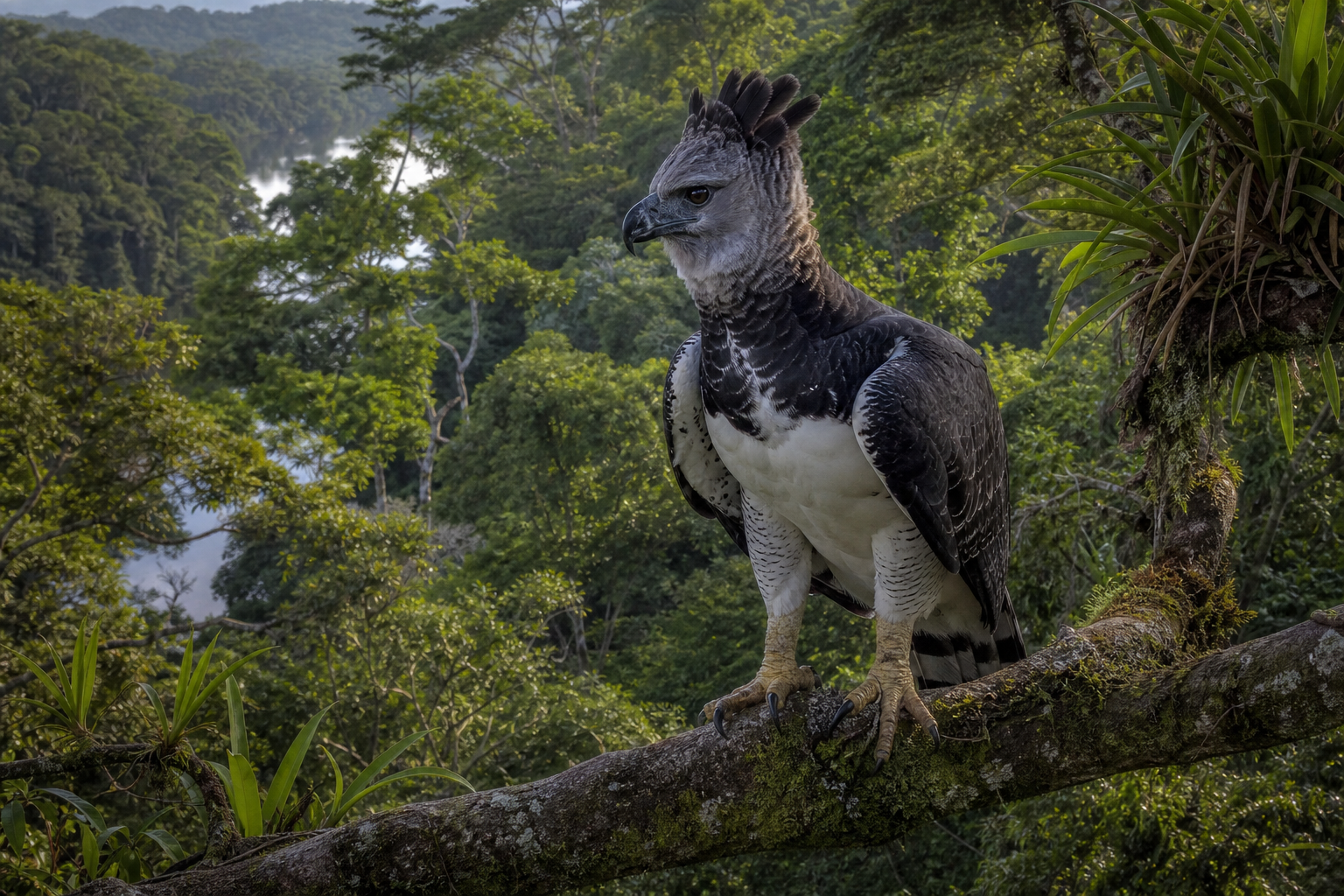
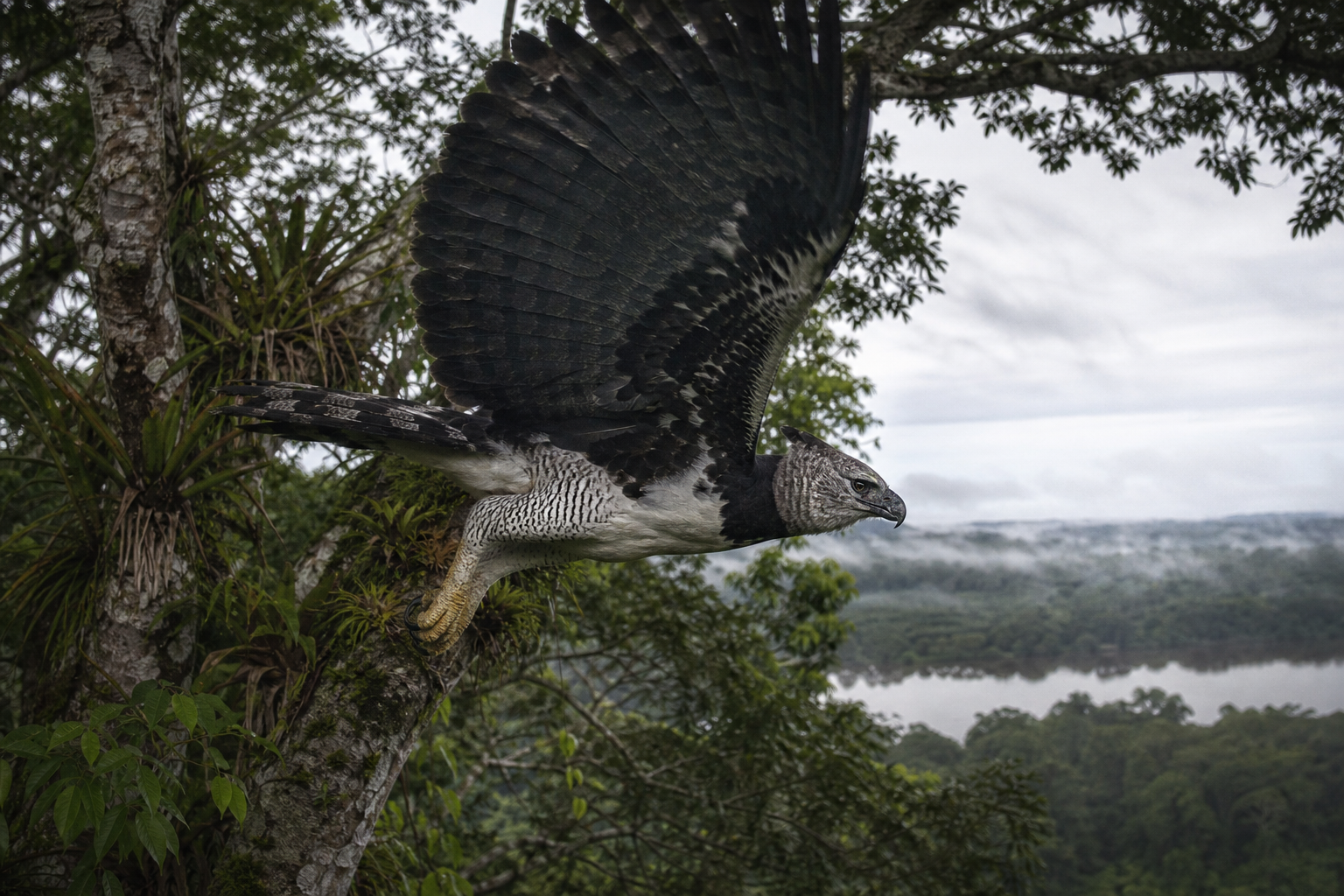
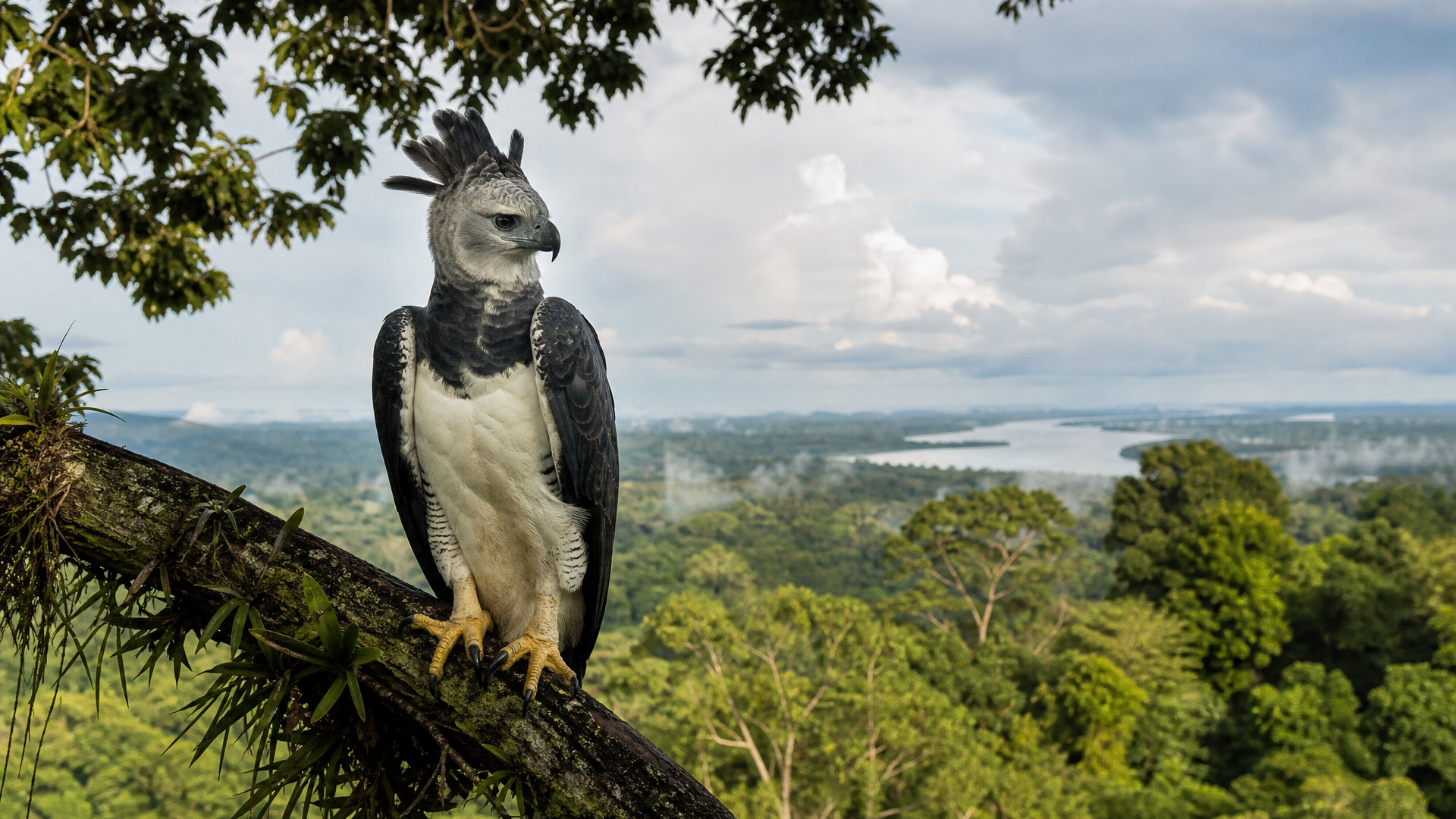
High above the forest floor, where the crowns of old trees lock together in green darkness, a branch dips under sudden weight. The bird that lands there is built like a decision. Gray head feathers lift in the damp air, talons close around bark, and the canopy grows quiet around a hunter large enough to make monkeys freeze before it moves.
The harpy eagle belongs to forests with height and age. It needs emergent trees strong enough to hold a nest like a platform and a hunting country wide enough for patience. From below, it is mostly rumor: a shadow between leaves, a short call, a sloth gone from a branch where it had seemed part of the tree itself. Up close, the bird is all compression and force. The face is alert and severe, the wings broad, the legs thick, the feet almost shocking in their scale. It does not waste motion. It waits until the forest gives one small opening, then drops through the green with power that feels too heavy for flight.
In the Amazon Basin, the harpy eagle is a measure of canopy intactness. Its presence means large trees, prey, distance, and time still hold together. Where forests are cut into smaller pieces, the sky may remain full of birds, but this particular silence begins to disappear from the crowns.