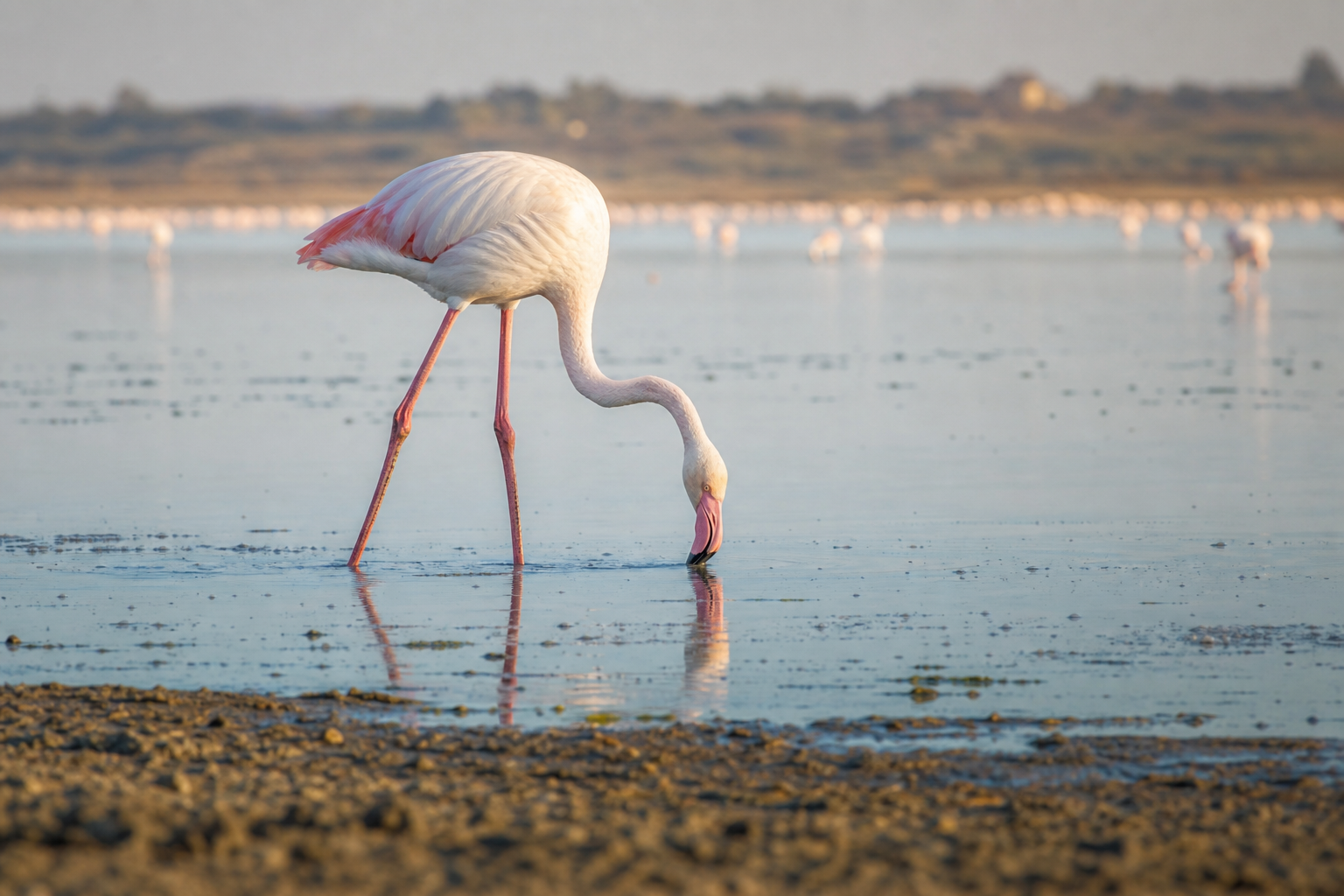
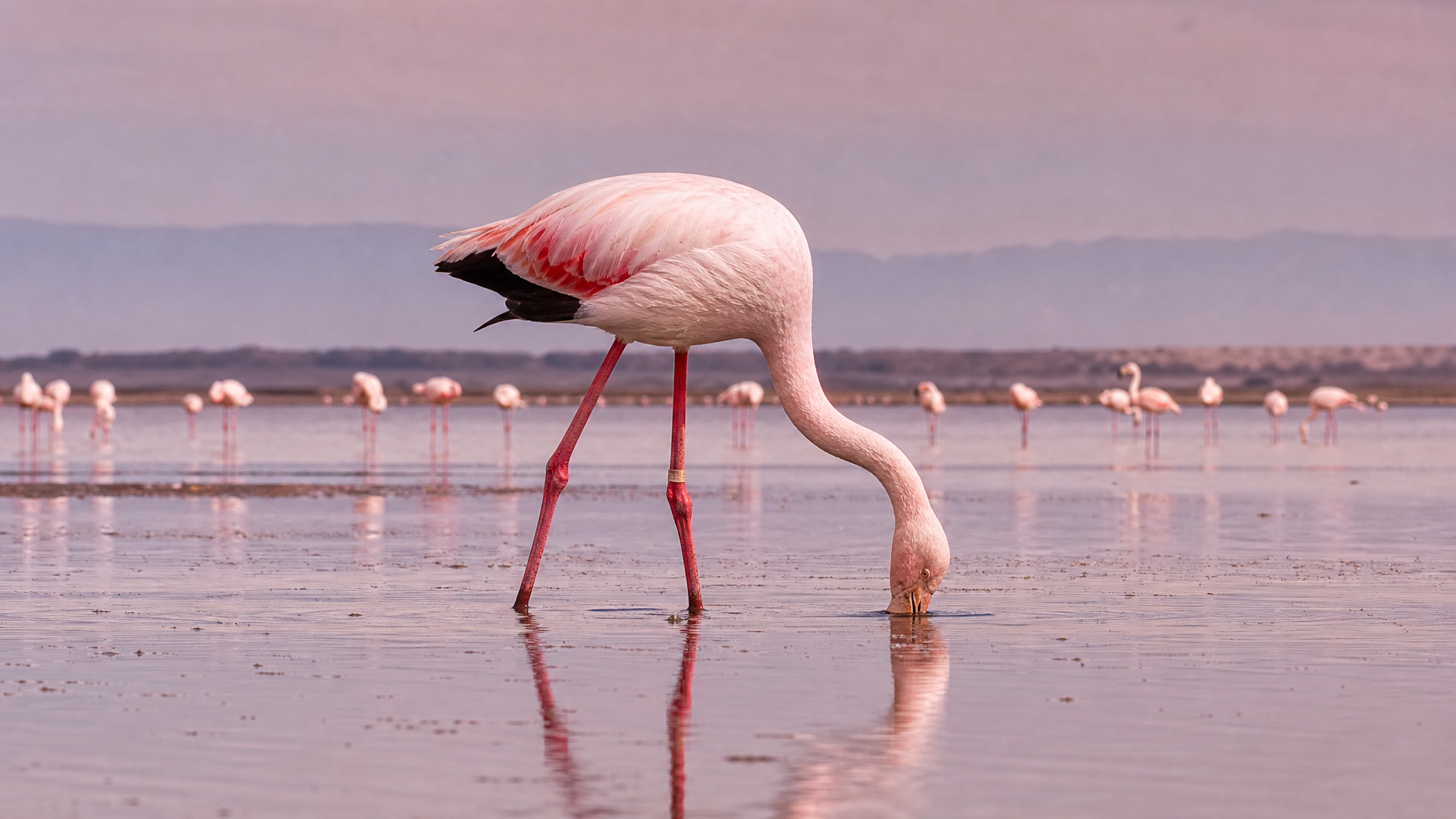
At a salt lake in the morning, the water is almost white with glare. Then the surface blushes. Hundreds of flamingos stand knee-deep in the shallows, their reflections trembling beneath them, the whole flock shifting between silence and soft, murmuring calls.
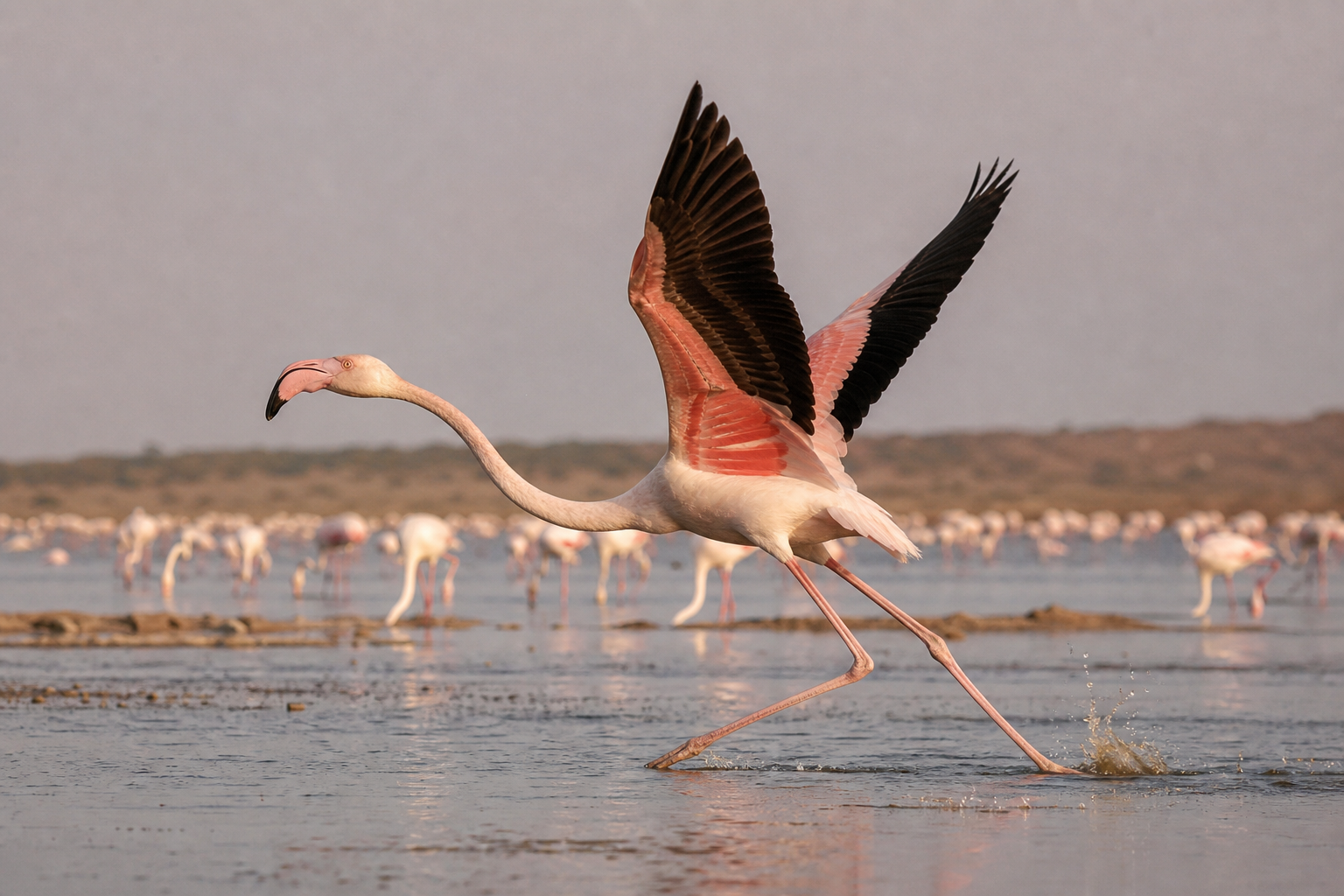
The greater flamingo changes the pace of North Africa. After dunes, cliffs, and dry mountains, it brings the eye to water: saline lagoons, estuaries, Nile Delta wetlands, and saltpans where life gathers in brightness. Each bird seems improbable on its own, all long legs, bent neck, and pale rose color, but the flock makes sense of the strangeness. They feed with heads inverted, bills working through the water in steady rhythm. They walk in lines, turn together, lift together, and when they fly, black flight feathers appear from beneath the pink like a secret briefly shown.
This bird represents the region's wet edges, the places that contradict the easy idea of North Africa as only desert. It ties Mediterranean light, mud, salt, and seasonal water into a spectacle of living filtration and colony life. Wetlands are drained, polluted, and disturbed with an ease that makes their abundance look less durable than it seems. Still, at dawn, the flock stands in shining water, and the desert continent turns pink.