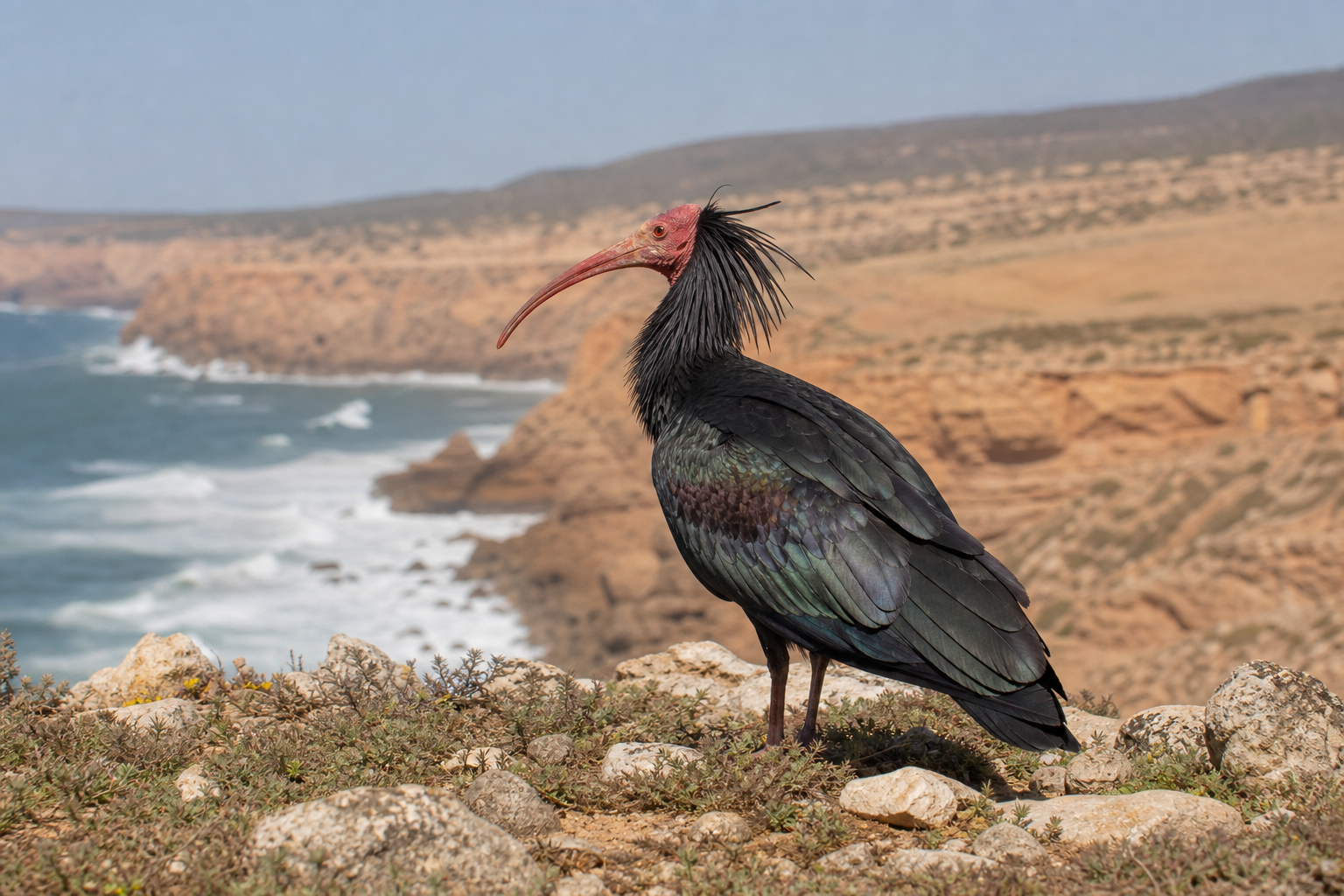
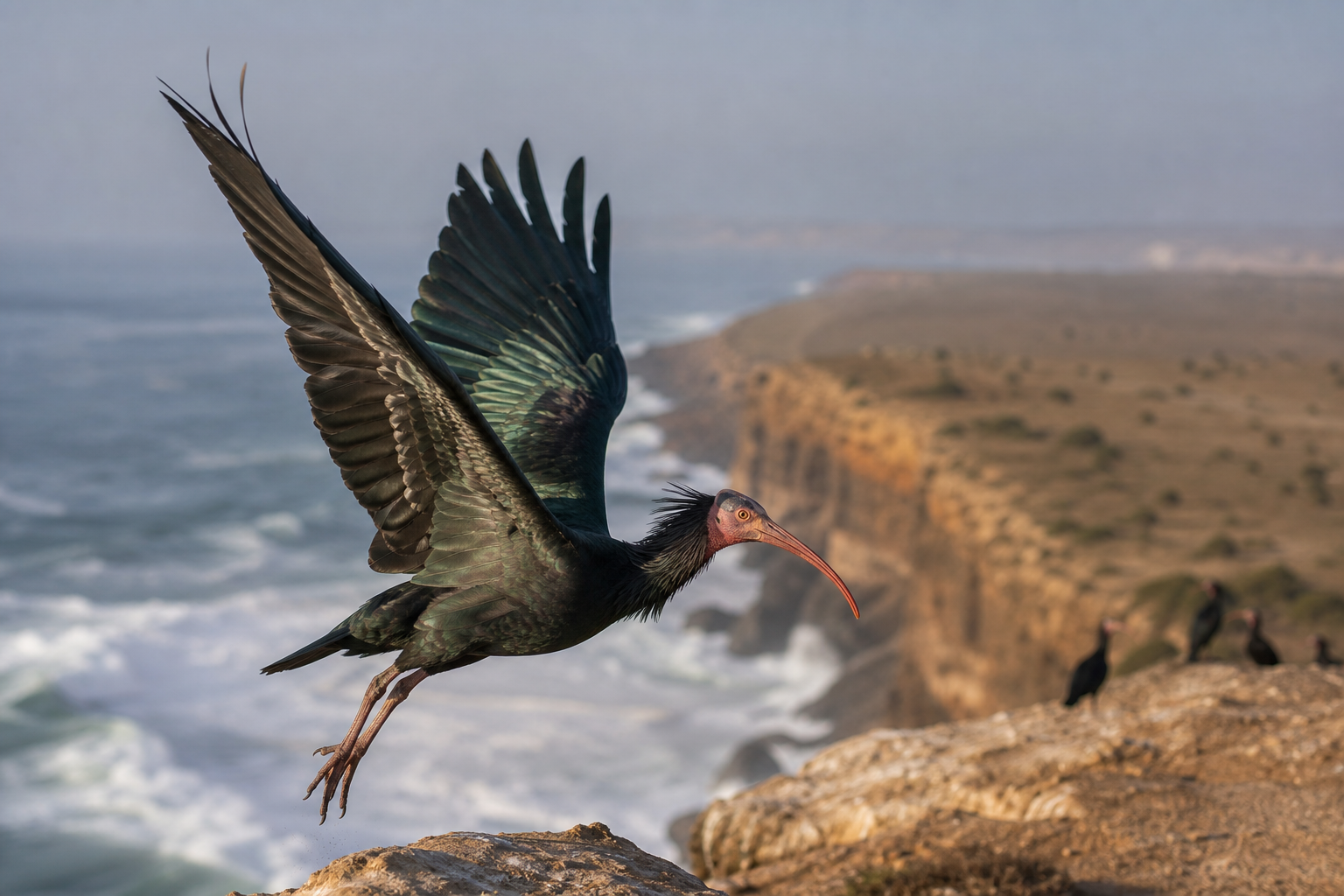
Morning wind moves along Morocco's Atlantic cliffs, carrying salt, dust, and the cries of birds. A dark shape lifts from a ledge, long bill curved downward, bare red head catching the light. Then others follow, their wings beating over steppe and surf as the colony spills into the day.
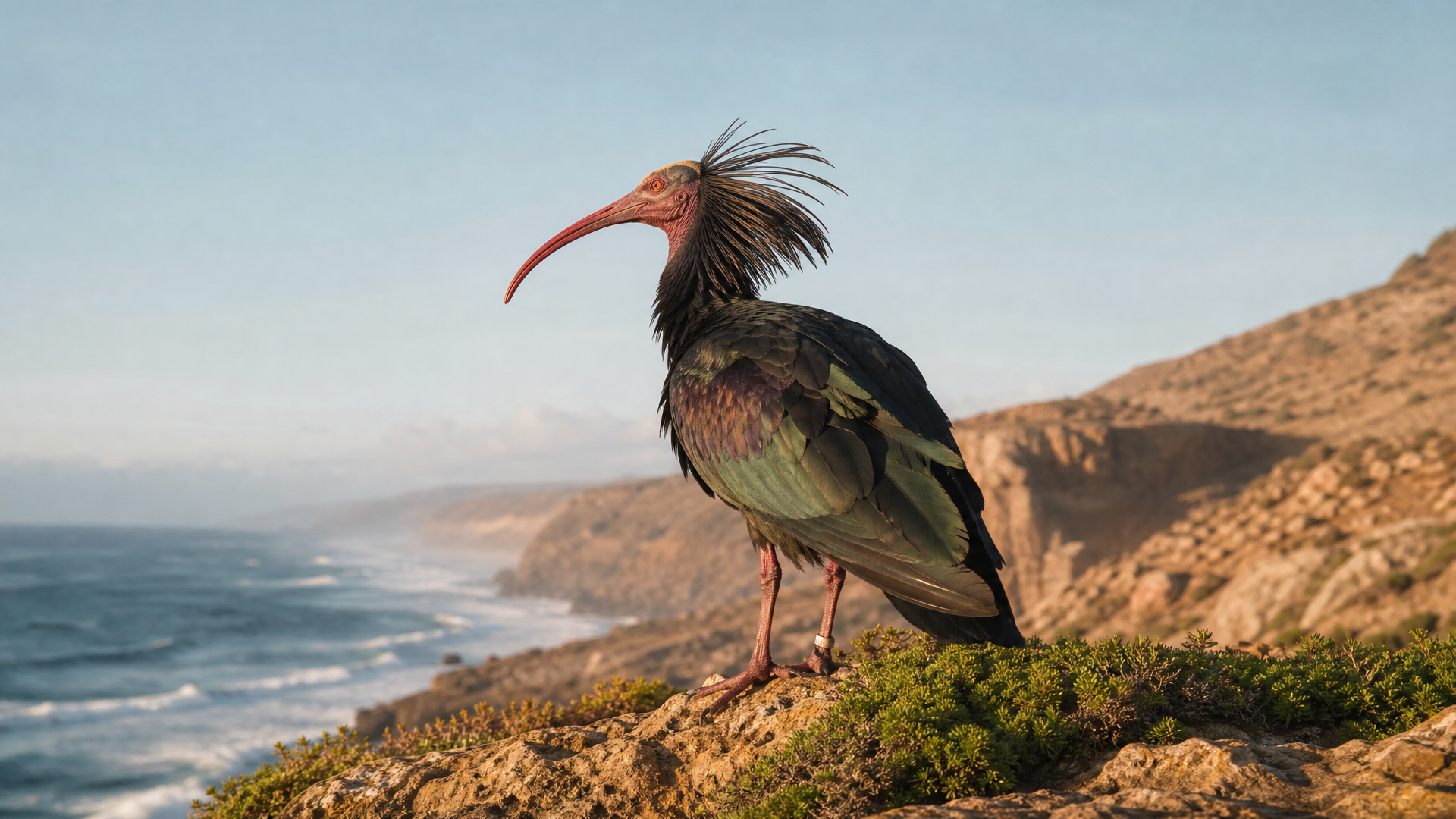
The northern bald ibis has the look of an old story that refused to vanish. Its silhouette is unmistakable: ragged crest, sickle bill, dark body glossed with green and bronze when the sun strikes right. On feeding grounds inland from the cliffs, it walks with deliberate steps, probing, pausing, and calling to companions in low, nasal notes. The flock is social without being chaotic. Birds gather, separate, return, and the whole group seems held together by memory of safe ledges and familiar routes.
In North Africa, this ibis represents the Atlantic Maghreb as strongly as any desert animal represents the Sahara. Morocco's remaining wild colonies turned a species once spread across wider lands into a concentrated conservation story, not yet secure, but no longer only a disappearance. It brings cliff, pasture, steppe, and sea wind into one body. When the flock passes overhead, the shadow it casts is small, but historically it is long.