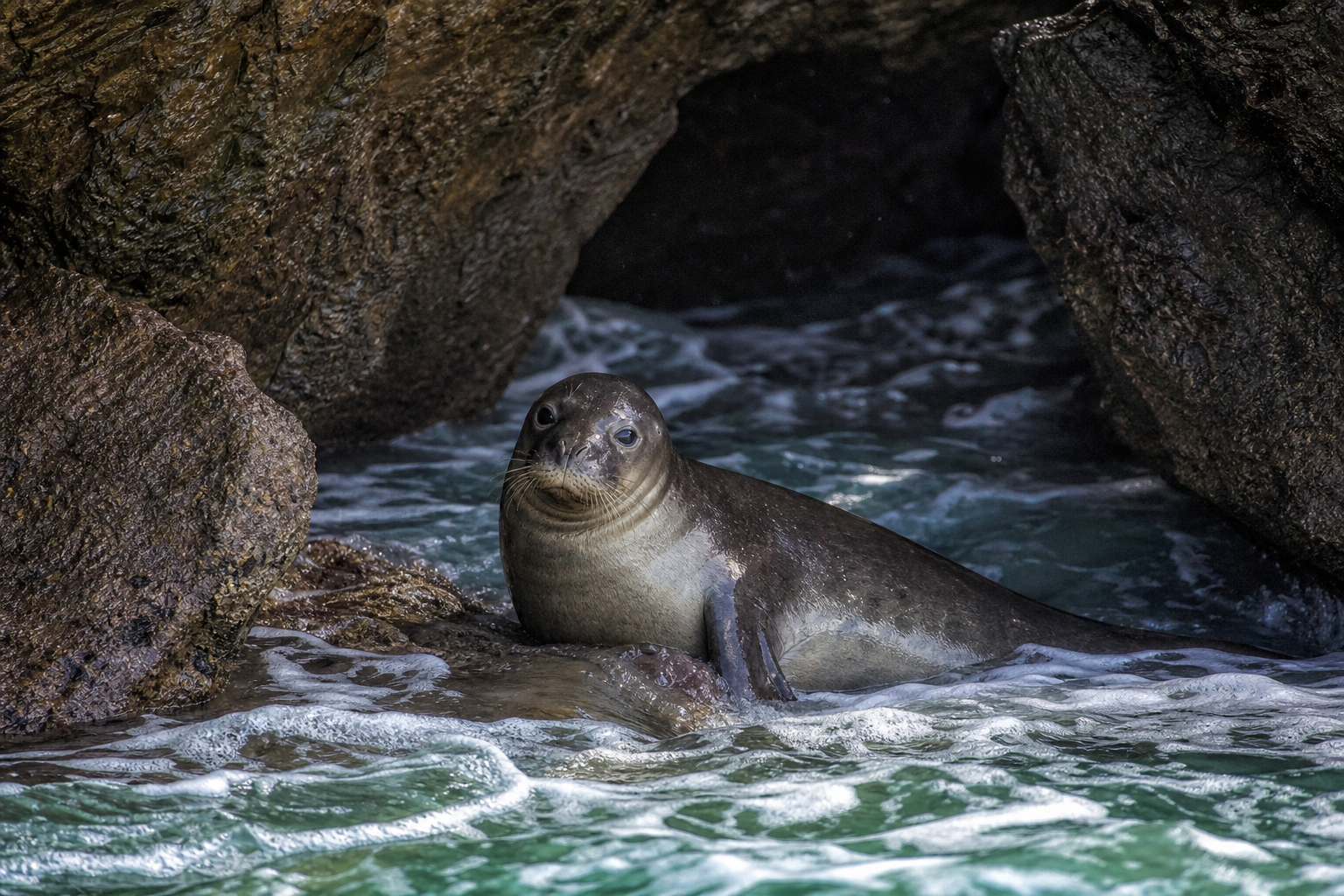
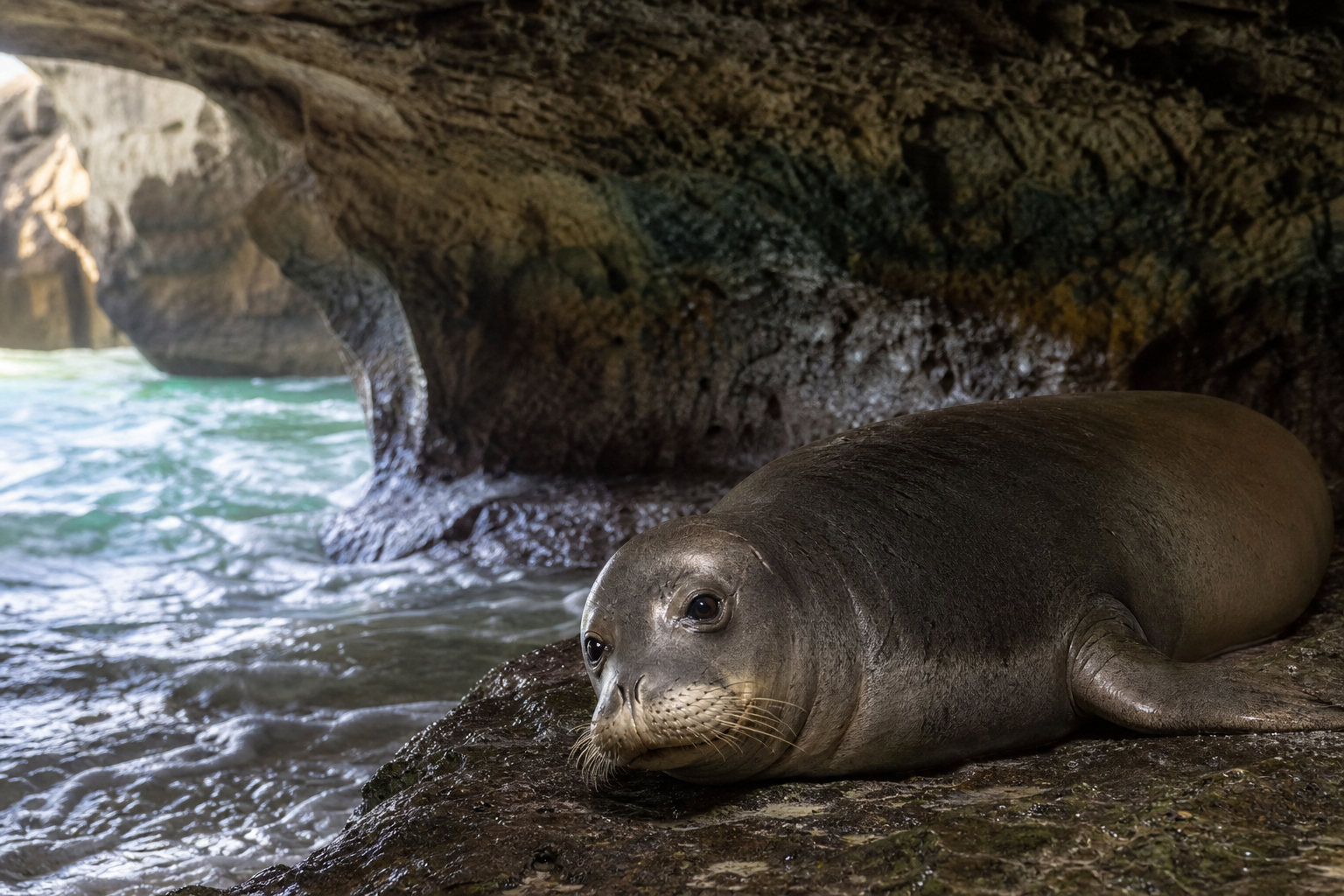
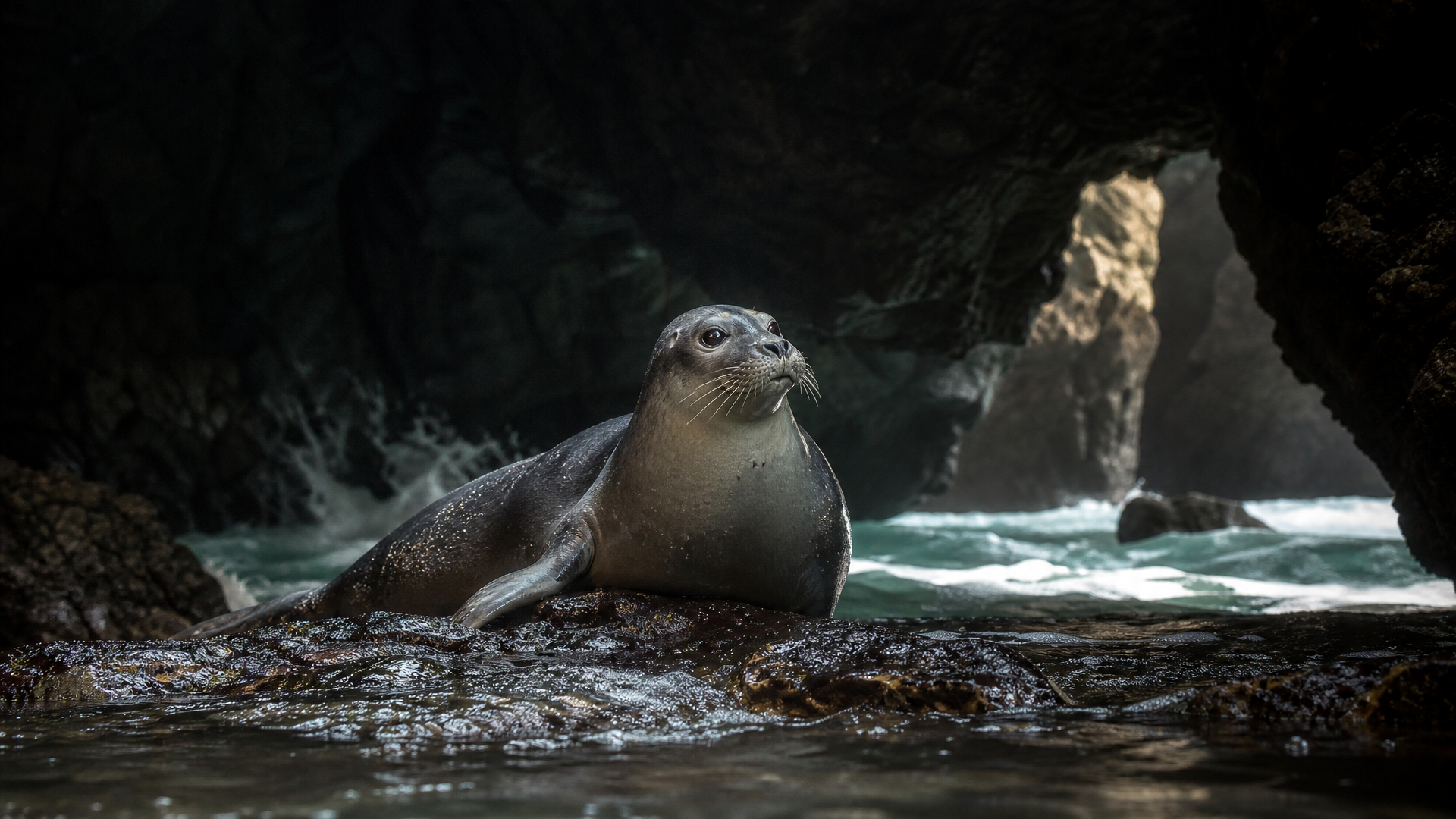
On the Atlantic coast near Cabo Blanco, surf enters a sea cave with a heavy, breathing sound. The water rises, turns silver, and falls back from dark rock. Then a seal's head appears in the foam, whiskers shining, eyes open to both sea and shadow.
The Mediterranean monk seal gives North Africa a coast as vivid as its deserts. It is not an animal of crowded beaches or noisy colonies. It seeks remoteness: caves, ledges, broken shorelines where land and ocean negotiate in darkness. In the water, the body that seems heavy on rock becomes fluid and exact, turning through green light, surf, and current with quiet strength. A mother and pup in a cave belong to one of the most private nurseries left on the continent's edge, where every wave changes the room and every disturbance matters.
For a North Africa chapter, the monk seal opens the Atlantic and Mediterranean doors. It speaks for Morocco's wild coast, for cliff, cave, fish-rich water, and the old relationship between desert land and sea. Centuries of hunting, disturbance, and shrinking safe breeding sites have pushed it into scattered refuges. When it surfaces in cave shadow, the region feels suddenly larger, bordered not by emptiness, but by breath.