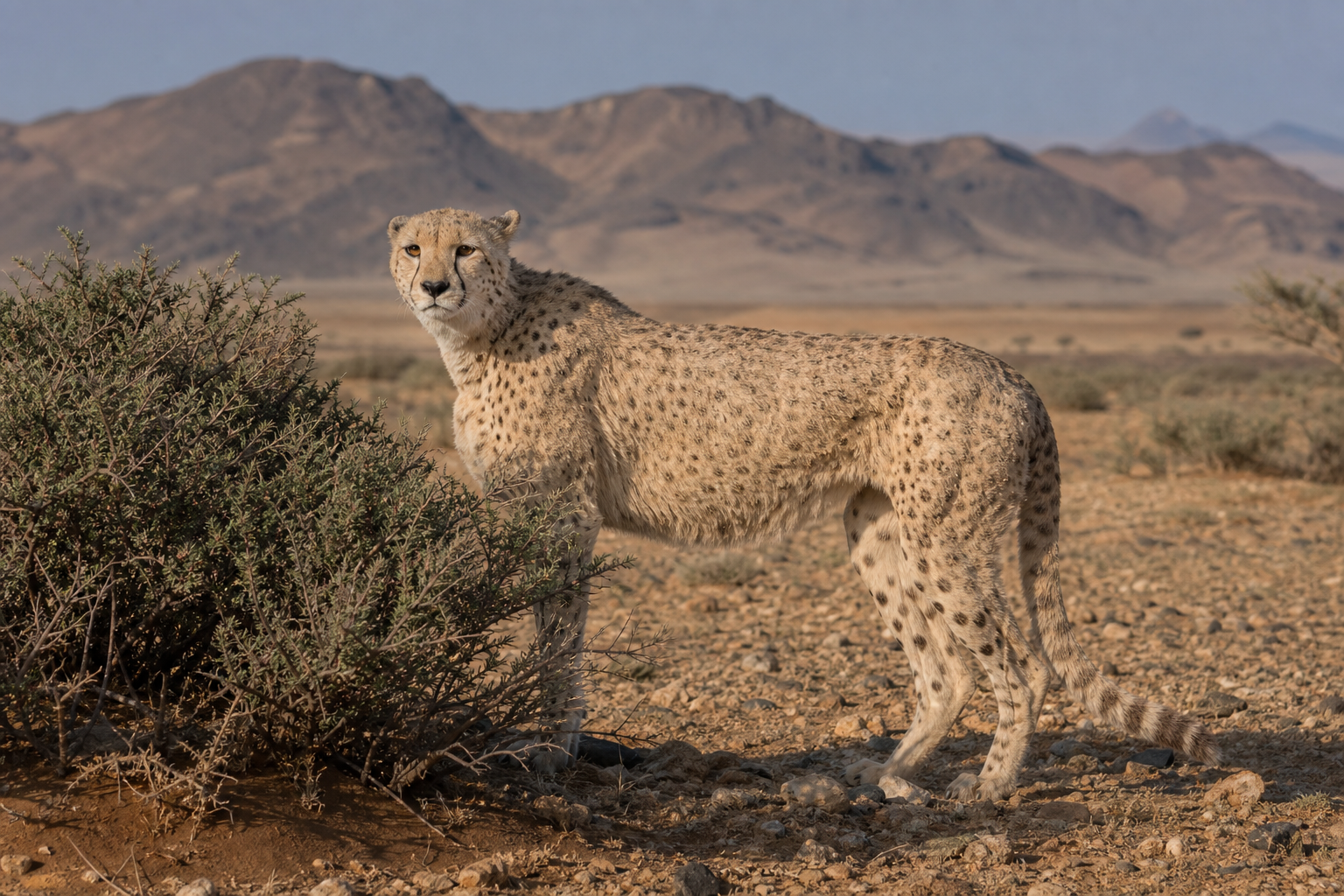
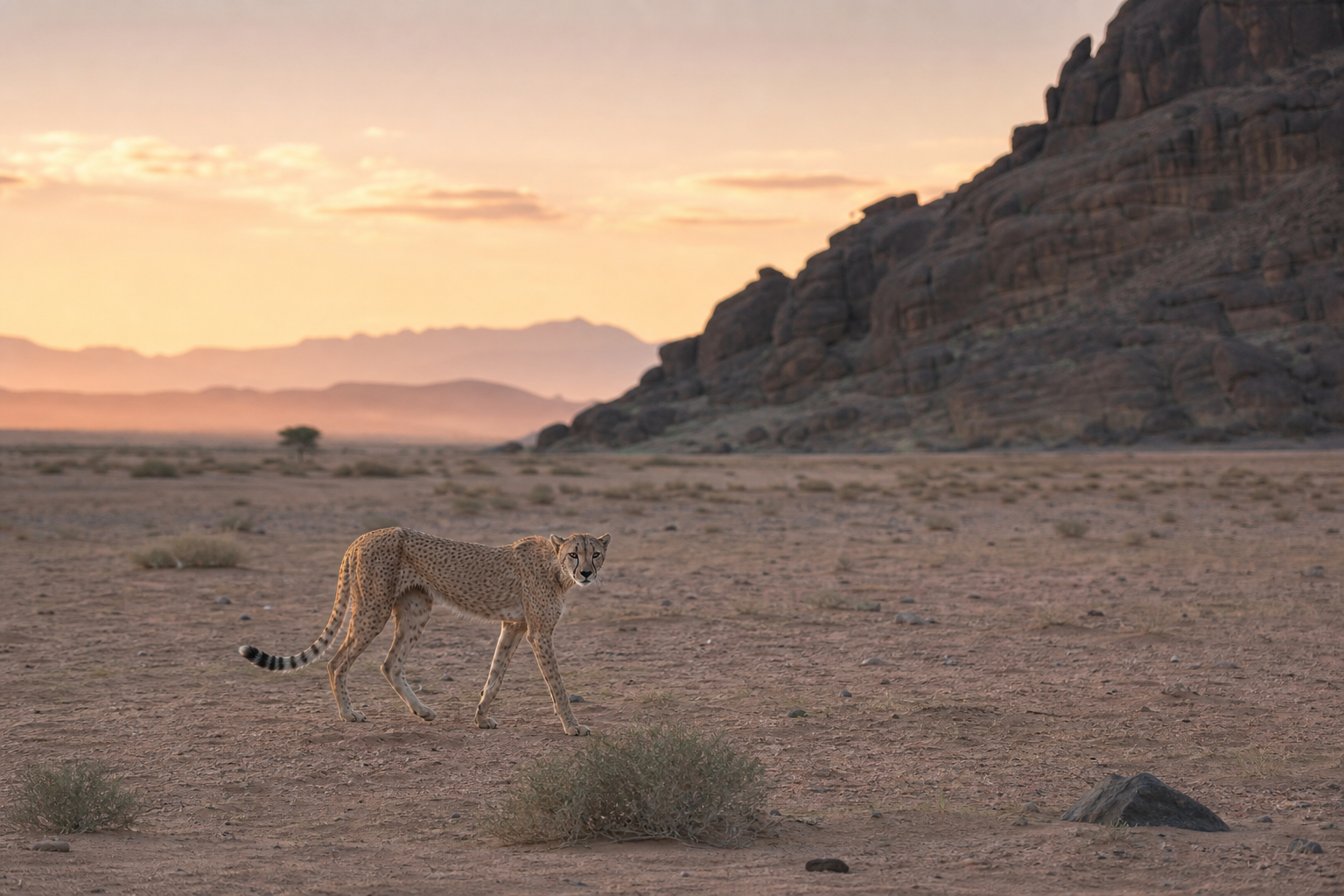
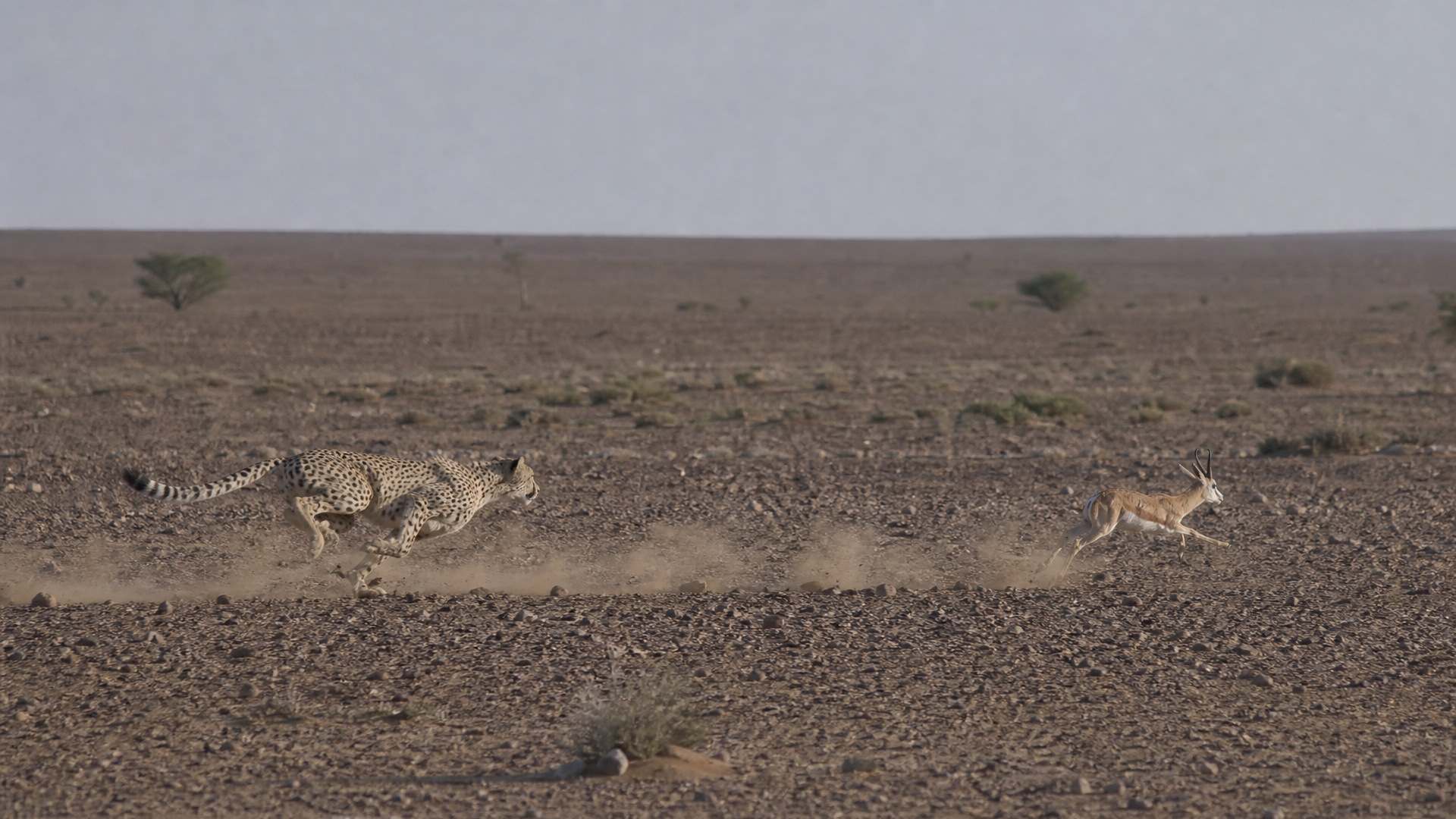
In the Termit Massif, dawn comes thin and cold over stone, sand, and open scrub. For a long time there is nothing but tracks: a hare's tight pattern, a gazelle's split hooves, the round print of a cat that passed in darkness. The cheetah itself is almost never seen.
This is not the cheetah of golden grass and gathered vehicles. The Northwest African cheetah is paler, rarer, and more secretive, a desert form living at the edge of what speed can solve. It travels enormous spaces at low density, often by night or in the cooler margins of the day, its body still built for acceleration but its life governed by scarcity. A glimpse from a camera trap may show long legs, a narrow face, eyes lit briefly, and then the animal is gone again into rock and thorn. Even the famous sprint feels different here. It is not spectacle. It is a calculation made in thin country, where every chase spends what cannot easily be replaced.
Its place in North Africa is justified by difference. This cheetah carries the Sahara and Sahel in its pale coat and hidden habits, not the open savanna story told elsewhere. With prey depleted and ranges fragmented, it survives like a rumor across desert strongholds. The tracks remain longer than the animal does.