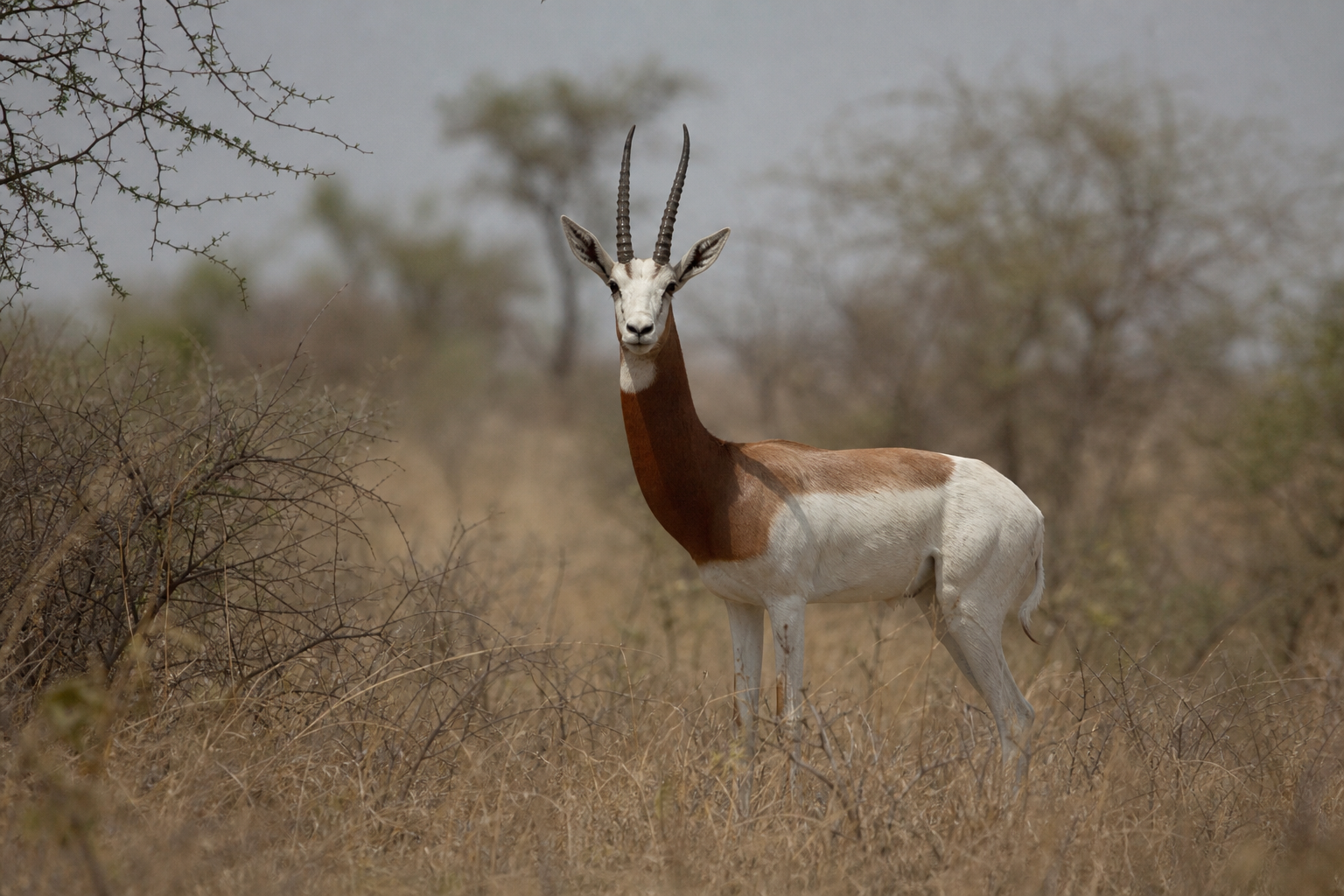
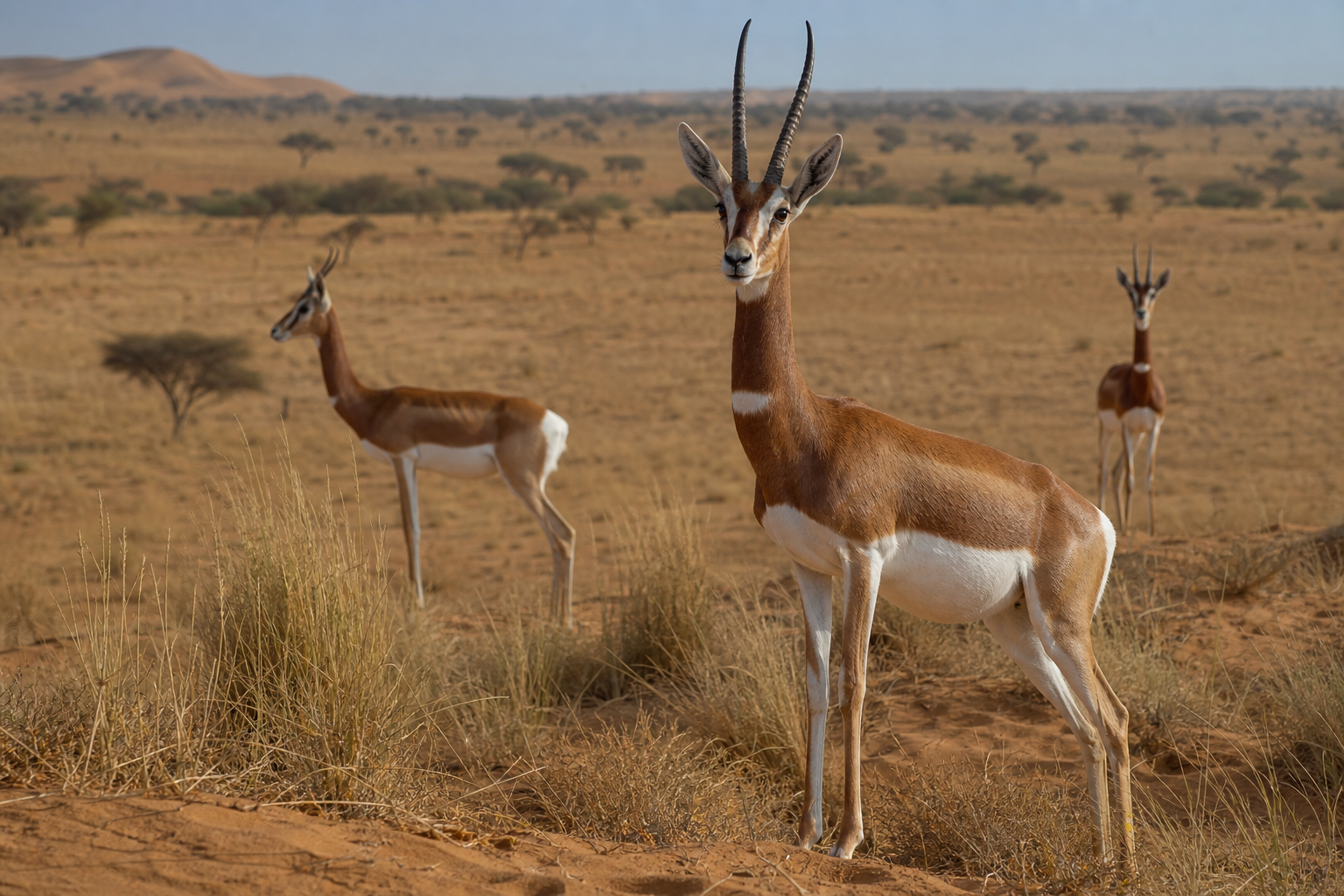
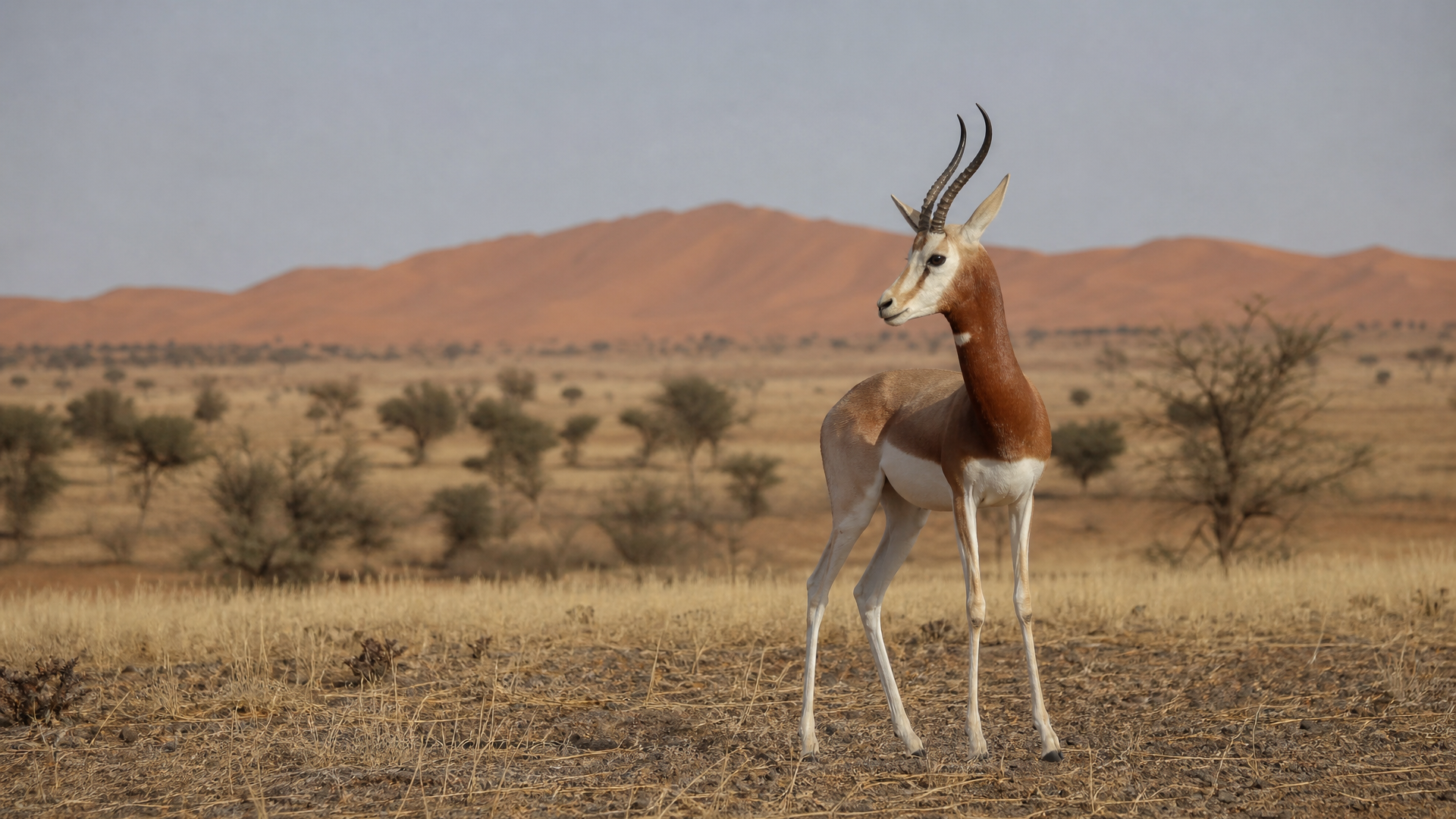
At the Sahel's edge, the land changes by degrees: sand loosens into grass, thorn trees lift from the flats, and the horizon becomes a little less empty. A tall gazelle moves through that borderland with its neck raised high, white and chestnut body catching the early light like a signal.
The dama gazelle is built for openness, but not for emptiness. It belongs to the thin, living band where the Sahara gives way to steppe and acacia, a place of seasonal chances and long distances. Taller than the dorcas, more upright than the dune-colored slender-horned gazelle, it carries itself with an alert, almost antelope-like refinement that makes the landscape seem wider around it. A group moving across fixed dunes and dry grass keeps a loose order, stopping often to look, then flowing on again with quick, lifted strides.
Its North African meaning lies in that edge. The dama is not the deep-sand specialist or the mountain survivor; it is the Sahelo-Saharan threshold made visible. Now only scattered remnants hold that role in the wild, pressed by hunting, livestock, drought, and broken range. The animal's height lets it see far, but there are fewer safe distances left to see.