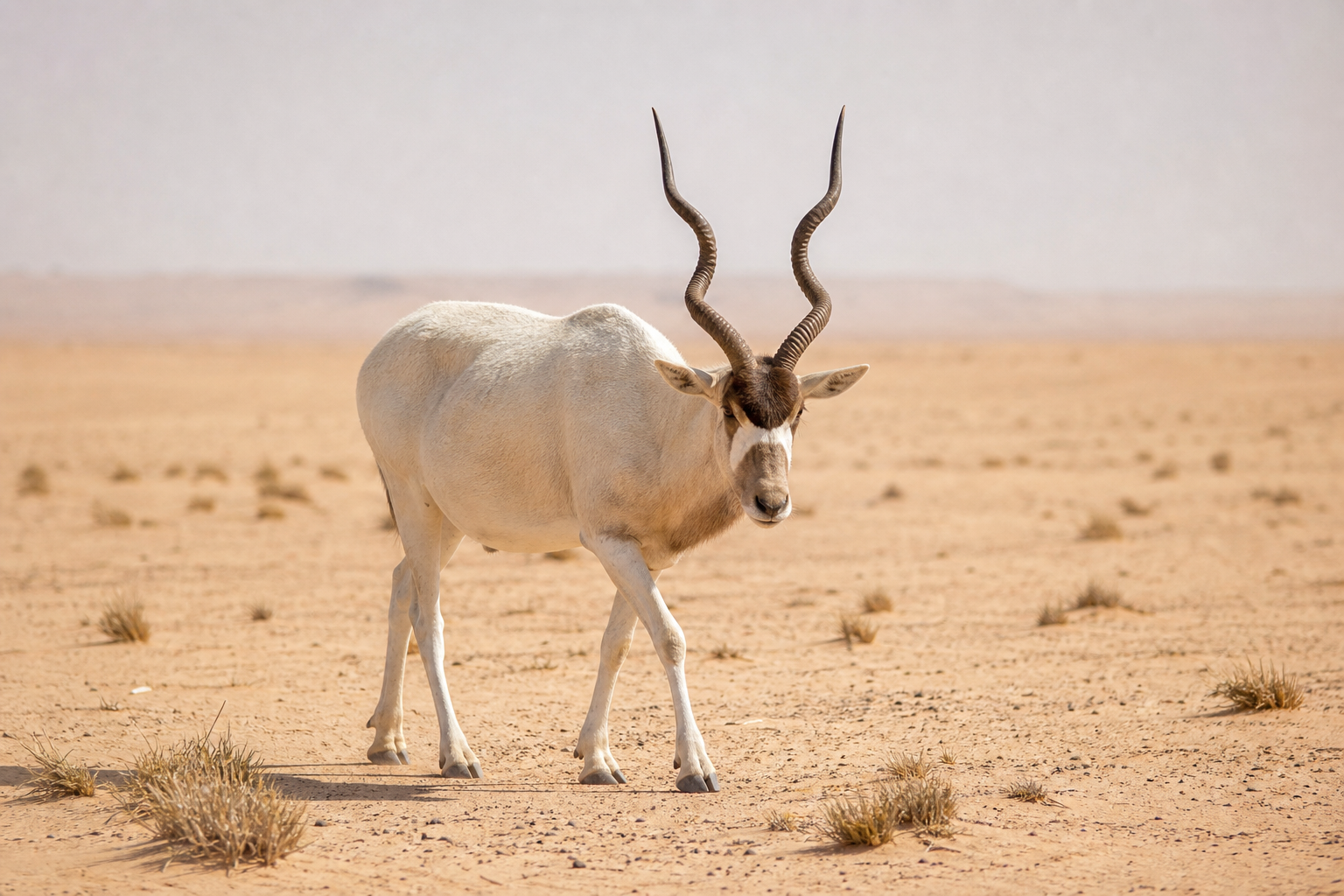
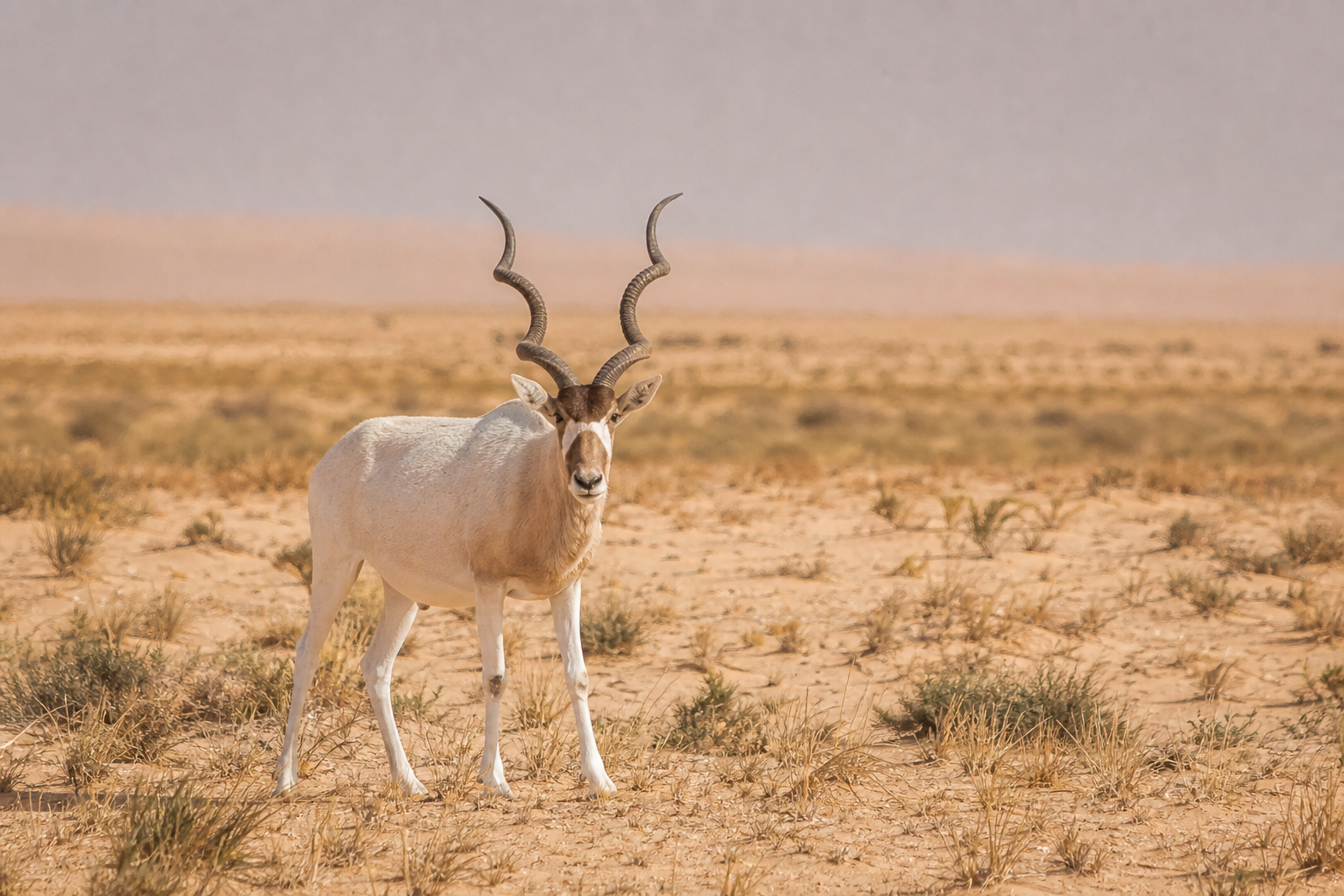
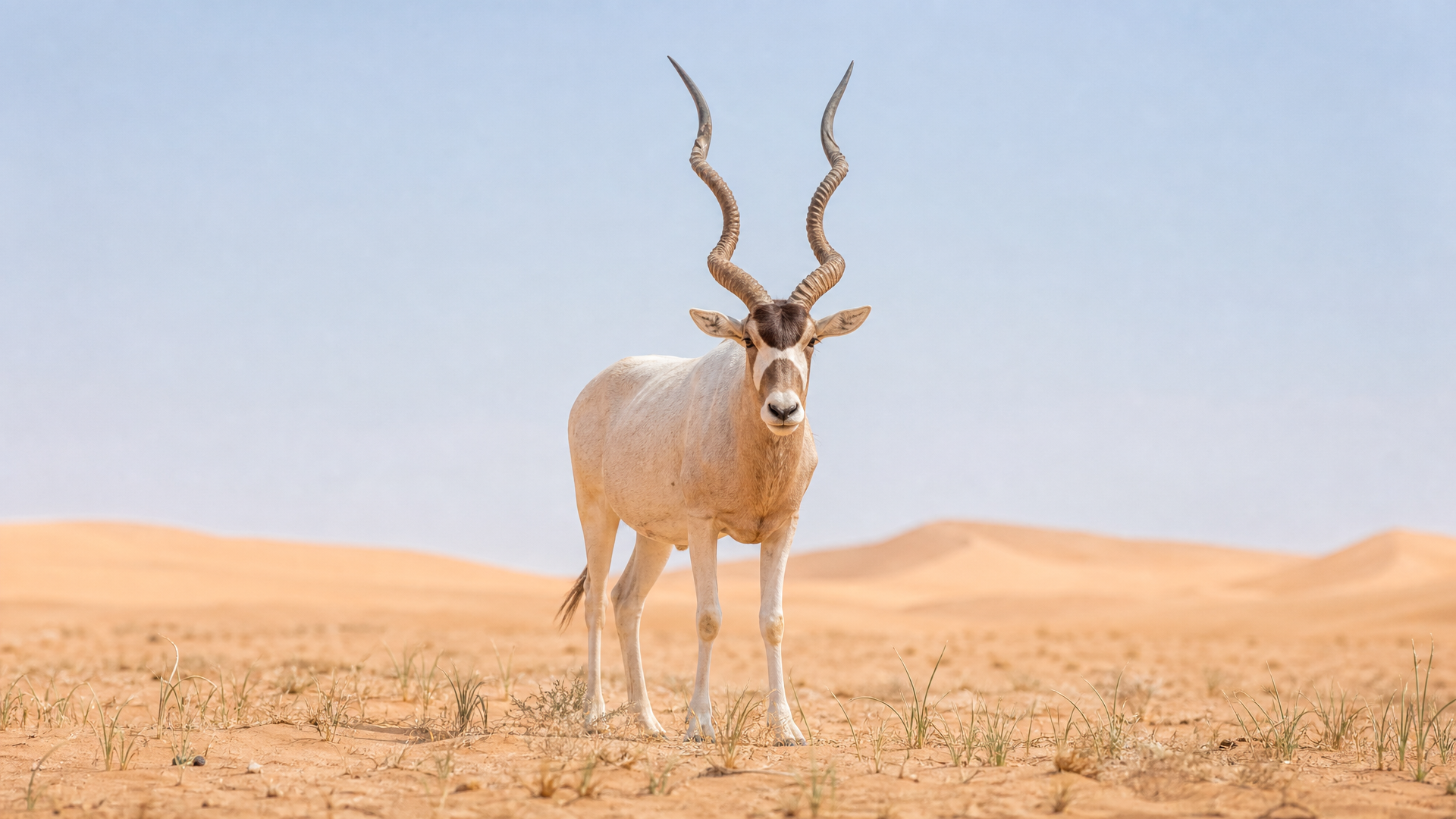
Far out in the desert, where tracks may last for days unless the wind rises, a pale antelope stands with its head lowered against the glare. The horns twist upward in slow spirals, dark against the white heat. Around it, there is no shelter large enough to explain how such a body remains.
The addax is the Sahara's great antelope of endurance. Its coat seems to reflect the sun; its broad hooves spread weight over soft sand; its movements carry the patience of an animal that may travel far between brief greenings. A herd crossing open country does not hurry unless it must. It drifts, pauses, turns into the wind, and follows the faint promises left by rain. There is a solemn elegance to those corkscrew horns, but the deeper beauty is practical: a body shaped to live where abundance arrives rarely and must be recognized at once.
For North Africa, the addax is both emblem and warning. It carries the memory of a Sahara where large antelopes still moved across vast spaces, tying dunes, plains, and scattered pasture into one living range. Hunting, drought, disturbance, and shrinking refuge have pushed it close to disappearance in the wild. When an addax stands in the heat shimmer, it looks almost ghostly, as if the desert is remembering itself.