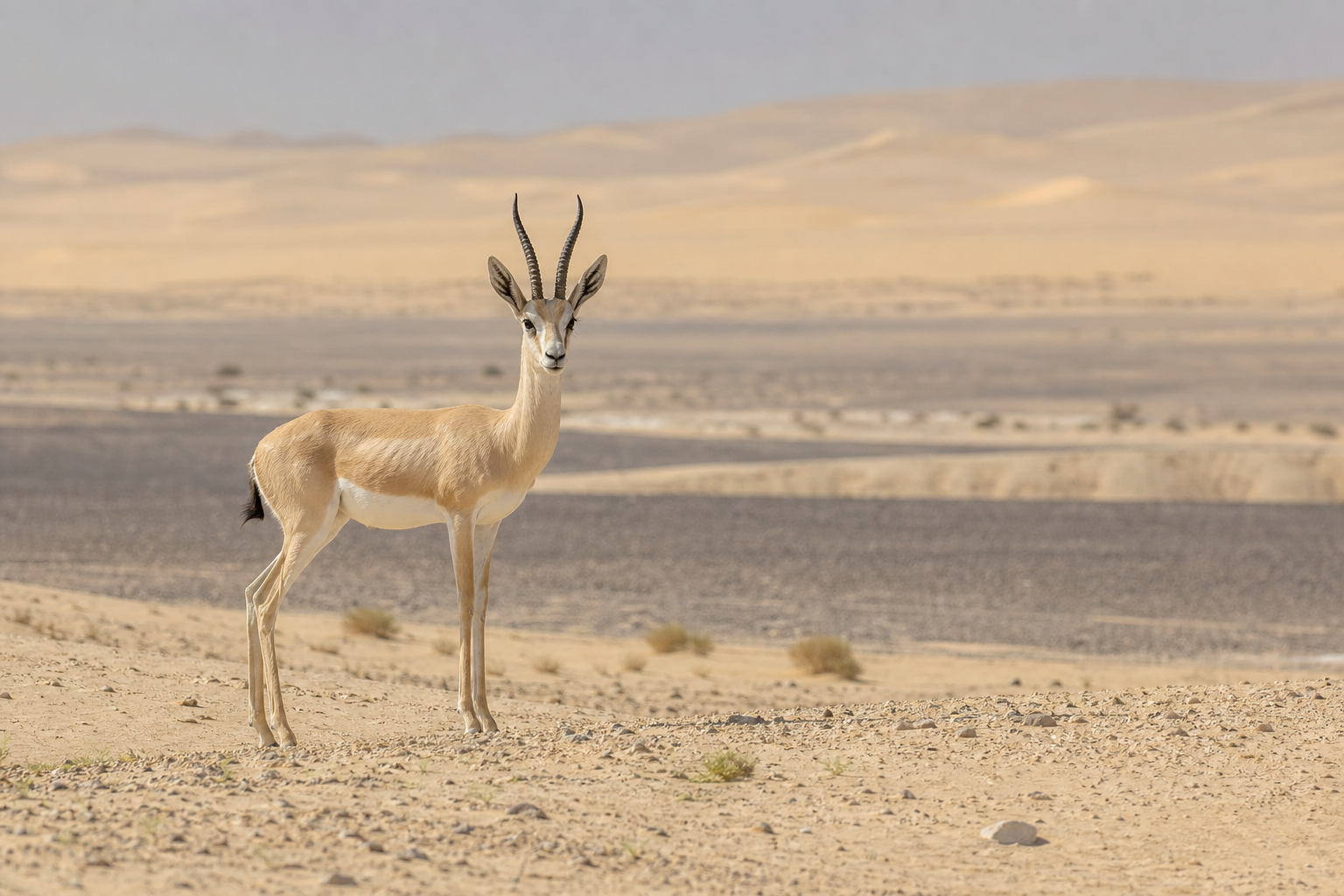
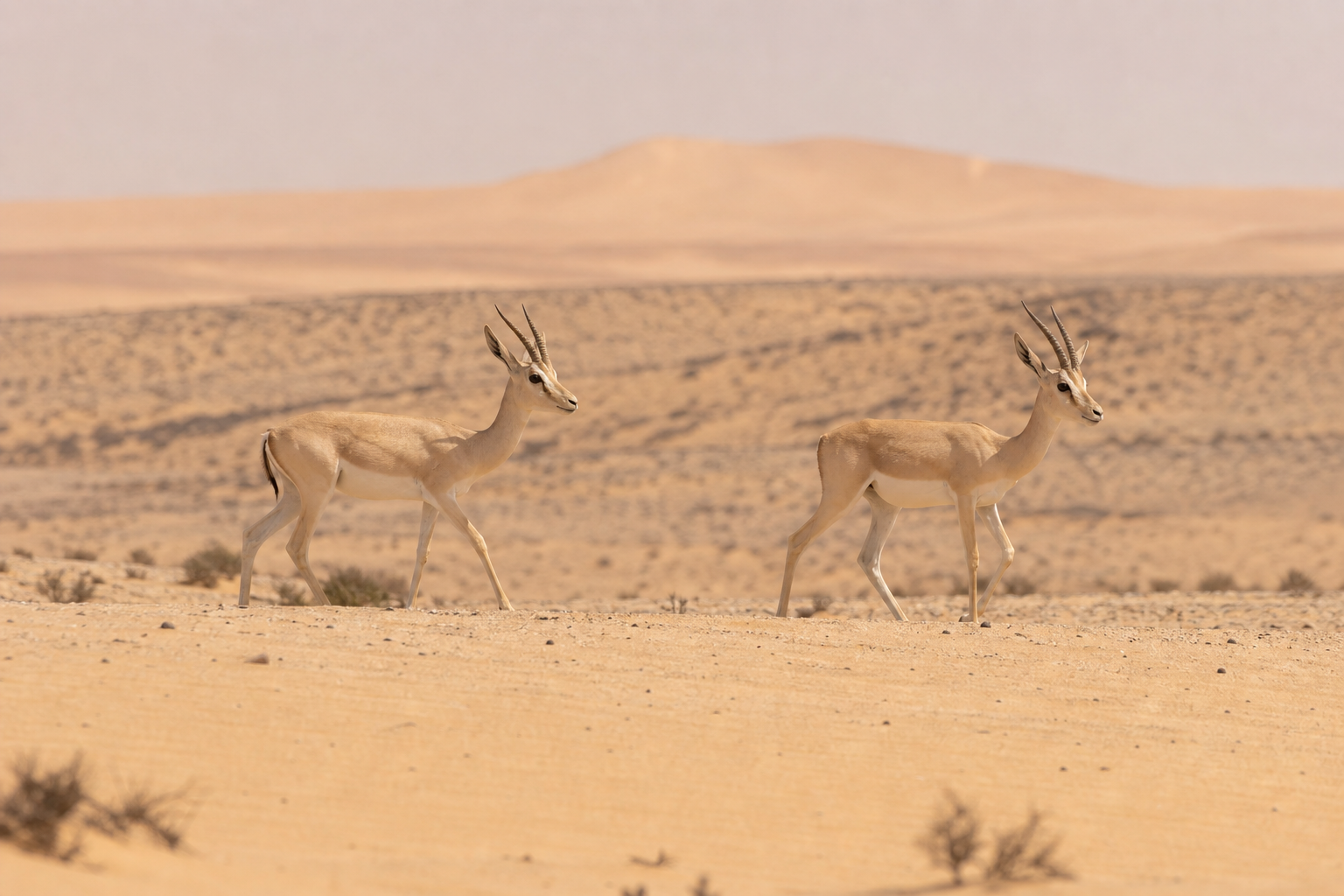
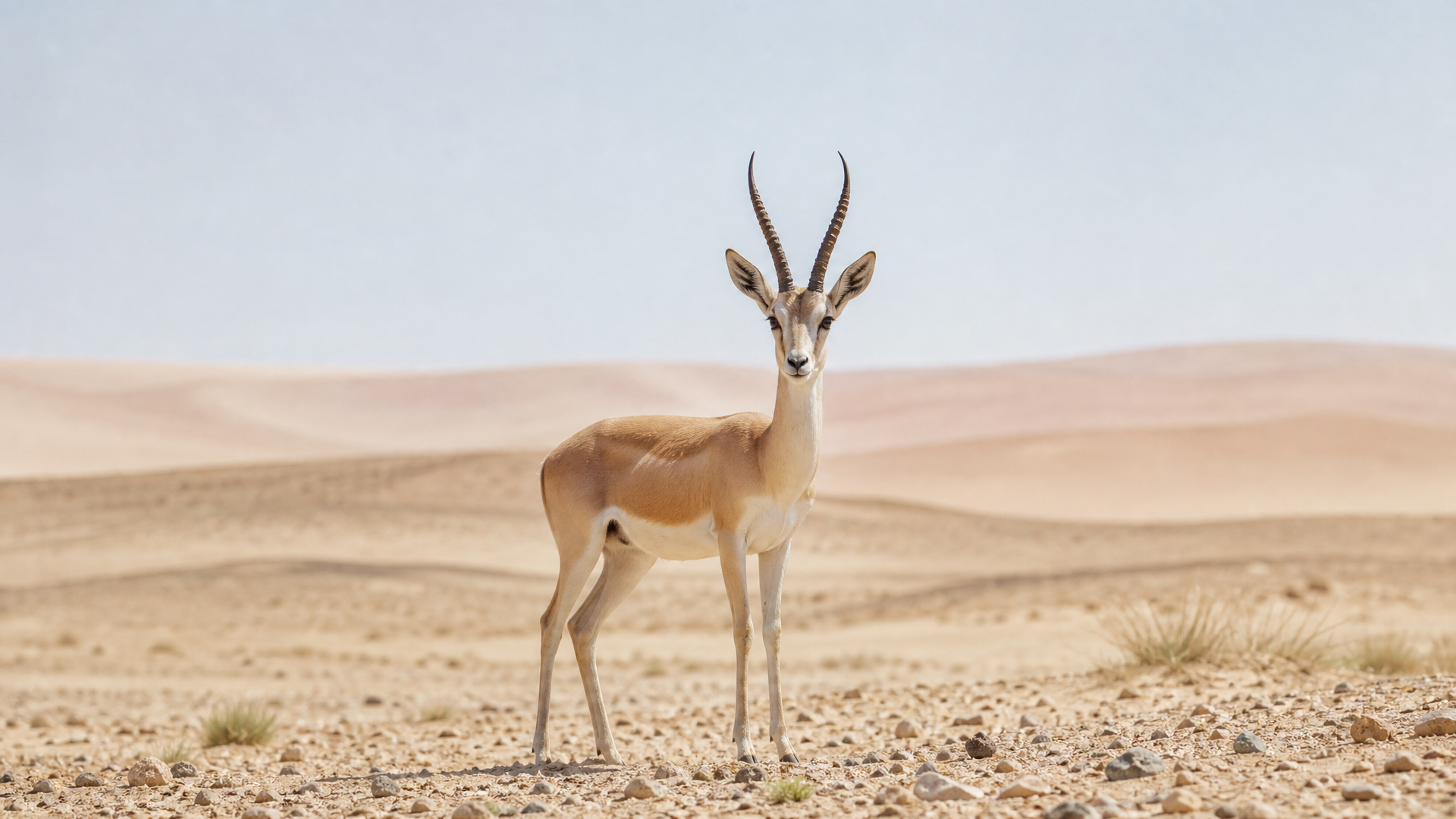
In the great sand seas, light has almost no edge. Dune passes into dune, and the horizon trembles until distance feels unreal. Against that pale world, a gazelle appears so lightly colored that it seems made from the same wind and sand, its horns rising thin and dark above the brightness.
The slender-horned gazelle is not simply another desert gazelle. It is one of the Sahara's most refined answers to open sand. The body is pale, the face softly marked, the legs precise as it moves over dunes and firm flats where shade is brief and cover nearly absent. It does not have the heavier presence of the addax or the wider dryland familiarity of the dorcas. Its gift is a kind of vanishing: standing in plain sight and becoming difficult for the eye to hold. When it runs, the dunes seem to loosen and flow with it.
This animal represents the Sahara at its most austere. It speaks for the ergs and gravel basins, for landscapes that look empty because so few creatures can afford to be visible there. Its numbers have fallen under hunting, disturbance, and the breaking of desert refuges into smaller islands of survival. A pale gazelle crossing pale sand is easy to miss. That is part of its power, and part of its peril.