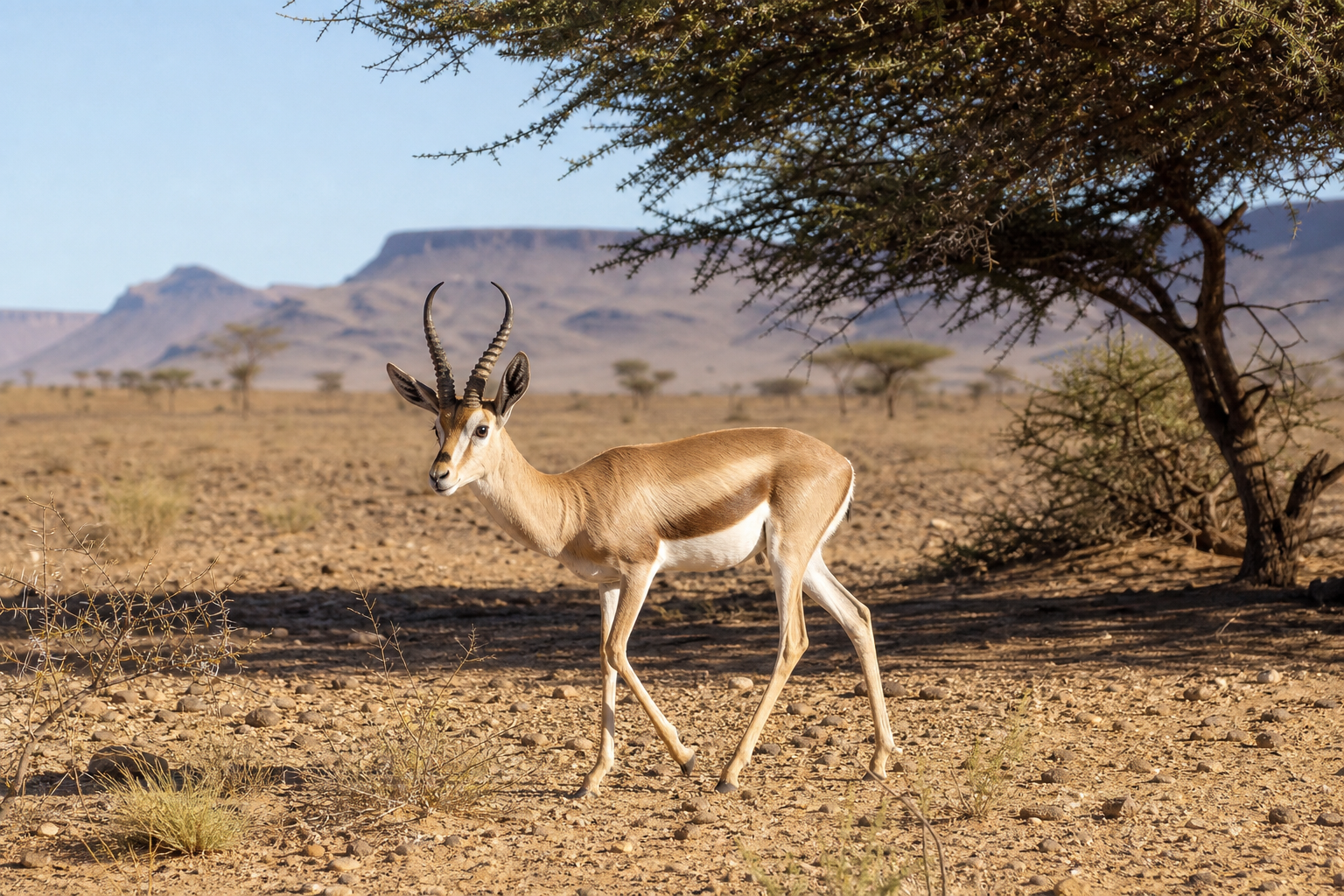
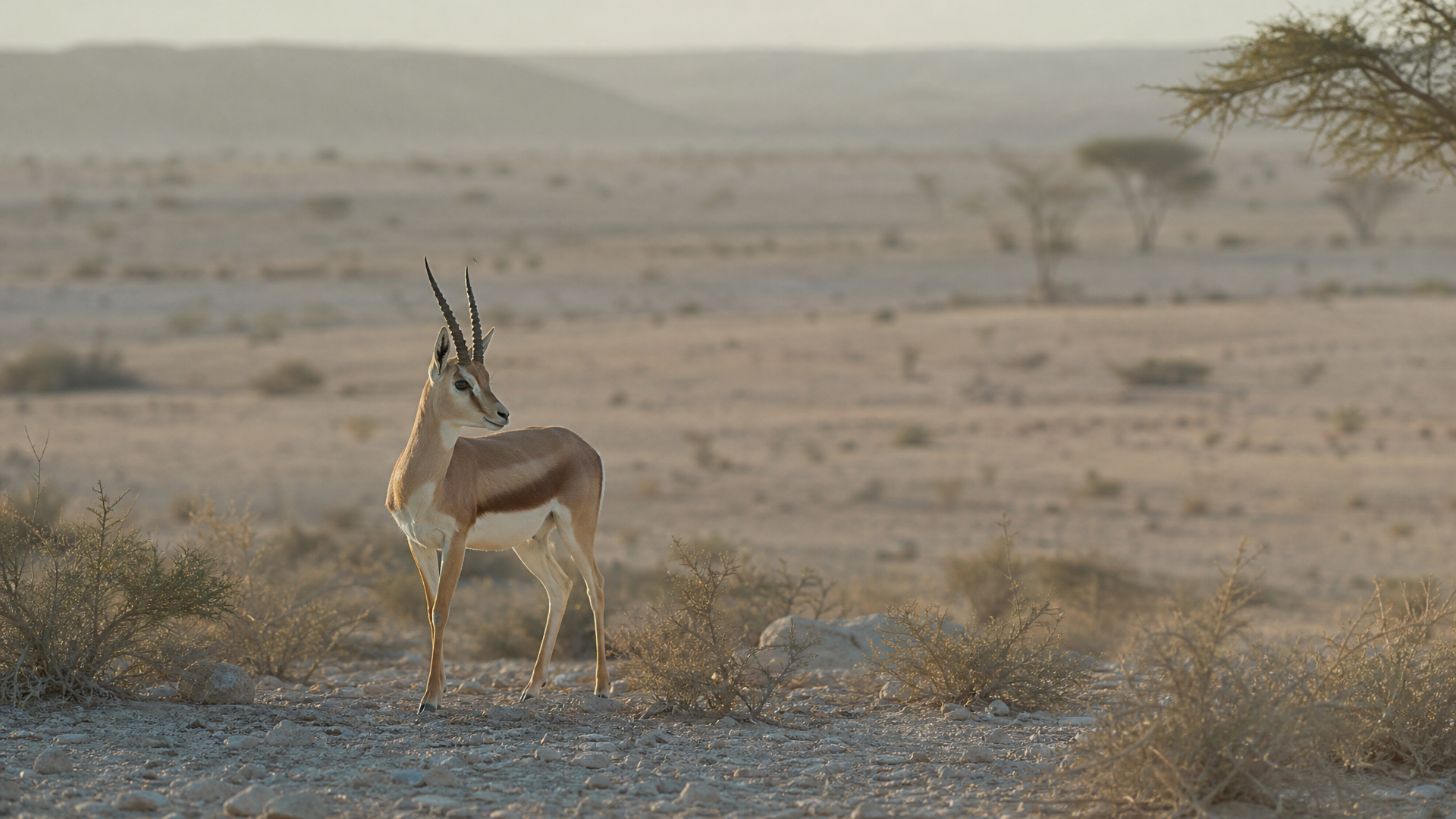
Before the sun becomes severe, a small gazelle moves across the desert plain with the delicacy of a flame. Its hooves touch the ground lightly, then lift again, leaving almost nothing behind. Around it, acacia shadows are thin, the air already bright, and every open yard must be read.
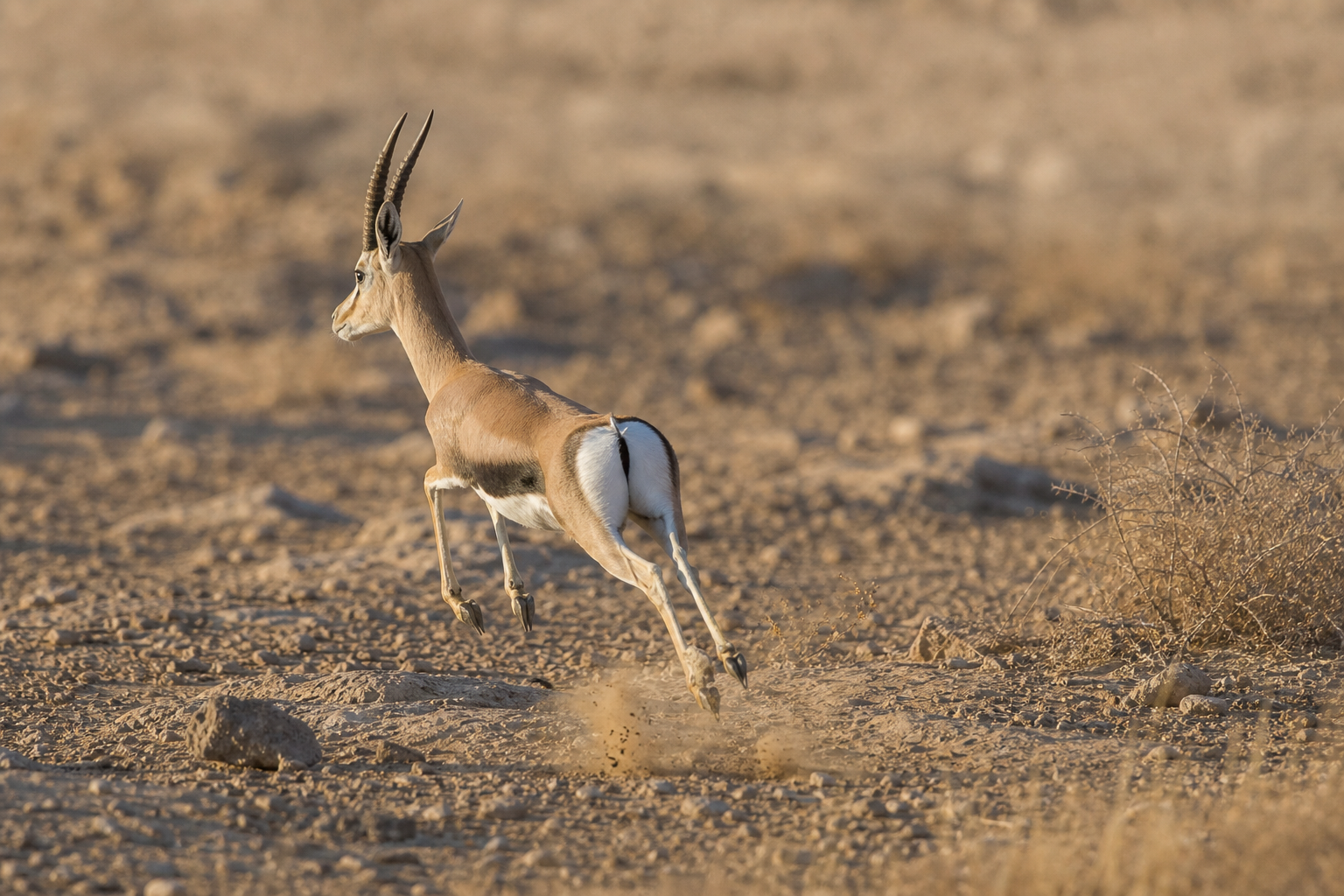
The dorcas gazelle is the everyday grace of North Africa's drylands, though nothing about its life is easy. It travels through heat with a body made for restraint: small, fine-boned, alert, able to draw what it needs from sparse country and keep moving when water is only a memory held in plants. A group spreads across a wadi floor, heads lowering and rising in rhythm. One animal stots, white rump flashing, and the message passes instantly through the others. In such exposed country, beauty and vigilance are the same act.
Where the slender-horned gazelle tells the story of pale dune specialization, the dorcas tells the broader Sahara and Sahel story: mobile, water-sparing, familiar to desert edges from Morocco to Egypt and southward where sand gives way to grass. Hunting, disturbance, and competition have reduced many populations, yet a dorcas on the horizon still makes the empty country feel inhabited, measured, alive.