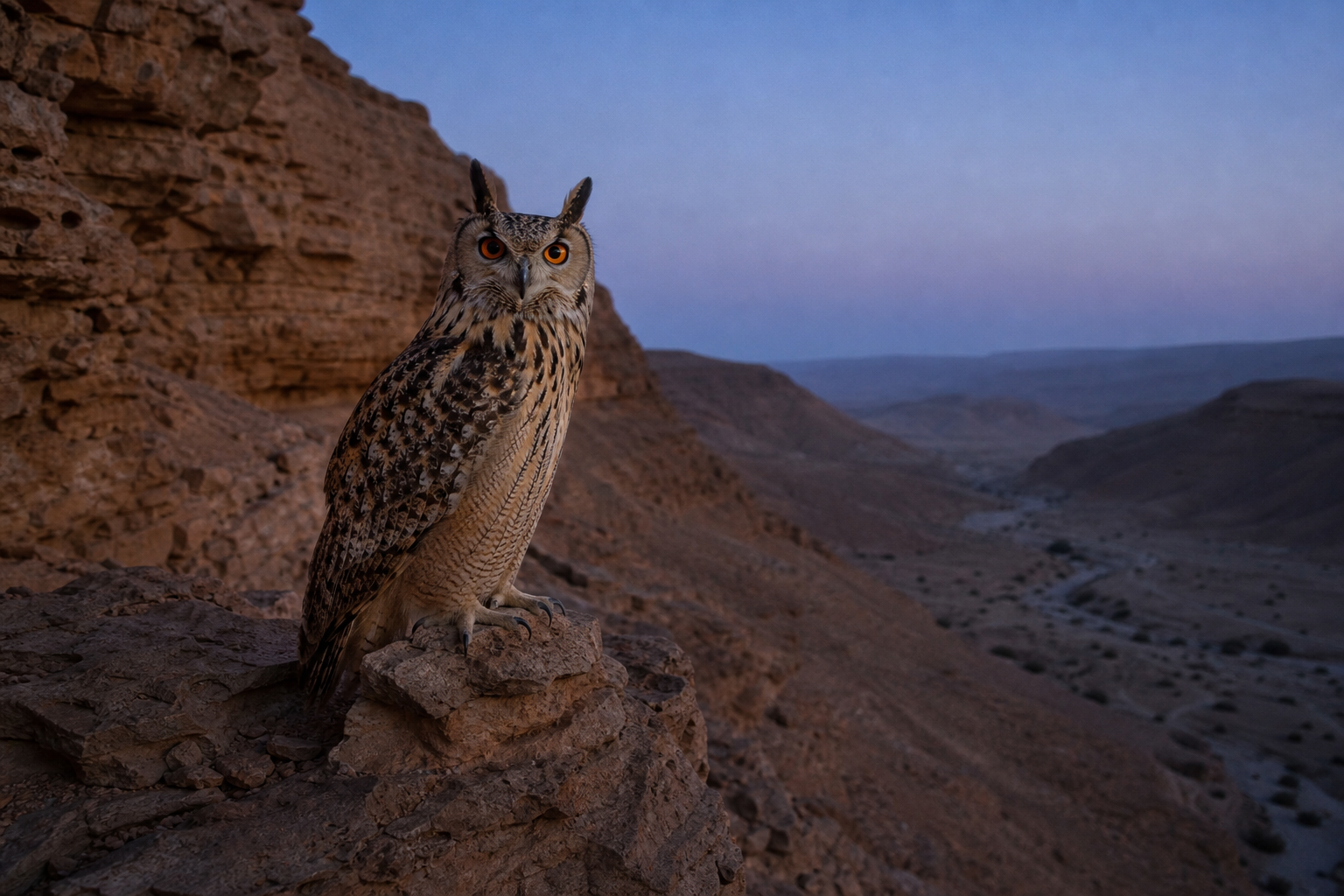
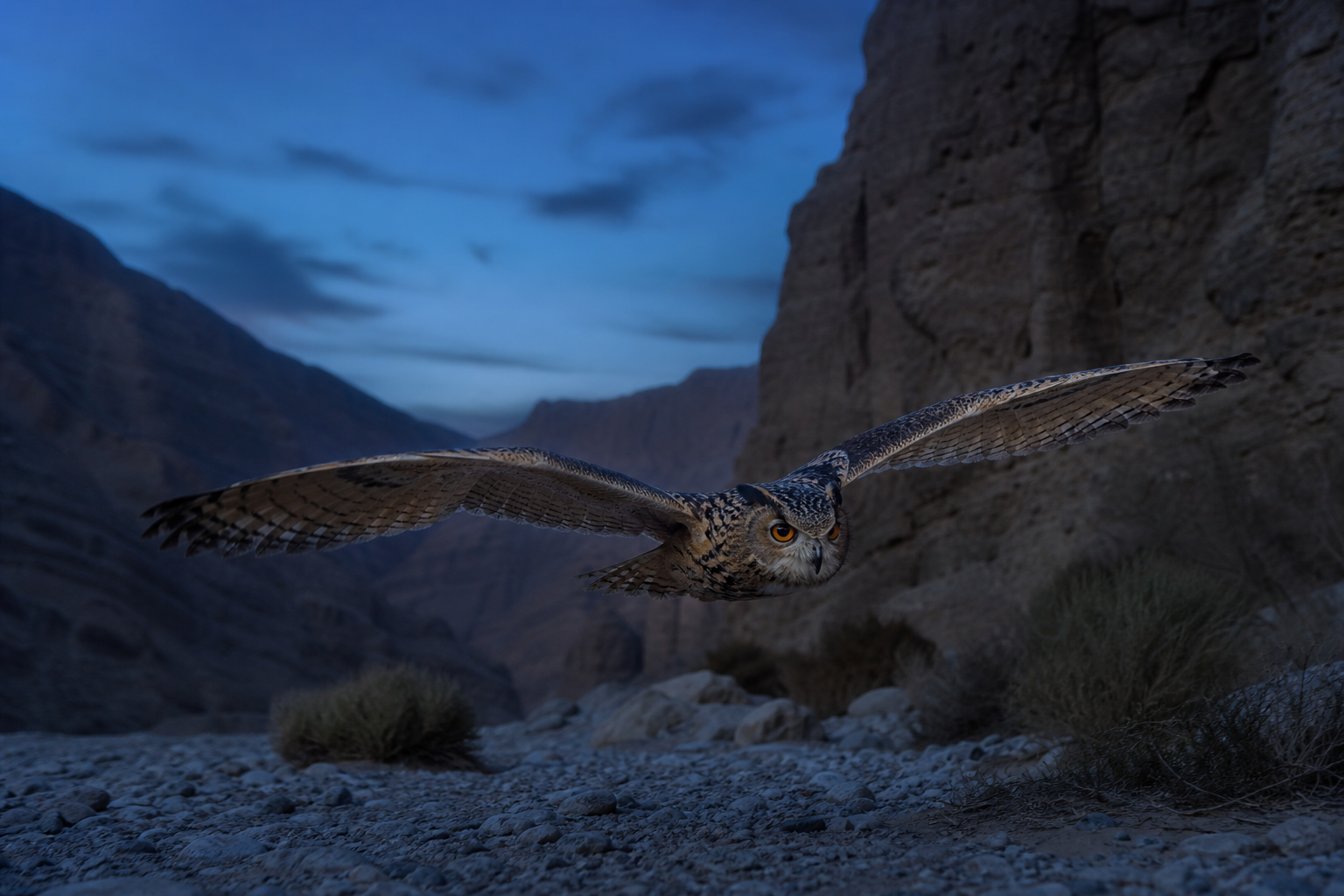
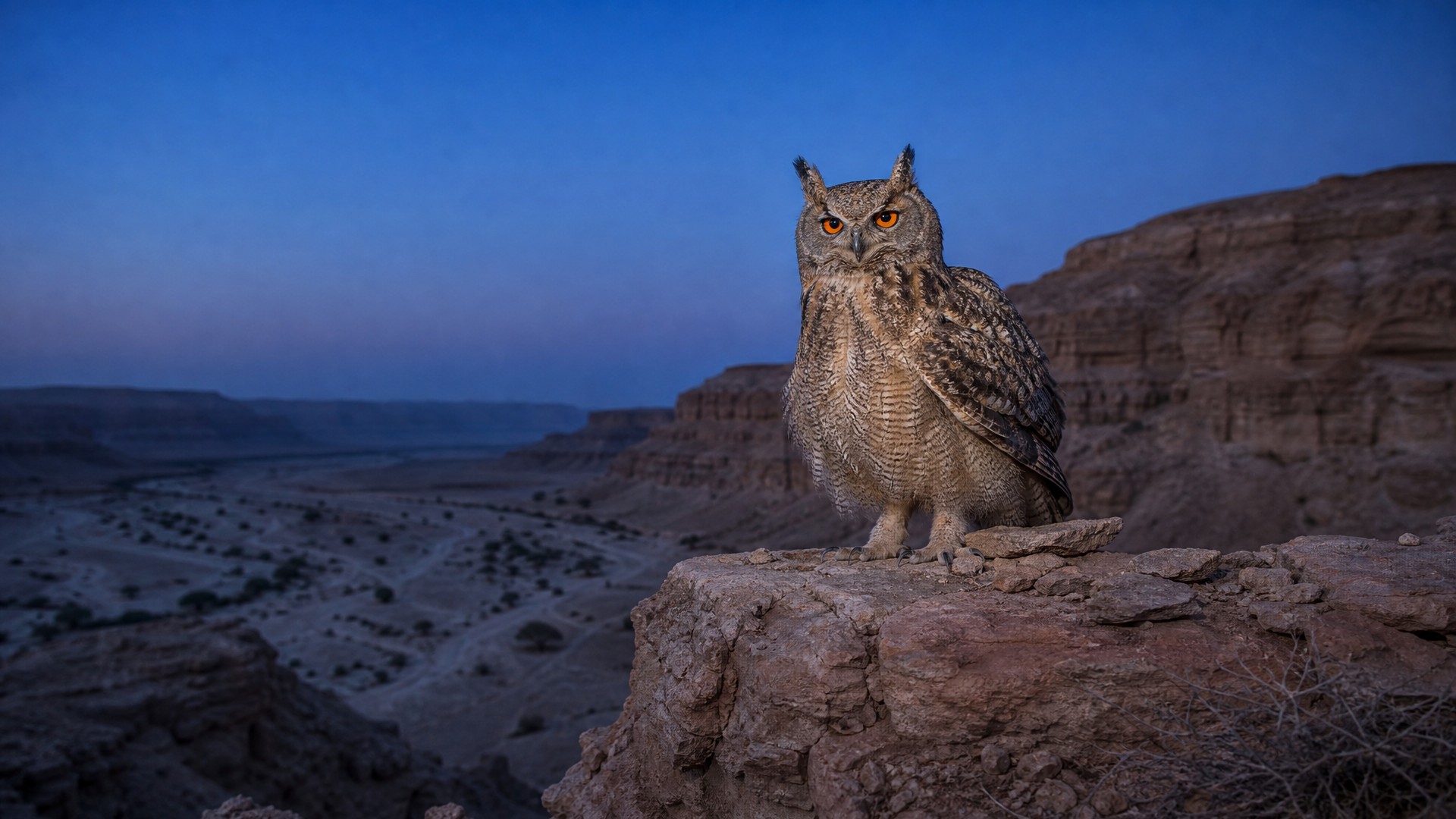
Dusk gathers on the desert cliffs, and the last heat lifts from the rock in wavering threads. Somewhere above a dry valley, a shape separates from the ledge. Broad wings open without hurry. The owl drops into the blue hour, and the small lives of the wadi grow suddenly more careful.
The Pharaoh eagle-owl brings a watching presence to North Africa's night. By day it can look like stone: mottled, still, tucked into shade with orange eyes half-lidded against the sun. At night those eyes become the center of the animal. It listens from cliffs, ruins, and rocky slopes, then flies low and soft through open darkness. There is power in it, but not waste. A turn of the head, a lift from the perch, a glide over gravel and scrub: each movement seems measured against the cost of heat, distance, and hunger.
Its name carries old Nile and desert echoes, but the bird itself belongs to living North Africa, from arid hills to oasis edges and steppe. It breaks the page away from hoof and paw into feather, silence, and night vision. As cliffs are disturbed and prey-rich drylands change around settlements and roads, the owl remains where darkness still has room to work, keeping watch from stone.