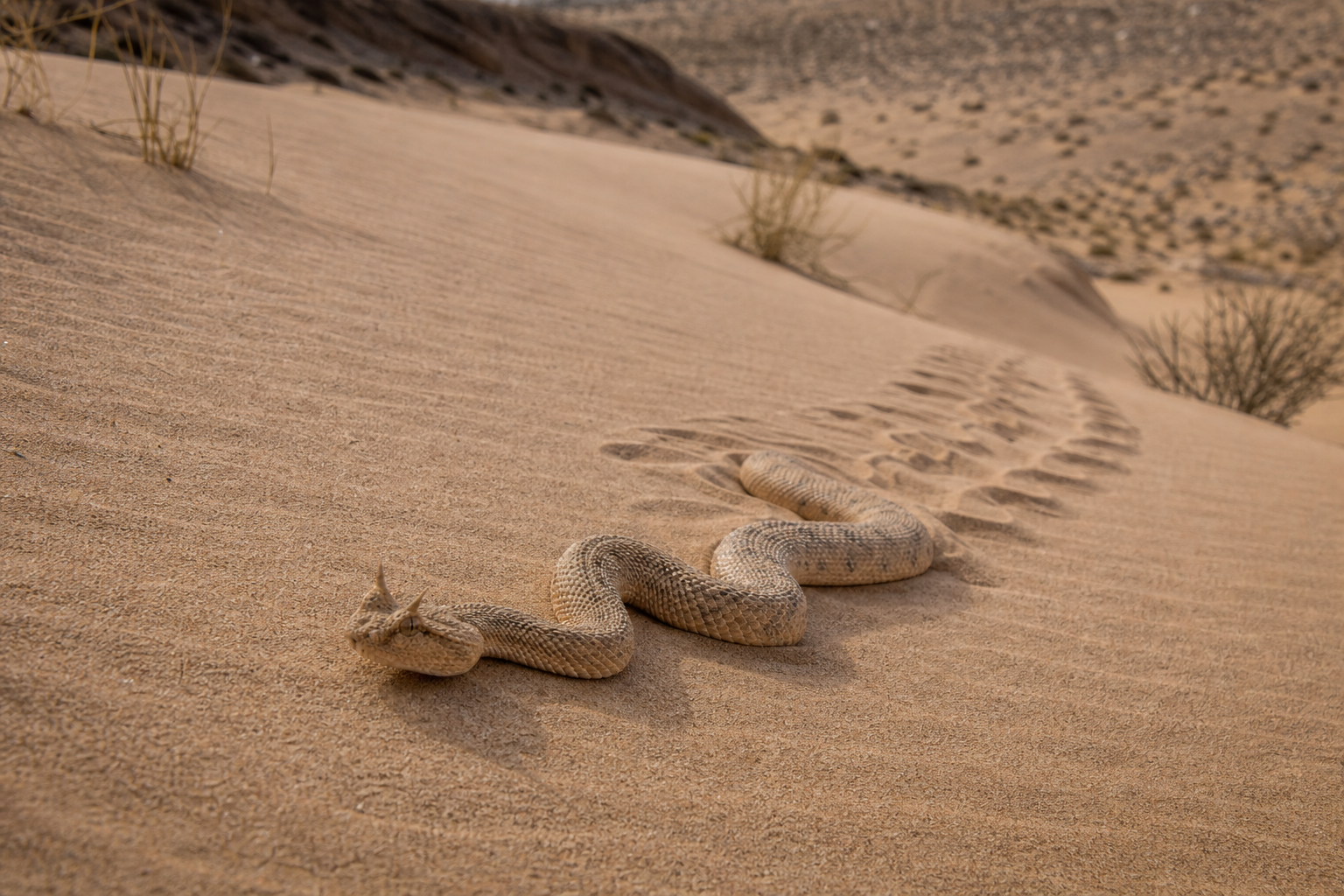
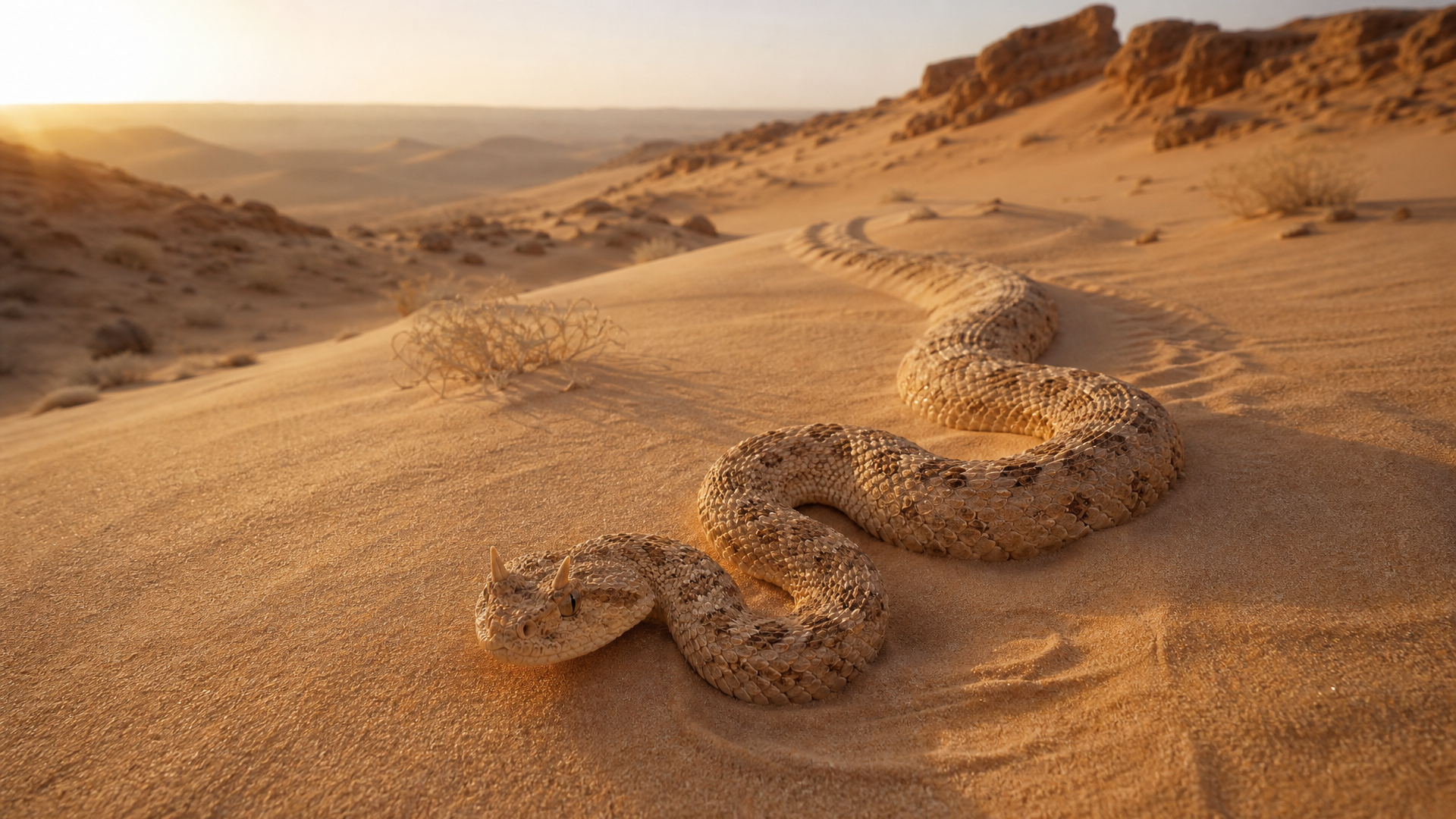
At midday, the dune face looks sealed by heat. Nothing moves except grains sliding in the wind. Then a line appears where there was no line before, a body traveling sideways across the slope, leaving parallel marks like script written by the desert and erased almost as soon as it is made.
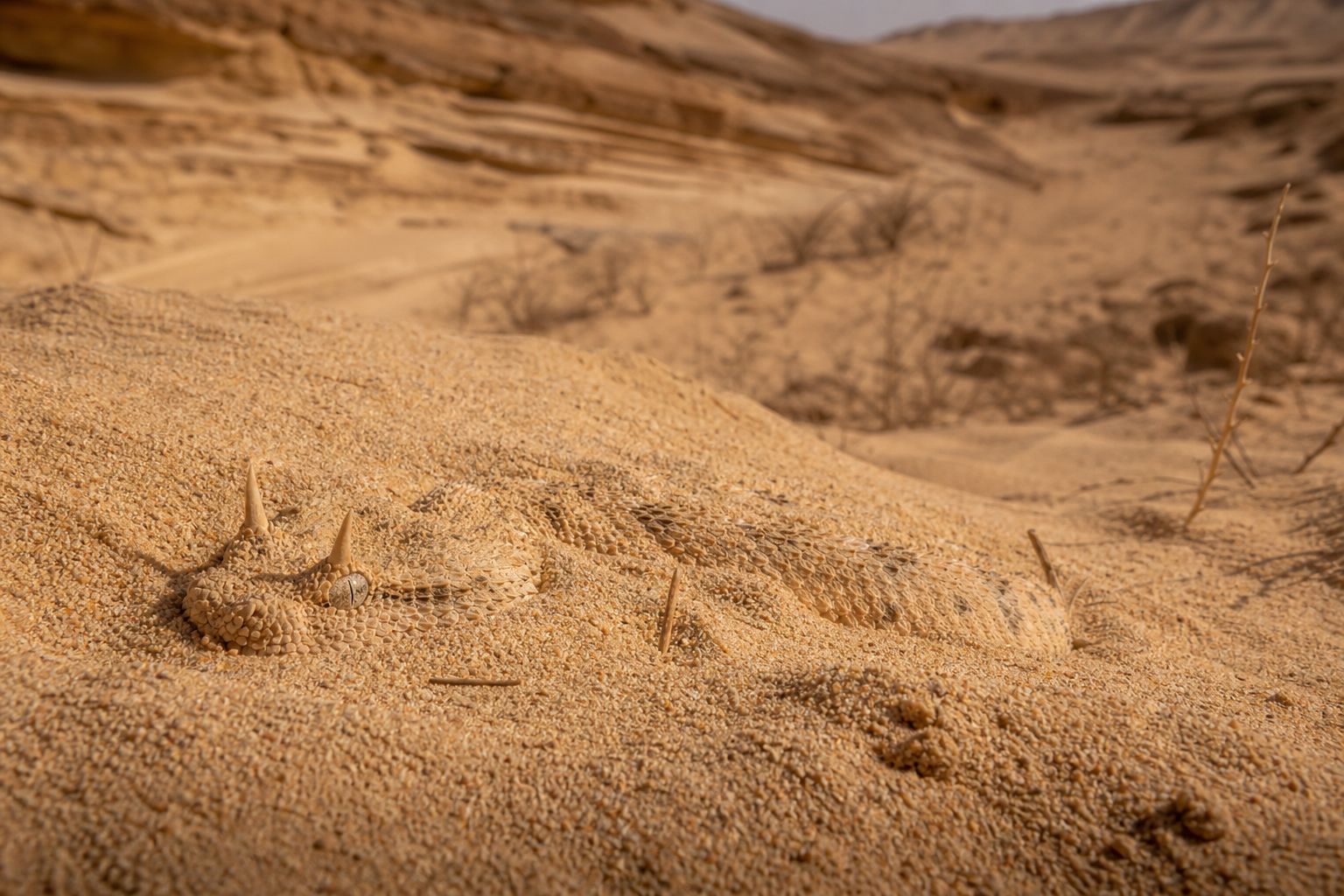
The Saharan horned viper is an animal of patience and sand. It can sink into the surface until only the eyes and horn-like scales remain above the grains, turning itself into a trap so complete that stillness becomes camouflage, shelter, and weapon at once. Its sidewinding is not theatrical; it is practical, a way of crossing loose, hot ground with as little body on the surface as possible. Near a wadi or dune hollow, it waits where night traffic may pass, reading vibration through a world that often seems silent to us.
This snake gives North Africa a reptile that feels made by the Sahara's hand. It belongs to the close scale of the desert: heat against belly scales, wind-polished sand, the tiny decisions of animals moving after dark. Feared and often killed, it nevertheless holds an old place in the dry-country web. The dune may look empty. The viper knows better.