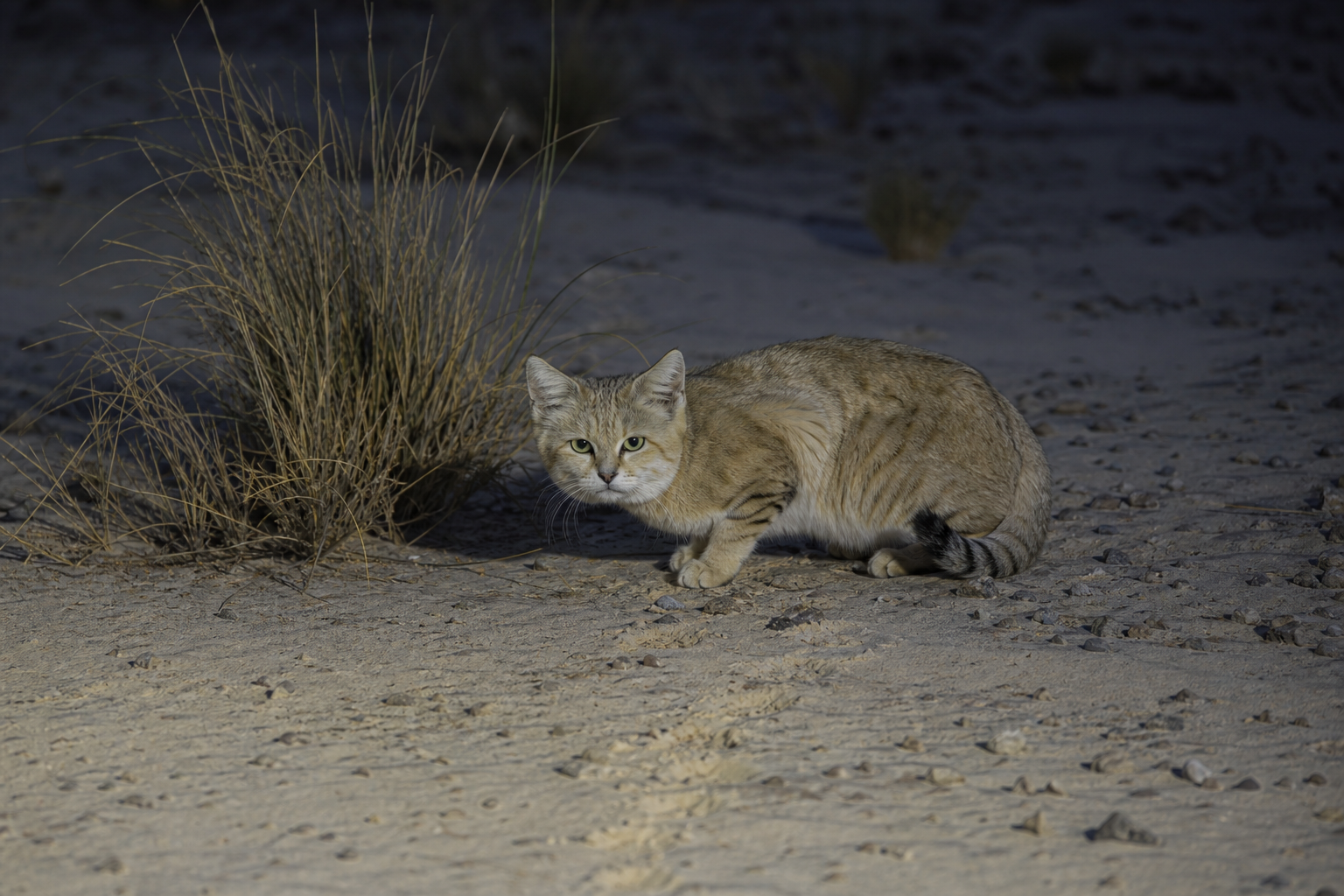
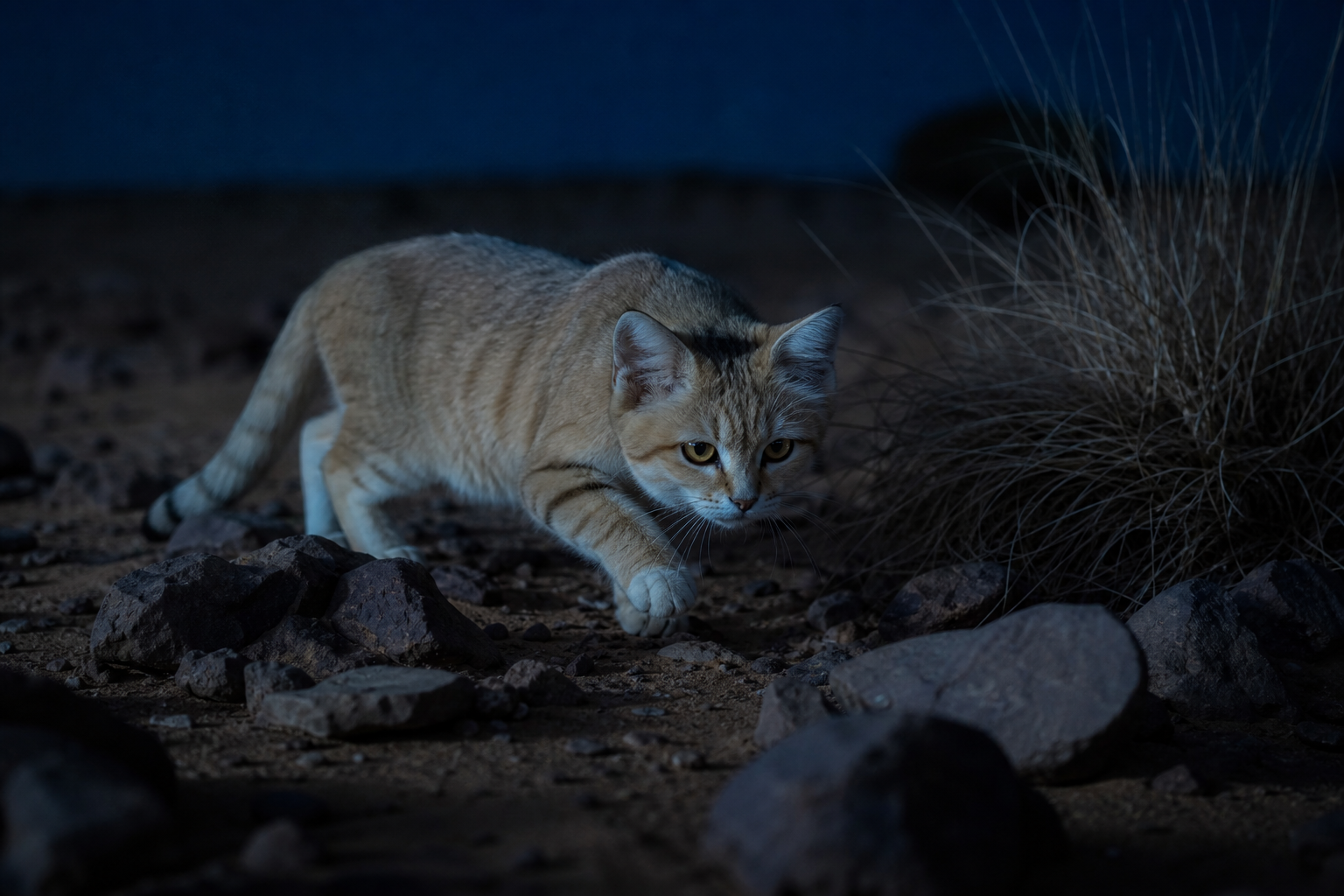
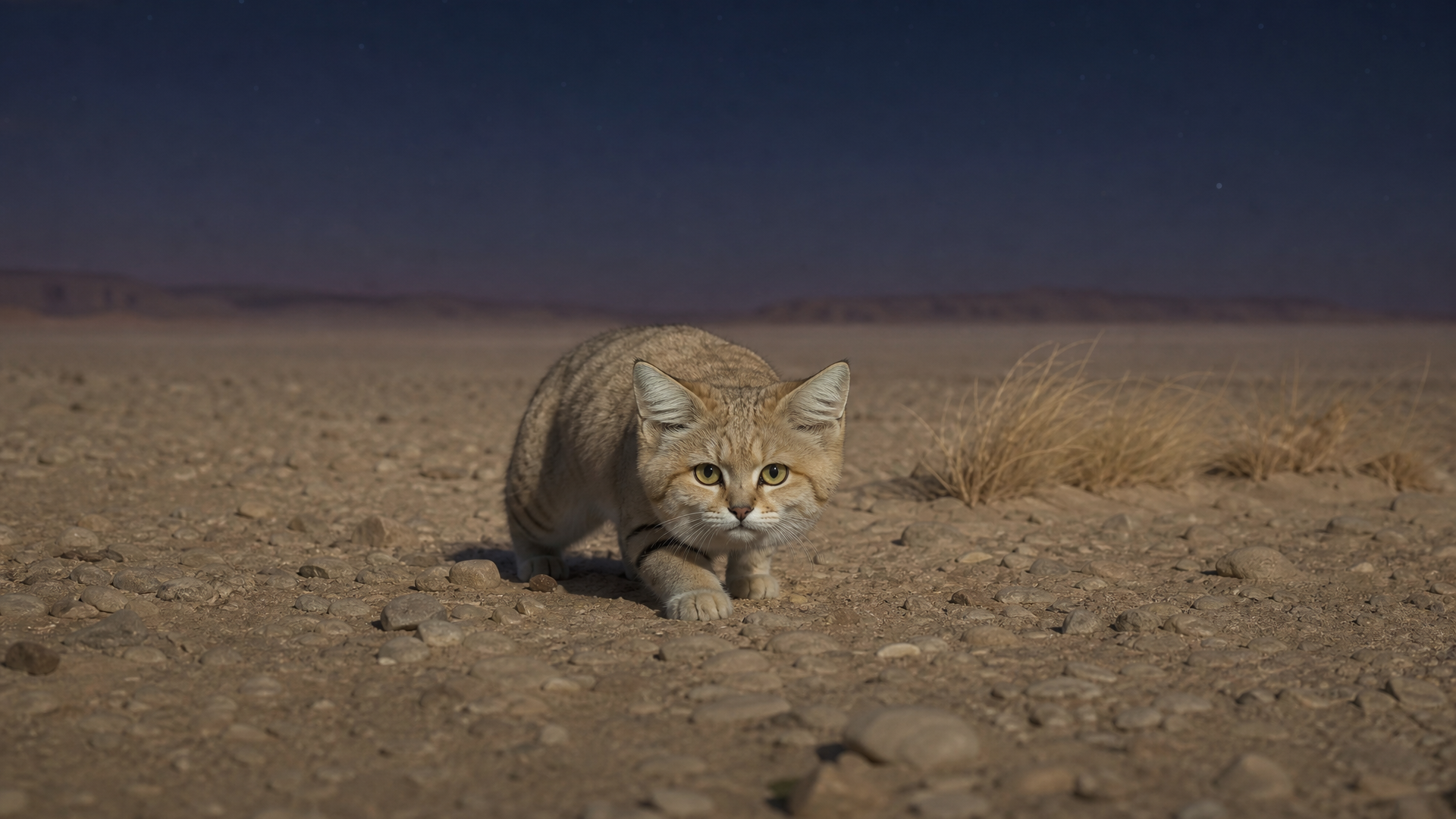
The tracks are there before the cat is. Fine prints cross a flat of pale sand and end beside a low clump of desert grass, where nothing appears to be hiding. Then the shadow under the grass changes shape, and two amber eyes open at ground level.
The sand cat is not a miniature version of the savanna cats. It is a desert specialist in the deepest sense: low, quiet, broad-faced, and built for country where shade is temporary and silence carries far. Its paws leave soft marks that wind may erase within minutes. It moves close to the ground, slipping between stones and tufts, waiting, listening, then striking with sudden concentration. Even its stillness has texture. The ears flatten. The body seems to pour into the sand. A human observer can look directly at the place where it rests and see only desert.
In North Africa, the sand cat gives the Sahara a predator scaled to its small lives: the rustle beneath a shrub, the quick body under the crust, the night work that continues when the dunes look empty. It is hard to count, hard to follow, and easily missed in a changing desert. That secrecy protects it, but also hides how little may remain.