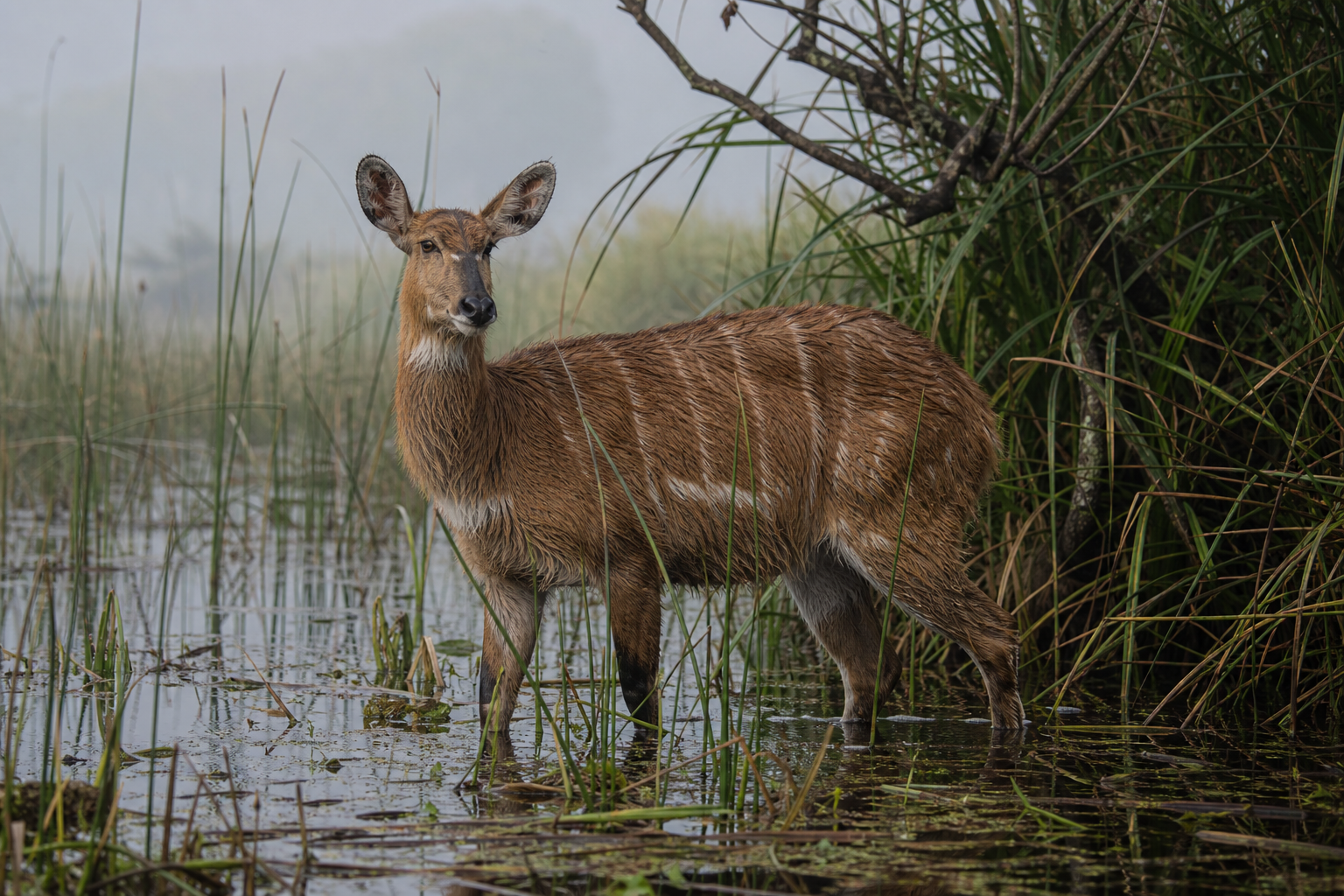
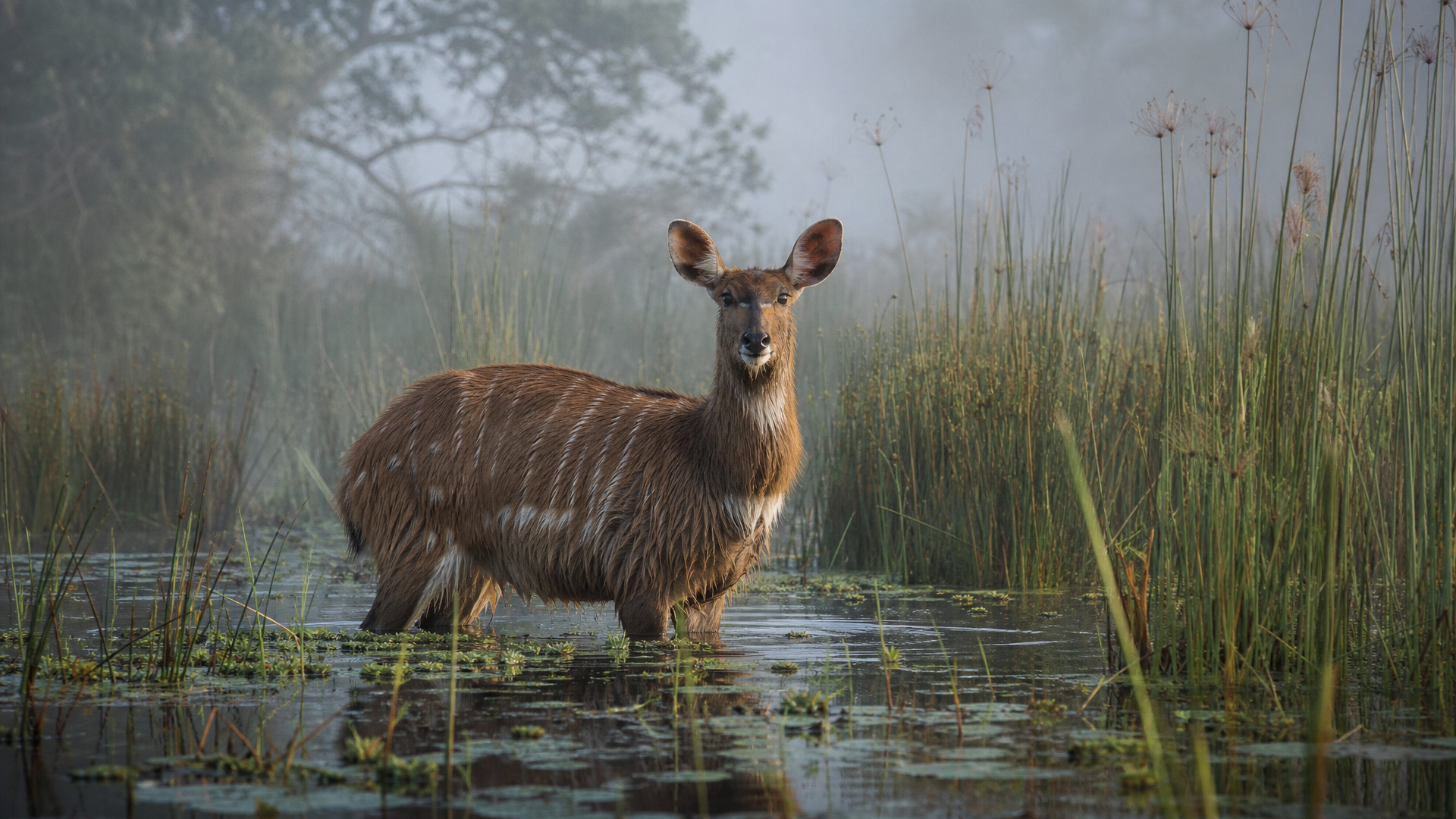
The swamp looks still until the reeds bend without wind. Water trembles around a hidden body. Then a narrow face appears between papyrus stems, ears high, eyes dark, and the sitatunga takes one careful step on ground that would not hold most antelope at all.
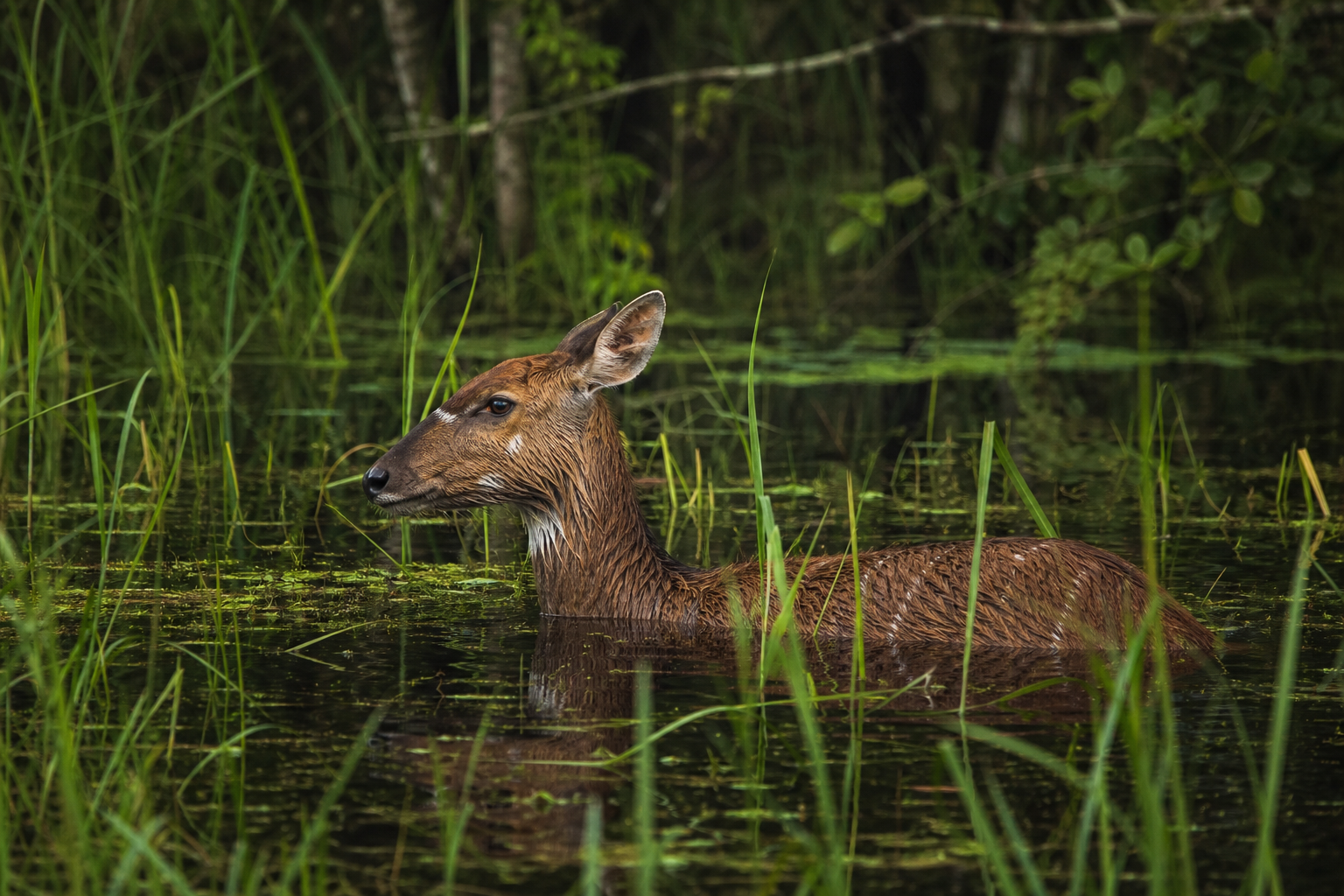
Everything about it is tuned to uncertainty underfoot. The legs seem delicate, but the hooves spread wide in mud and floating vegetation, turning marsh into passage. It slips through reedbeds and flooded edges with a swimmer's caution and a ghost's patience. When alarm rises, it may sink deeper into cover or enter water until only the head remains above the surface, the body held by the swamp it understands better than any pursuer.
The sitatunga gives Central Africa its wetland pulse. The Congo Basin is not only closed canopy; it is also marsh, papyrus, flooded forest, and river country where land and water refuse to stay separate. By feeding, hiding, and moving through those margins, the sitatunga makes the swamp feel inhabited from within. A reed straightens after it passes, and the water keeps the secret.