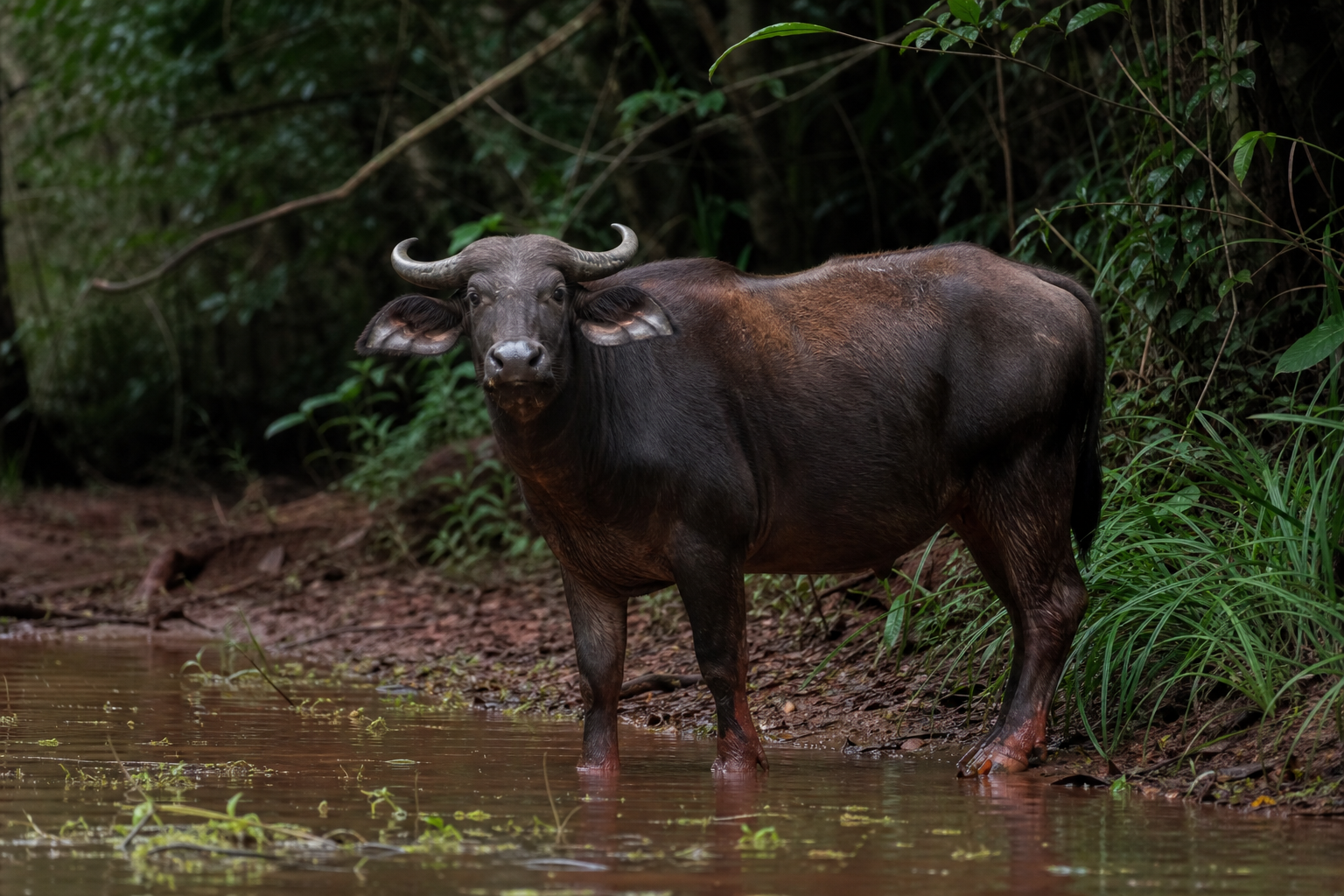
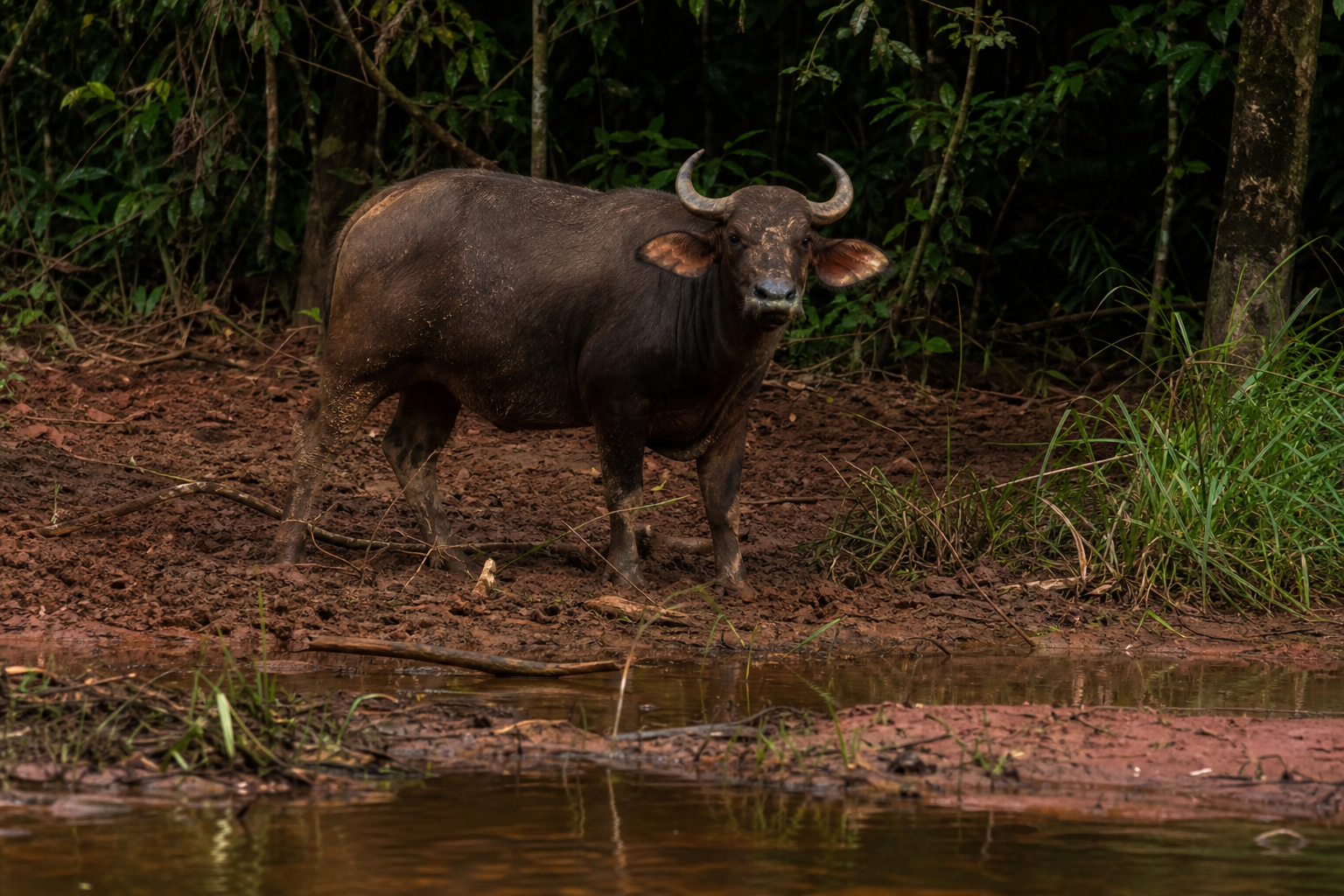
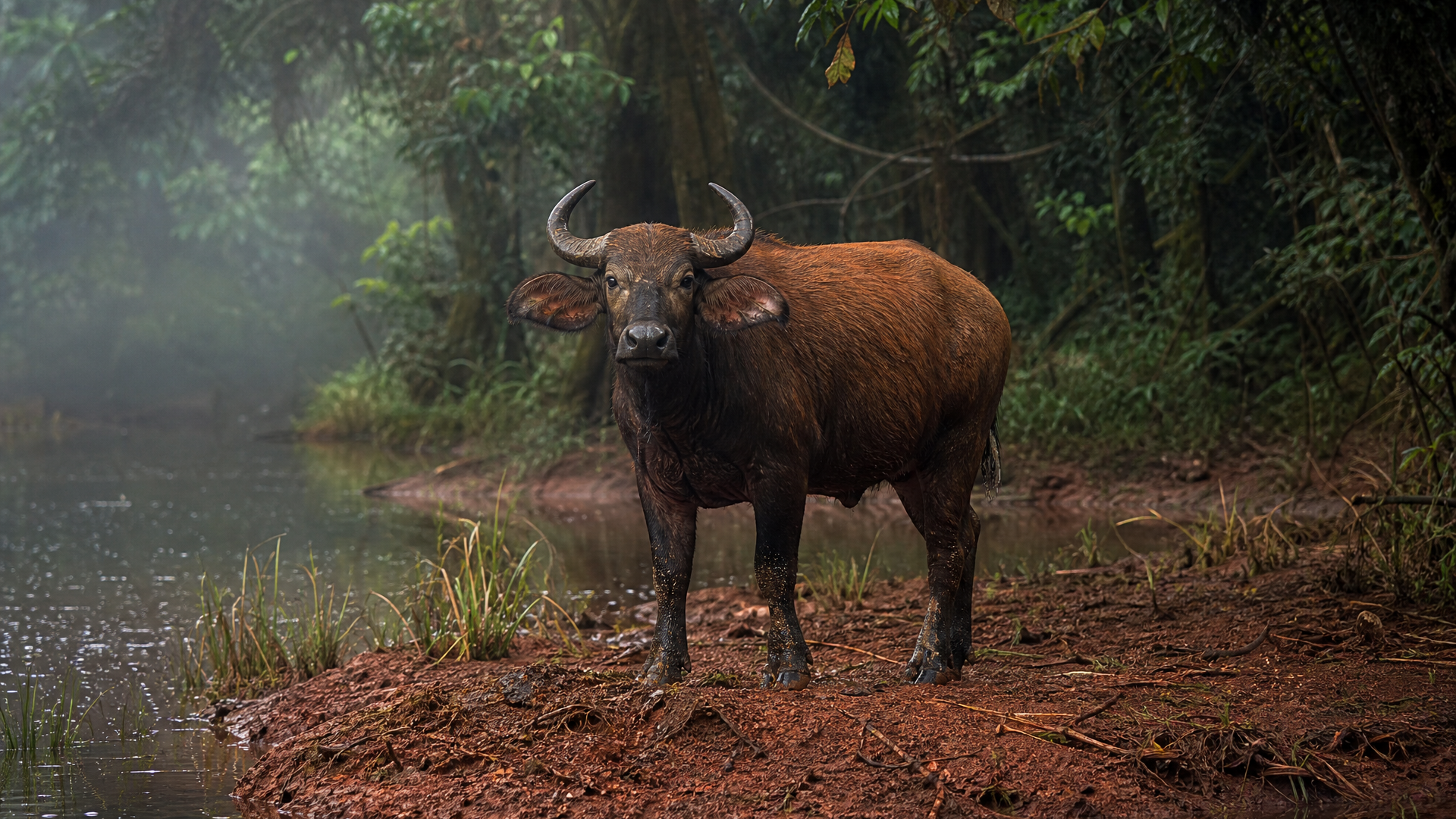
At the river edge, red mud shines on dark hooves. A small herd stands half in water, half in shade, their bodies lower and more compact than the buffalo of open savanna. One animal lifts its head, ears spread wide, and the stare that comes from the forest is no less serious for being smaller.
Forest buffalo carry the familiar buffalo shape into a different world. Their coats can glow reddish in young animals and darken with age. Horns curve back rather than forming the great heavy boss of the savanna form. They move between clearings, swampy margins, and shaded paths with blunt confidence, cropping, wallowing, and watching. Oxpeckers may ride their backs; calves stay close where the group can close around them.
They represent Central Africa because they show how the forest remakes even a well-known African animal. Here, mass must fit between trunks. Vigilance belongs to shadow. Their grazing and movement keep clearings open and link river edges to deeper cover. If they are named only as African buffalo, the story blurs. As forest buffalo, they become one of the Congo Basin's grounded, watchful presences.