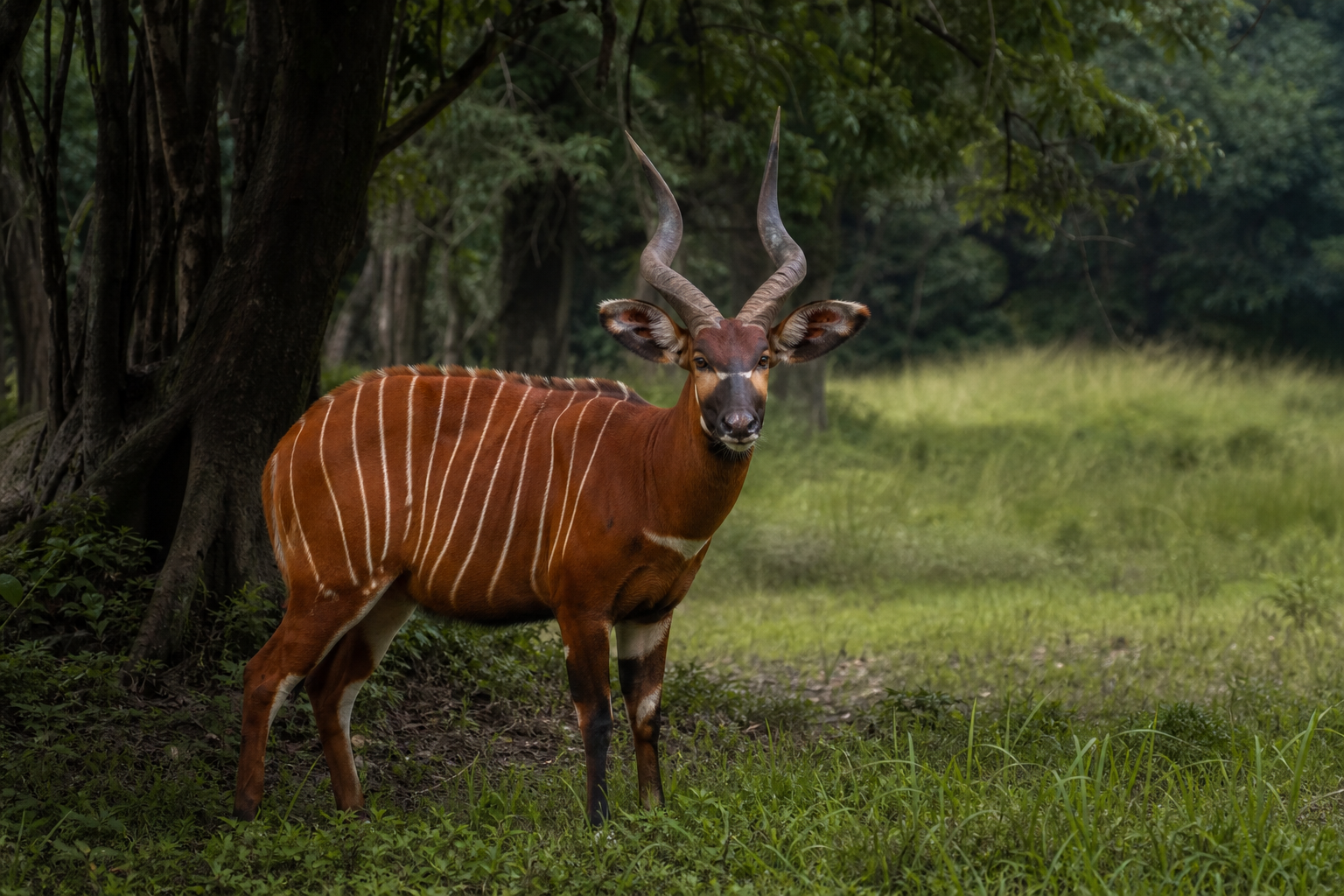
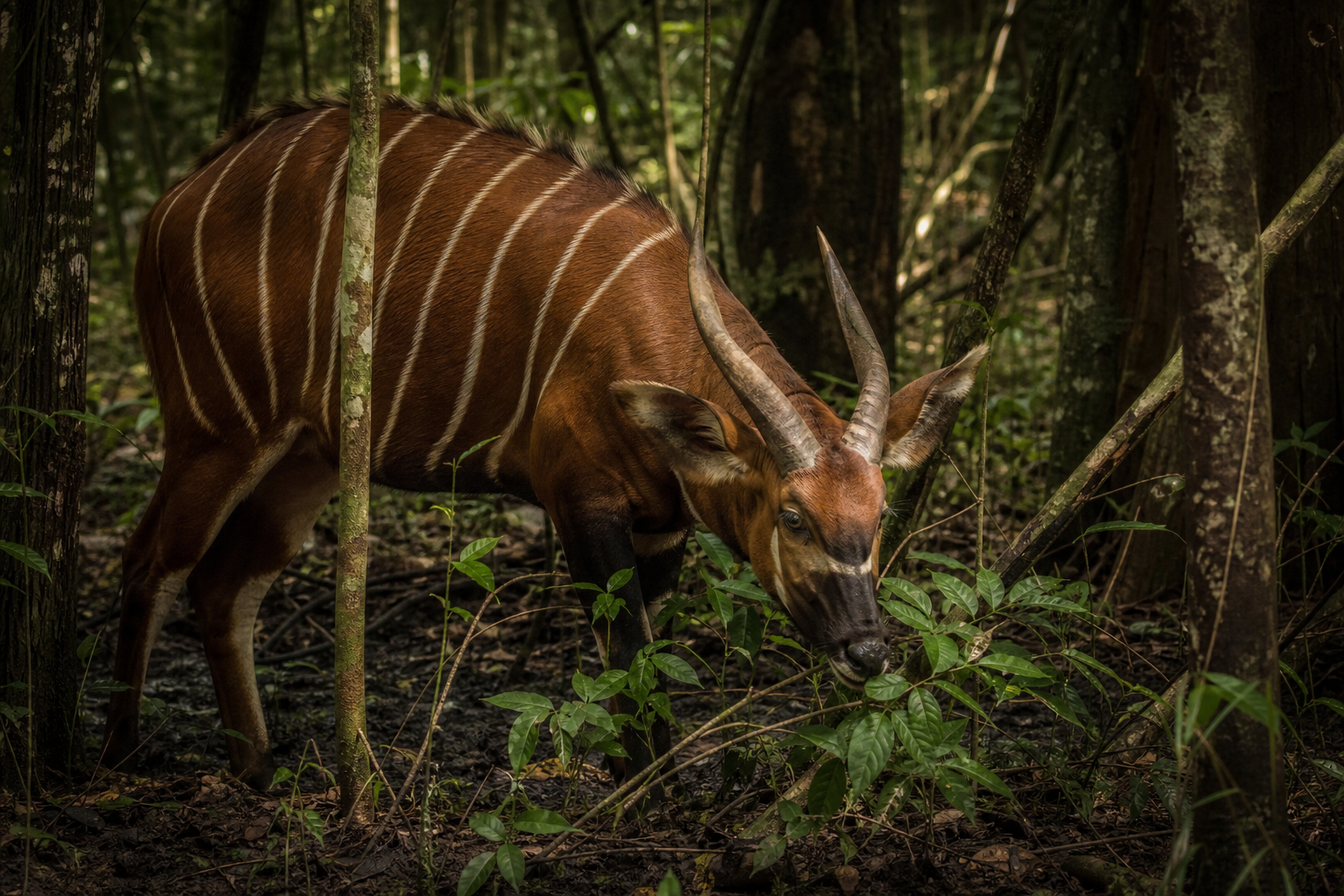
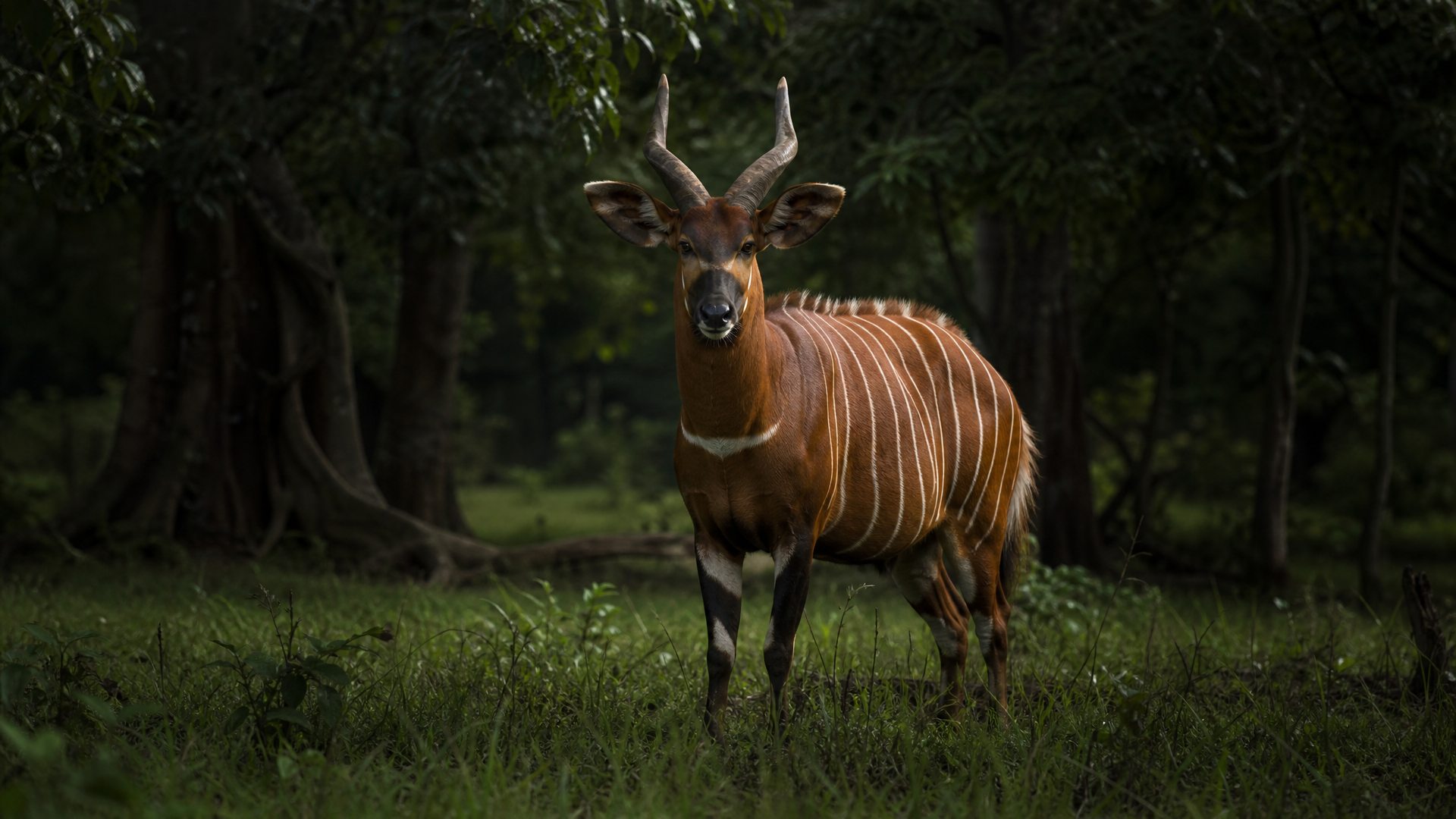
In a lowland forest clearing, the grass parts before the animal is fully visible. First come pale stripes, then a chestnut flank, then spiral horns rising through shadow like carved wood. The bongo pauses at the edge, every sense turned outward, and the clearing seems to wait for permission to continue.
This antelope is large, but it does not carry the open confidence of plains grazers. Its body is built for passing through cover: head low, ears wide, horns angled to slip between stems. The stripes break its shape into shafts of light and trunk shadow. It feeds with care, then lifts its head quickly, reading scent, sound, and the subtle wrongness that can move through a forest before danger becomes visible.
The bongo gives Central Africa a hoofed animal that belongs under canopy. It keeps the chapter from becoming only apes and elephants, reminding us that the Congo Basin also holds shy giants of the understory. In clearings and forest-savanna mosaics, it trims growth, moves seeds, and leaves delicate tracks for such a heavy body. Then the horns tilt, the stripes turn, and the forest takes it back.