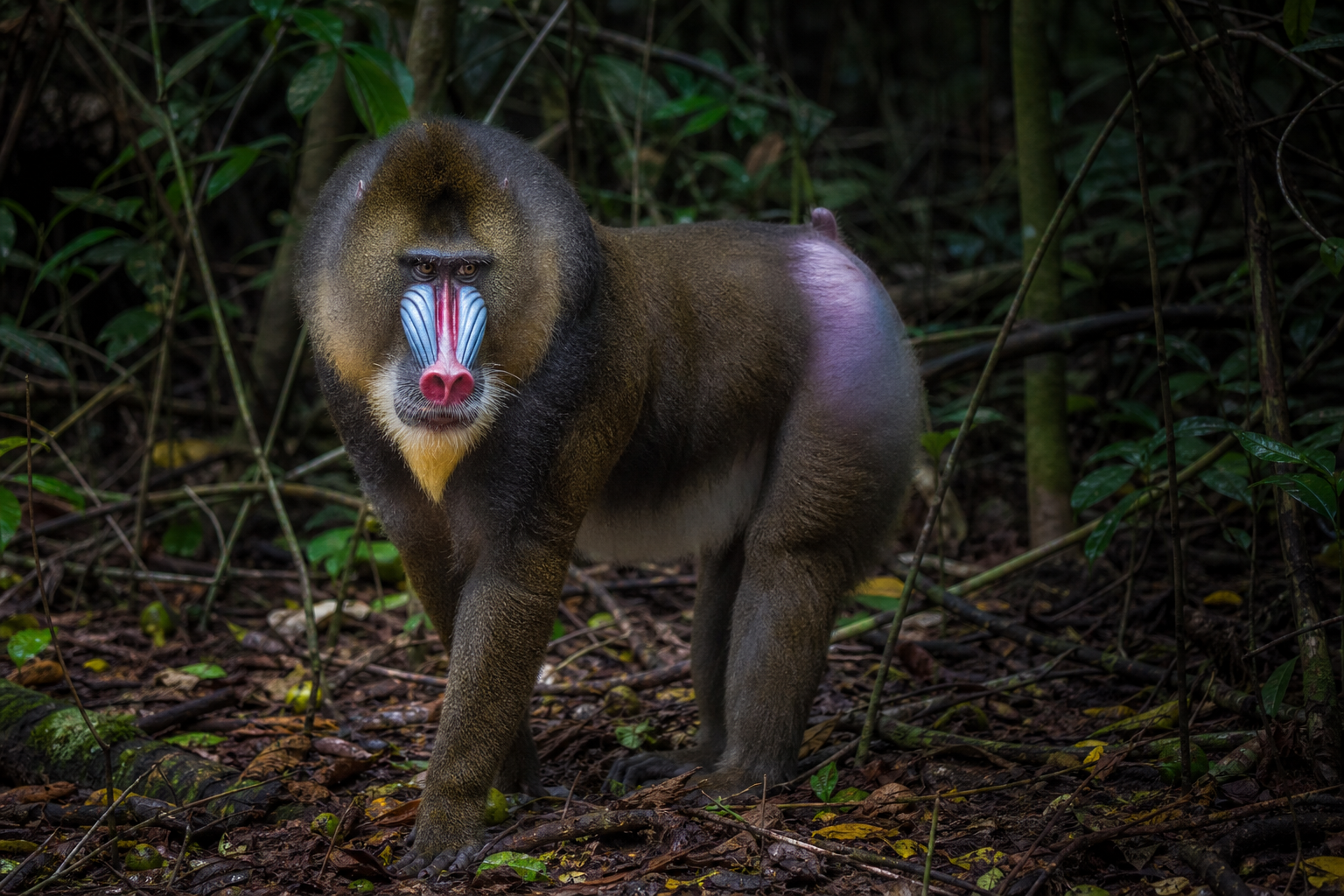
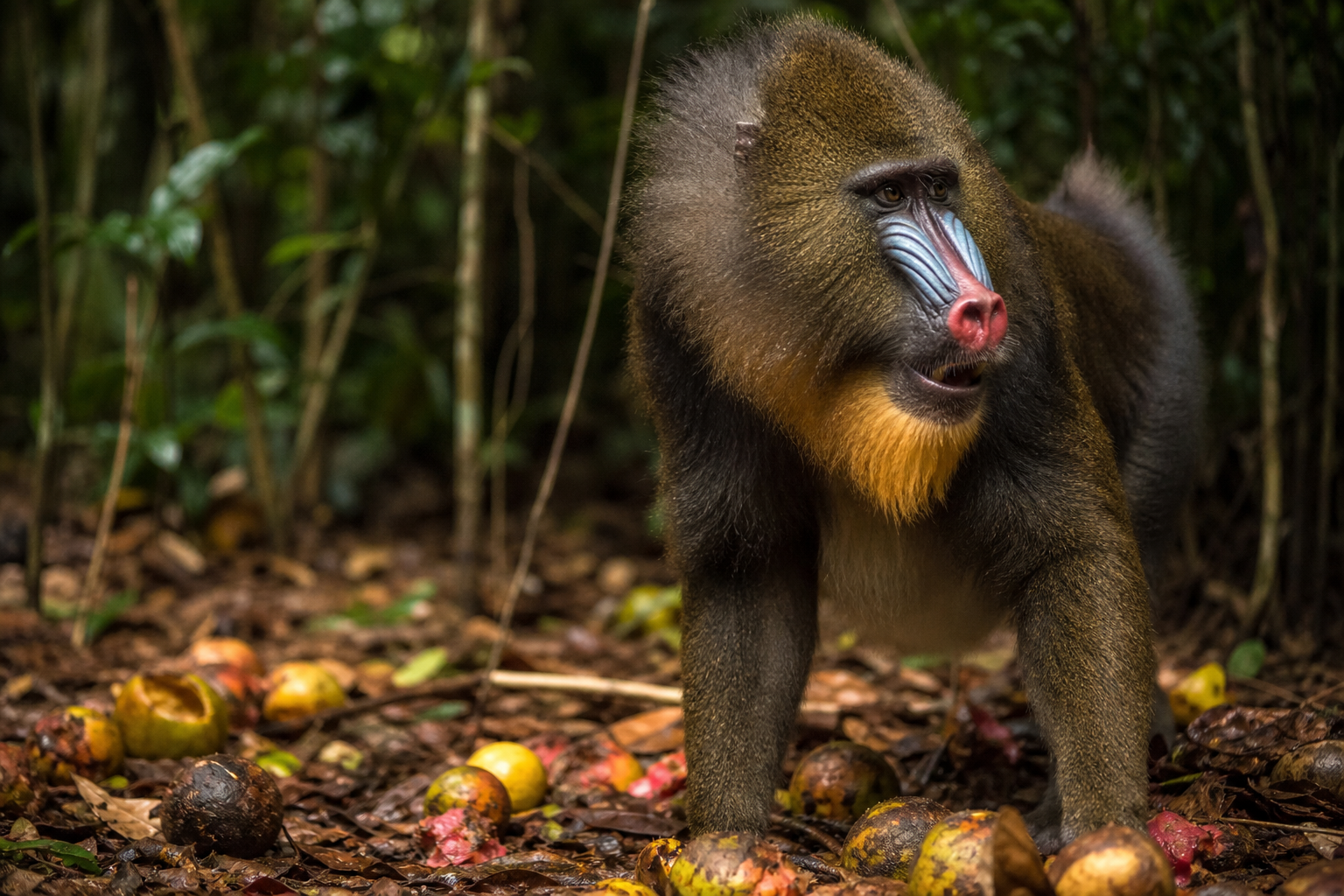
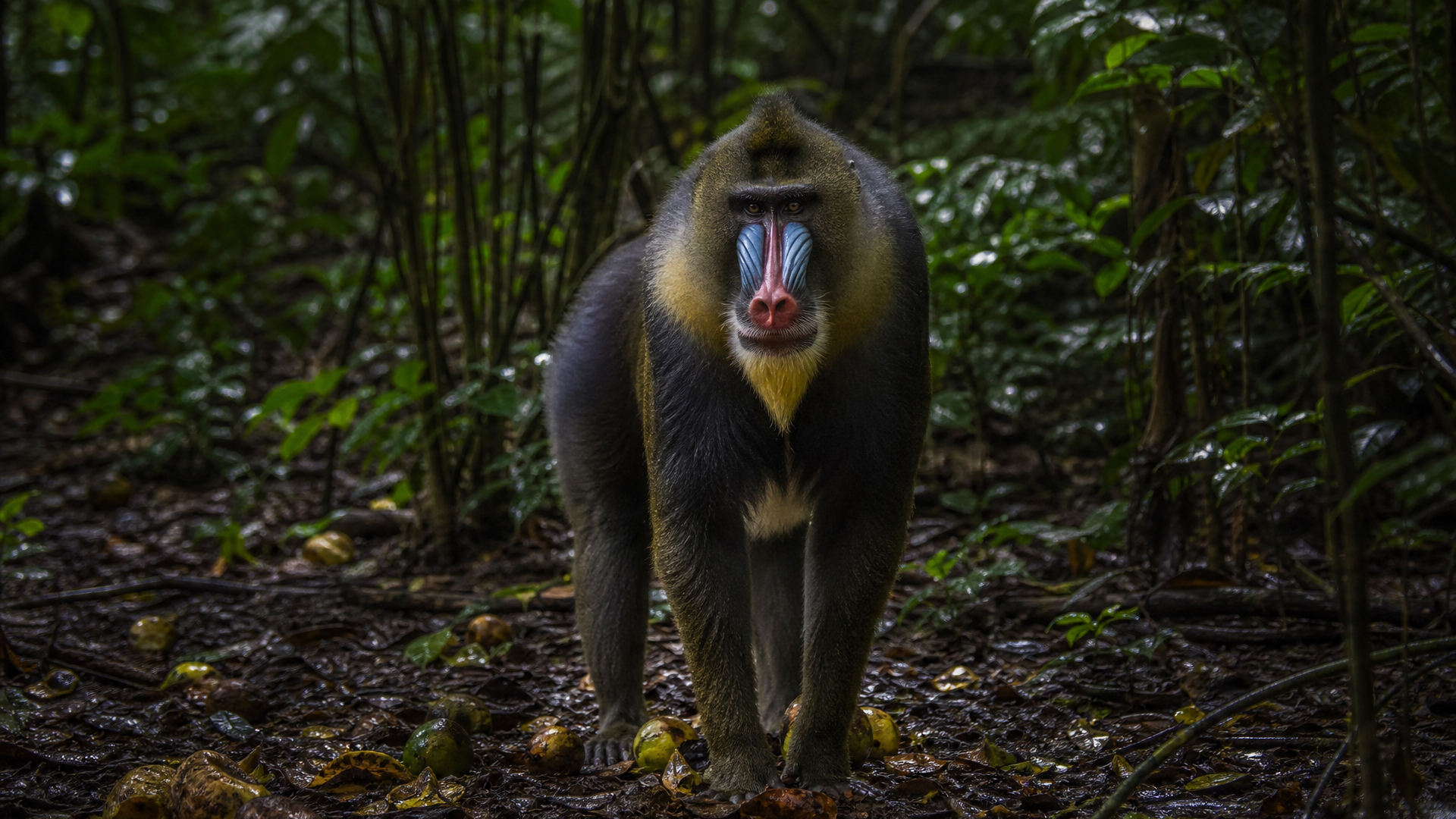
The forest edge is green, wet, and full of warnings. Leaves jump before the animals appear. Then a face emerges that seems almost too vivid for shade: blue ridges, red nose, golden beard, eyes set forward with absolute attention. A mandrill steps into view, and the understory suddenly feels occupied by color with teeth behind it.
Mandrills move in numbers, and numbers change the forest. A group feeds across the floor with restless purpose, turning fruit, roots, insects, and fallen matter into motion. Young animals dart and climb. Females keep the center alive with signals and corrections. Adult males carry their color like a social weather report, brightened by strength, status, and the dangerous work of being noticed.
They represent western equatorial Central Africa because they join spectacle to density. In Gabon, Cameroon, Equatorial Guinea, and Congo, mandrills make the forest floor loud, muscular, intelligent, and hard to simplify. Their movements disperse seeds, disturb soil, and connect deep cover to edges and clearings. When hunting and forest loss thin their great groups, the silence left behind is not gentle. It is space where a whole moving society should be.