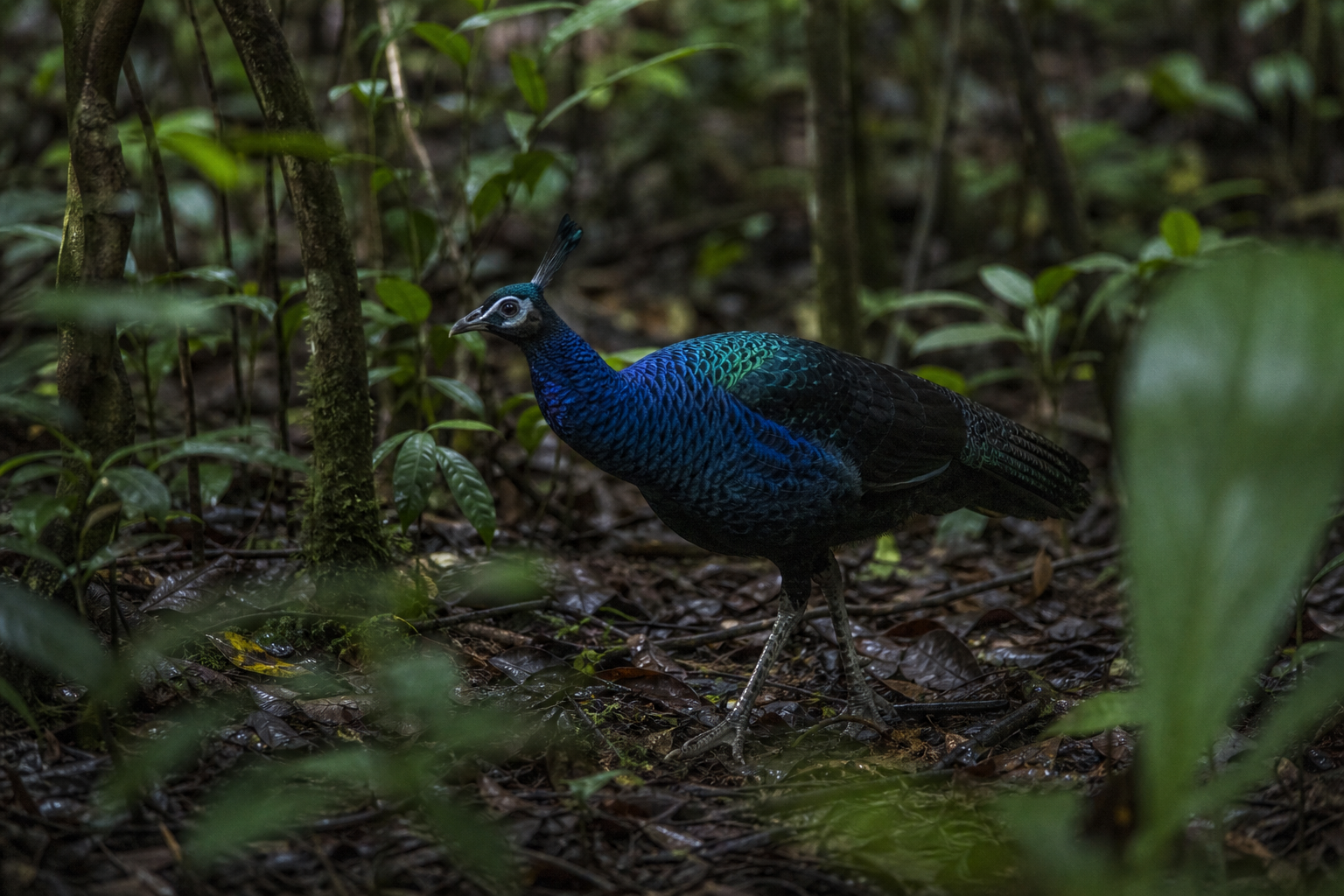
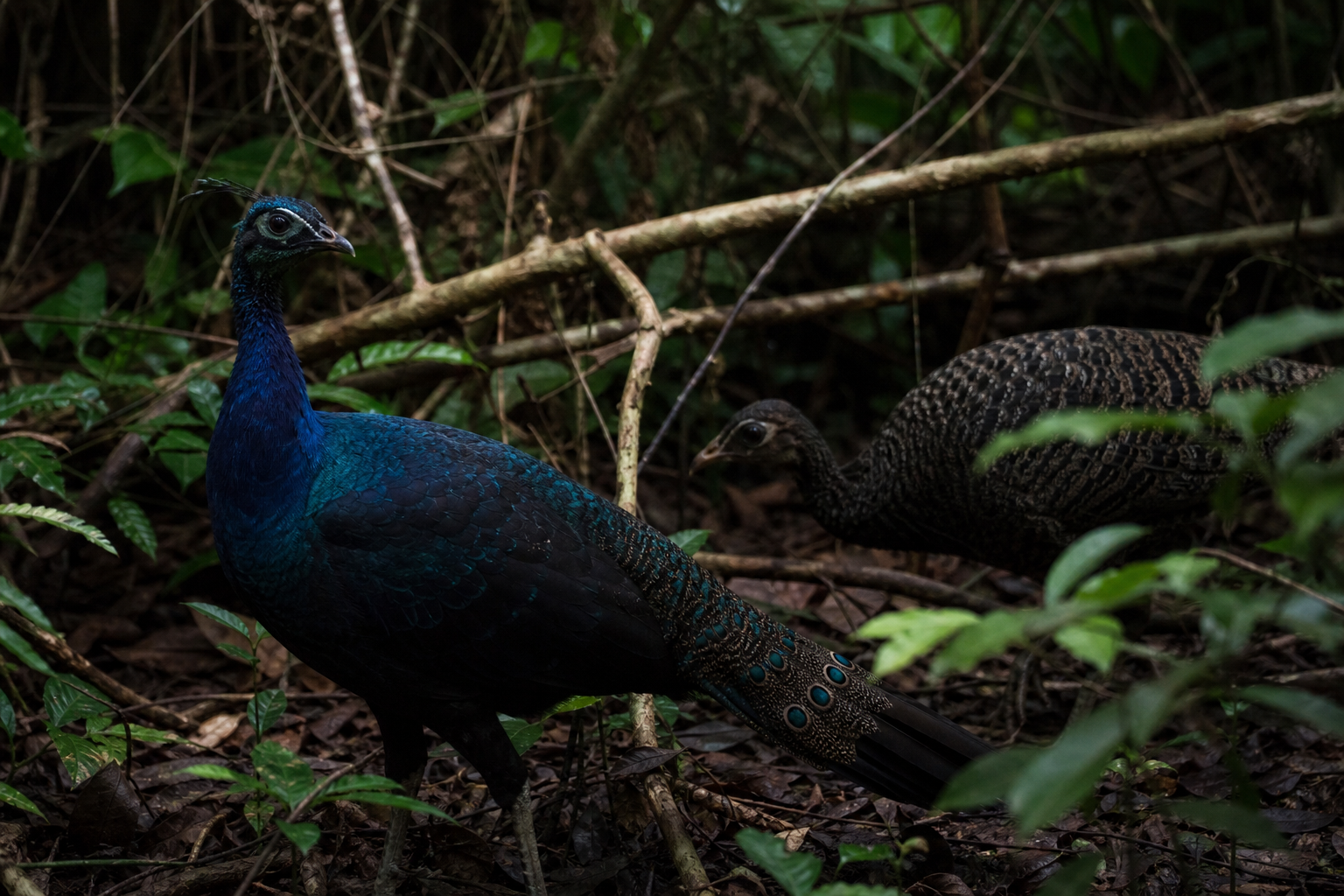
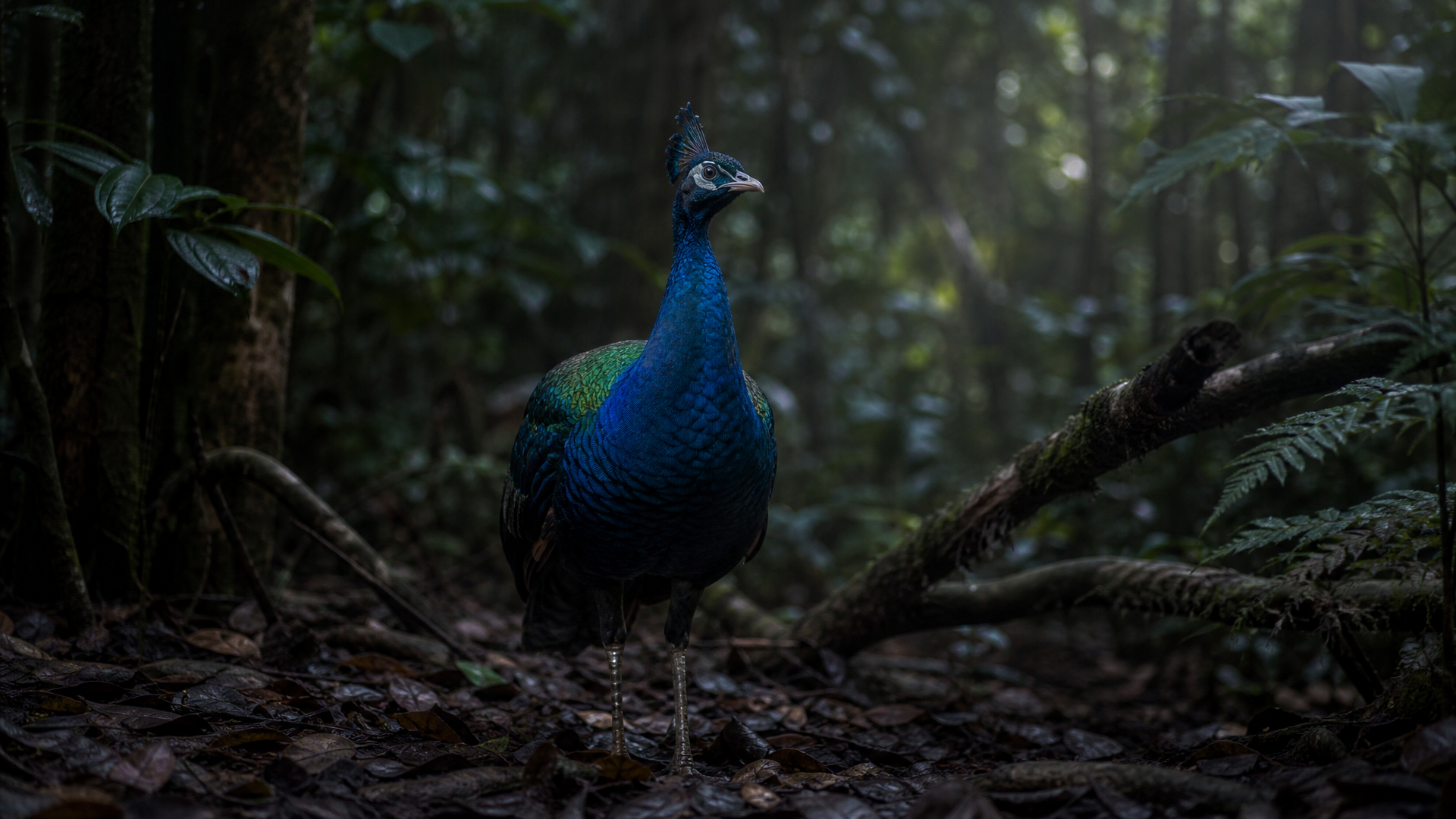
On the forest floor of the DRC, the dawn is low and muffled. Leaf litter darkens with last night's rain. Somewhere under the canopy, a bird calls from cover, and the sound seems to belong to a place where color has learned to stay hidden until the final second.
The Congo peafowl does not command the open air like the familiar peacocks of human gardens. It keeps to shadow, stepping through leaves with the alert reserve of a bird made for dense forest. The male's deep blue and green are not display for broad sunlight, but flashes held close beneath branches. The female moves even more quietly, patterned for the ground, her presence easy to miss unless the forest allows it.
This bird gives Central Africa one of its clearest endemic notes. It is Congolese not as decoration, but as evidence: a lineage shaped inside lowland forest, far from generic images of African wildlife. Its life depends on old canopy, intact floor, and the hidden continuity between them. A brief gleam in the leaves is enough. Then the forest closes, keeping its own bird.