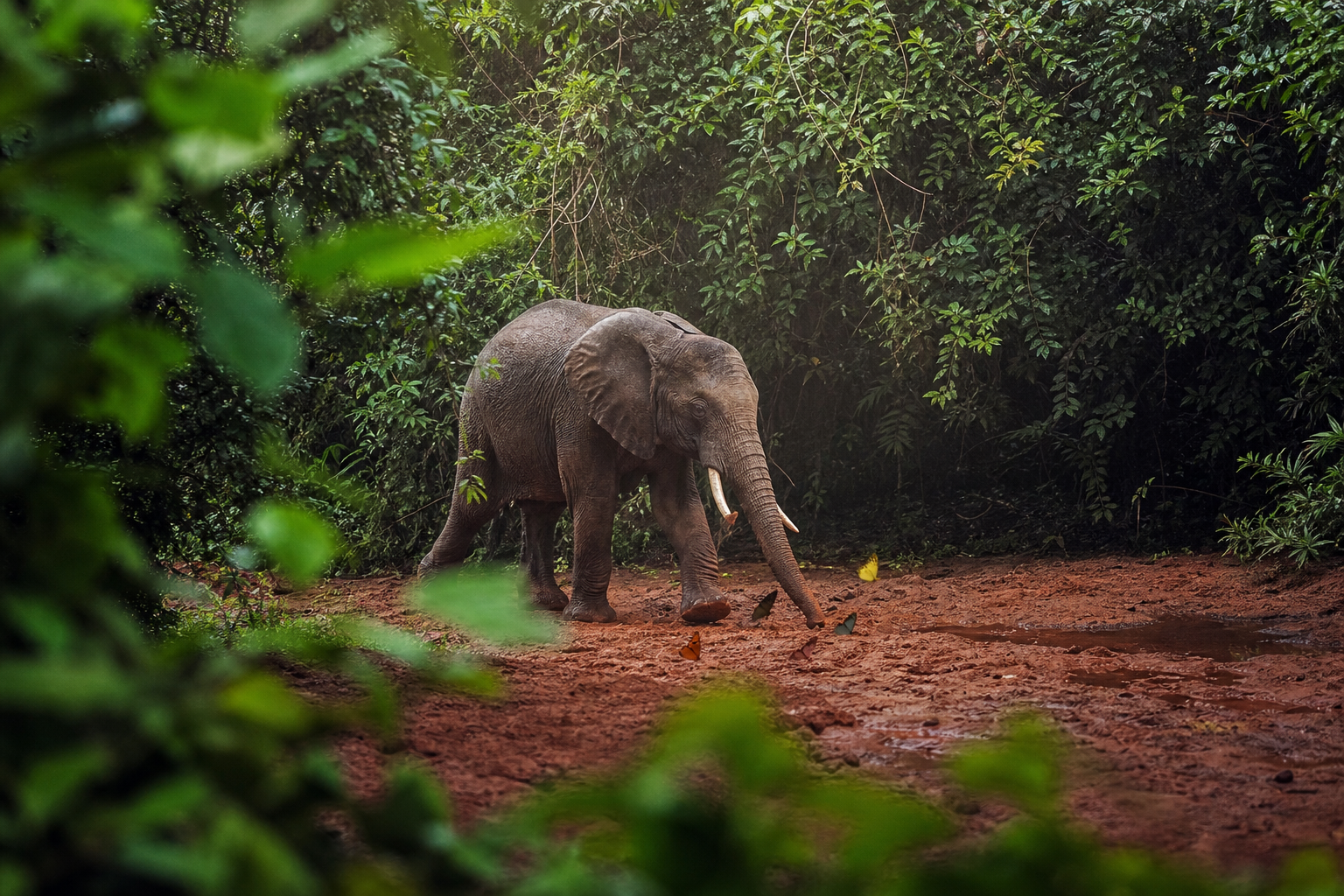
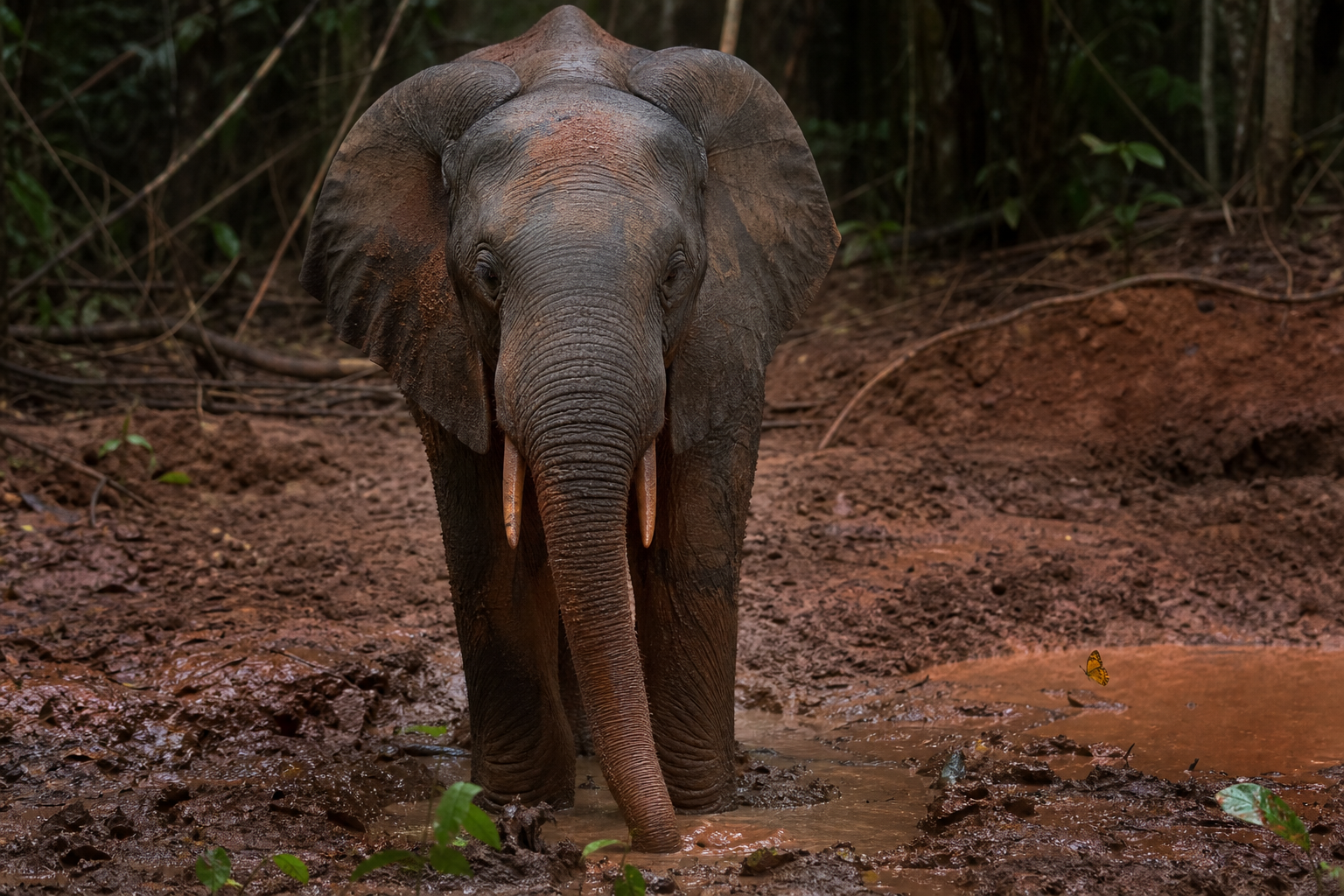
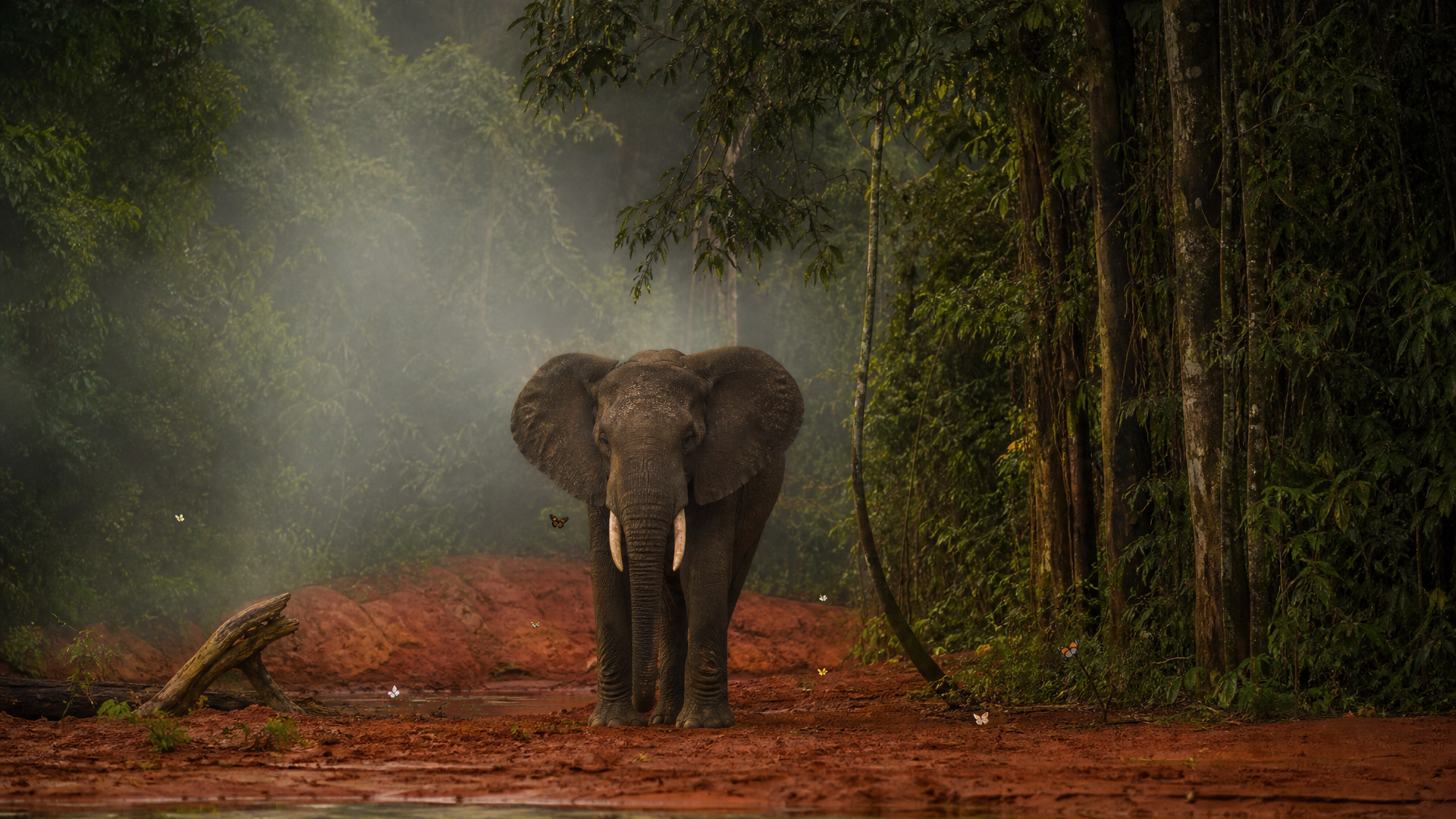
The first sign is not the elephant but the path: a tunnel through vegetation, wide enough for a dark body and old enough to feel inherited. Then comes the sound of branches folded aside, slow and deliberate. At the edge of a mineral clearing, an African forest elephant appears, ears rounded, tusks angled downward through shade.
It moves with a secrecy that seems impossible for an animal so large. The trunk searches clay, bark, fruit, and leaf litter with fine attention. A calf vanishes beneath adult bodies. Older females pause as if reading messages laid into mud by feet that passed days before. At a bai, low rumbles pass through air and ground, and the clearing becomes a meeting place for bodies, memory, and minerals.
No animal shapes the Congo Basin forest more physically. Forest elephants open corridors, spread large seeds, thin dense growth, and create clearings where light and other lives gather. They are not the savanna elephant translated into trees; they are a different force, quieter and deeper in the green. Where their routes disappear, the forest loses movement, architecture, and memory all at once.