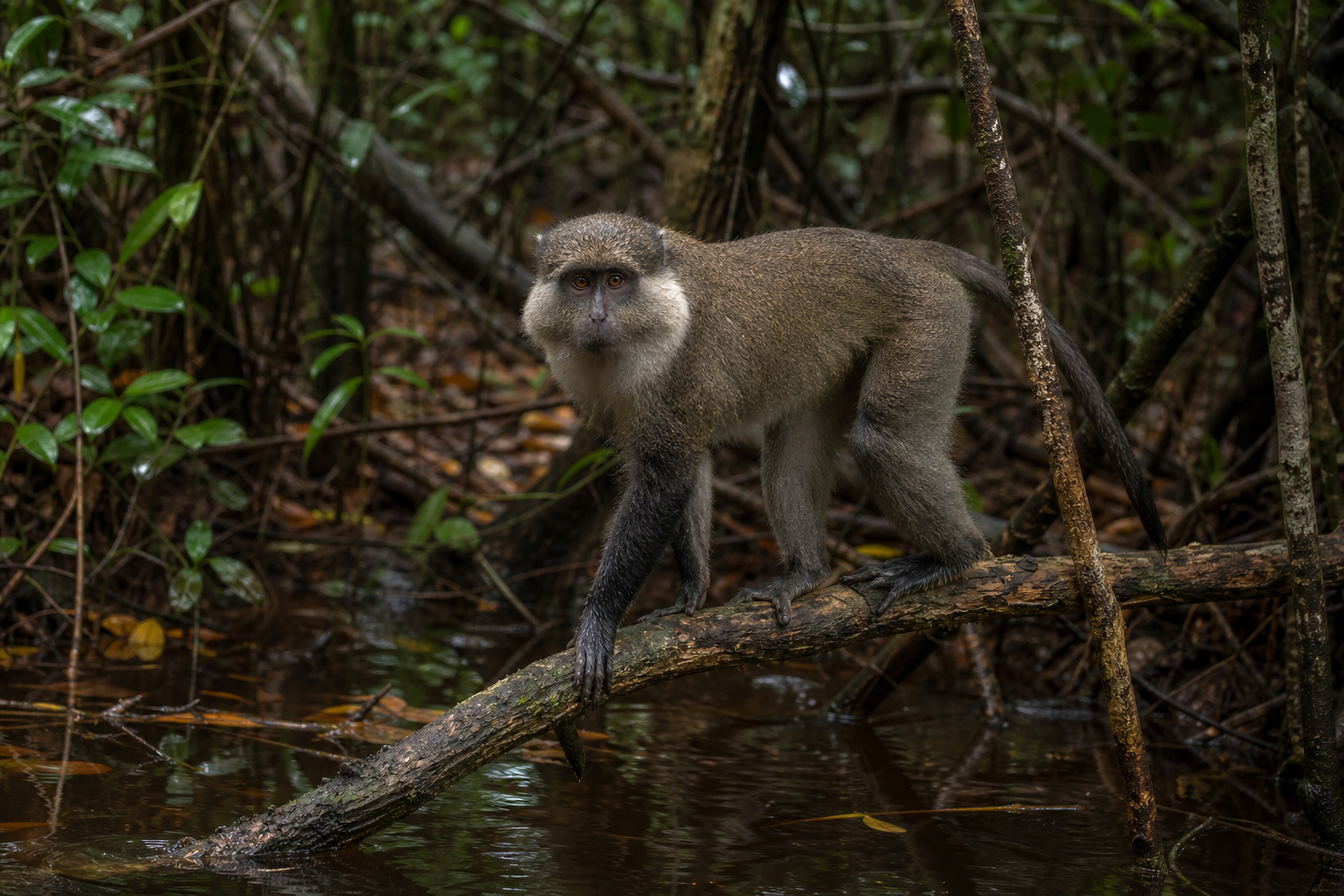
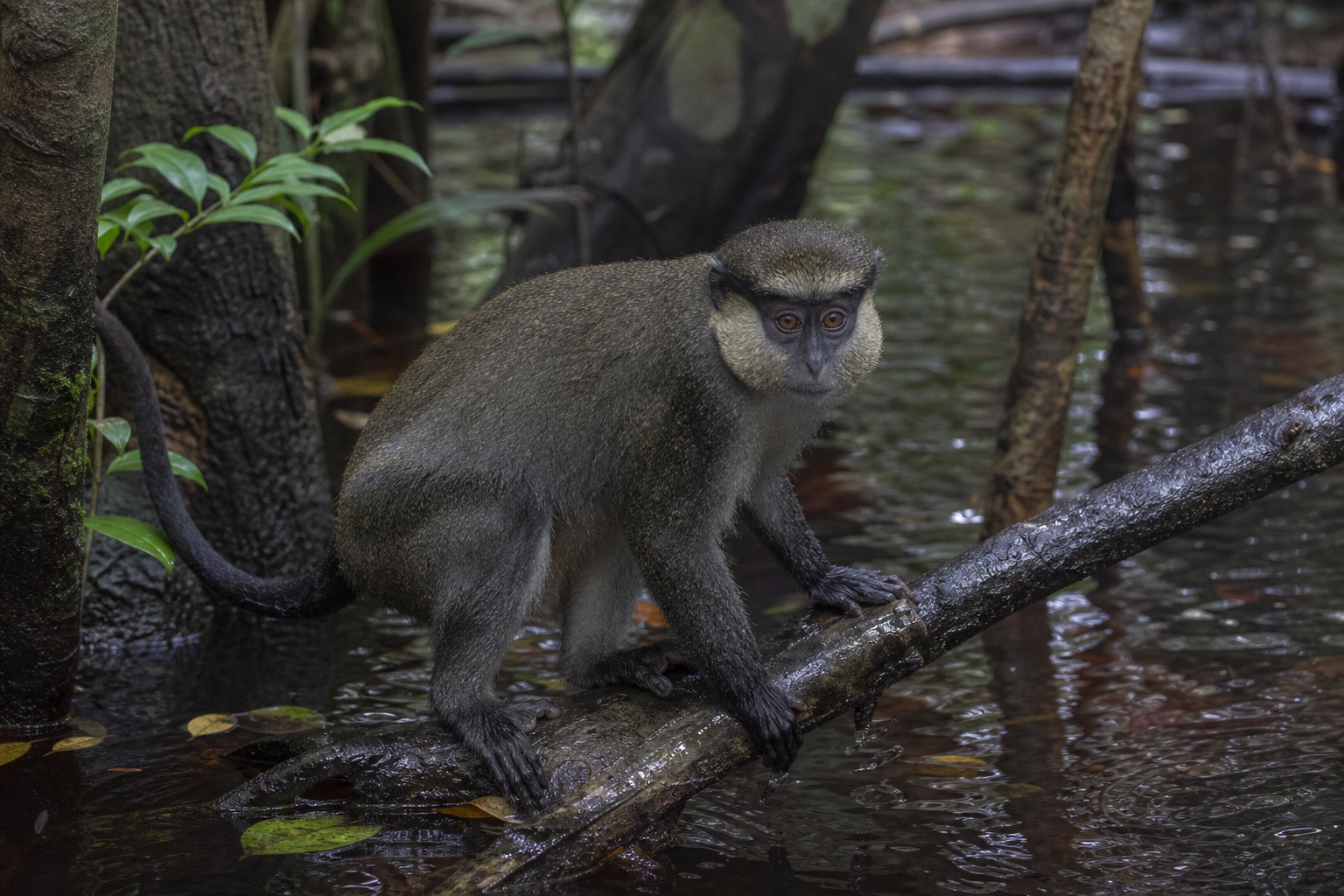
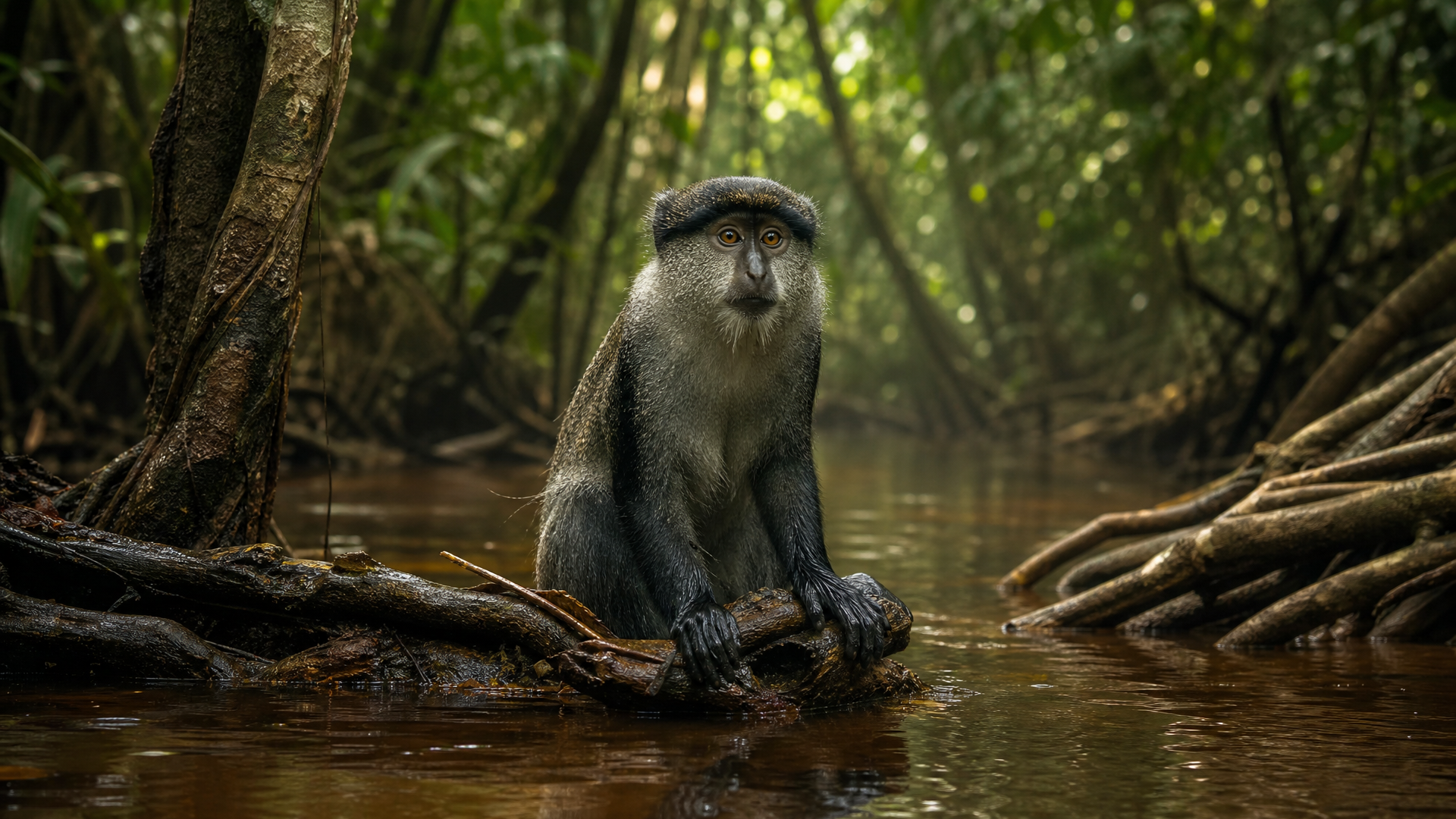
Along a slow Congo Basin channel, roots twist into brown water and the air smells of leaves beginning to rot. A small splash breaks the quiet. Then a monkey appears on a low branch, wet-handed, bright-eyed, and already measuring the distance back to cover.
Allen's swamp monkey belongs to the places where forest meets water so closely that the boundary becomes useless. It moves through low branches, flooded edges, and riverine tangles with a quick, practical intelligence. The hands search, the eyes check, the body drops and climbs again. Unlike many monkeys that seem to belong mainly overhead, this one keeps returning to the wet margin, comfortable with mud, stems, and the small lives hidden there.
It represents Central Africa because it makes the swamp forest active, not background. The Congo Basin's waterlogged places are full of specialized movement, and this monkey gives them a face: alert, social, and hard to hold in view. It carries seeds, stirs invertebrate life, and threads primate energy through channels and flooded roots. When it vanishes into leaves, the splash remains for a moment longer.