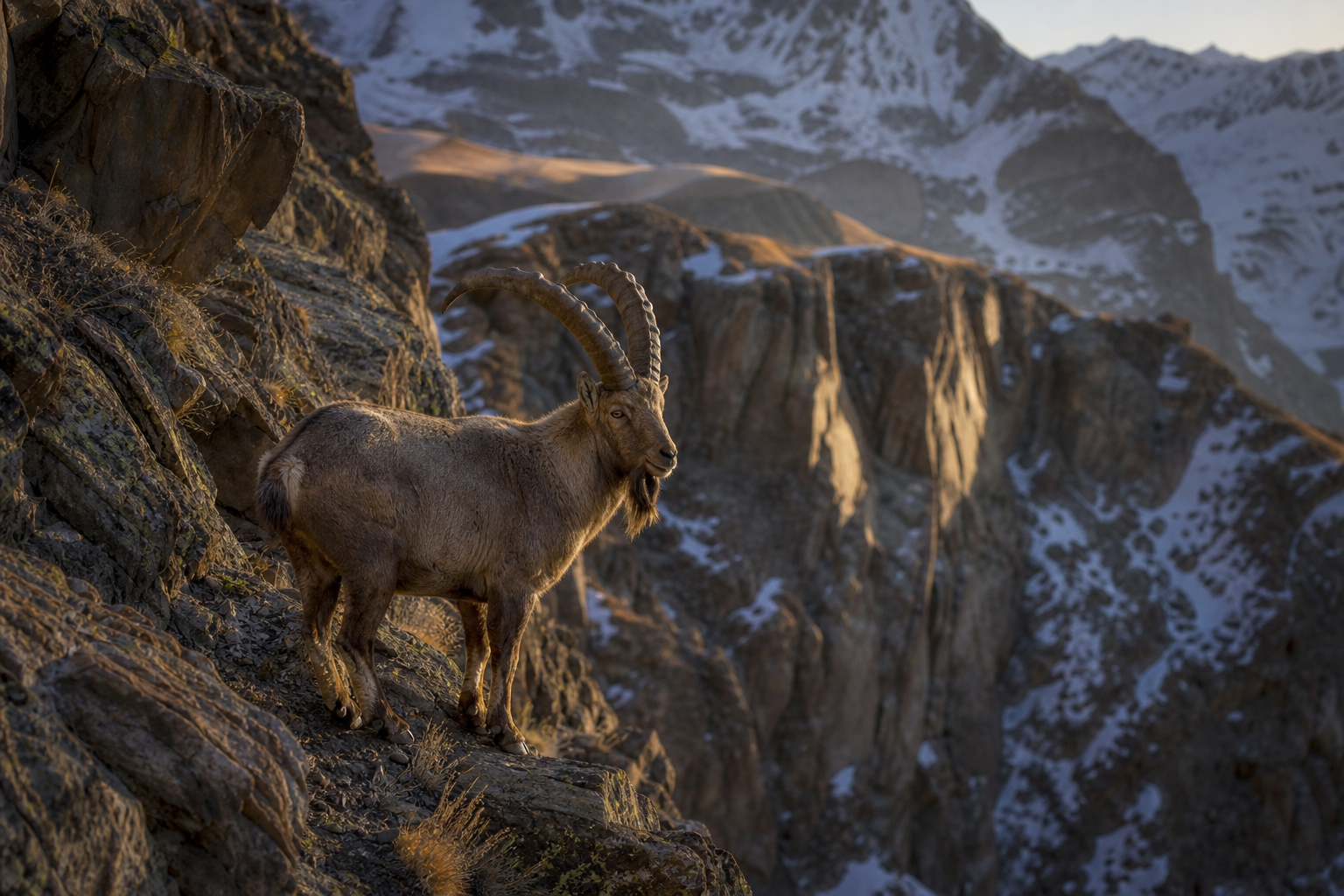
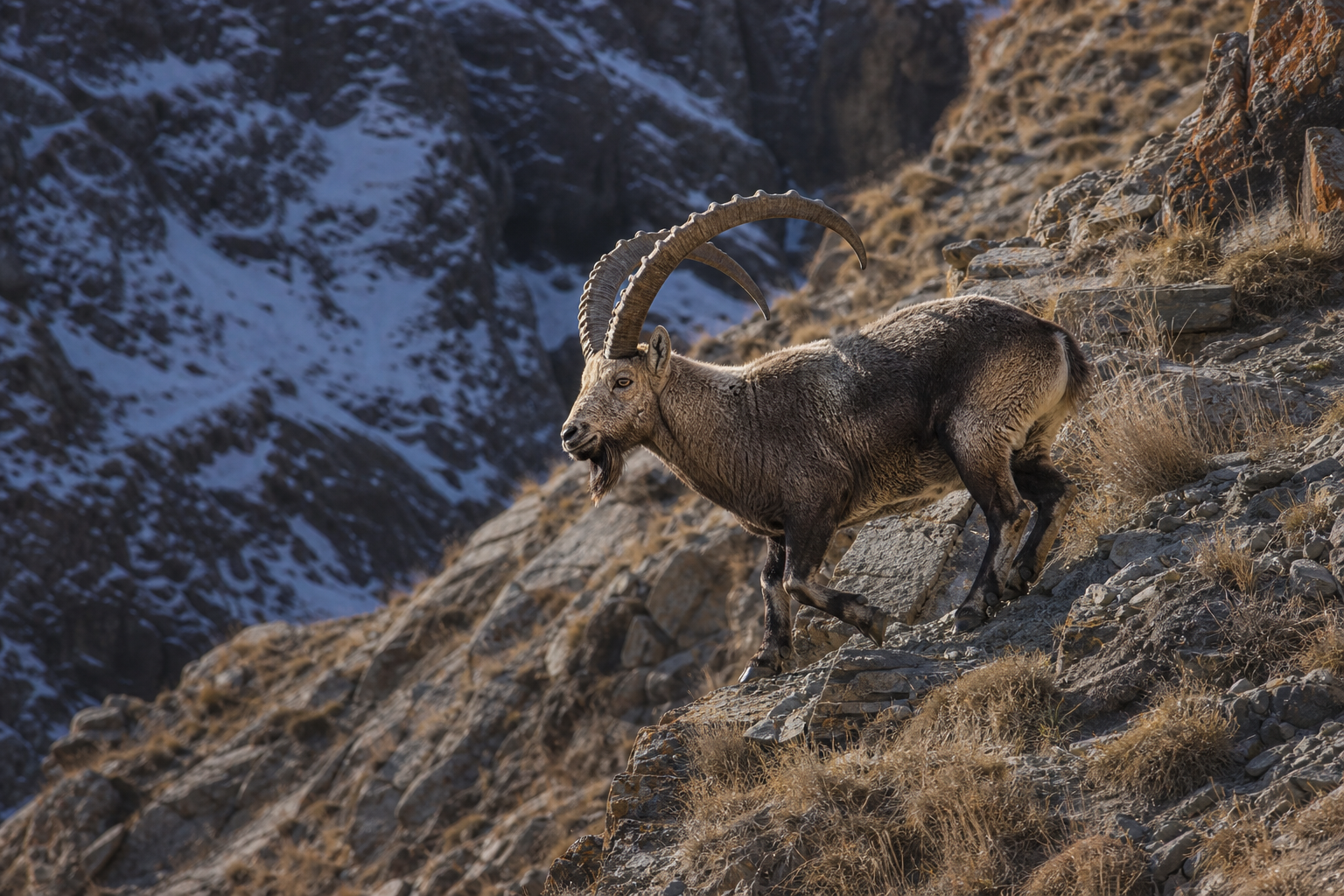
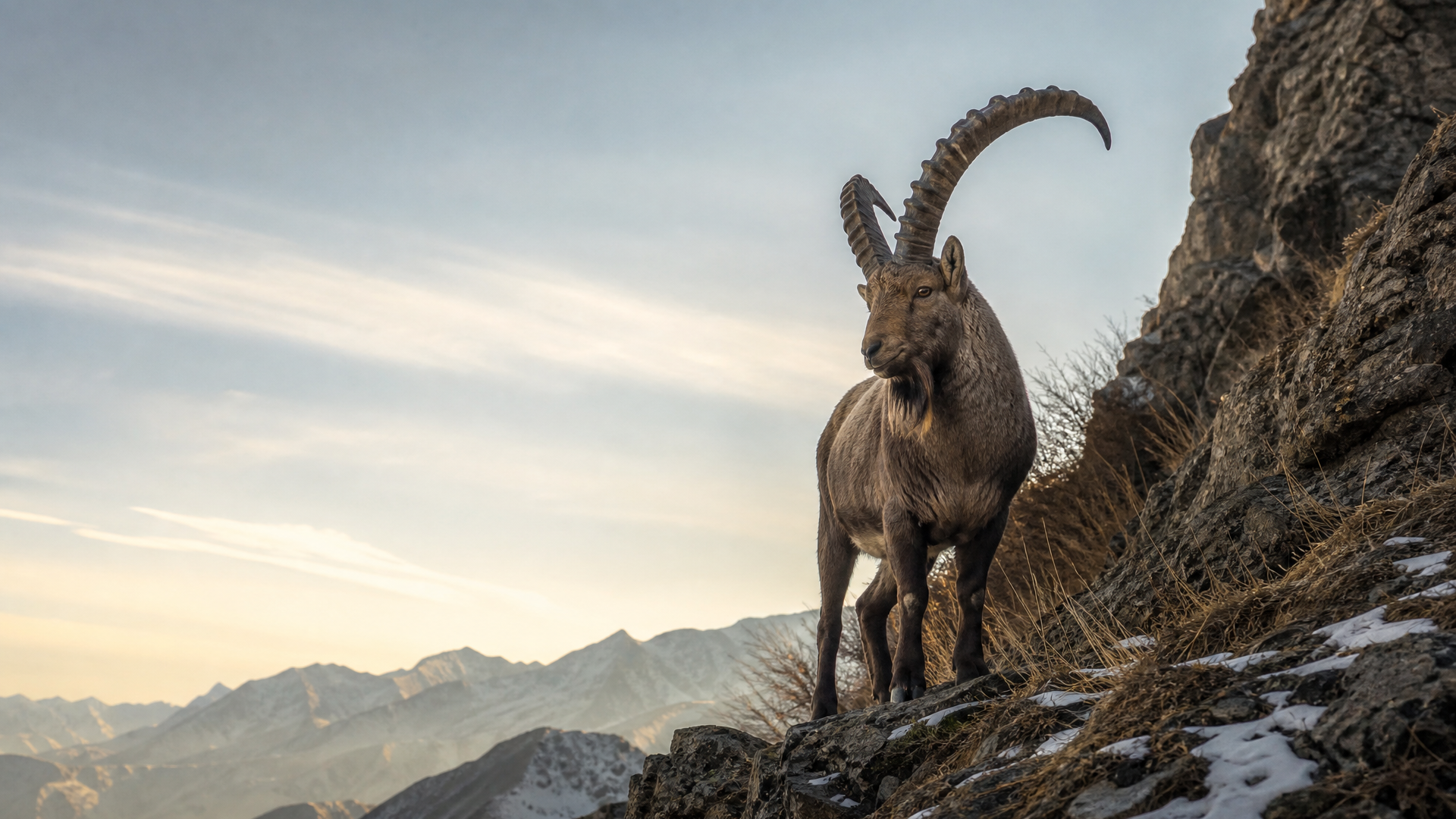
At dawn in the Altai, shadows still fill the ravines while the ridges catch fire with cold light. Stones tick loose somewhere above. A male ibex stands on a ledge no wider than its body, beard moving in the wind, long horns arcing back over shoulders built for the climb.
The Siberian ibex treats steepness as ordinary ground. Its hooves find edges where the eye sees only fracture, and its weight shifts with calm precision from one broken shelf to another. Females and young move in groups, watching from higher ground, while older males carry a slower authority, stopping to test the air and rake horns against scrub or rock. In winter, every patch of exposed grass matters. In summer, the animals rise toward cooler slopes, following the mountain's changing skin.
Ibex keep the cliffs alive for more than themselves. Their trails mark passes for smaller animals, their grazing shapes alpine plants, and their bodies support the predators that share the heights. Hunting, disturbance, disease from livestock, and warming snowlines press into their country. Still, one hoof settles on stone, and the whole cliff seems possible.