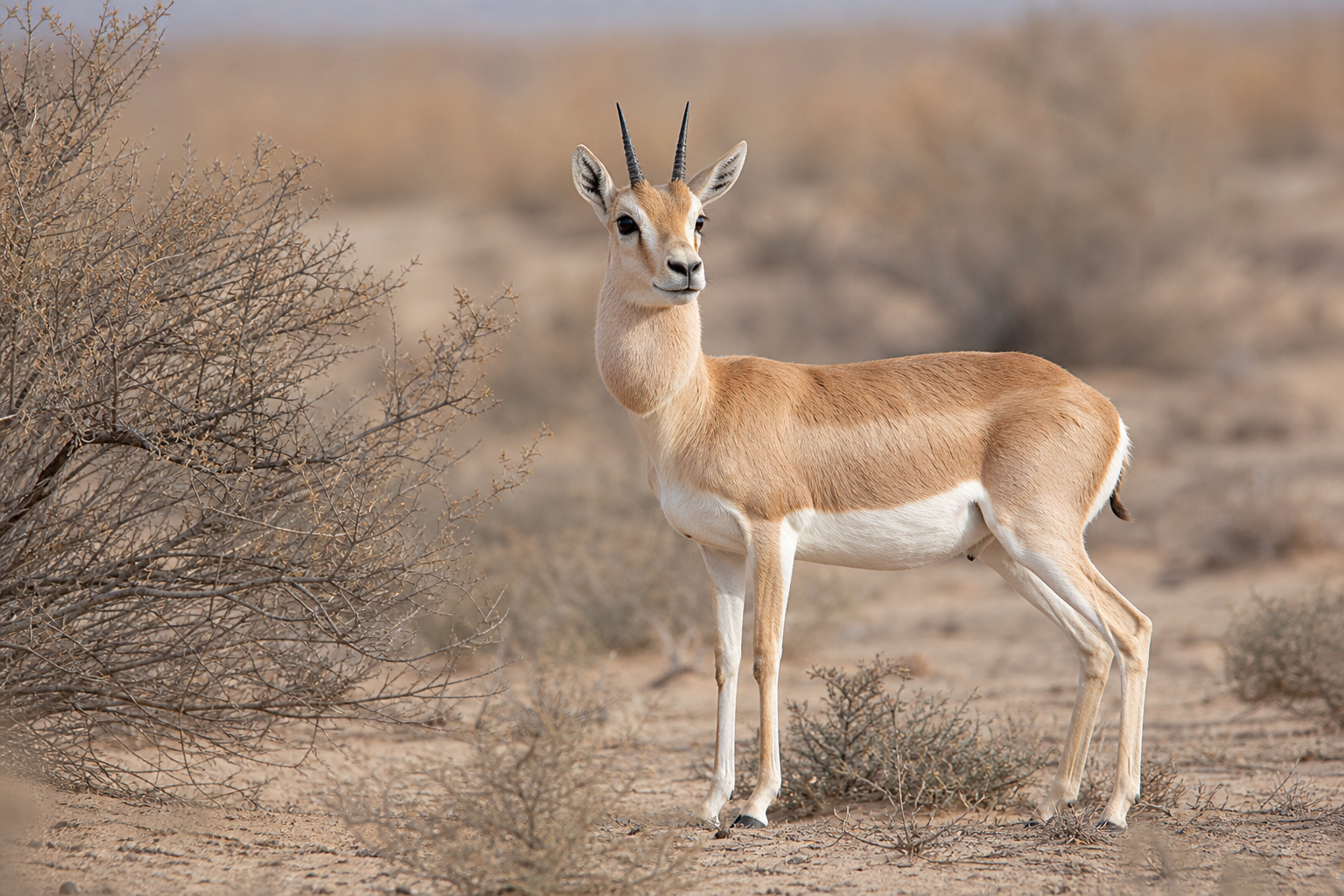
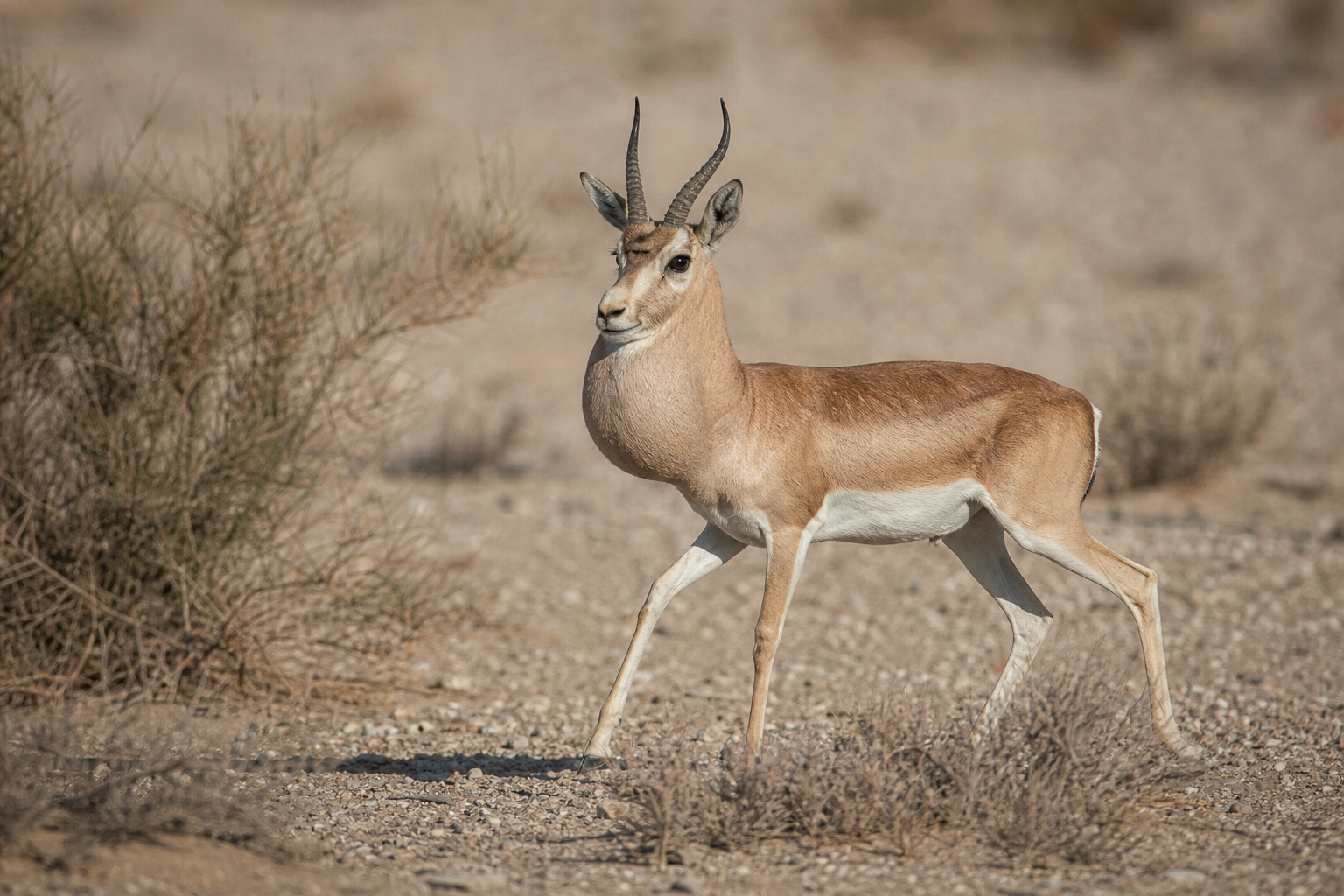
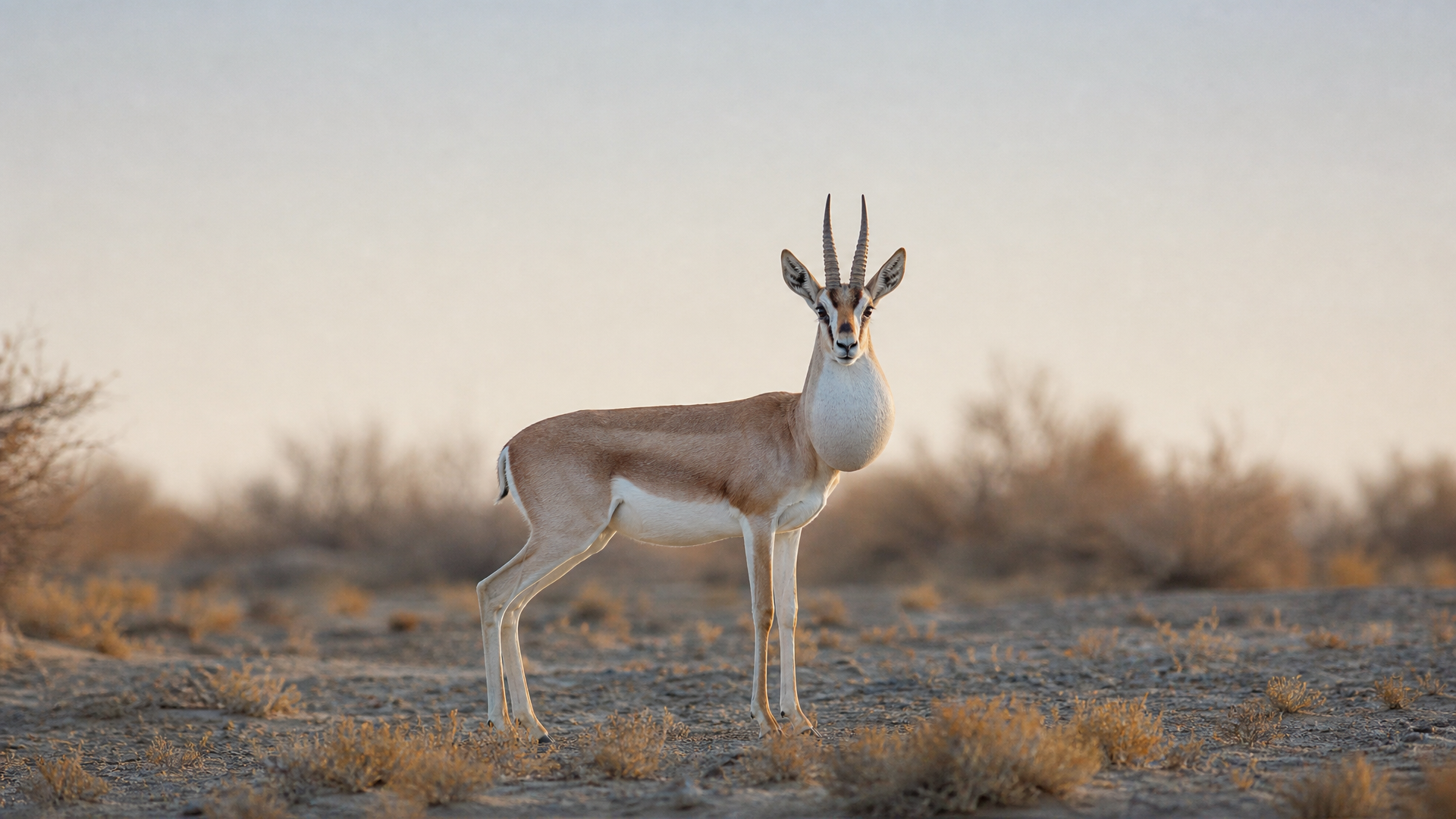
The Kyzylkum morning is pale before it is warm. Sand holds the night's coolness, saxaul shadows lie thin on the ground, and a gazelle stands just beyond them with its head high. For a moment it is color matched to the desert. Then the ears turn, the muscles gather, and space opens around it.
The goitered gazelle lives by attention. Its body is slender without seeming fragile, the legs clean and quick, the dark eyes set for wide horizons. It feeds in scattered patches, crosses gravel and sand with economical steps, and pauses often enough that the whole plain seems to pass through its senses. Males in the breeding season carry a swollen throat and a different tension, marking, pacing, watching rivals with the dry country stretched between them. When alarm comes, the gazelle does not simply flee. It pours itself away, a brown line over pale ground.
In Central Asia's deserts and semi-deserts, this animal turns sparse country active. It shapes shrubs by browsing, feeds hunters, and carries wild motion through landscapes often mistaken for empty. Poaching, fences, roads, and grazing pressure have made distance less reliable. The gazelle stops on a low rise, looks back once, and becomes desert again.