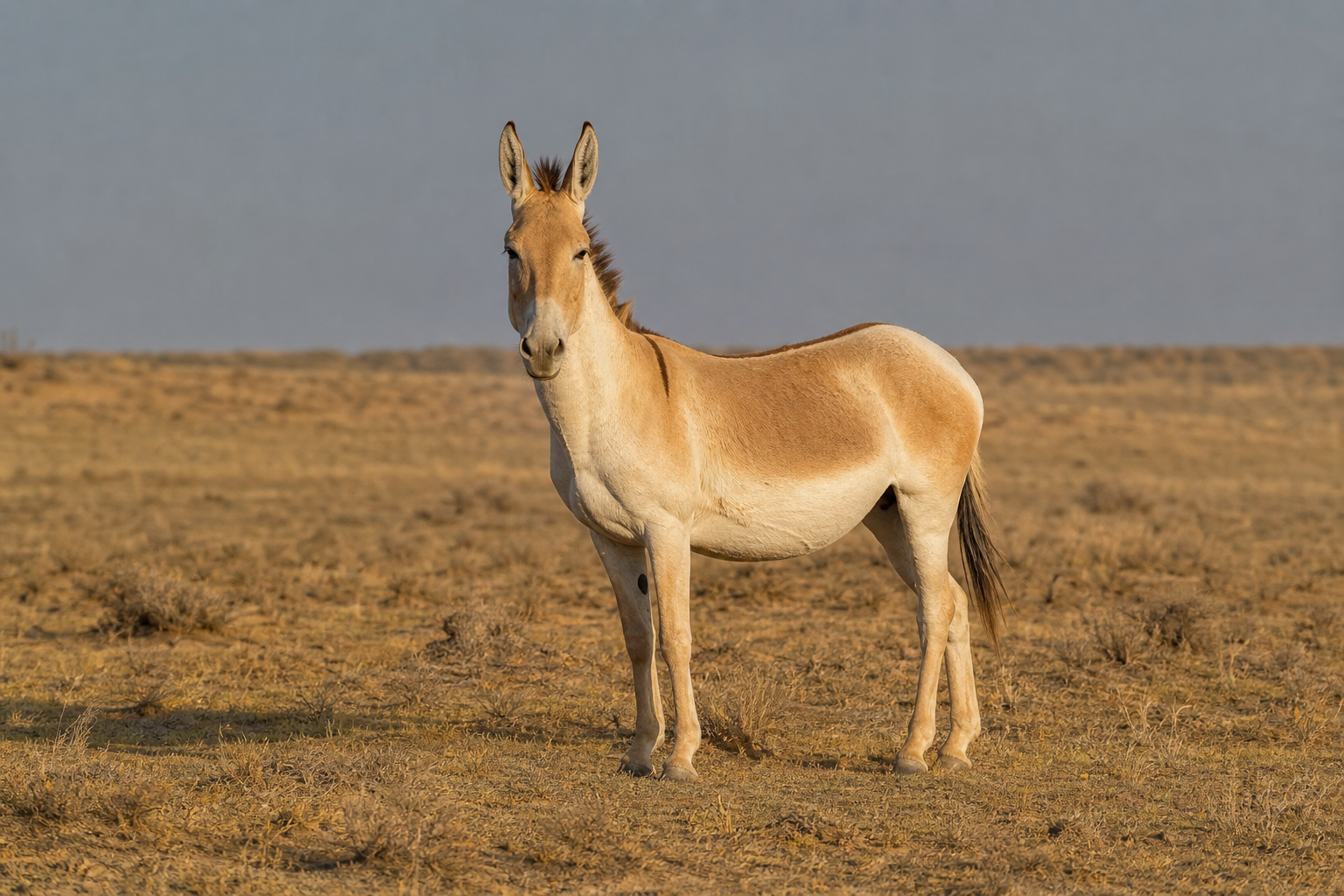
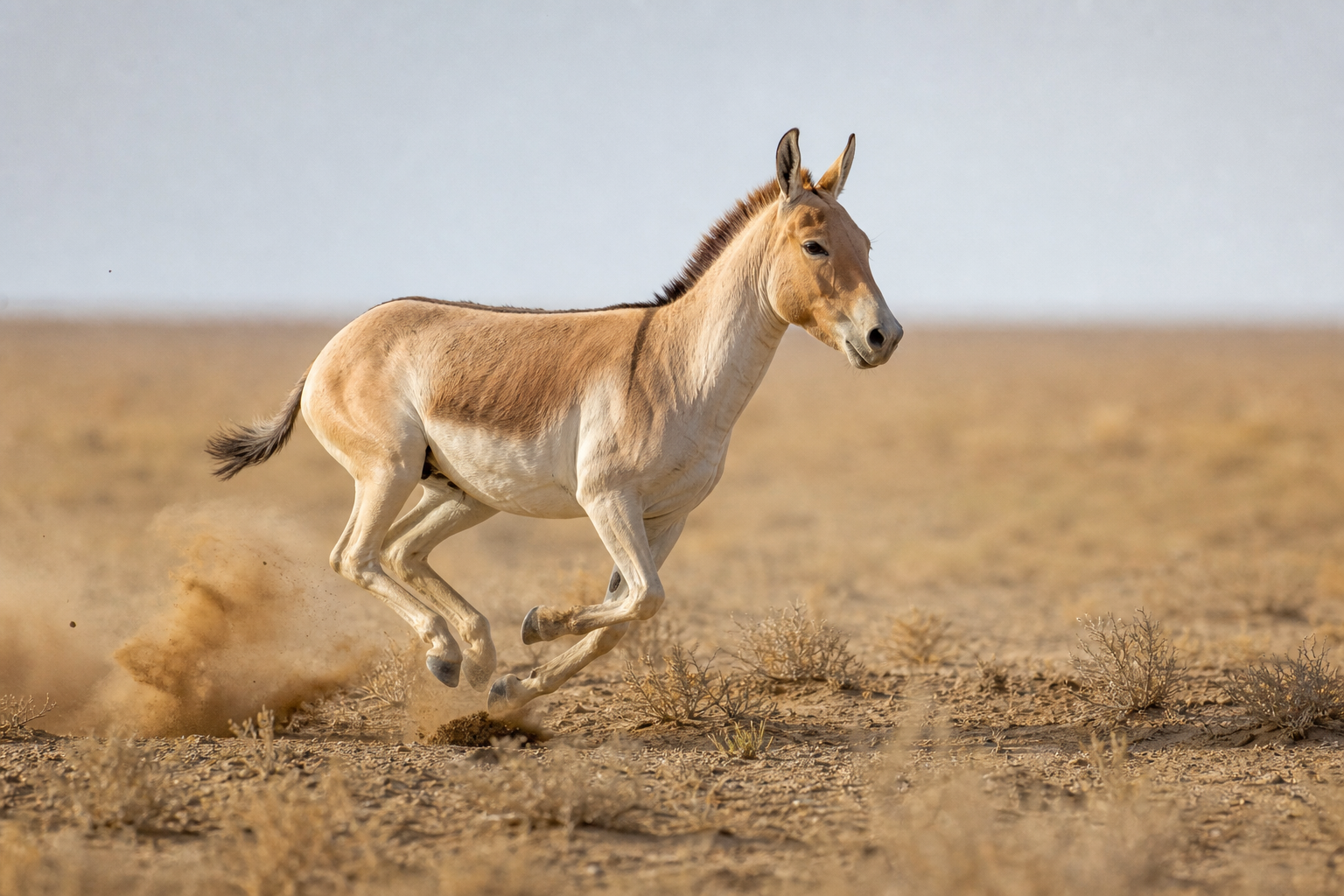
The Karakum plain shivers under early heat. Far off, a line of animals moves between dust and sky, too slender for domestic horses, too direct for mirage. Then one lifts its head, ears sharp, dark mane standing upright, and the herd begins to run.
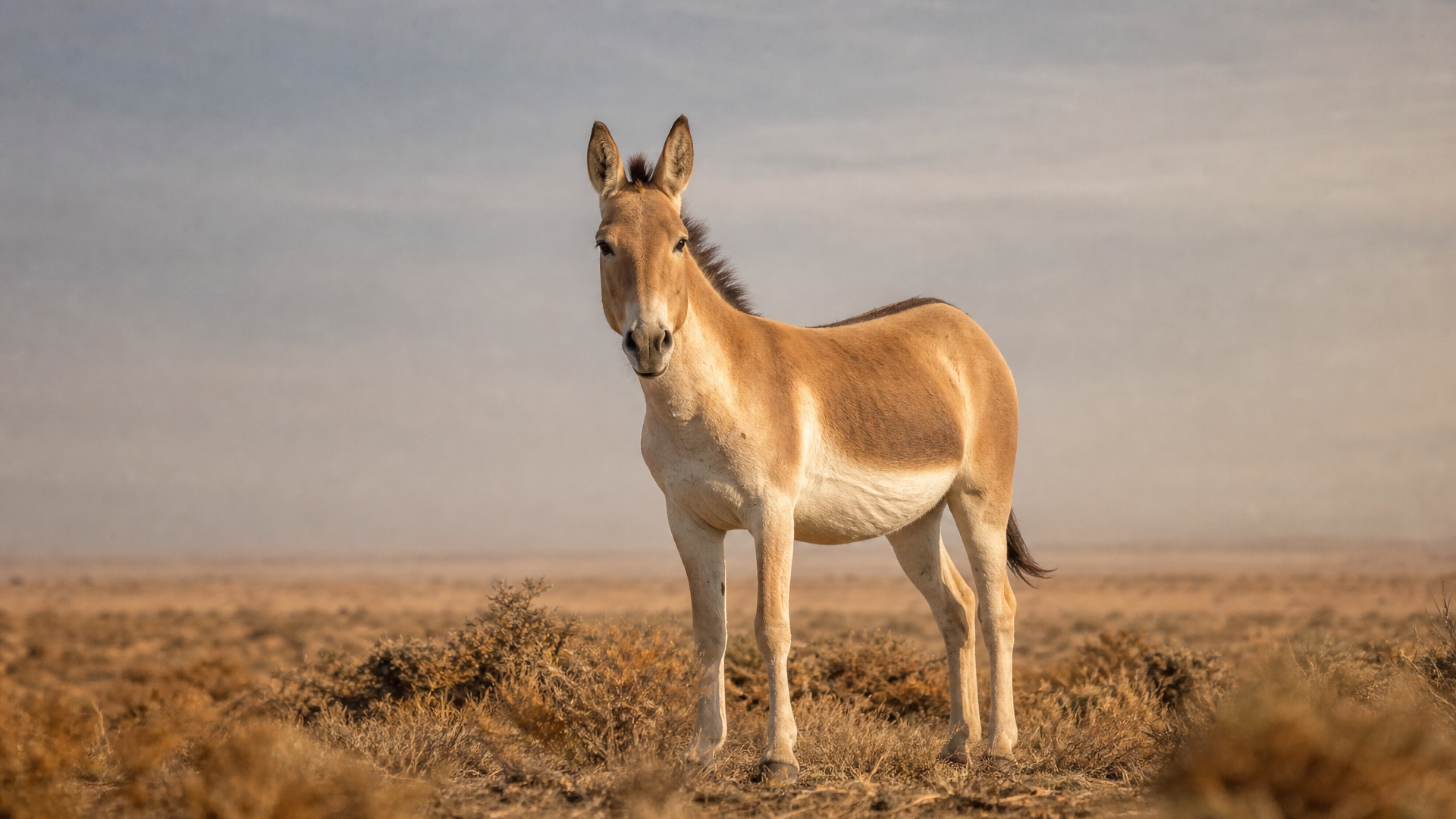
The Turkmenian kulan carries the desert in its nerves. It is lean, long-legged, and intensely alert, with a pale coat that gathers the color of dry earth. Herds do not waste time in soft country. They walk far between water and grazing, then break into speed with a harsh grace that sends dust lifting behind them. Foals learn the rhythm quickly: keep near, keep moving, read the bodies ahead. A stallion watches from the edge, not as ornament, but as a living boundary.
This wild ass gives Central Asia one of its old open-country voices. It grazes and travels across arid plains, moving seeds, cropping tough growth, and feeding the imagination of a landscape built around distance. Hunting, competition, barriers, and lost water points have pushed it into smaller strongholds. When kulans run, the desert does not look empty. It looks awake and leaving.