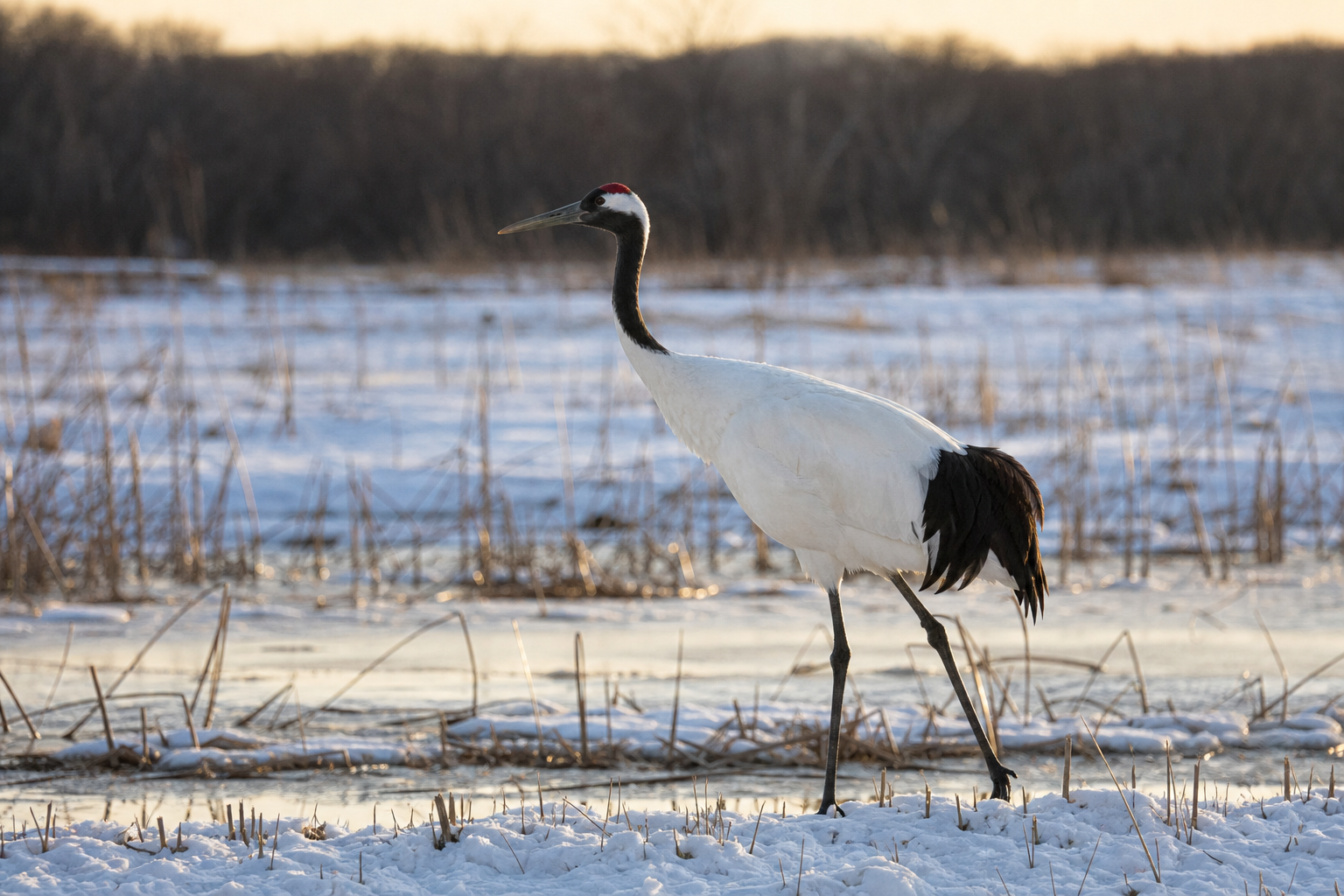
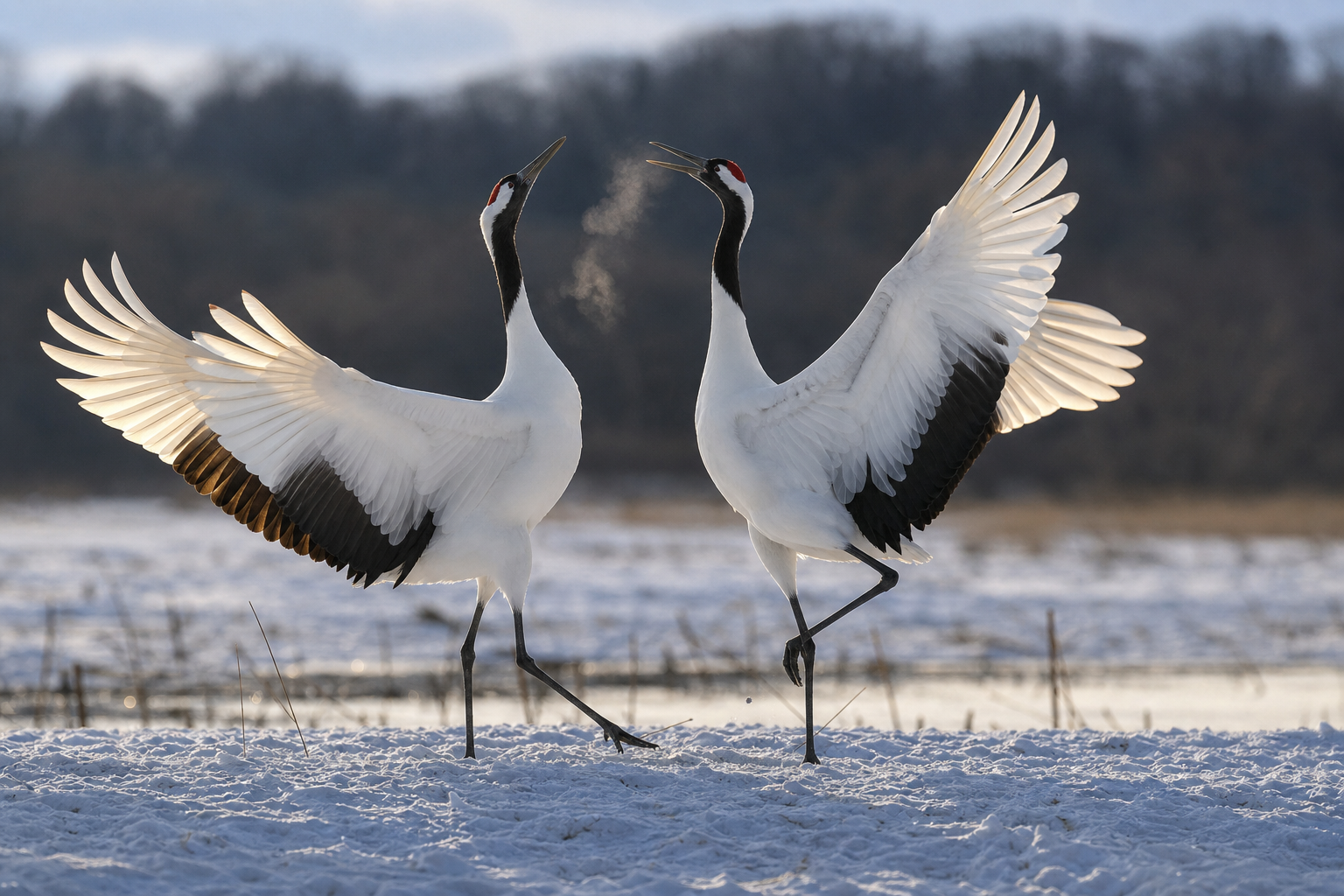
Snow lies clean over the Kushiro wetlands, and the reeds stand dark where the wind has combed them flat. Then two cranes step into the open, white bodies bright against the cold ground, black necks lifted. One bird bows. The other answers. Their breath fades in the air between them.
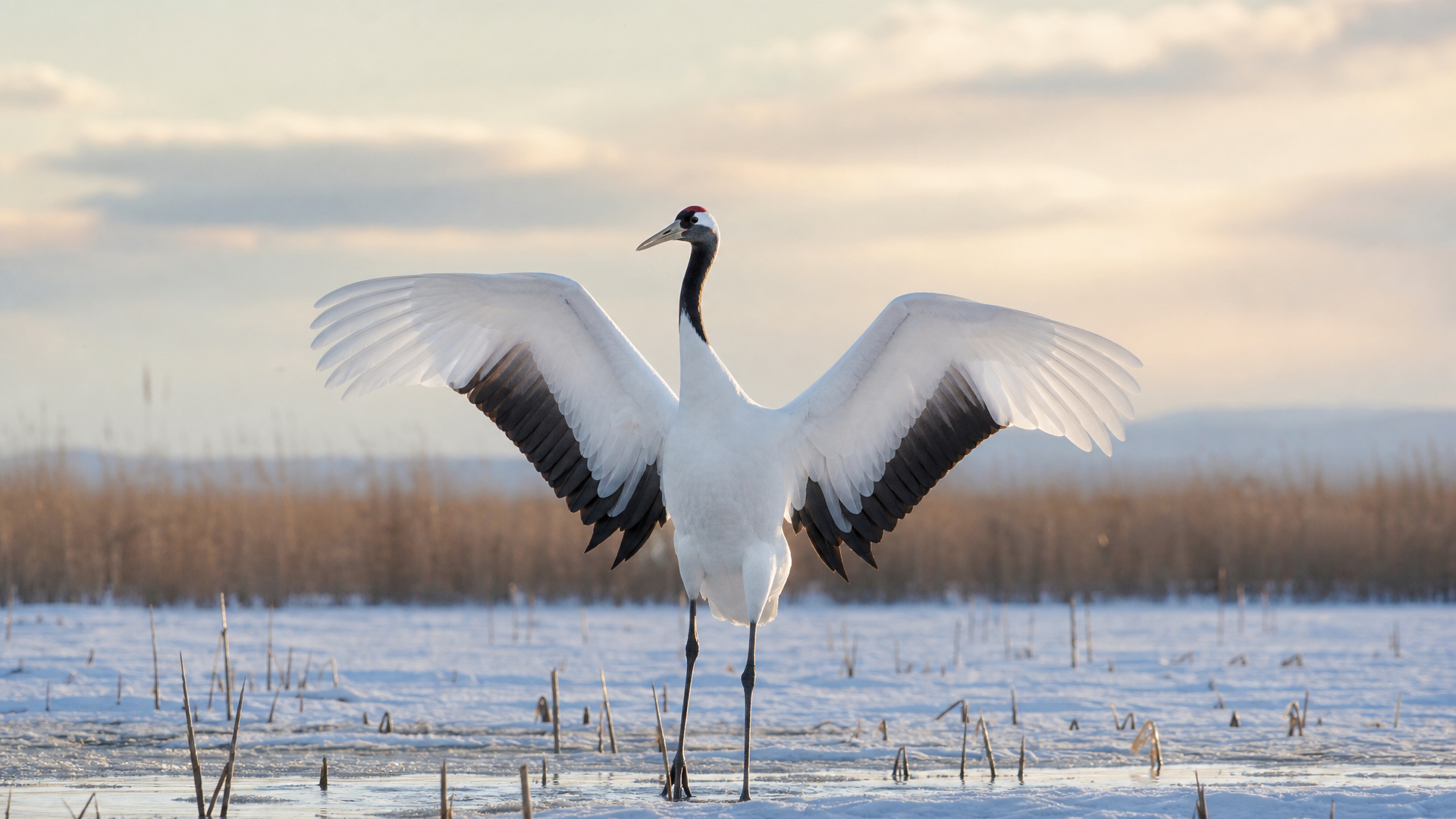
The red-crowned crane carries ceremony without needing an audience. Long legs place each step with care through marsh, ice, or shallow water. The crown is a small blaze of bare red skin, startling because the rest of the bird is so controlled. When a pair dances, the movements seem both playful and solemn: a leap, a turn, wings raised wide enough to hold the weather. Their calls travel far, braided voices that make distance feel inhabited.
The pair bond gives the bird much of its gravity. Cranes return to nesting places, defend young with fierce attention, and move through the year with a memory for safe ground. They also ask a great deal from a landscape. Wetlands must remain wet, quiet enough, and rich enough to hold them.
Across Japan, Korea, China, and the Russian Far East, marshes have been drained, divided, and crowded. Still, in winter light, two birds lift together from the snow, and the white of their wings makes the cold look briefly alive.