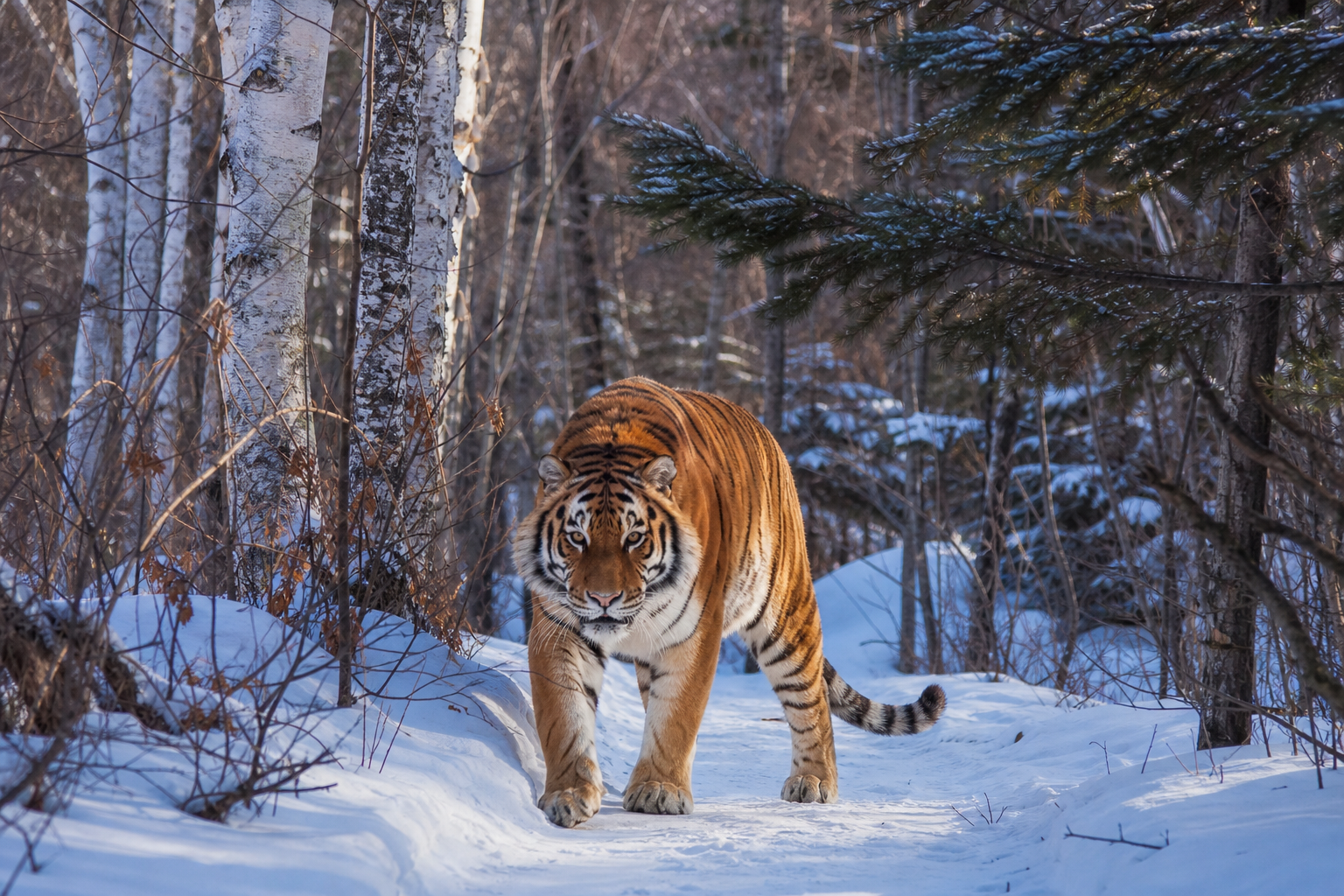
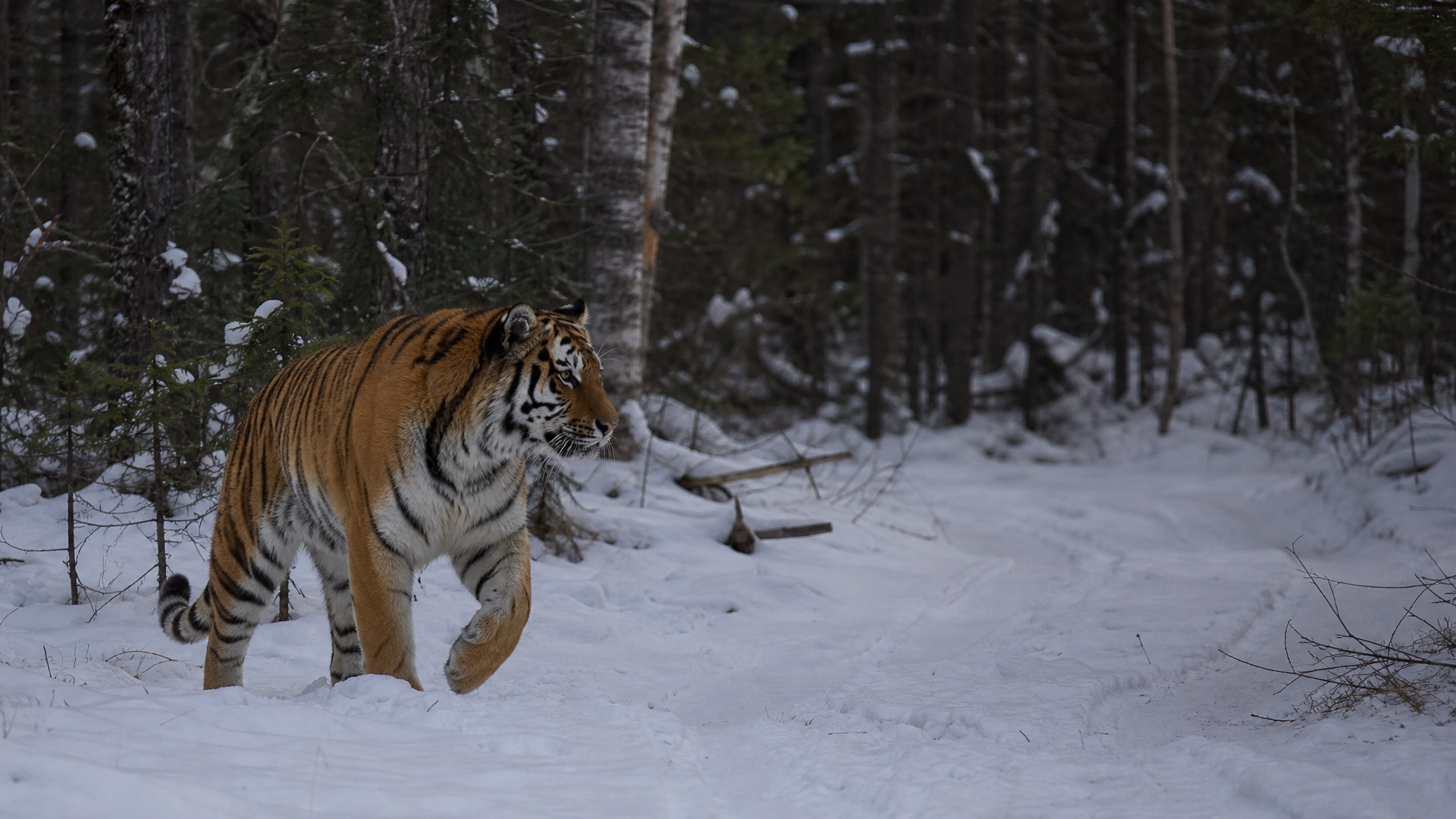
The snow gives away almost everything except the tiger itself. Hoof marks cross a frozen track. A raven shifts in a cedar. Far back among birch trunks and Korean pine, something orange passes between shadow and light, and the forest seems to hold its breath until the stripes are gone.
The Amur tiger is built for cold country and long distances. Its coat is pale and thick, the body immense, the paws broad enough to press through snow without wasting strength. It does not fill the forest with noise. It reads it: the trail of a wild boar, the pause of a deer, the change in wind along a ridge. A hunt may end in one violent rush, but most of the life around it is waiting, walking, and knowing when not to move.
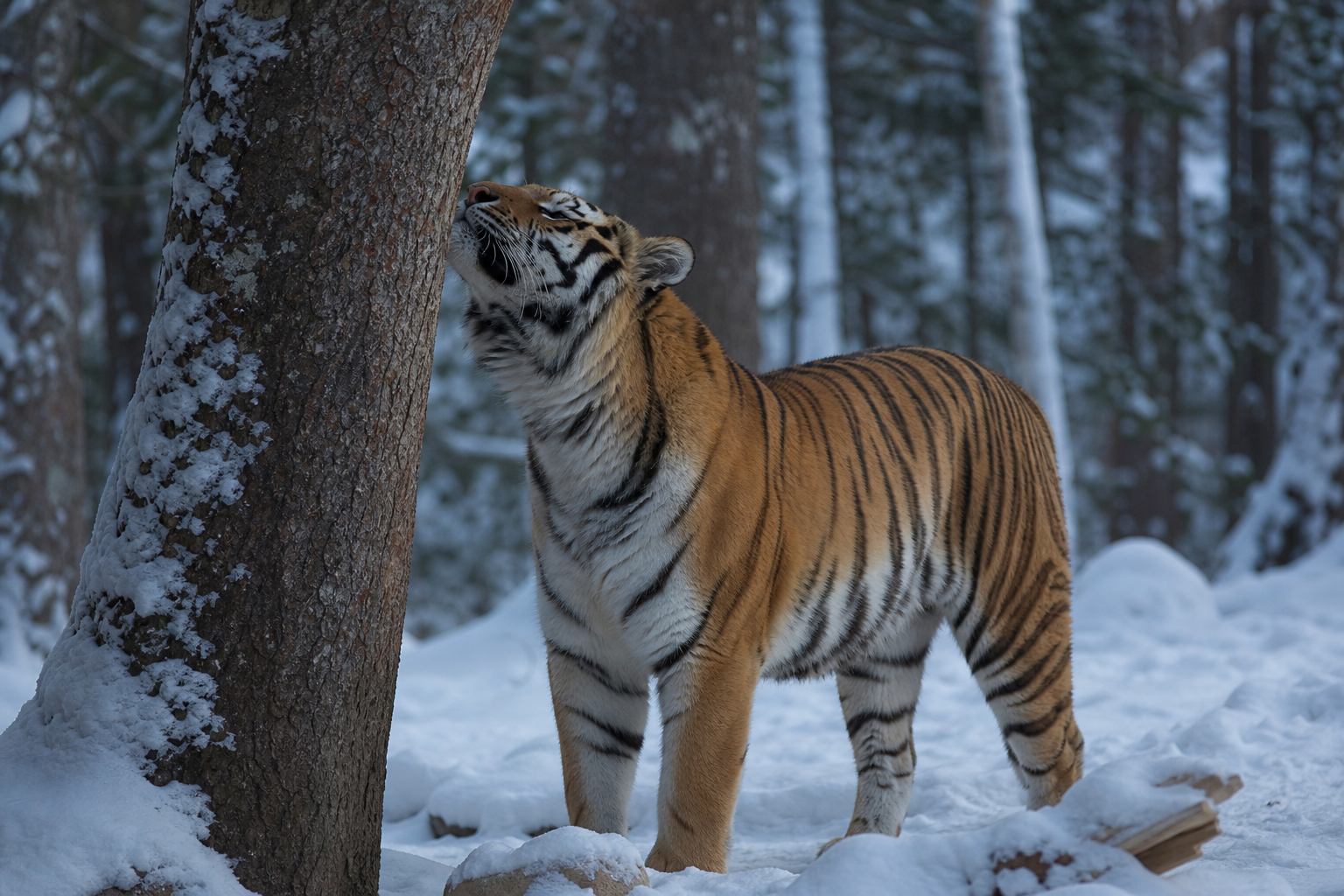
To be near its sign is to feel the taiga rearrange itself. Tracks larger than a human hand turn a logging road into a question. Musk on a tree, scratches in bark, a kill covered with snow: these are the tiger's sentences.
Where this cat survives, the forest still has depth enough for prey, cover, and secrecy. Poaching, roads, and shrinking corridors can make even a vast map feel narrow. The tiger passes behind the trees, and winter closes over the path it took.