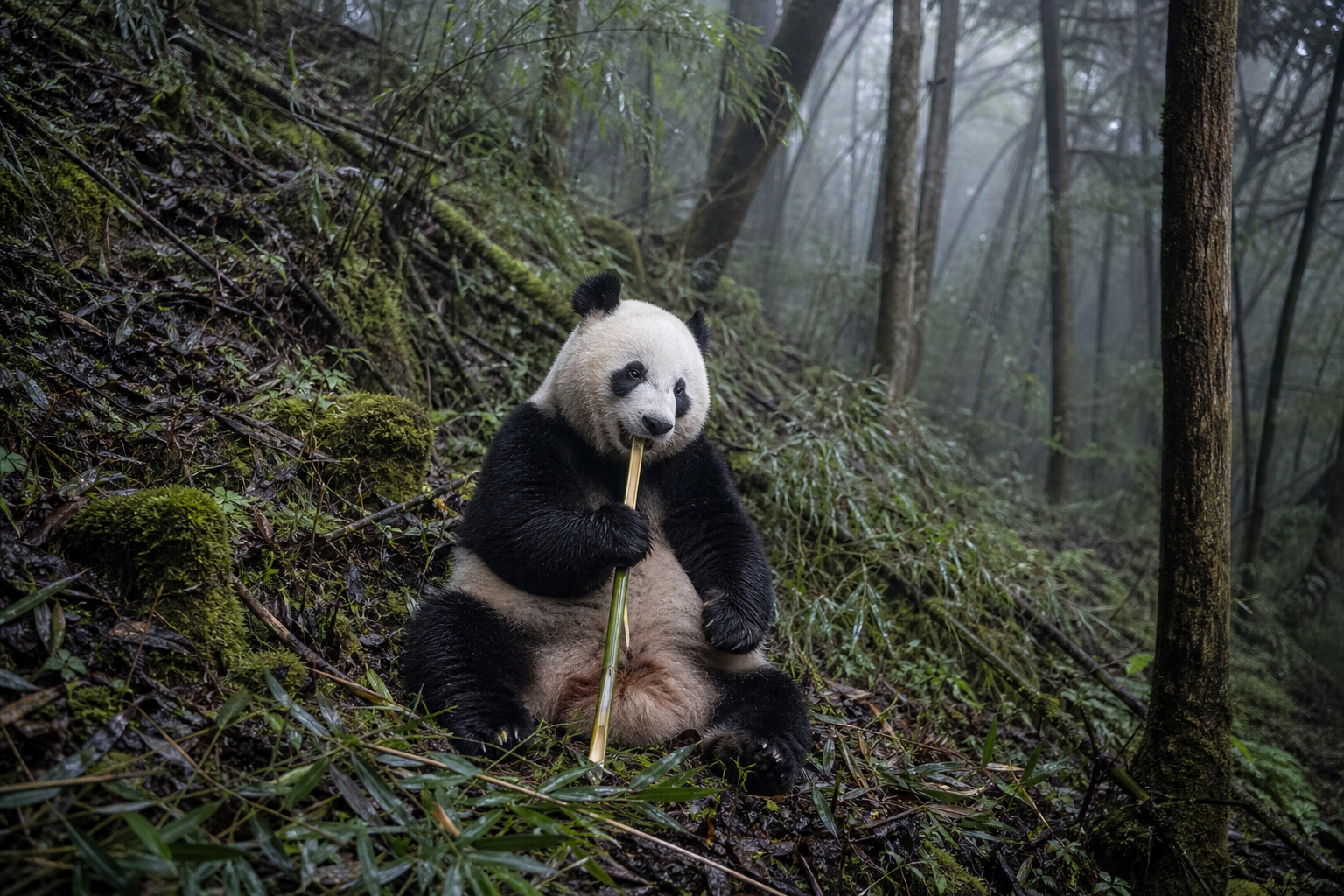
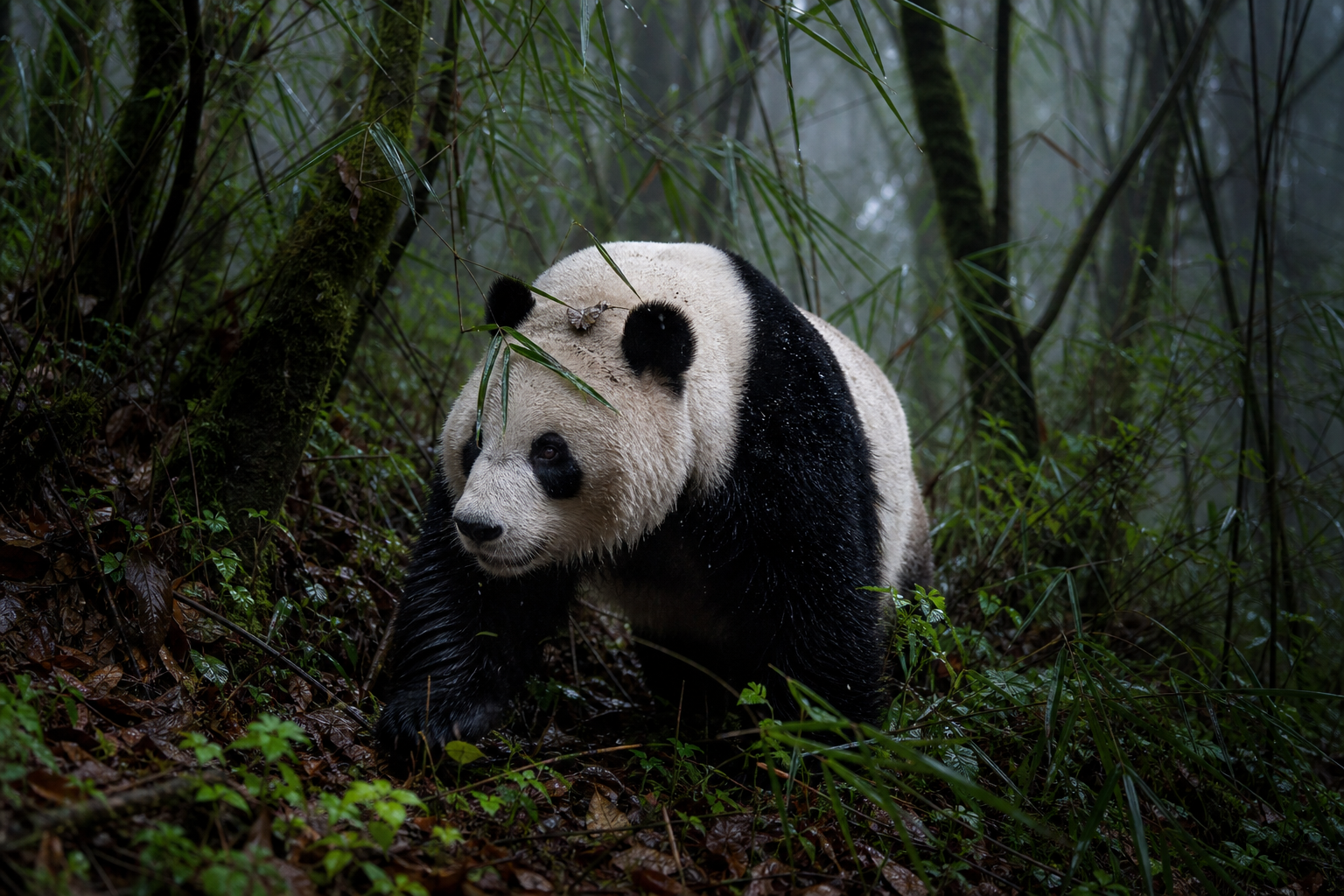
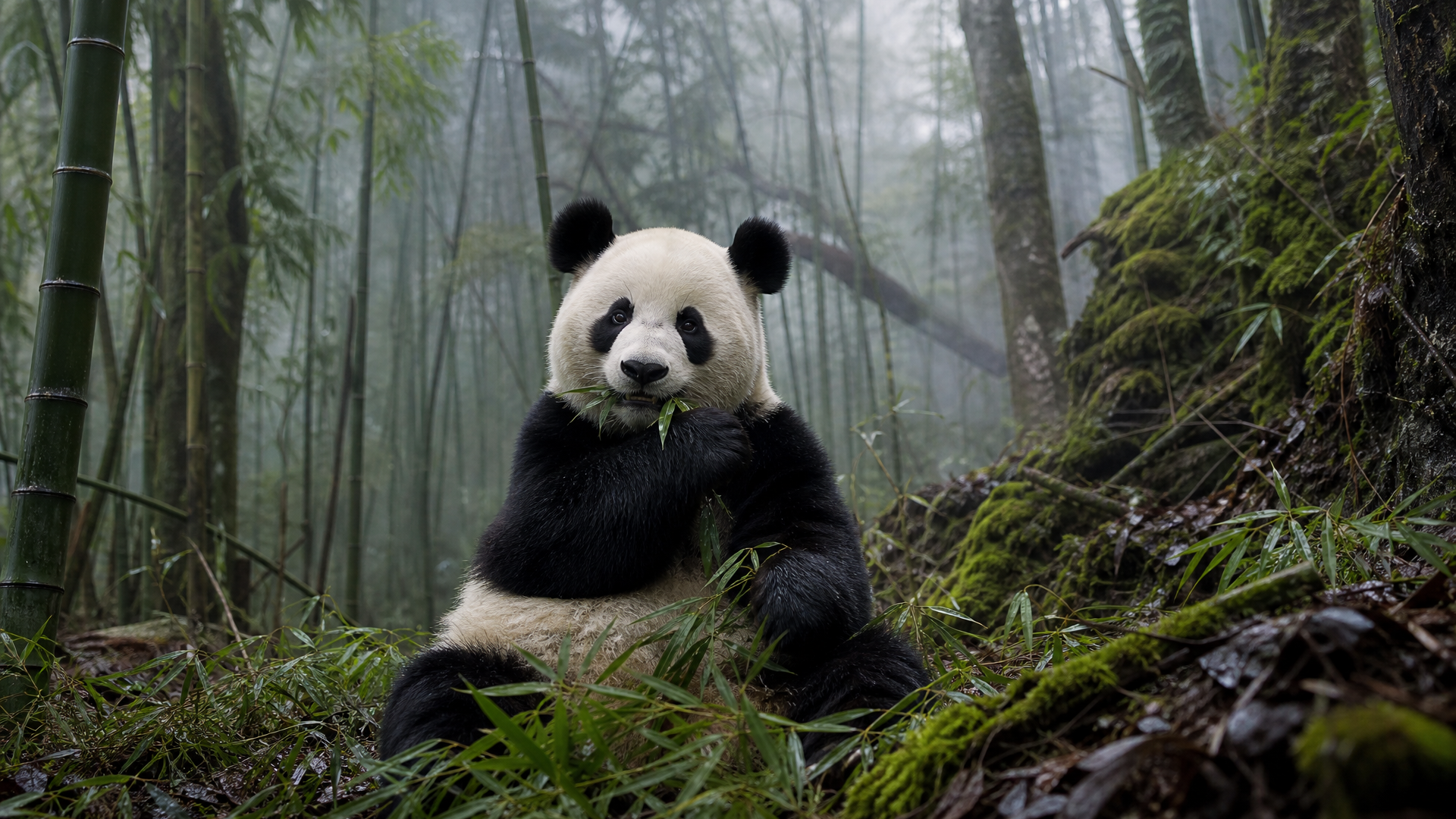
Mist holds low in the Qinling forest, silvering the bamboo leaves before the day has fully opened. A heavy shape sits among the stems with its back against the slope, one paw drawing a stalk inward, jaws working with steady concentration. Around it, water ticks from leaves into moss.
The giant panda seems built from contradictions. It carries the skull and shoulders of a bear, yet spends much of its life in the patient work of stripping, biting, and choosing. A false thumb, made from a wrist bone, braces bamboo against the paw. The round face looks gentle because the muscles of the jaw are large, not because the forest has made life easy. It climbs when it must, scent-marks with careful insistence, and moves through its mountain home as a mostly solitary presence, leaving signs on trunks long after the animal itself has gone.
In these Chinese mountains, the panda is more than a beloved face. Its need for connected bamboo forest protects whole slopes of pheasants, takins, salamanders, and old trees. Roads, farms, and warming patterns have narrowed and shifted the green corridors it depends on. The panda lowers its head again. Bamboo fibers split softly, and the mountain keeps its quiet around that sound.