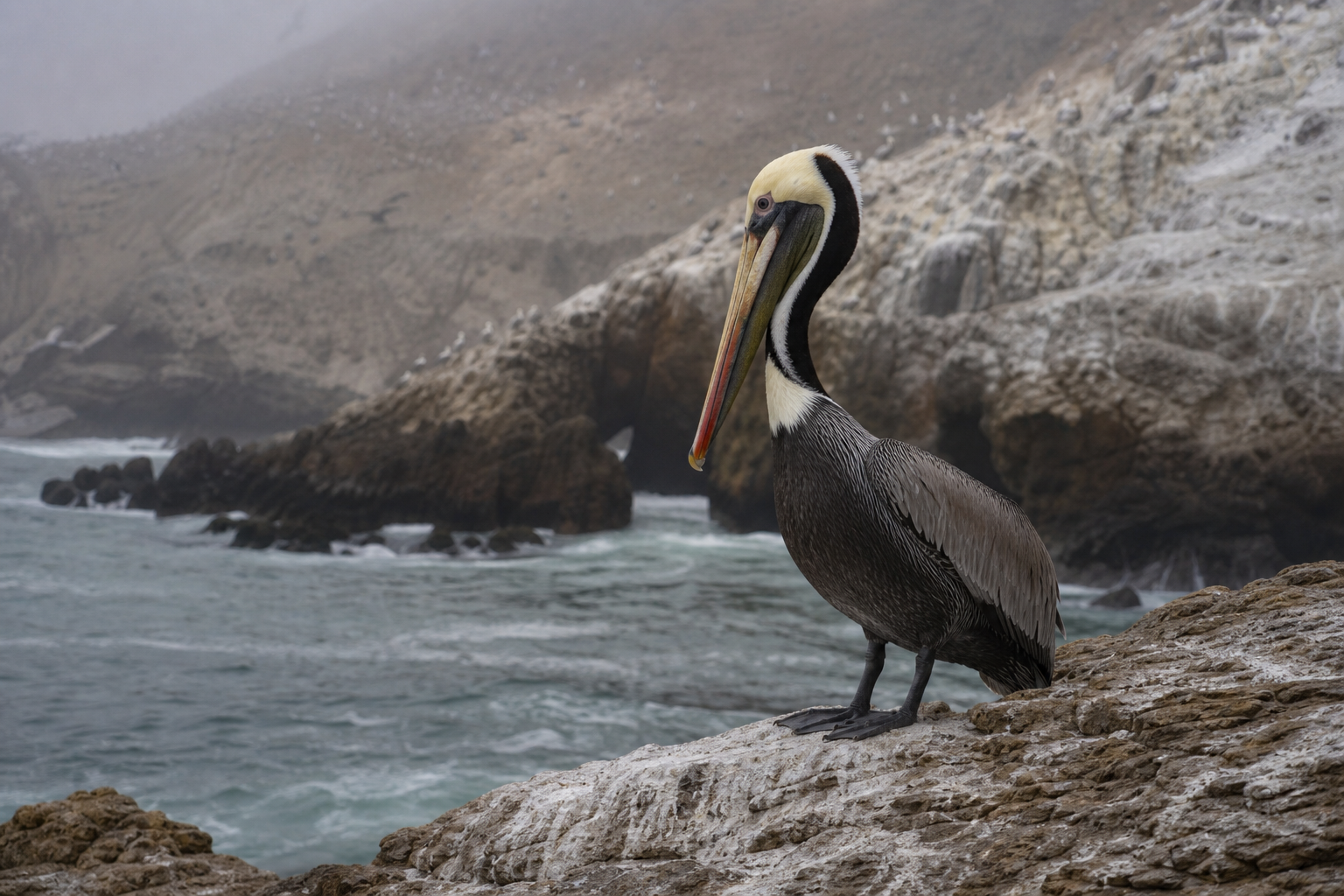
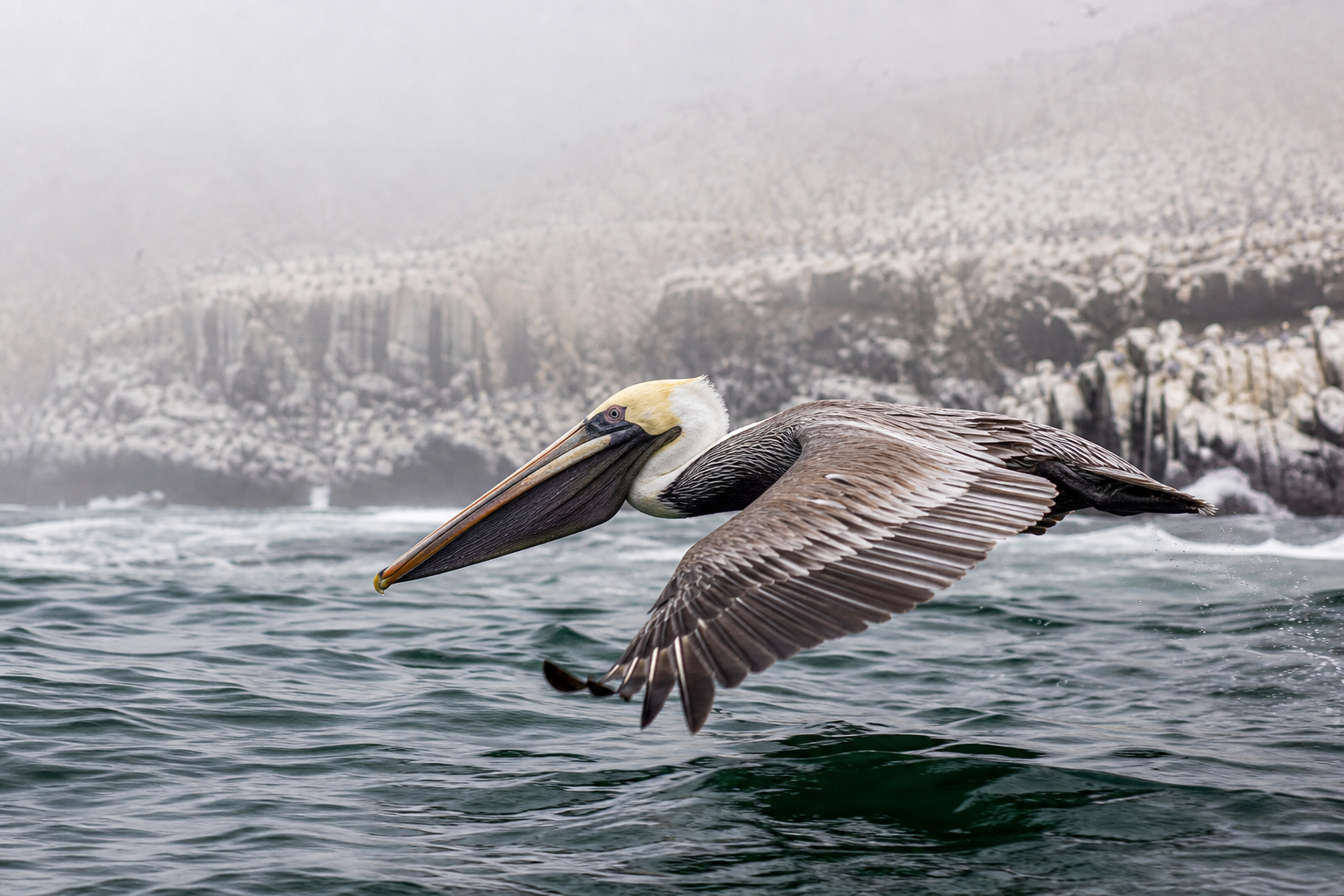
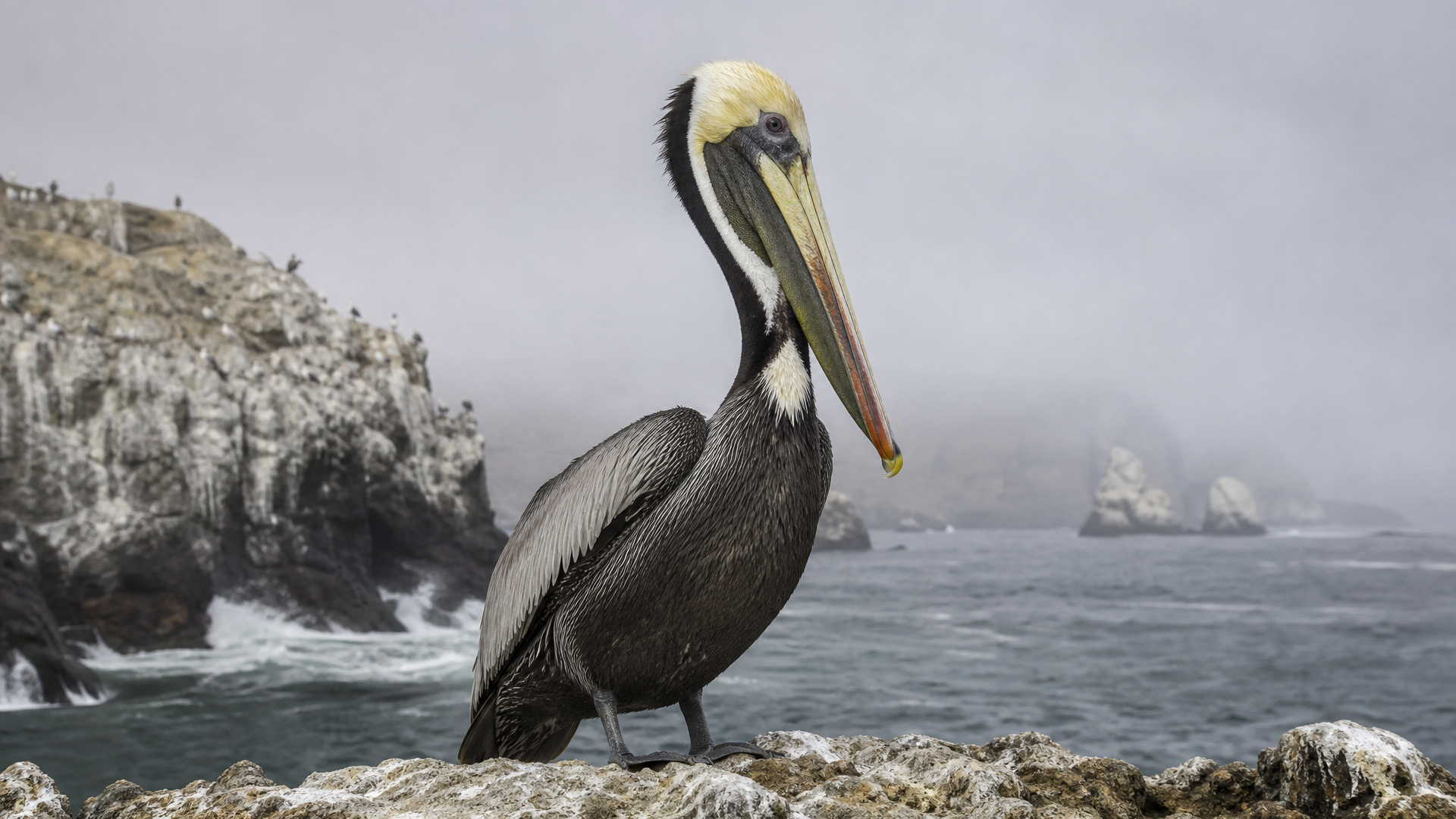
A brown line of pelicans passes low over the Pacific, wings rising and falling in slow agreement with the swell. Below them, anchovies turn the water alive. Above them, the desert coast holds its breath in cliffs, ports, islands, and guano-white rock.
The Peruvian pelican is a bird of heavy grace. It can look ponderous at rest, with a long bill, deep throat pouch, and large body folded among others on shore. In flight, the weight becomes rhythm. Birds skim close to the surface, adjusting together with small changes of wing and neck, then gather where fish push upward. A plunge, a scoop, a pouch full of water and prey: feeding is physical, almost industrial, but still finely timed. Colonies bring noise, smell, and motion to bare islands where the sea's productivity becomes visible in living bodies.
This pelican is tied to the Humboldt Current as tightly as any headline species. Fish abundance, El Nino events, pollution, disturbance, and fisheries decide much of its year before the bird ever opens its bill. Along the coast, a flock settles on a breakwater at dusk, and the line between working harbor and wild ocean grows thin.