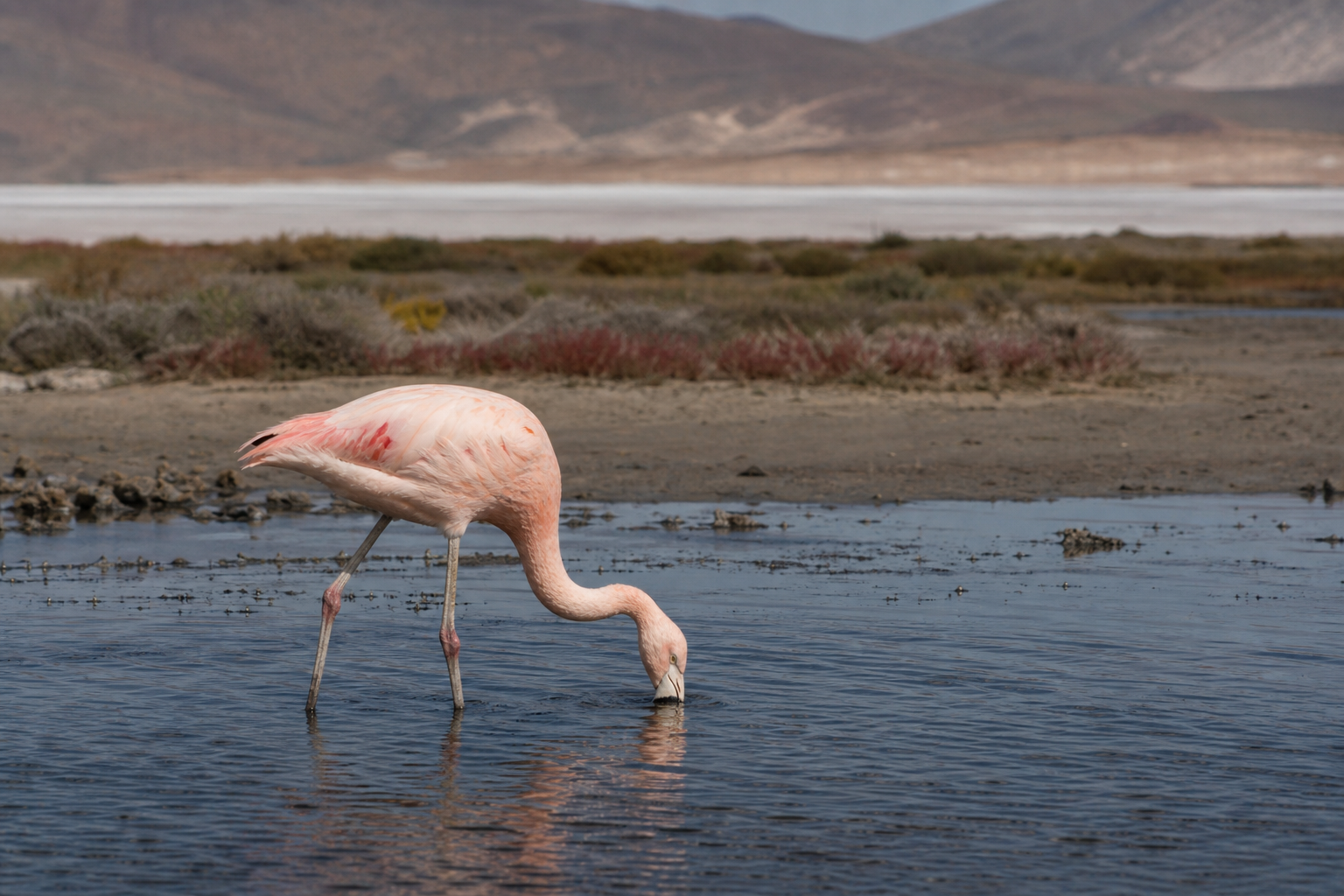
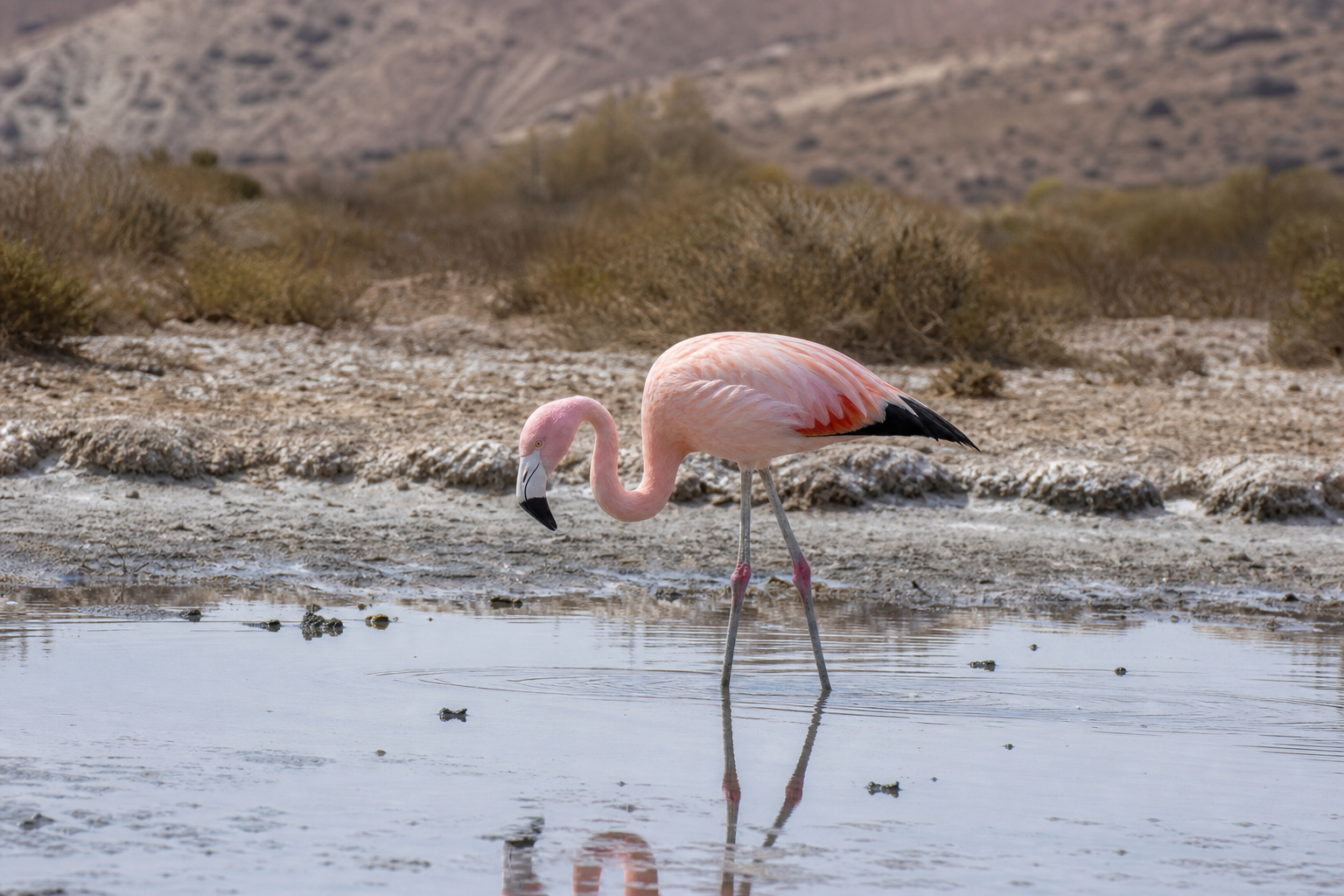
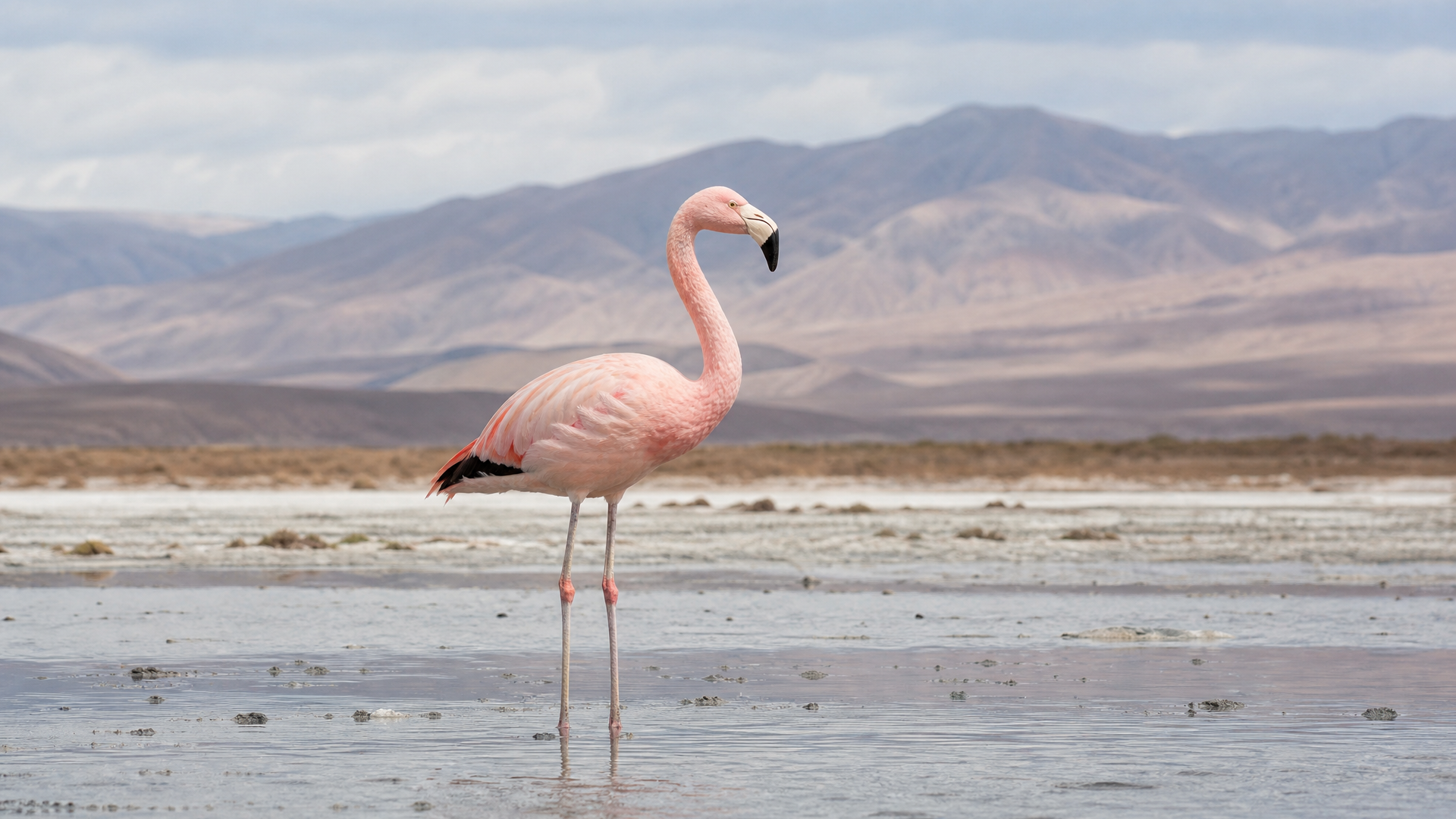
In a shallow lagoon, wind ruffles water the color of tin and sky. Flamingos feed with their heads upside down, pale pink bodies bent into reflection, legs drawing quiet lines through mud. When one lifts its neck, the whole flock seems to gain height.
The Chilean flamingo turns harsh wetlands into elegance without softening them. It feeds by filtering small life from brackish shallows, bill moving through water and sediment with steady precision. The color in its feathers is gathered from food and carried outward into display, flight, and courtship. A flock can appear delicate from far away, but close to the ground its life is full of salt, wind, mud, and alertness. Birds rest on one leg, call in low murmurs, and lift together when danger crosses the open water.
For the Pacific coast chapter, this flamingo widens the shore beyond cliffs and islands into lagoons, estuaries, and inland salt water linked by movement. Wetland loss, water extraction, mining pressure, disturbance, and changing hydrology can empty places that looked permanent. A flock rises, black-tipped wings showing briefly, and the lagoon is left with its own pale sky.