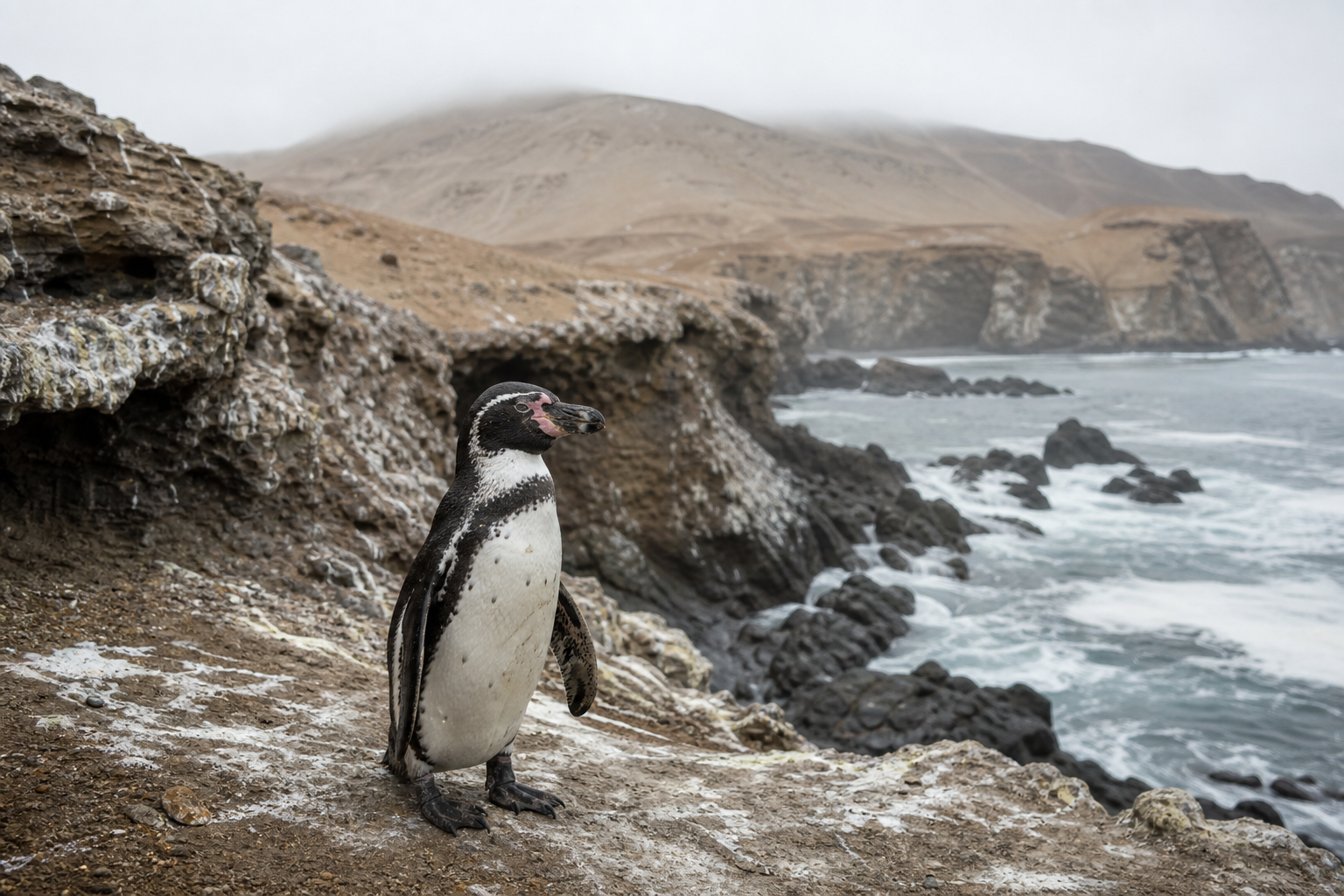
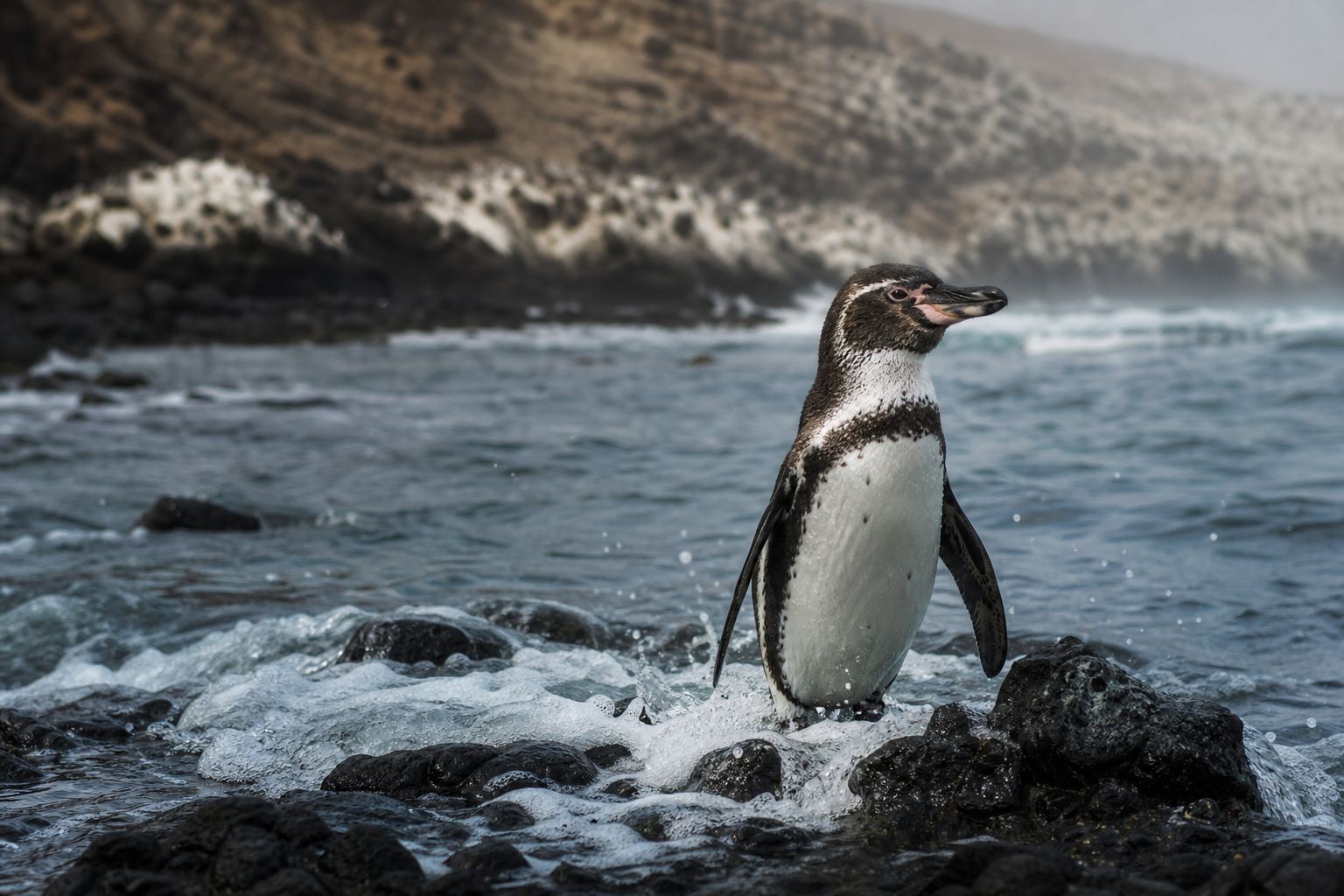
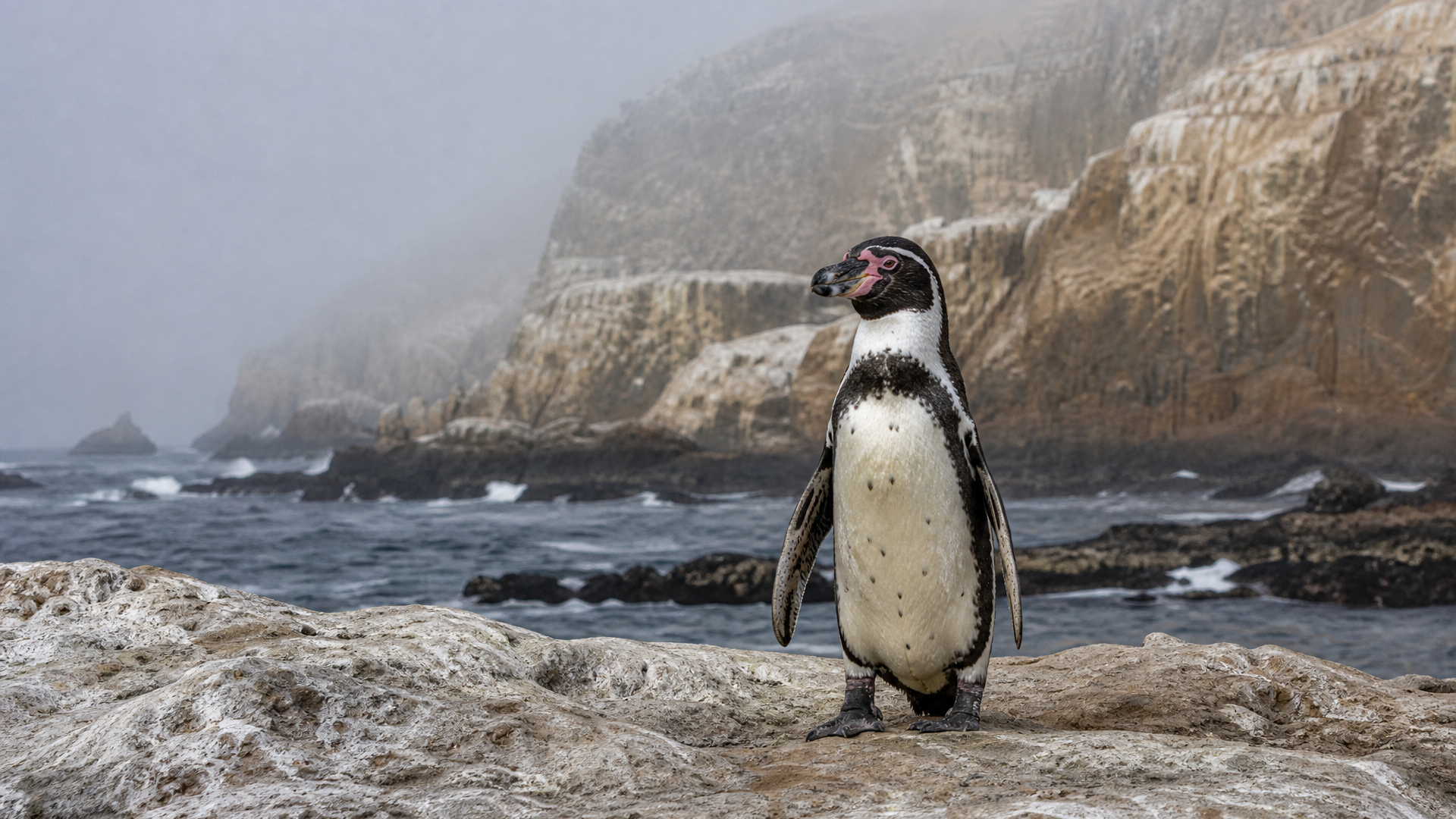
Along the dry Pacific coast, cliffs rise above water made rich by cold current. A penguin stands at a burrow entrance in guano, sand, and stone, black back turned to the glare of a desert that comes almost to the sea.
The Humboldt penguin belongs to one of the world's great coastal contradictions: arid land beside productive water. It nests in burrows, caves, and scraped places where shade can mean survival, then goes to sea with the speed and compact purpose of all penguins. Anchovies and other schooling fish draw it offshore, and the bird follows currents that can feed colonies or fail them. On land, pairs call in braying voices, chicks wait in dusty shelter, and adults return through surf carrying the day's catch inside themselves.
This penguin gives the mainland Pacific coast a story parallel to the Galapagos, but harsher in its desert clarity. Guano extraction, fisheries, disturbance, introduced predators, and changing ocean conditions have all marked its colonies. Still, when a group porpoises through cold water below sun-white cliffs, the coast reveals its bargain: little rain above, abundance below, and no guarantee between them.