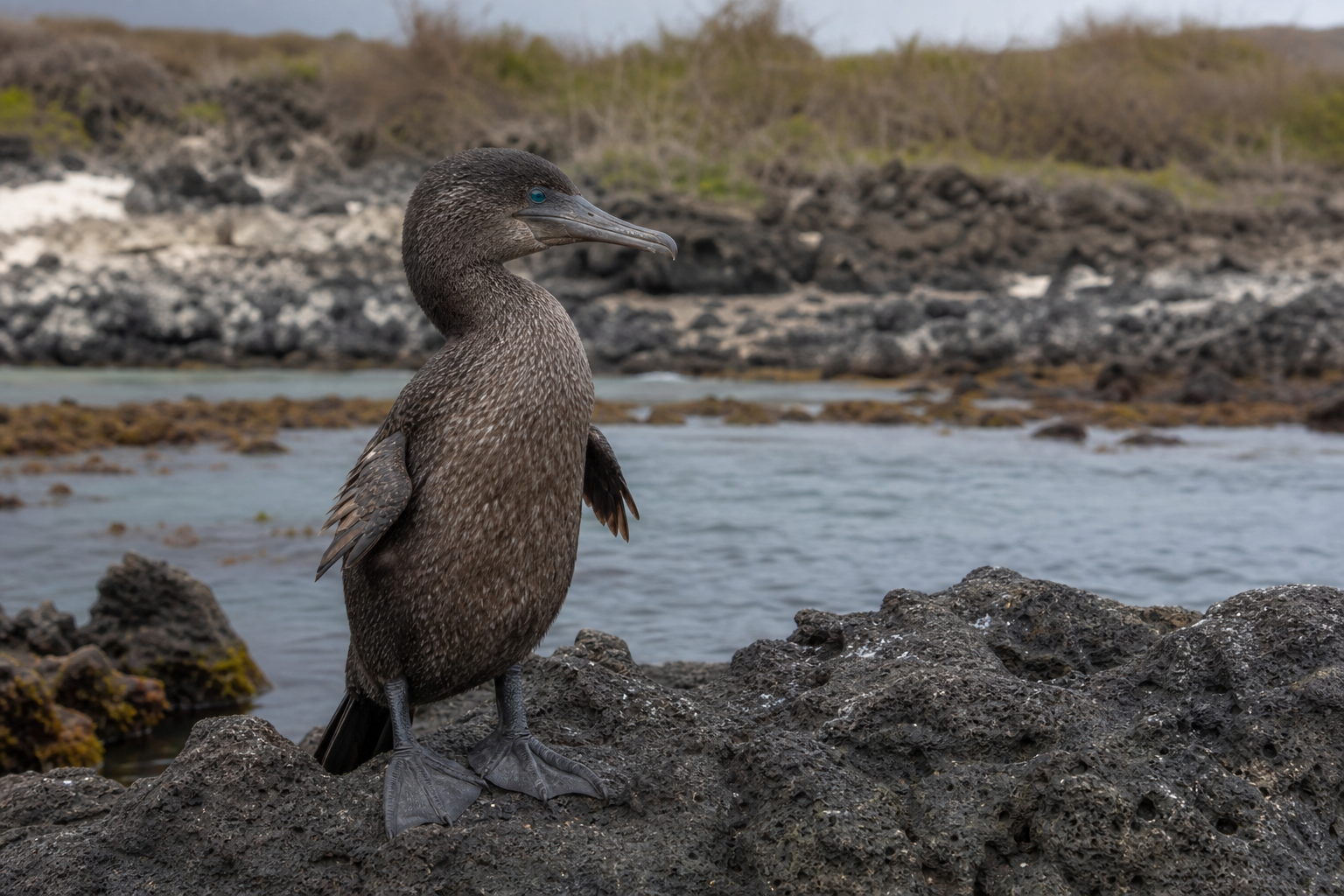
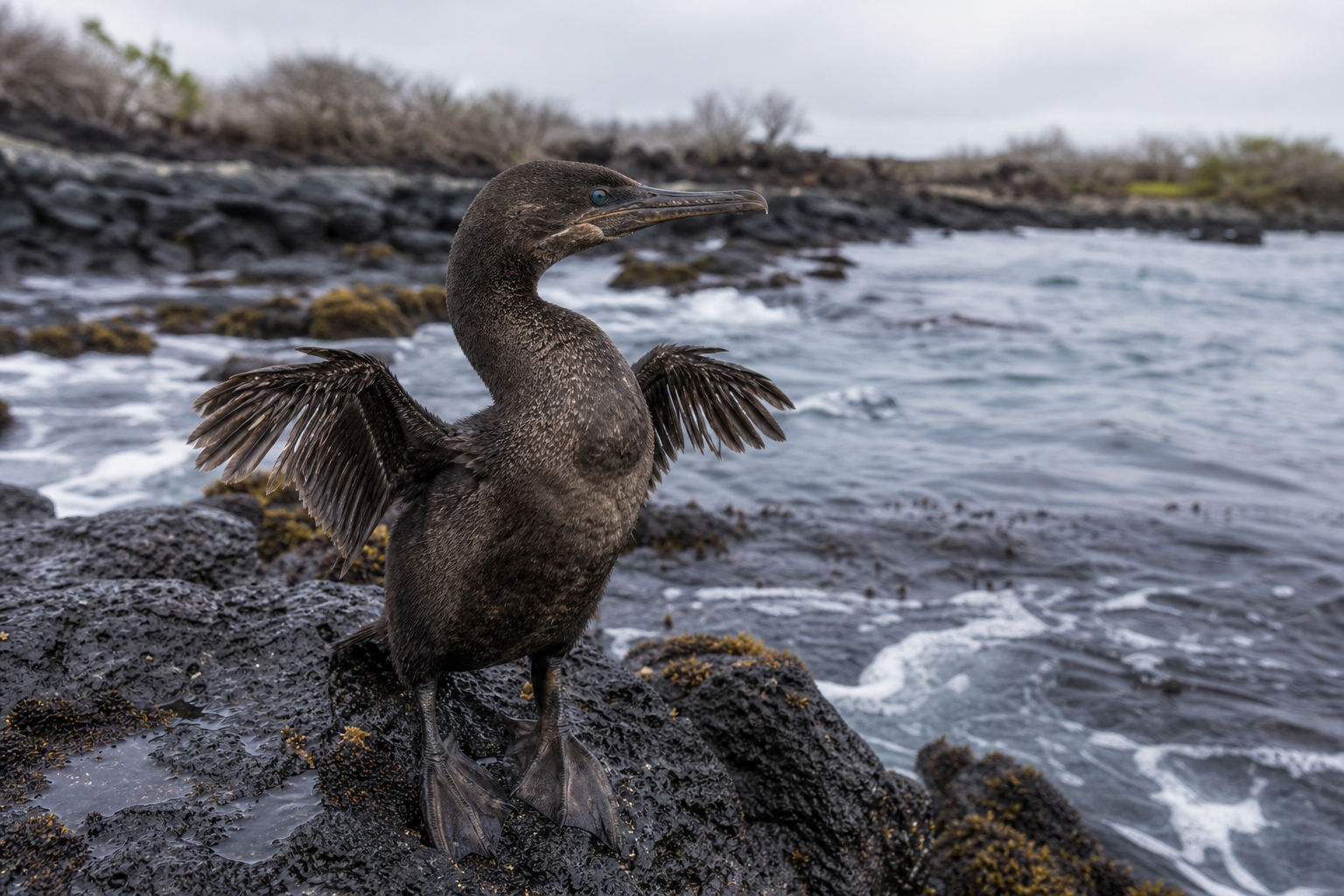
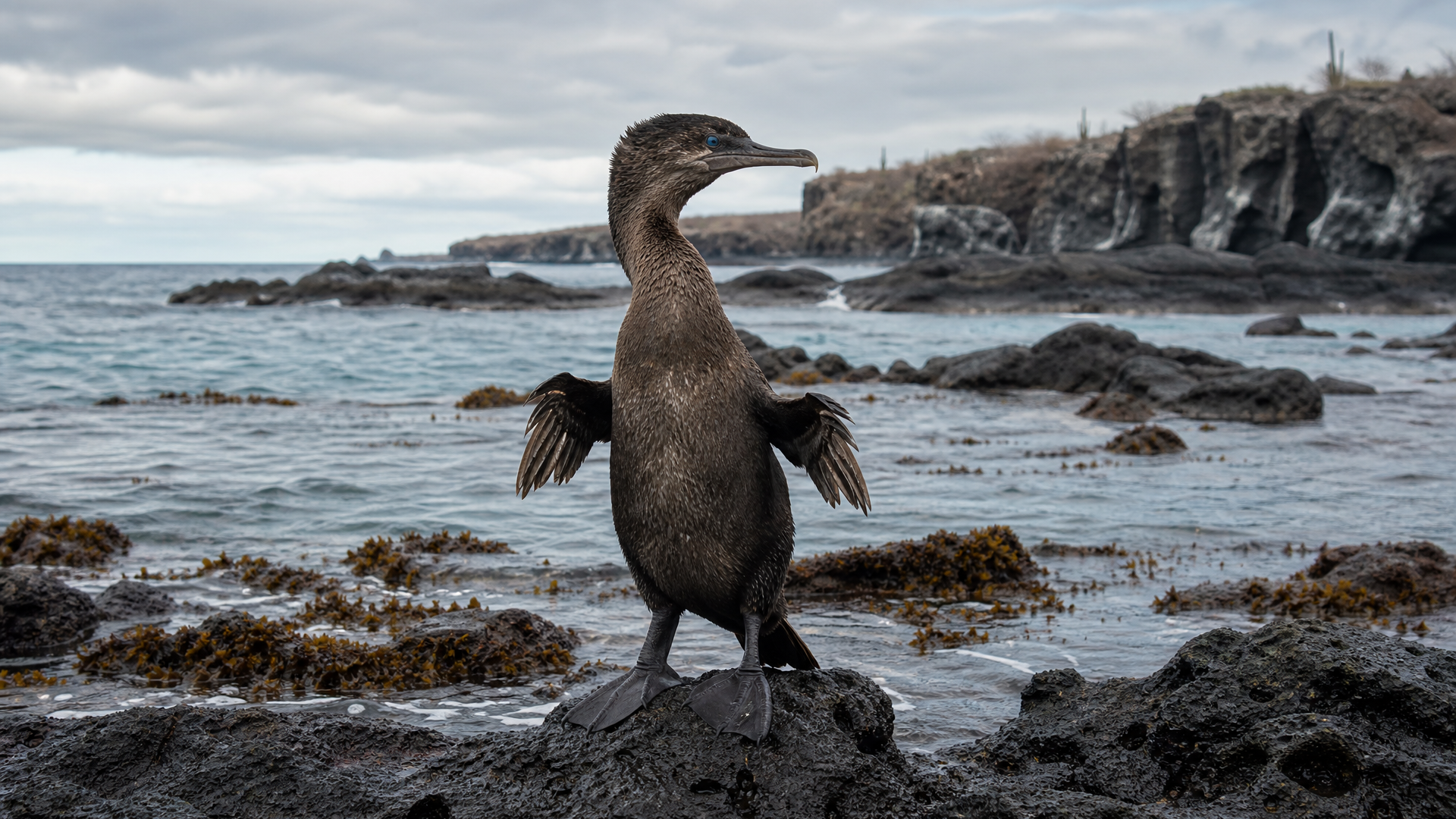
On a lava ledge beside clear water, a cormorant spreads wings too small for flight. They dry in the wind like a remembered tool. The bird turns its heavy head toward the sea, then steps down awkwardly and disappears into the place where its body makes sense.
The flightless cormorant has given up the sky for underwater work. In the Galapagos, where island isolation and rich nearshore water made escape by air less urgent, its body changed direction. Legs and feet drive it through the shallows with power, while the reduced wings help with balance rather than lift. It hunts close to shore among rocks, fish, eels, and octopus, surfacing with a dark head slicked back and eyes sharp from the dive. On land it looks unfinished only if flight is assumed to be the point.
For this coast, the bird is one of the clearest proofs that evolution is practical, not ornamental. It keeps its life near a few western islands, bound to cold water, nesting sites, and a narrow edge of sea. Oil, fishing gear, disturbance, and ocean warming can crowd that edge quickly. The cormorant climbs back onto rock, opens its small wings, and lets the wind pass through what remains.