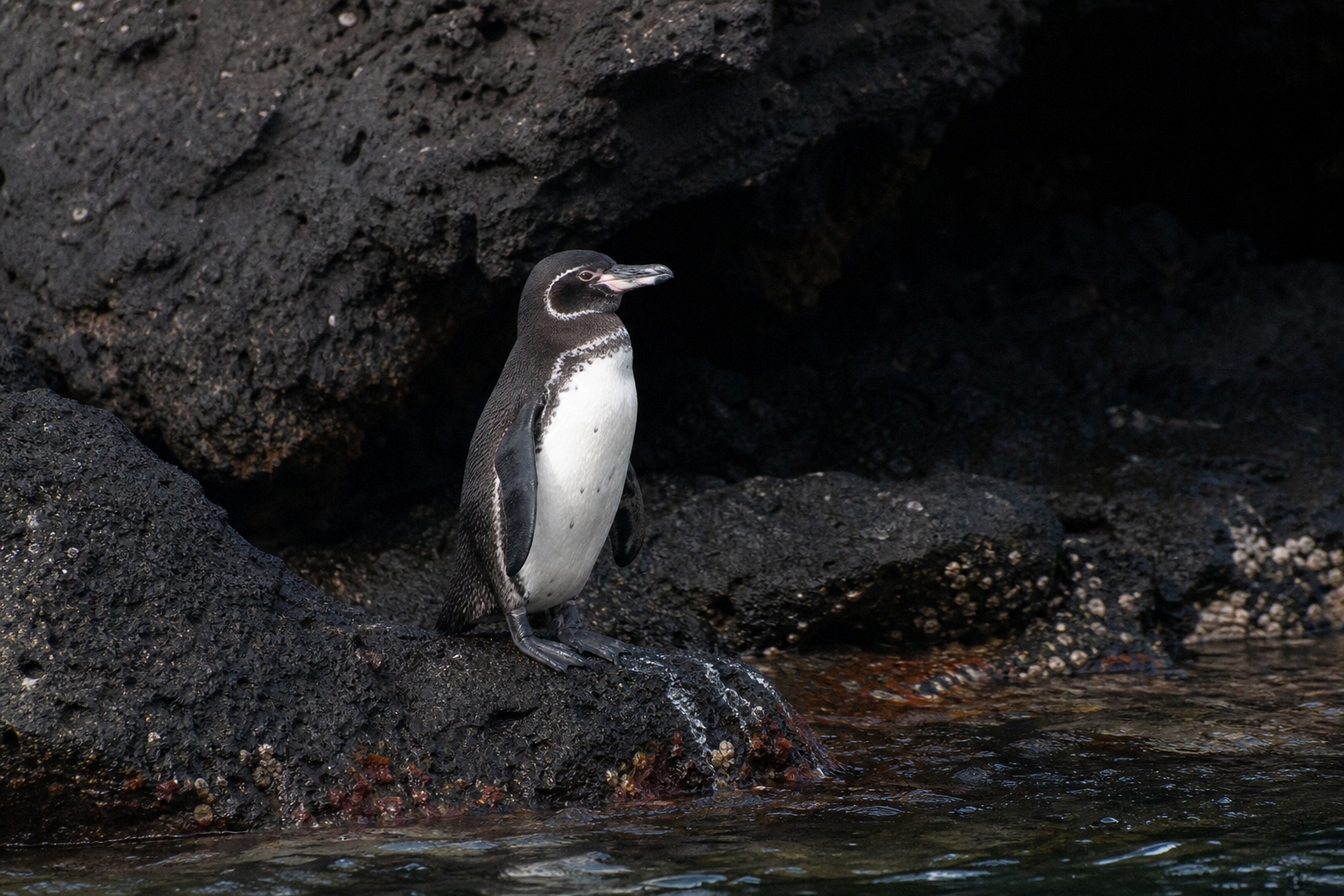
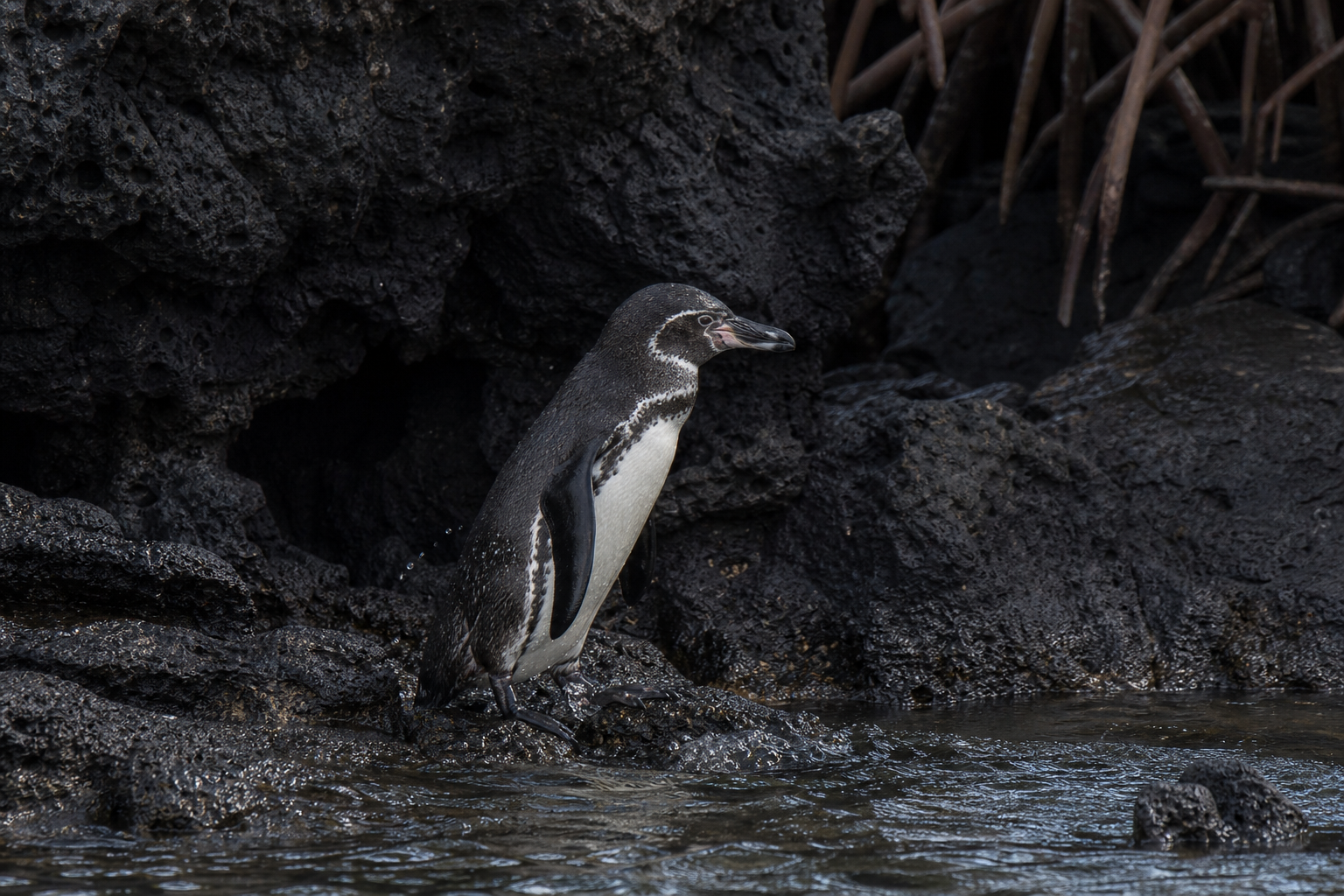
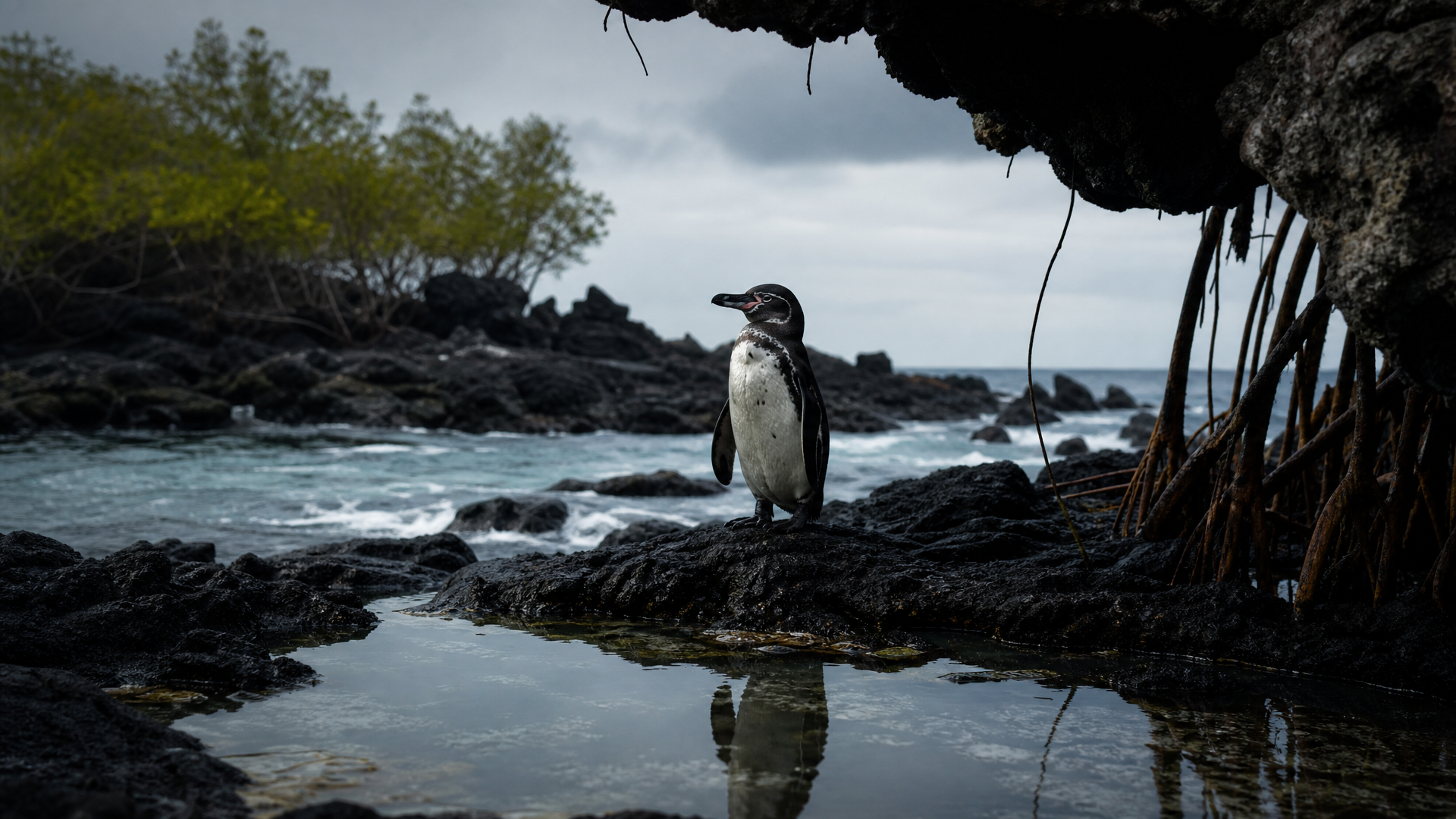
In the tropics, a penguin stands in the thin shade of lava, panting gently while heat trembles over black rock. The sight feels misplaced until the water below flashes cold and green, carrying the current that makes this small contradiction possible.
The Galapagos penguin lives by finding coolness in a hot place. It keeps close to productive upwellings, diving after small fish with quick wing strokes, then returning to shore where shade, crevices, and timing matter as much as speed. Its body is compact, its movements direct, its margin for error narrow. On land, pairs call from sheltered cracks and raise chicks when food allows, not by a simple calendar. In water, the penguin becomes a dart among baitfish, pursued in turn by larger hunters and watched from above by seabirds that read the same moving surface.
This bird makes the islands' ocean logic unmistakable. The Galapagos are tropical by latitude but not simple in temperature, and the penguin survives because cold current interrupts expectation. Warming events, low prey, introduced predators, disease, and disturbance all press hard on a small population. In the shade, a penguin waits for the tide to turn useful.