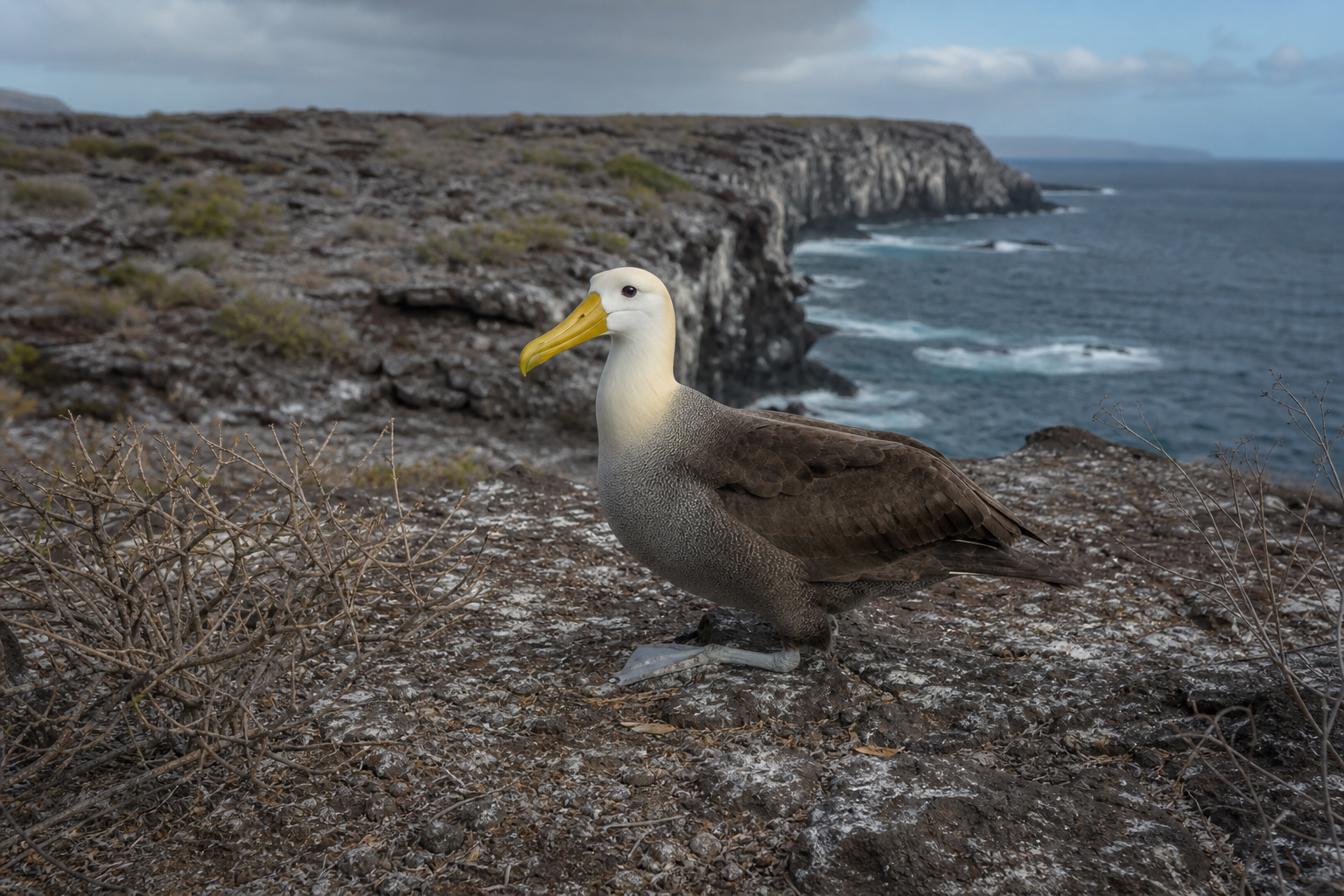
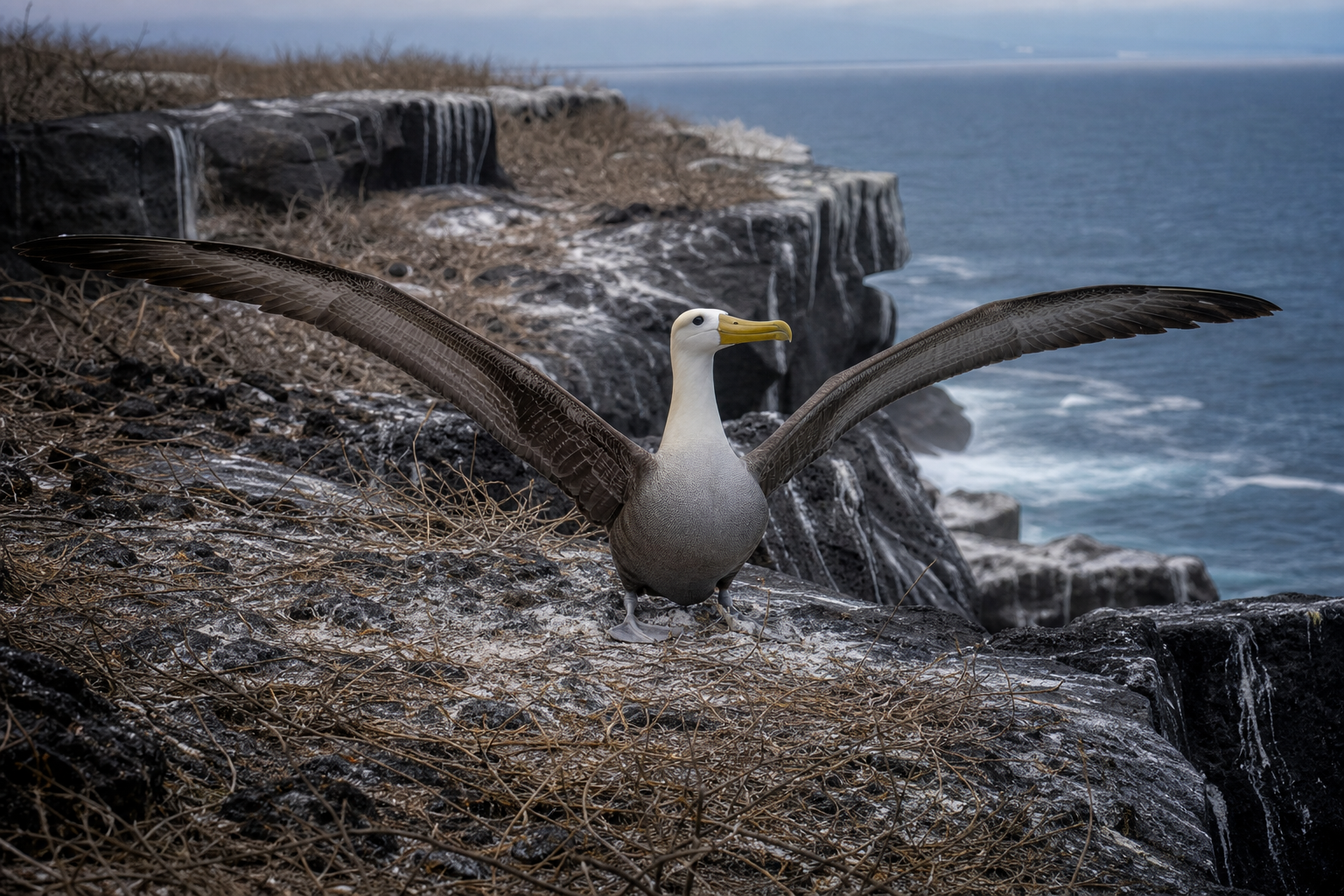
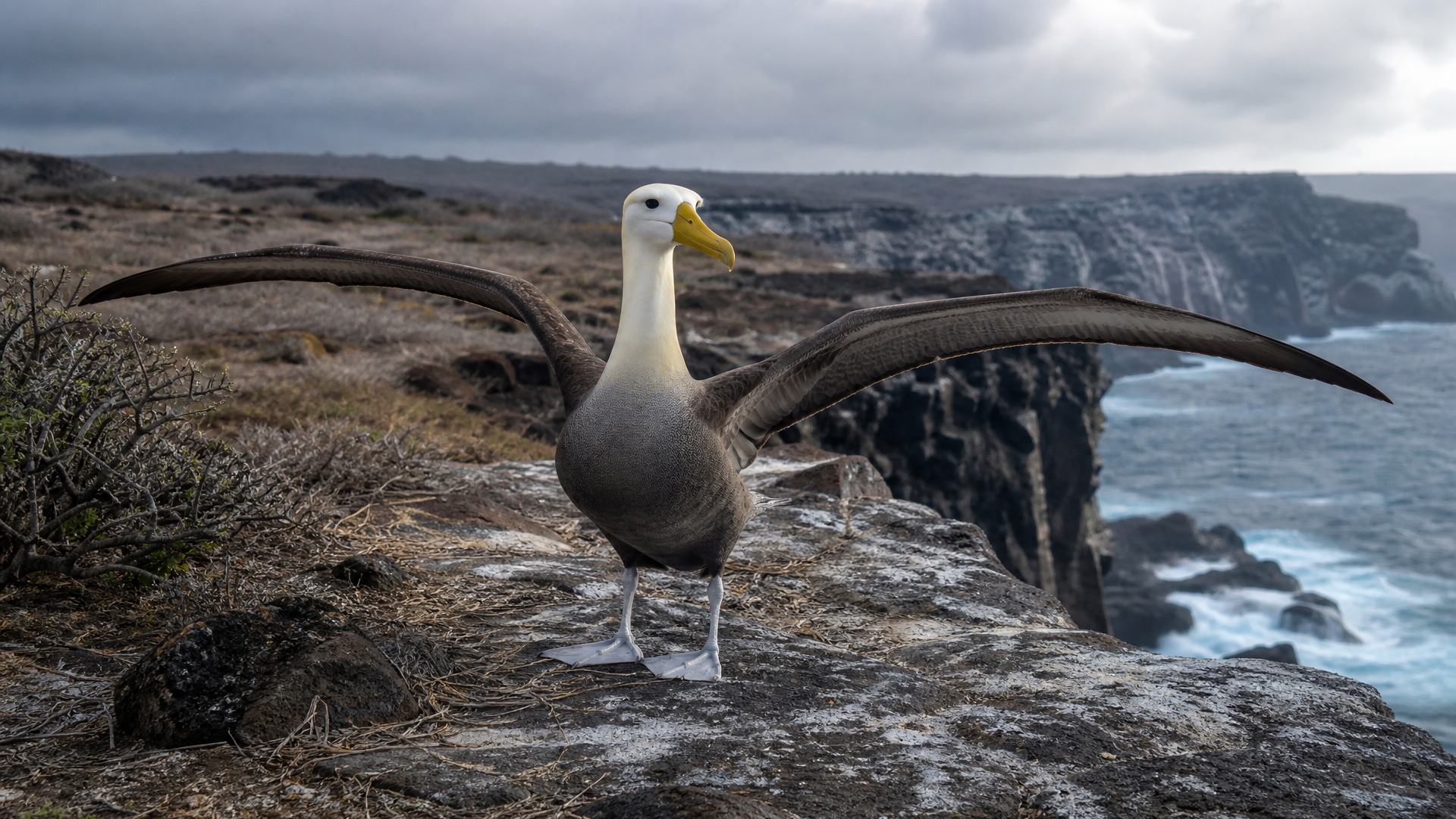
On Espanola, wind moves over low dry scrub and cliff edge until the air itself seems ready to leave the island. A waved albatross stands above the sea with its long bill angled into the gust. Then it opens narrow wings and steps into flight, exchanging rough ground for an ocean road.
The waved albatross is ungainly at close range and almost impossible to believe in the air. Its feet shuffle through courtship dances of bill clacking, bowing, and sky-pointing, rituals performed with grave attention between long-lived partners. But once the bird lifts beyond the cliffs, the body explains itself. Long wings hold the wind with astonishing economy, crossing wide Pacific distances where food appears in patches and the horizon gives few landmarks. It returns to land for nesting because the egg and chick demand ground, but the true scale of its life is pelagic, written in wind, squid, fish, and endurance.
This albatross gives the Galapagos a story that leaves the islands without abandoning them. It depends on protected breeding ground and an ocean not emptied or tangled by human gear. A bird banks beyond the cliff, and the island suddenly feels like a doorway rather than an edge.