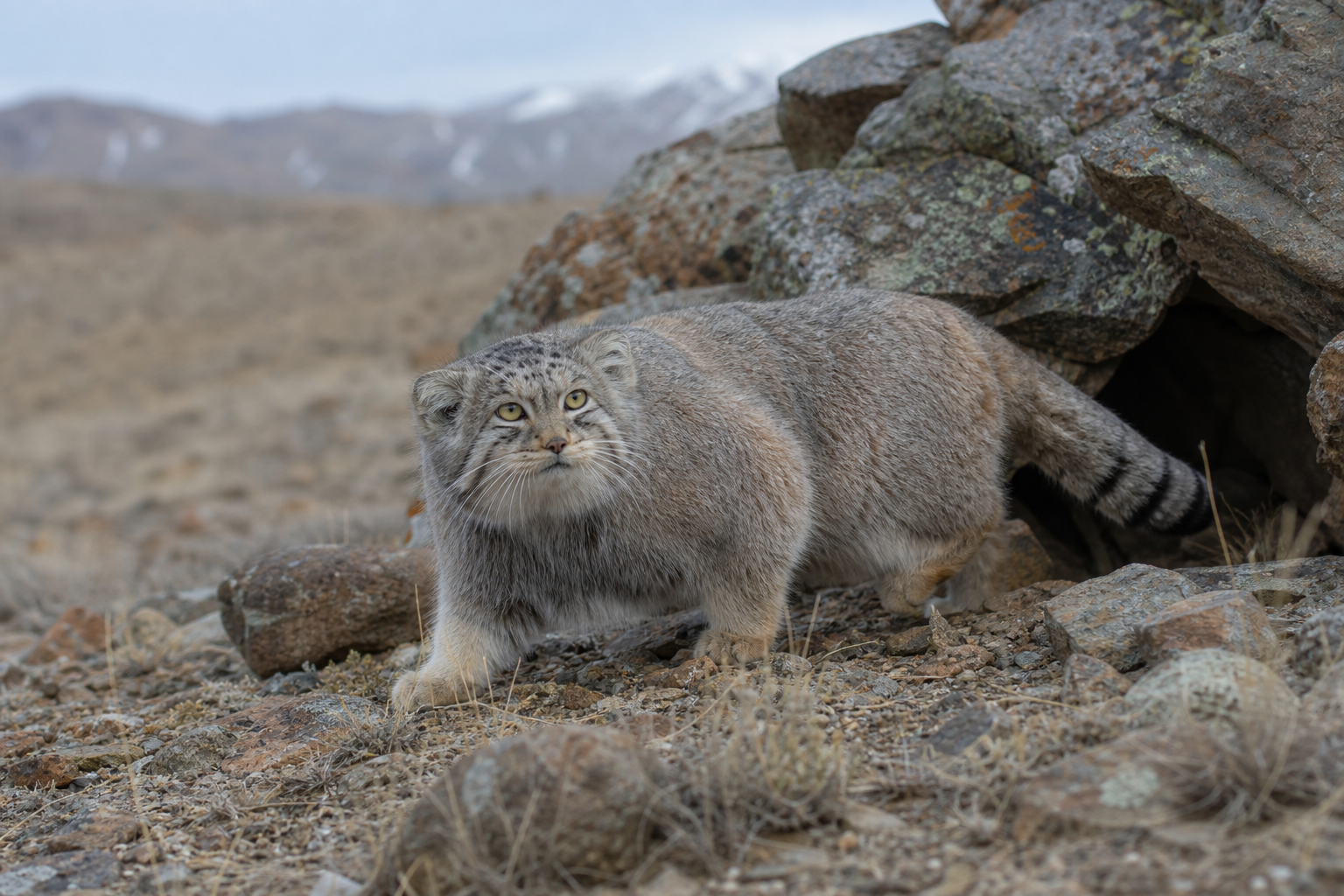
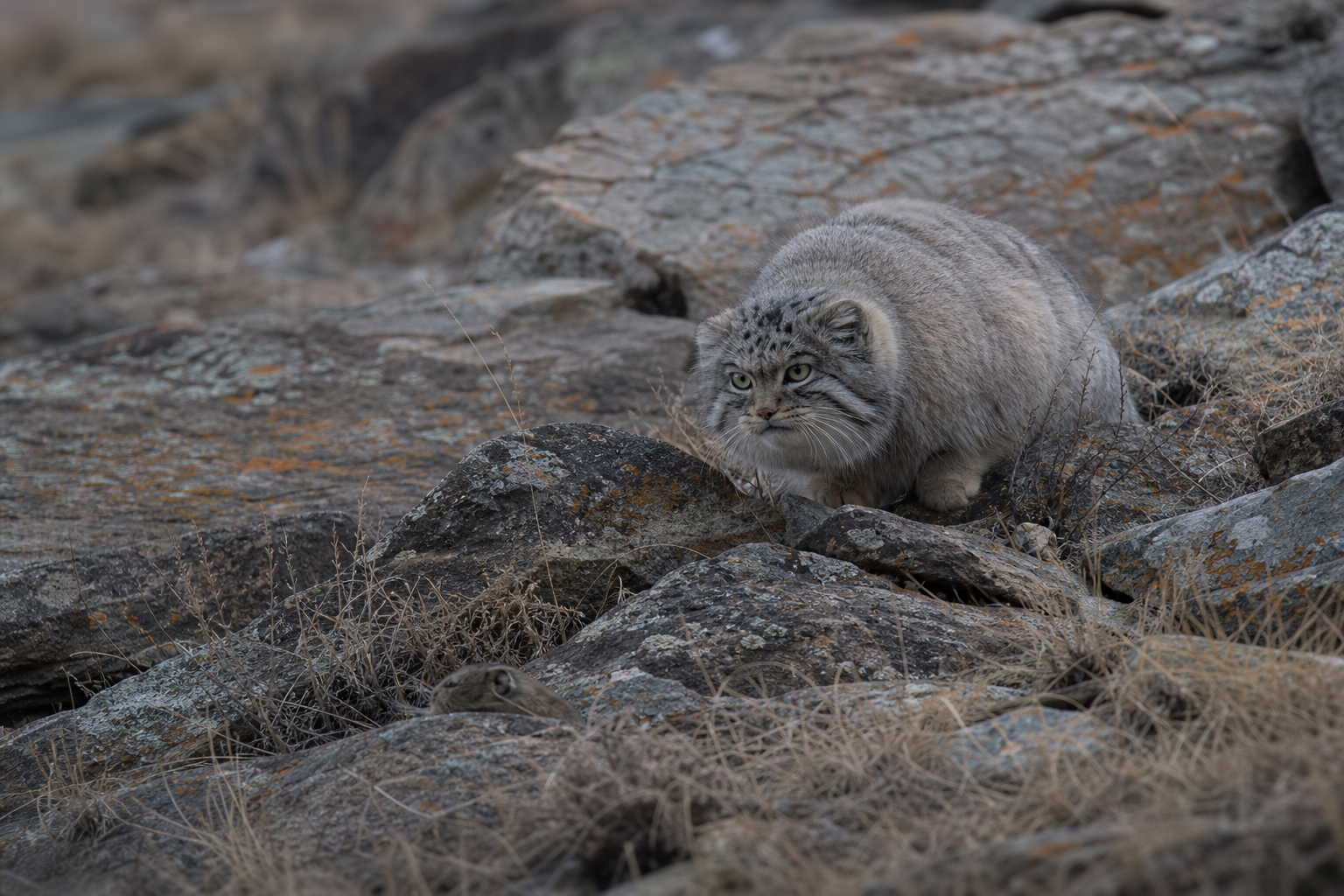
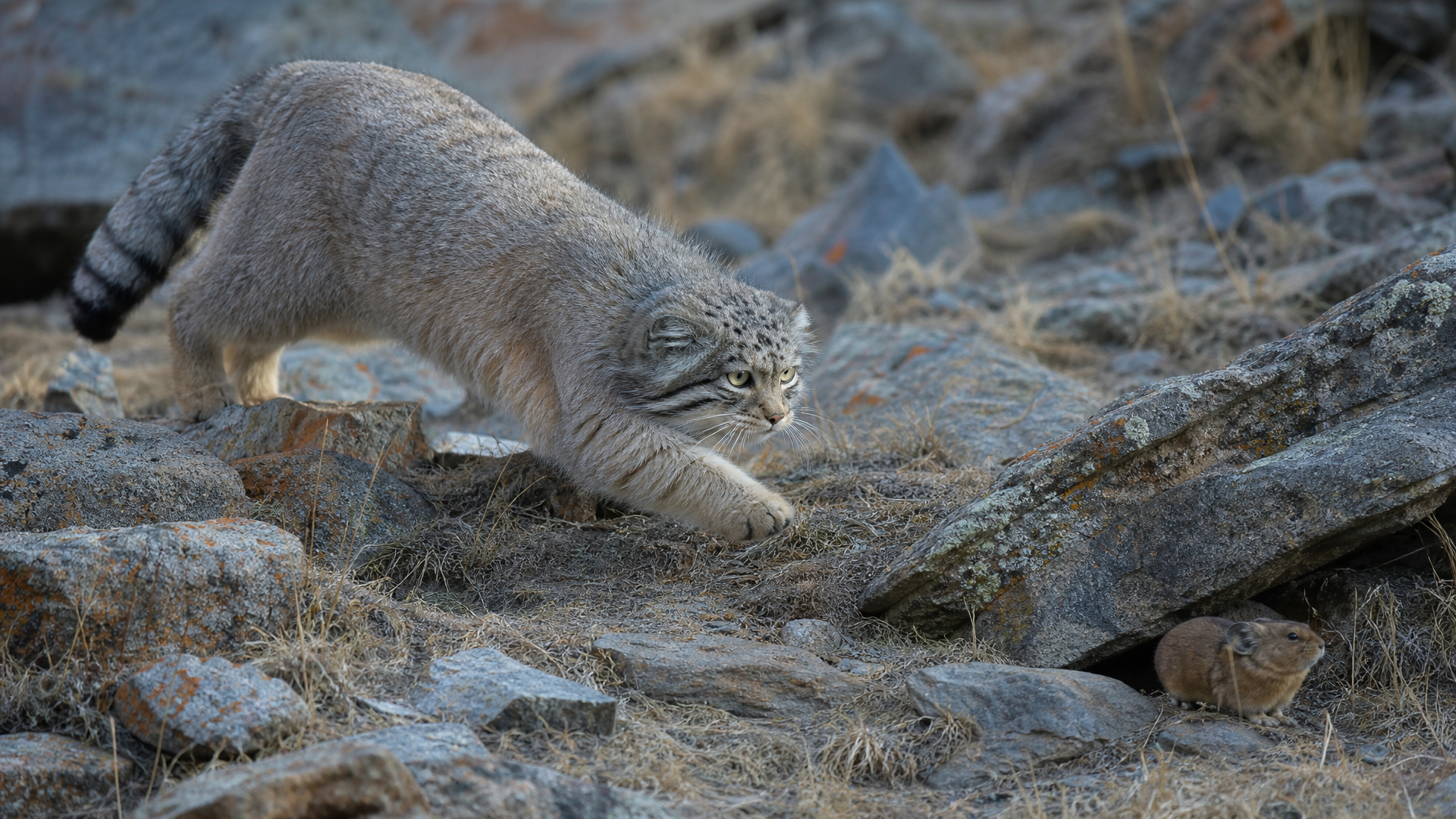
Evening comes early among the boulders of Mongolia's high steppe. Pikas call from rubble piles, wind slides through dry grass, and a round face appears at the mouth of a rock crevice. The cat does not step out at once. It watches until the whole slope seems to be waiting with it.
The Pallas's cat is built low to the ground, a compact body hidden under dense fur, ears set wide and flat so they barely break the line of stone. Its expression can look severe, but the animal is not performing. It is conserving heat, patience, and risk. A paw moves. Then another. It flows between rocks in short, careful advances, pausing whenever a pika's alarm sharpens the air. The tail follows like a striped brush. In open country, survival often means becoming less visible than the shadow beside a stone.
This cat belongs to the small life of Central Asia's uplands: burrows, grass stems, winter crust, and the quick bodies that vanish underground. Poisoning campaigns, grazing pressure, mining, and dogs can thin that quiet world from below. At dusk, the cat withdraws into rock, and the slope keeps its watchful face.