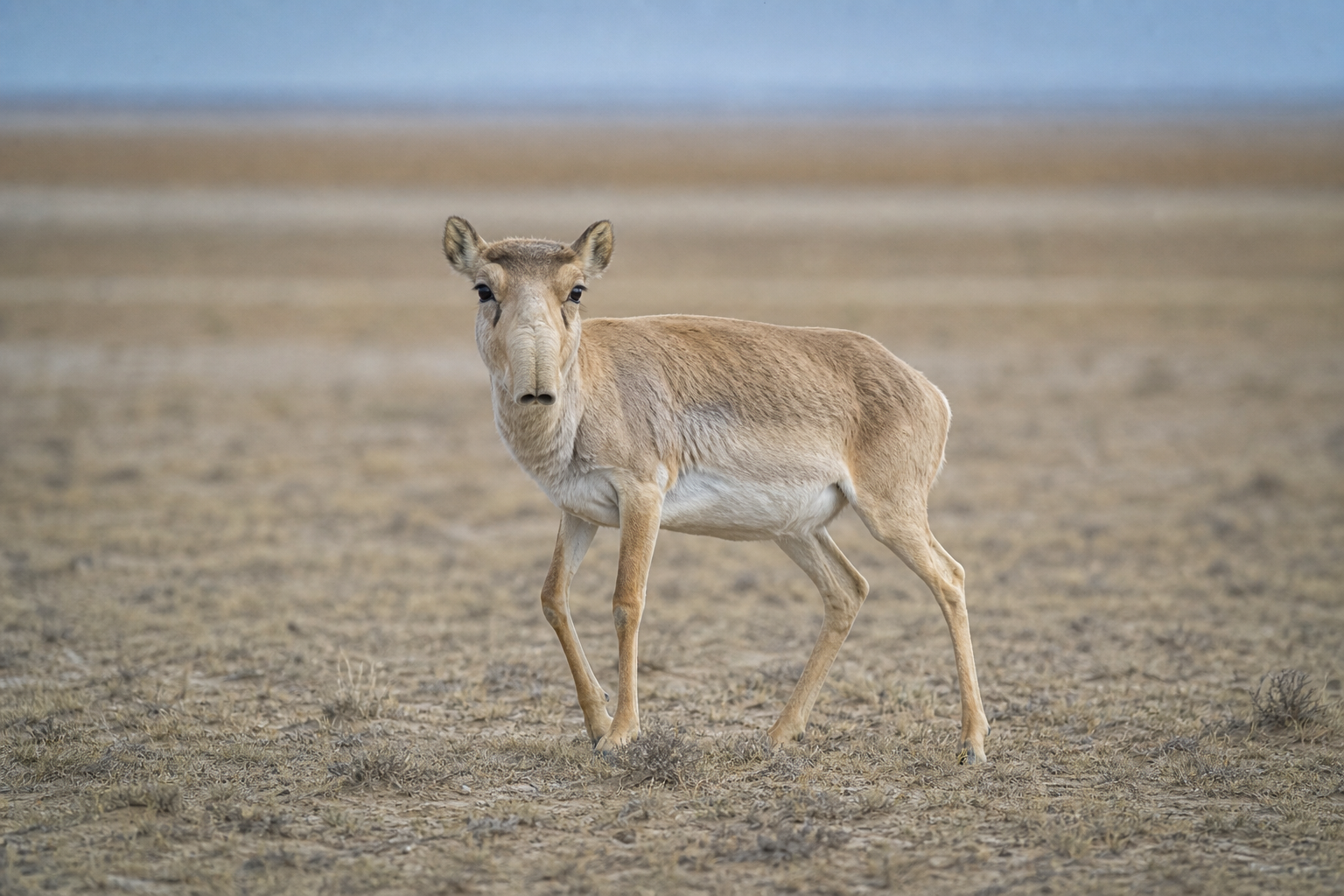
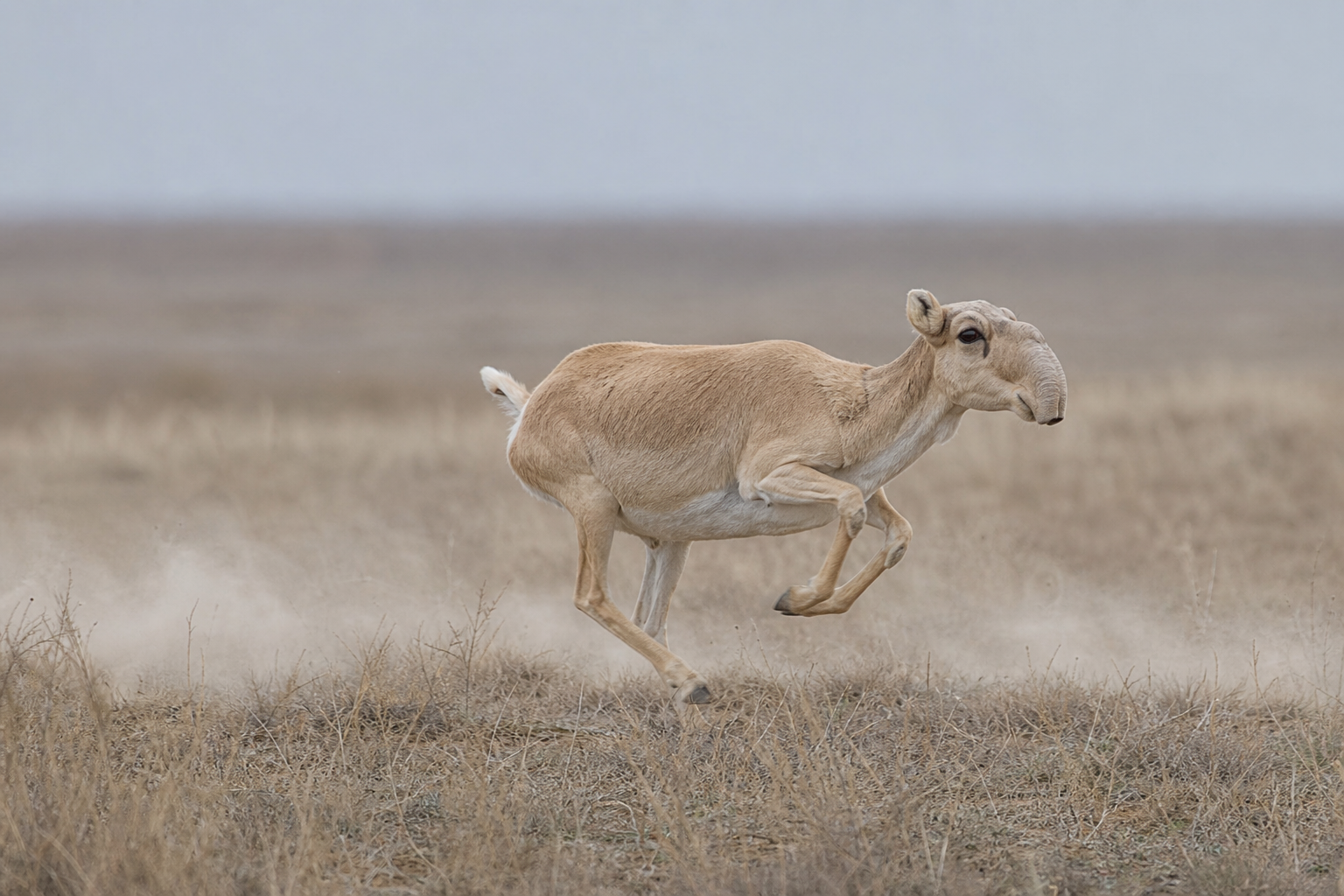
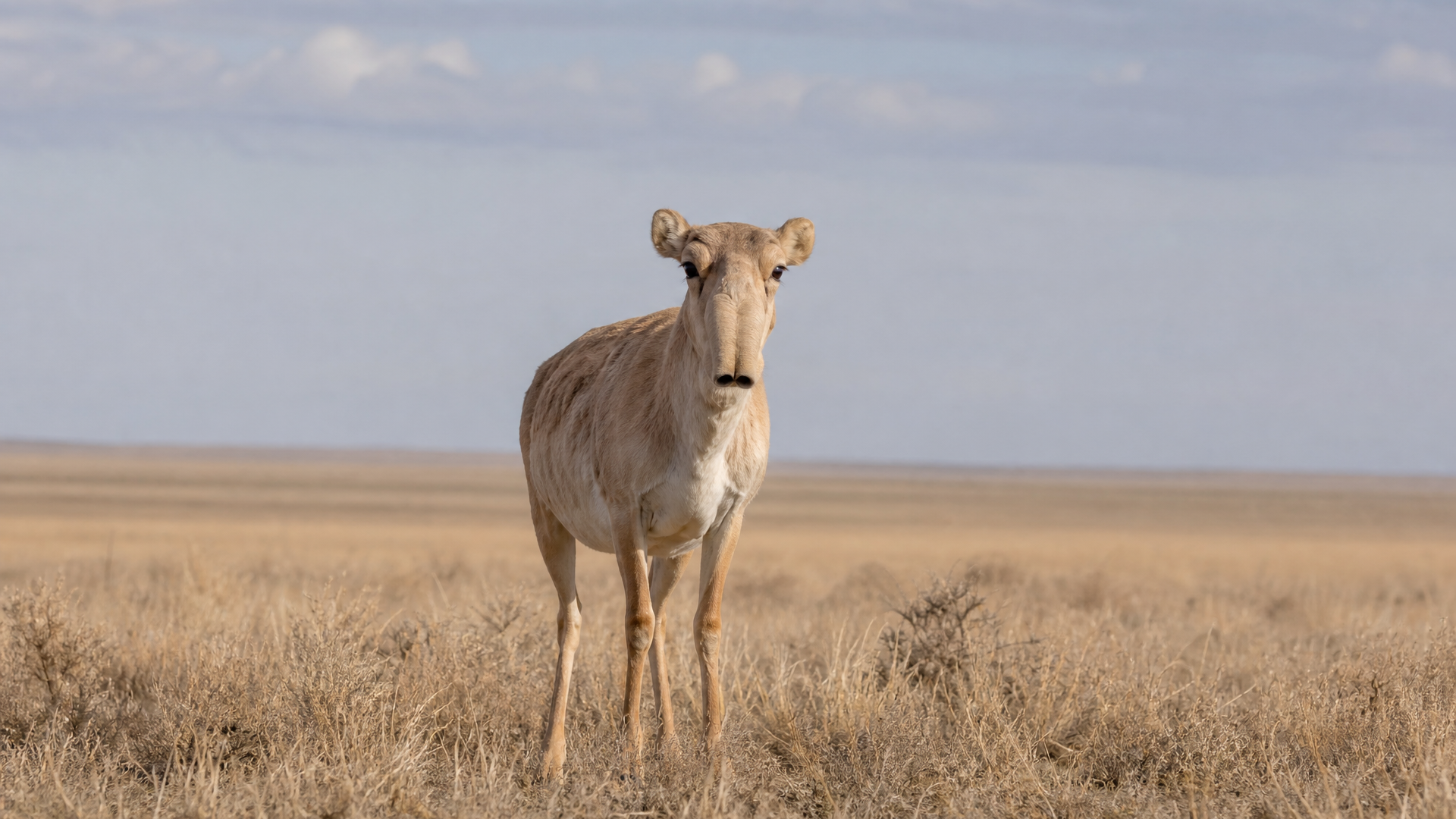
On the Ustyurt Plateau, wind moves before anything else. It combs the pale grass, pushes dust along the salt flats, and bends a herd into motion. The saiga appear almost suddenly, narrow legs flickering under sandy bodies, strange soft noses lowered into the cold air as if testing the steppe's breath.
The face is the first thing the mind keeps. That swollen, flexible nose looks impossible until the animal begins to run through heat, dust, and winter air, filtering and warming each hard breath. A herd can seem nervous even at rest, every head lifting, turning, returning to feed, then lifting again. Calves press close in spring gatherings, and adults move with the urgency of animals whose country has always been measured in distance. They are built not for one perfect refuge, but for movement across open land that changes beneath them.
The saiga gives Central Asia its pulse of migration and mass. It crops the steppe, feeds predators and scavengers, and turns grassland into a living procession. Disease, fences, poaching, and broken routes have struck it with cruel precision. Yet when a herd runs, the plain becomes one body of dust, hooves, breath, and direction.