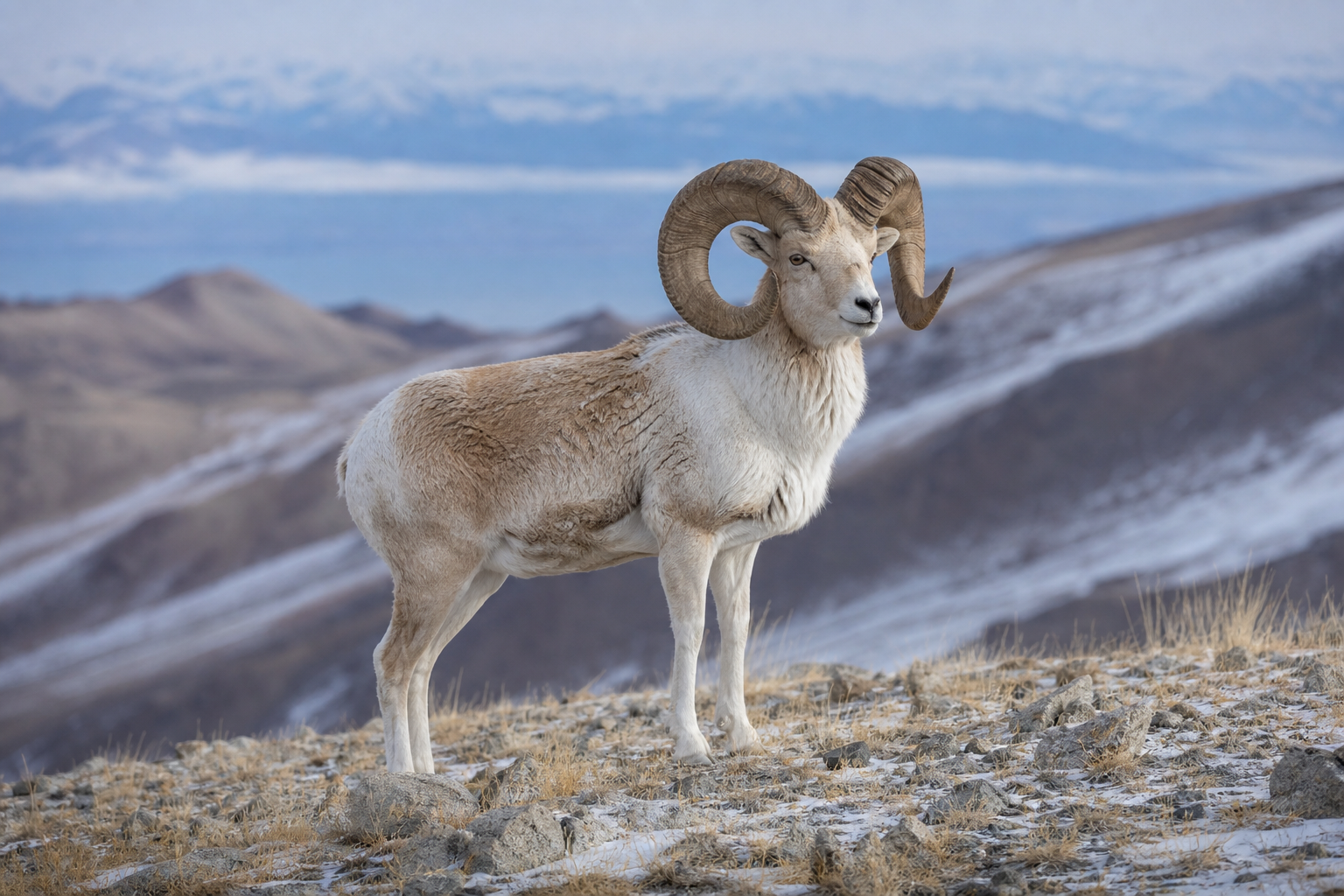
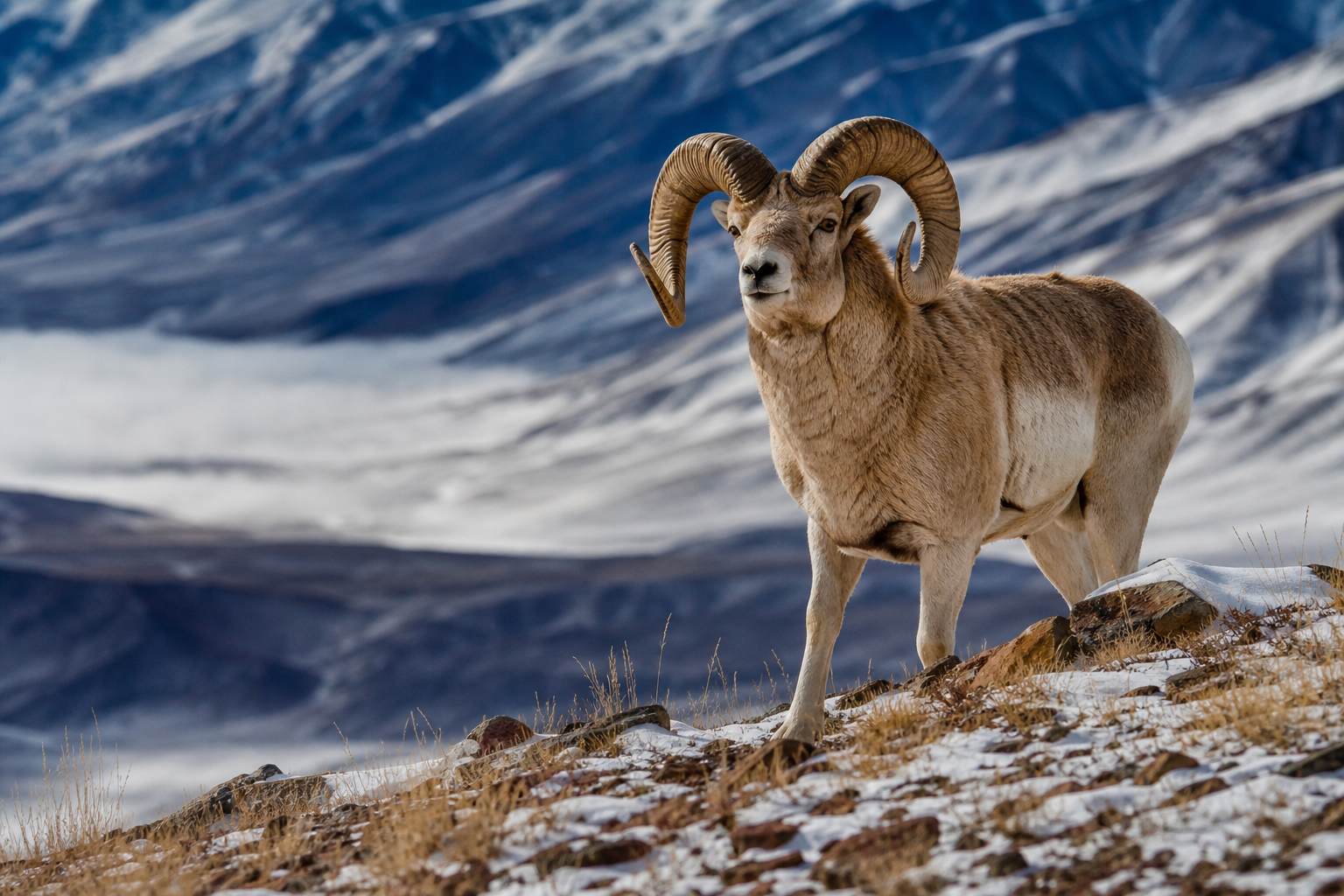
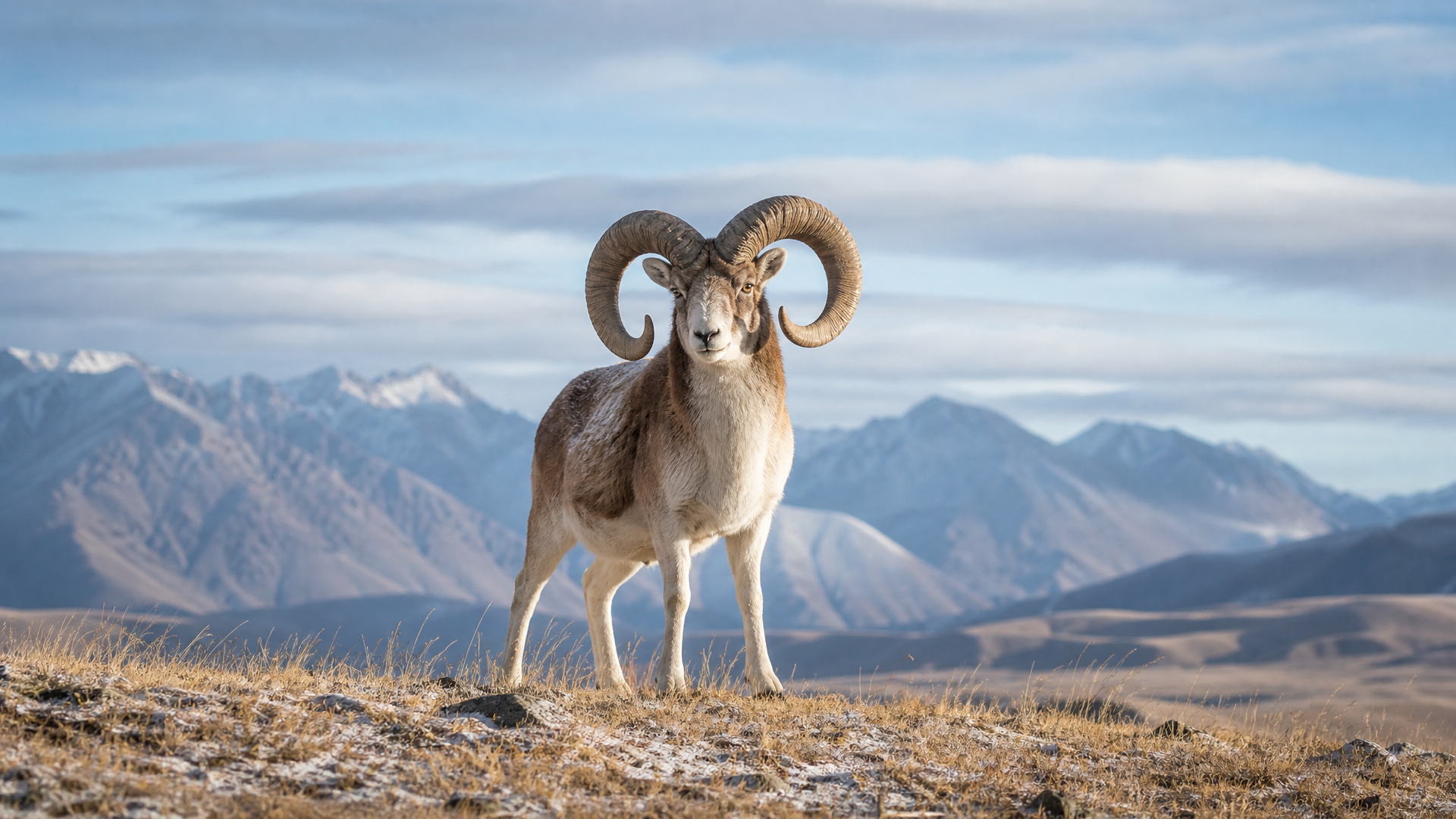
On the Pamir plateau, the horizon is not a line but a wall of pale ridges and wind. Snow dust lifts from the passes. Far above the valley floor, a group of sheep stands on a slope so open that there seems to be nowhere to hide. The rams turn their heads, and the horns draw great circles against the sky.
The Marco Polo sheep carries its presence in that sweep of horn, but the body beneath is all endurance. It climbs with measured certainty, stopping often to look downslope, then moving again over ground where each step must find purchase. Ewes and young keep to watchful groups. Rams hold distance, their horns heavy with age and contest, their bodies made lean by winter and height. In rutting season, the clash of horn against horn can travel across the cold air like stone breaking.
These sheep make the Pamirs feel inhabited at scale. They graze high pastures, feed wolves and snow leopards, and leave paths through country that seems nearly beyond use. Hunting pressure, livestock competition, roads, and border fences have narrowed old movements. Still, a ram on a ridge can turn once into the wind, and the mountain seems to answer in a spiral.