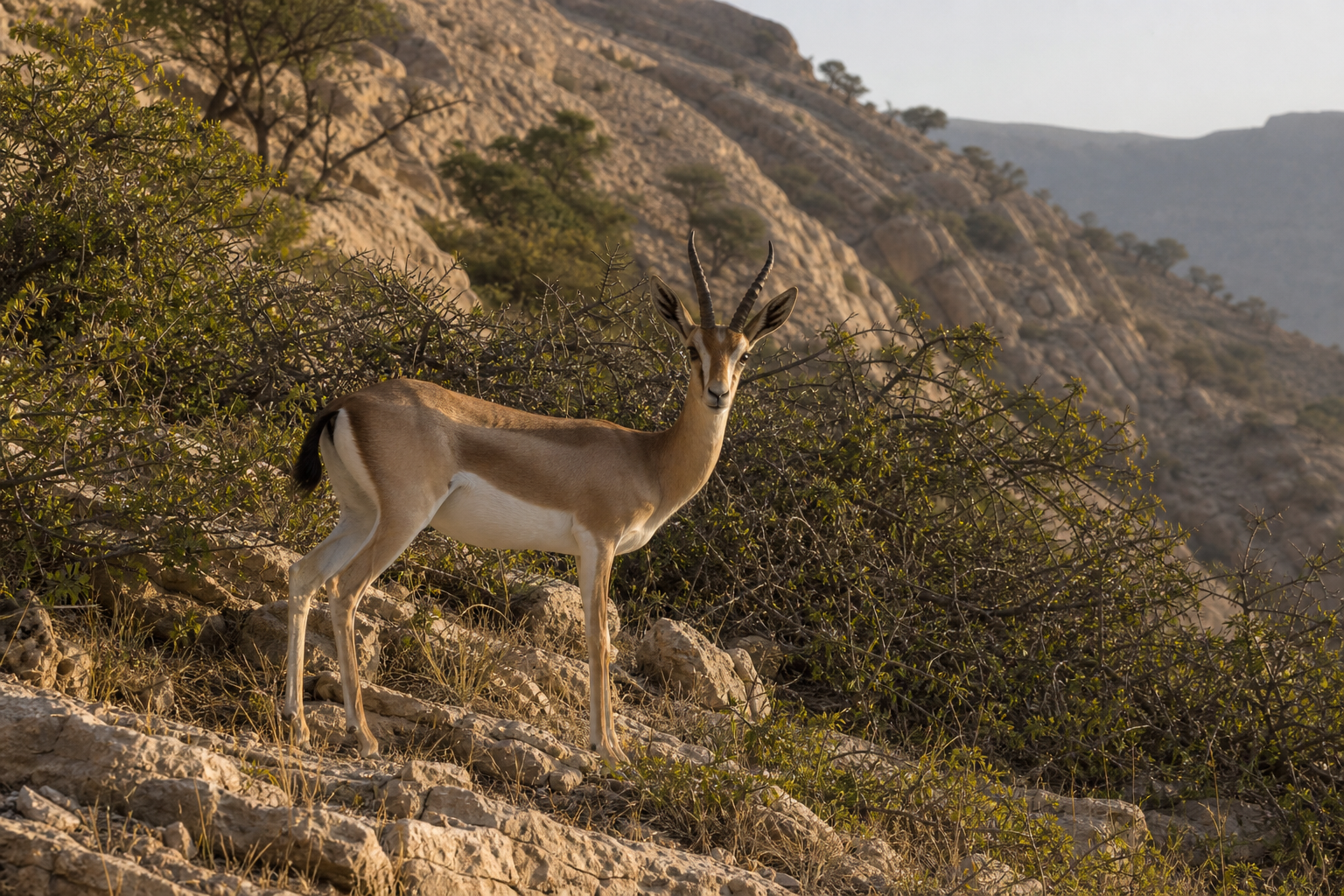
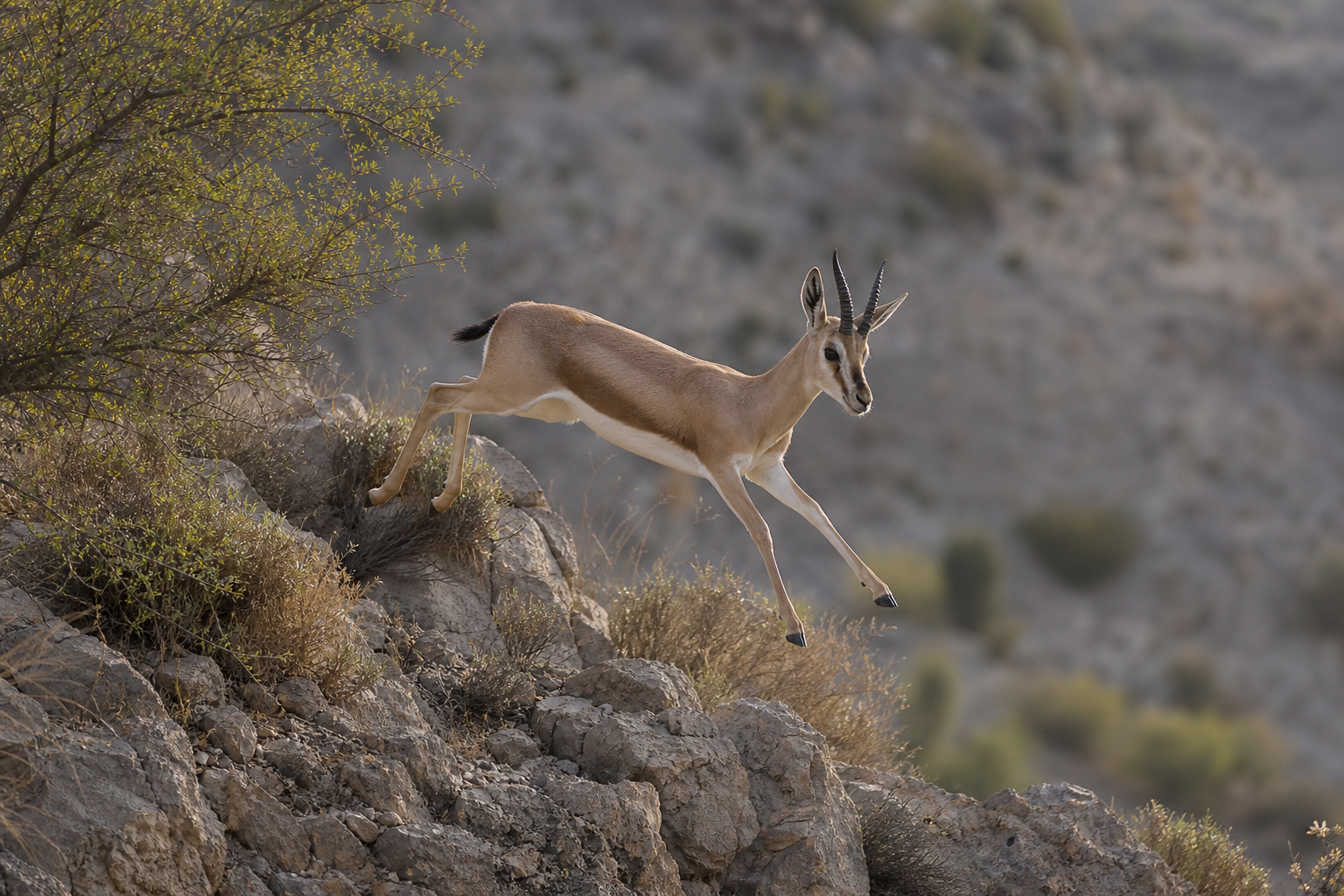
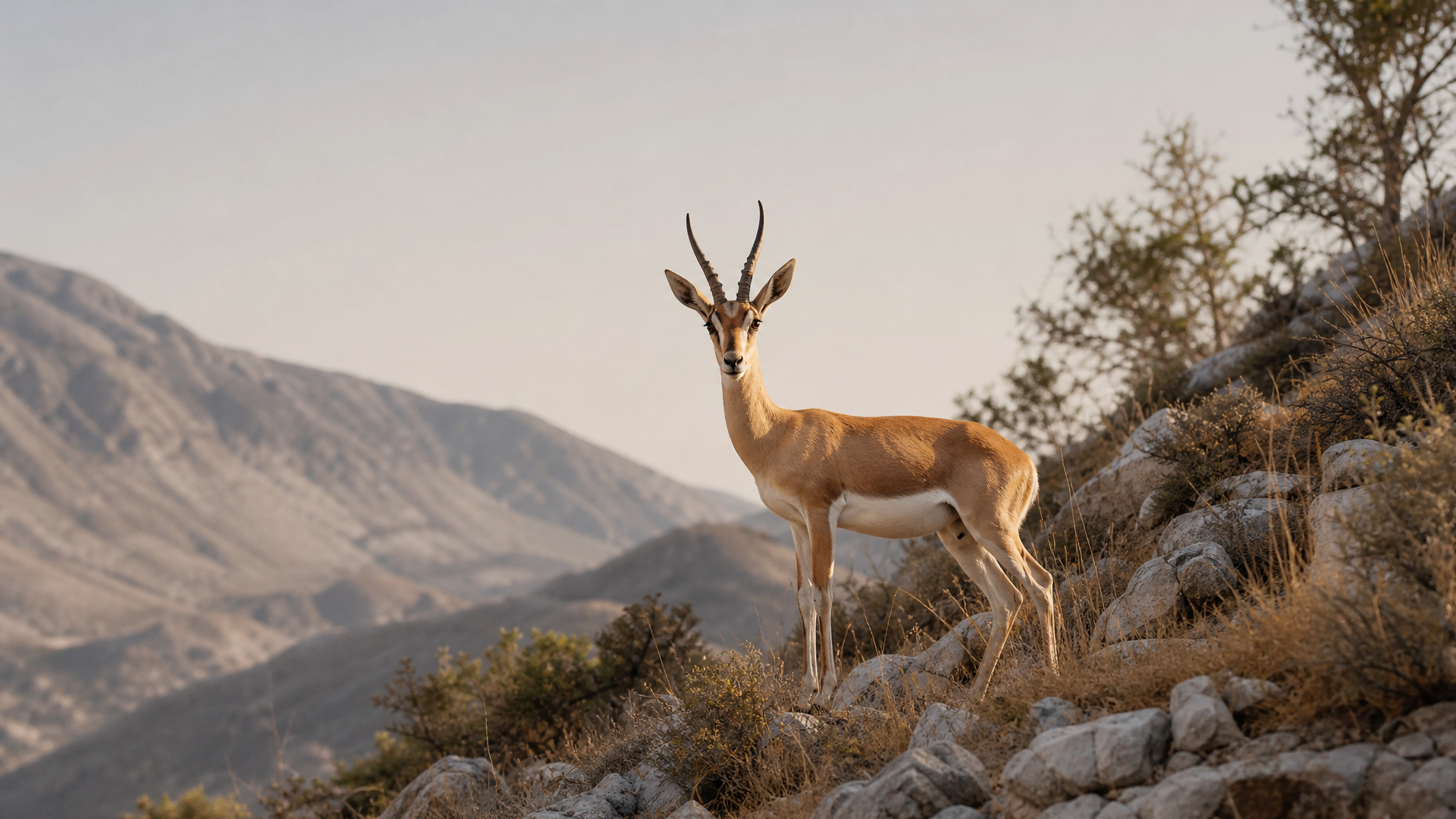
On the limestone slopes above the Jordan Valley, the morning is all angles: rock, thorn, light, shadow. A gazelle steps from behind a pistachio tree, black tail flicking once. The head rises. For several seconds, nothing moves except the ears.
Mountain gazelles are made for broken ground. They do not need the wide emptiness of dune country; they belong to ridges, terraces, scrub, and the narrow paths between them. Their hooves place the body with exact care. Their eyes carry distance. A male may stand with the still authority of a stone marker, guarding a patch of slope rich enough to matter. Females move more quietly with young, feeding, pausing, vanishing behind thorn before the mind has finished finding them.
Their grace is not softness. It is the discipline of animals living close to villages, fields, roads, dogs, and old predator routes. They browse and move seeds through hills where every patch of cover counts. When alarm passes through the group, the hillside seems to scatter into living fragments, each one choosing the only line that leads away.