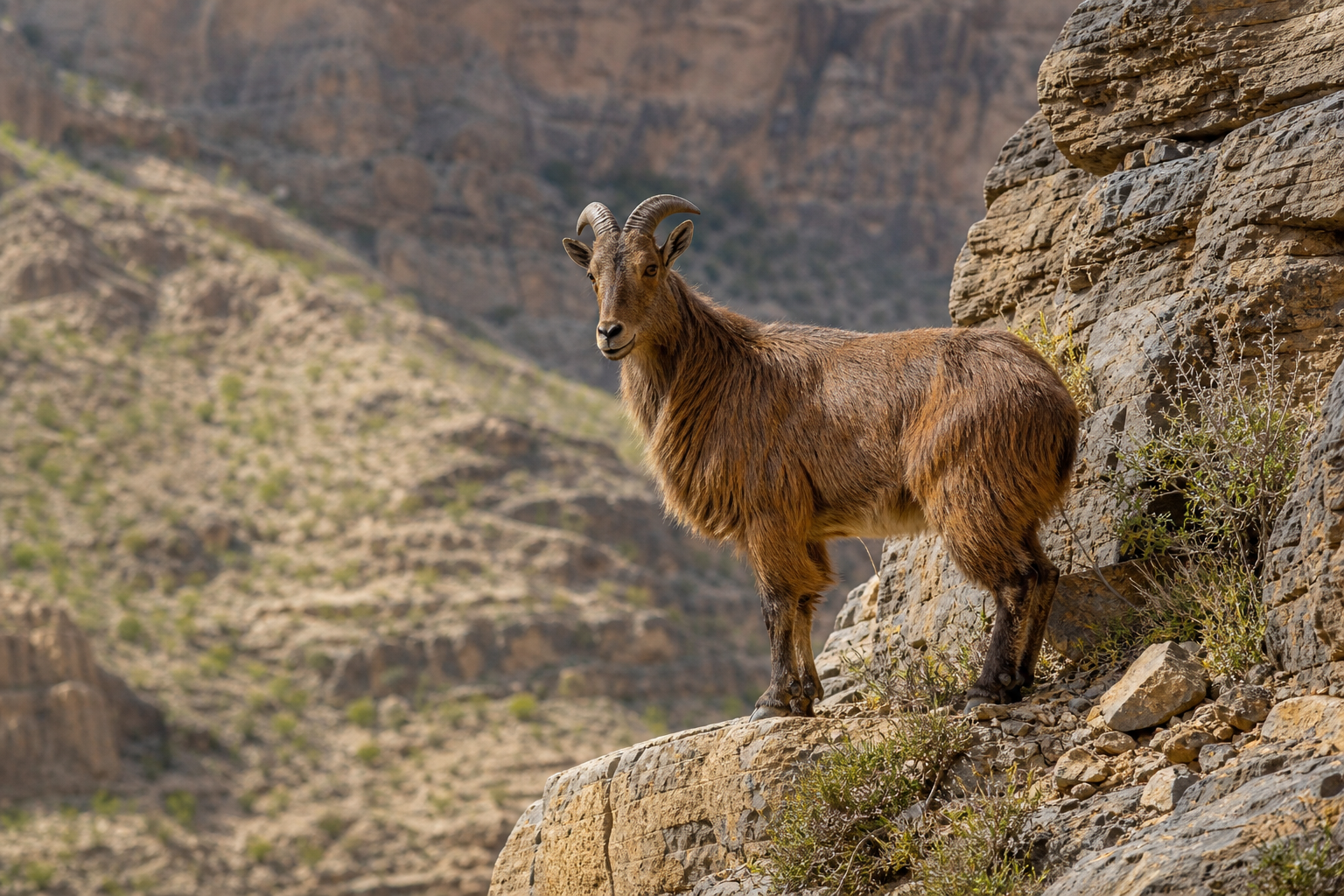
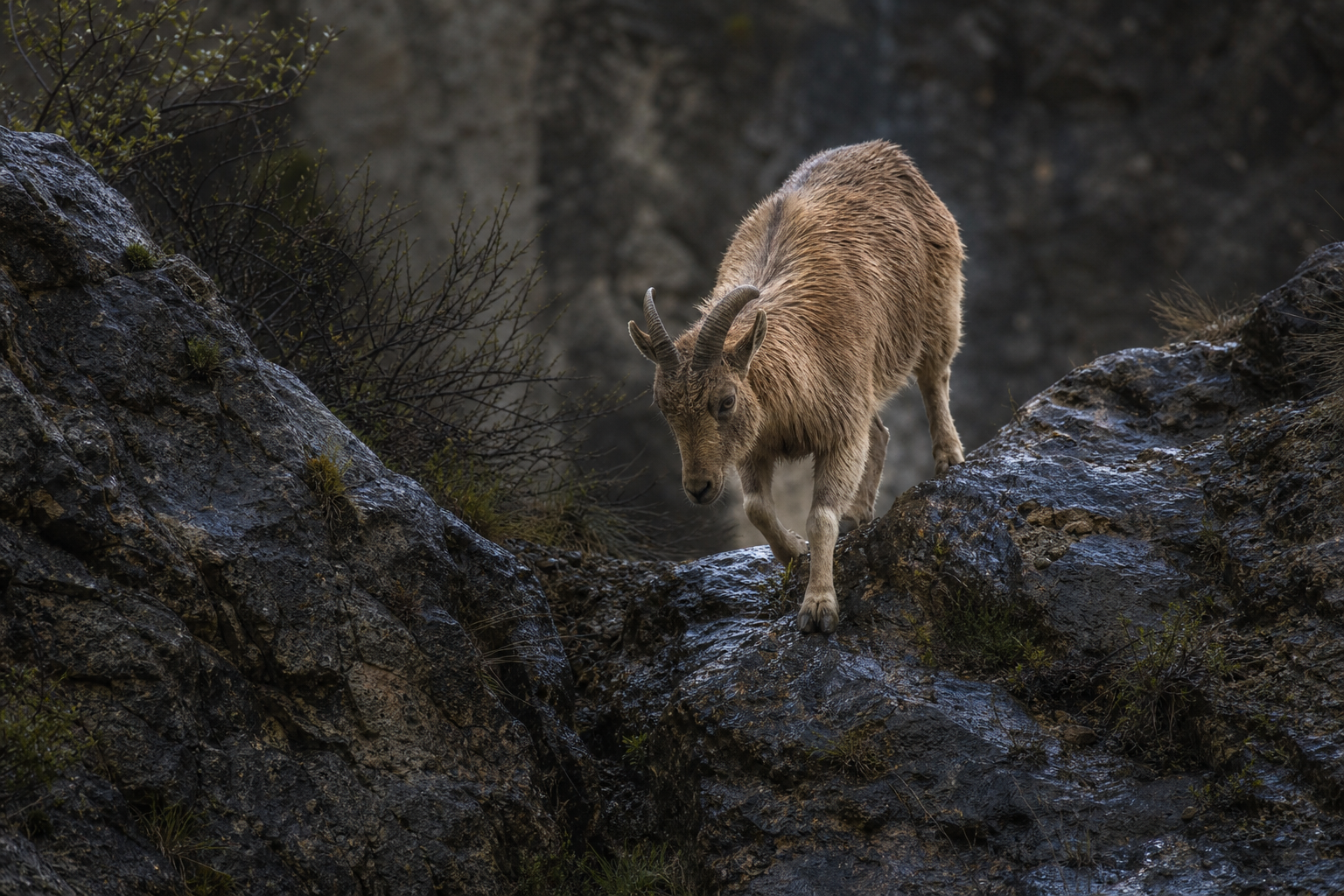
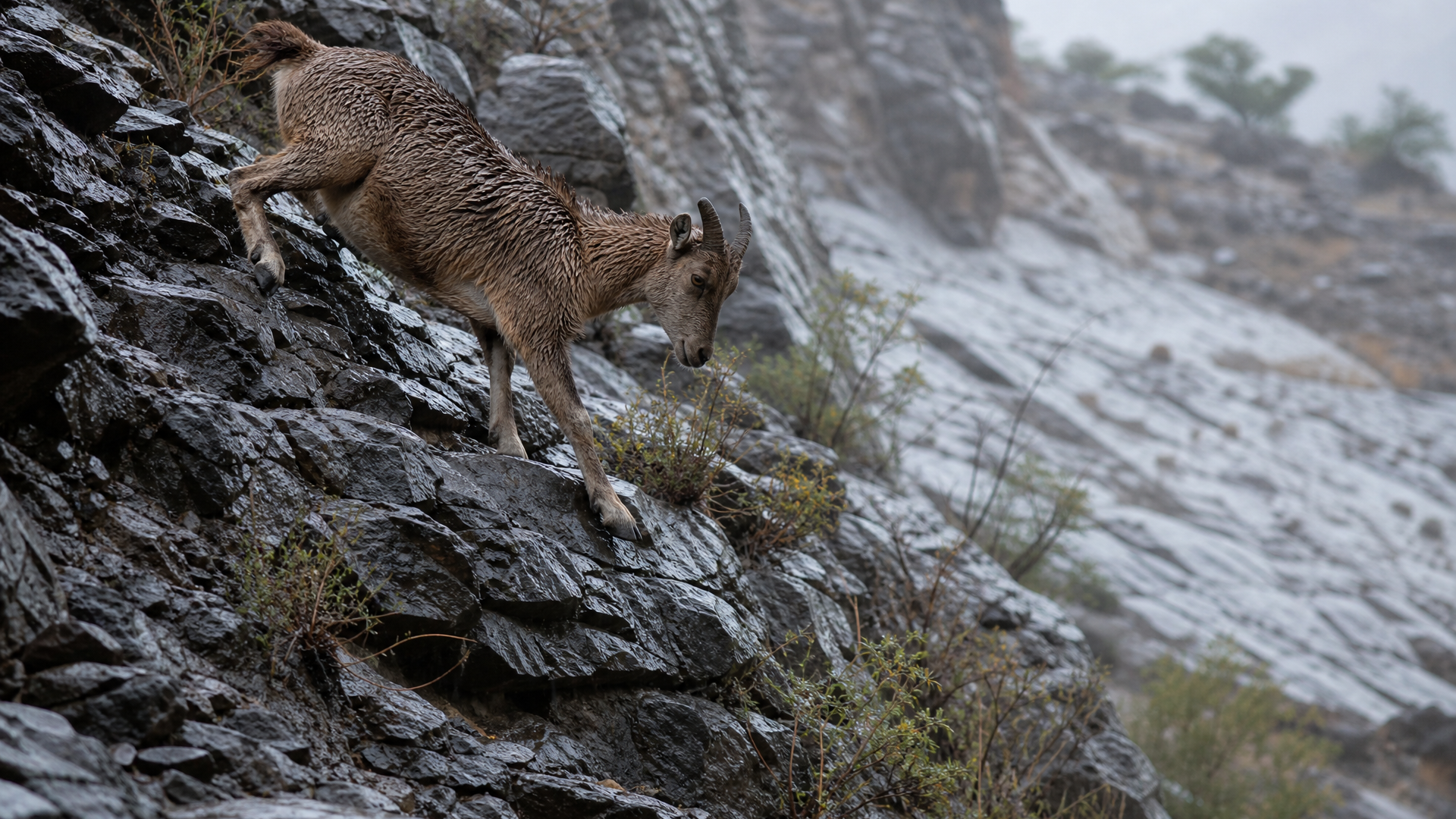
Rain has left a dark seam on the Hajar cliffs, and somewhere above it stones begin to fall. The tahr appears on a ledge that looks too narrow for standing, head lowered, rough coat catching the mountain light. Below it, the wadi drops away in silence.
The Arabian tahr lives vertically. Its world is not a path but a sequence of decisions made by hoof, muscle, and nerve. Males carry a shaggy mane and curved horns, the body compact and strong enough to turn on broken rock without hesitation. Females and young move through shaded gullies, feeding where moisture lingers after brief rain. In summer, water becomes the mountain's secret, and the tahr knows where the secret still holds.
Because it belongs to so little country, every pressure arrives close: feral goats taking forage, roads cutting access, springs altered or lost, disturbance climbing higher into refuge. Yet the animal itself gives no speech of scarcity. It steps from one ledge to another, and the mountain keeps its balance in that small, sure sound.