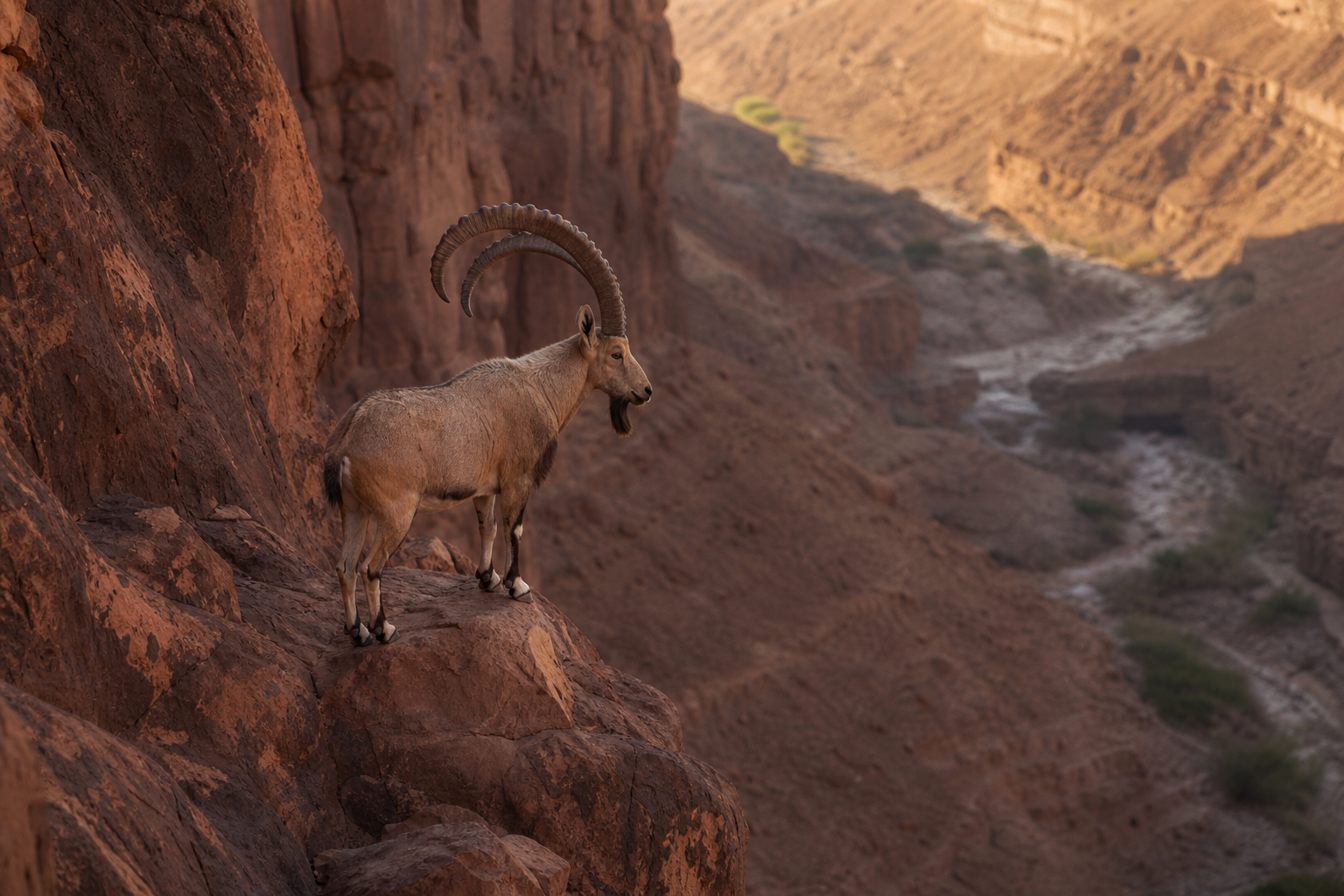
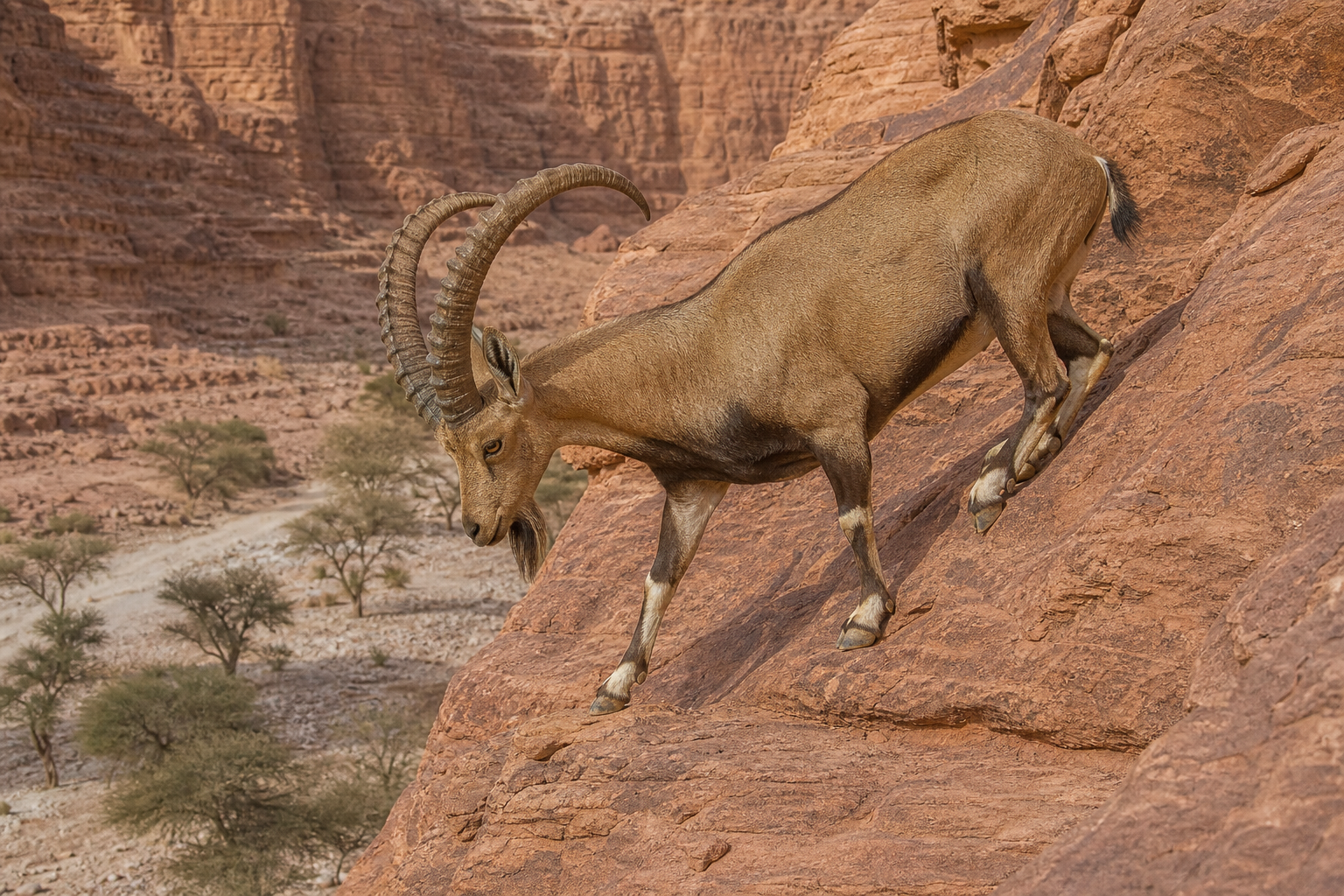
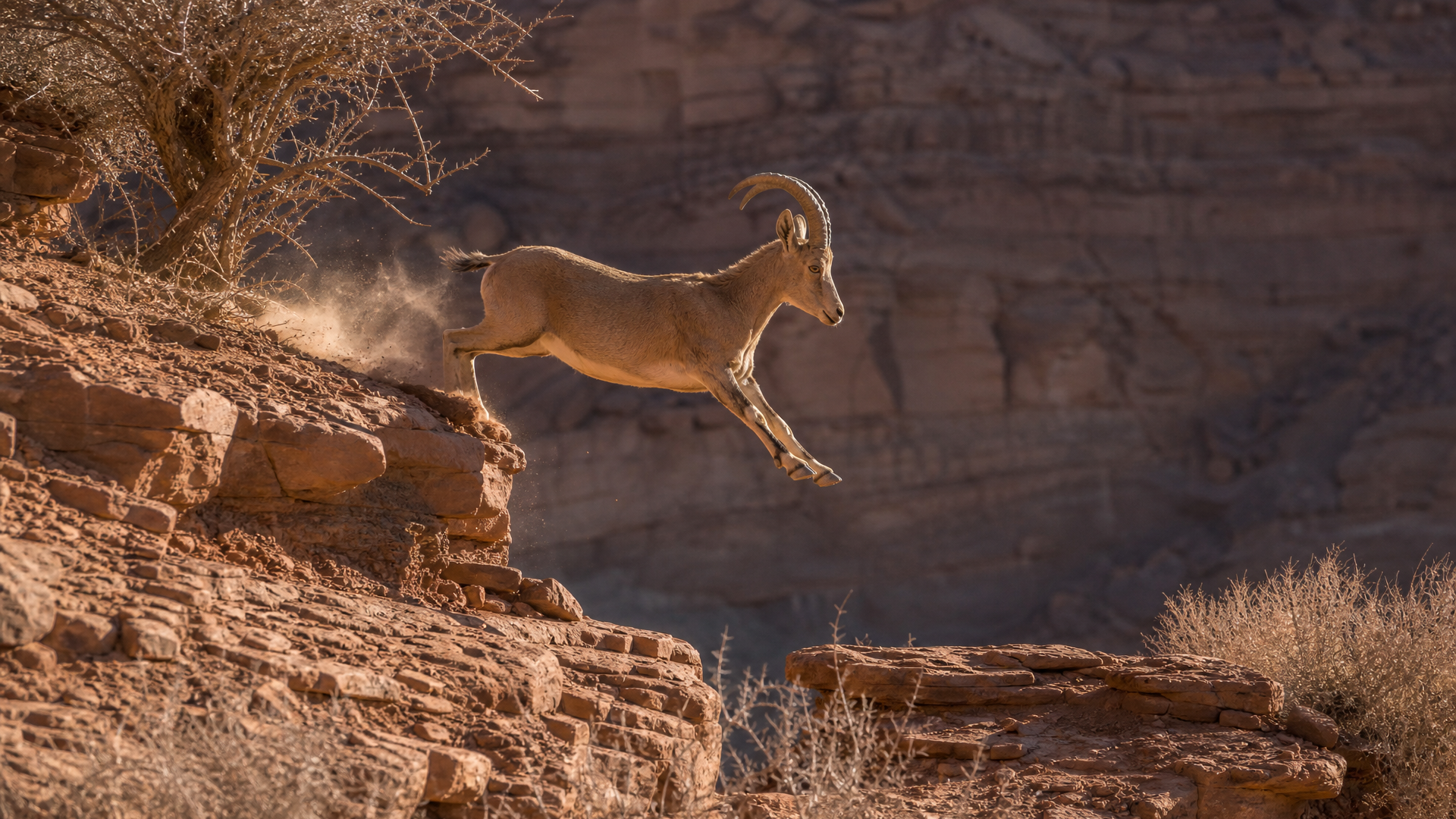
The wadi is quiet until pebbles click from above. On the red wall, an ibex stands with its body pressed to the slope, horns curved back like carved shadows. Far below, heat gathers in the dry channel, but the animal has chosen the air.
Nubian ibex make cliffs look usable. They cross faces of stone with a calm that unsettles anyone watching from below, placing each hoof on ledges no wider than a hand. Males carry heavy scimitar horns, ridged by years and contests. Females keep to sharper nursery country, where kids learn early that falling is not a lesson to repeat. At dawn and dusk they descend to feed, then climb back to safety when the day hardens.
They shape desert slopes by browsing, by carrying seeds, and by feeding the hunters that can meet them on their own terms. But water points, hunting pressure, disease from livestock, and human movement through remote wadis make refuge less remote. The ibex pauses high on the wall. One ear turns. Then it climbs into a place that seems impossible until it is occupied.