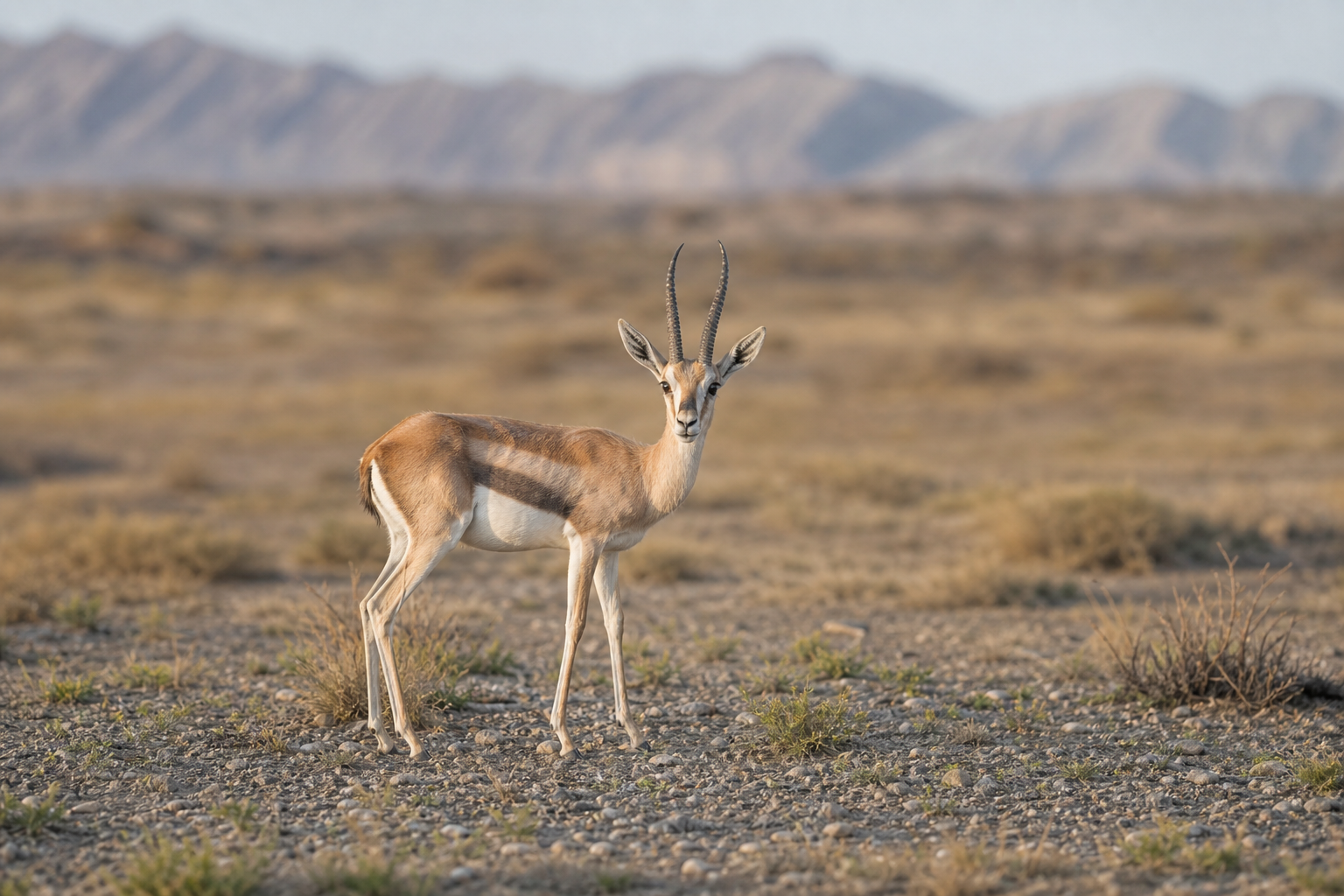
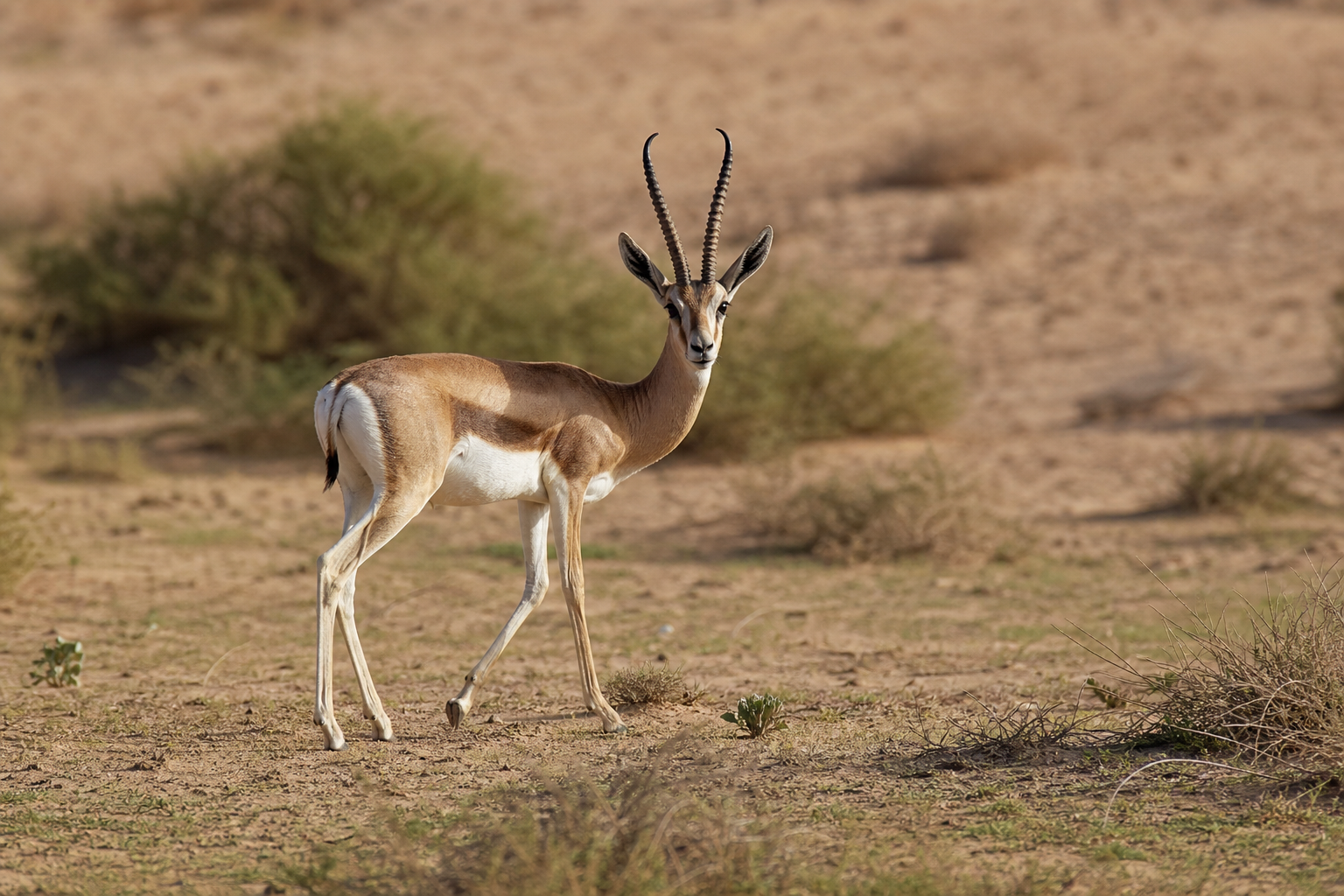
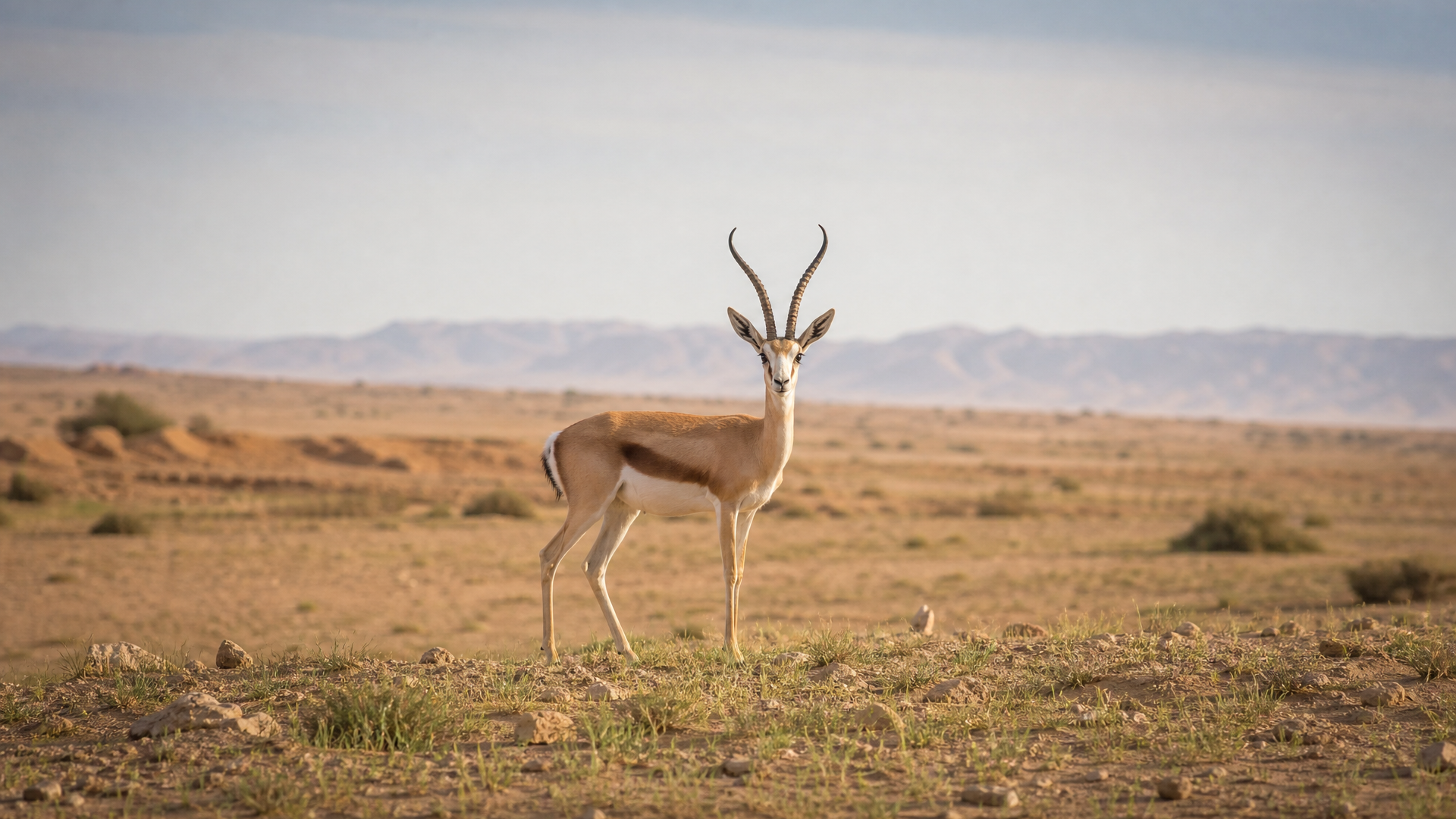
Morning slips across the gravel plain before the heat arrives. A gazelle lifts its head from a scatter of desert plants, ears high, dark eyes holding the whole open distance at once. Then the herd moves, lightly, as if the ground has barely been touched.
The Arabian sand gazelle lives by reading absence. It finds green where a person sees only stone, pauses where a breeze carries scent, and chooses speed only after stillness has failed. The body is narrow and fine-boned, but not fragile. Its strength lies in refusal: refusal to overheat, refusal to waste motion, refusal to stand where danger has begun to think. Fawns lie low in the hard light, their small bodies disappearing into the color of sand and dry stems while mothers feed and watch nearby.
In Arabia's open country, these gazelles turn sparse plants into motion for foxes, eagles, wolves, and the land itself. Roads, fences, overgrazing, and hunting have made many old routes thinner than memory. A herd crosses the plain in a few quick bounds, and the dust closes behind them without keeping their shape.