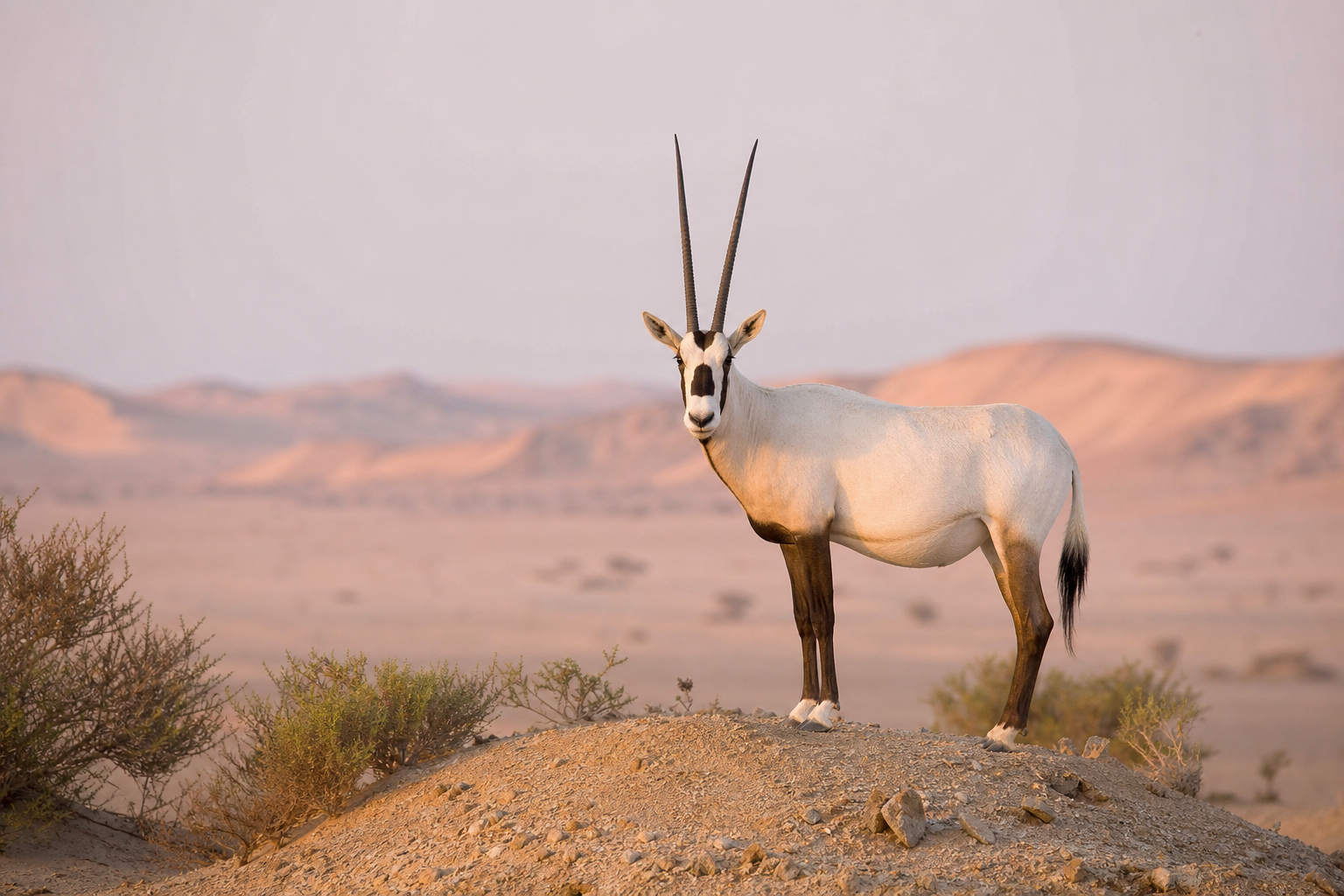
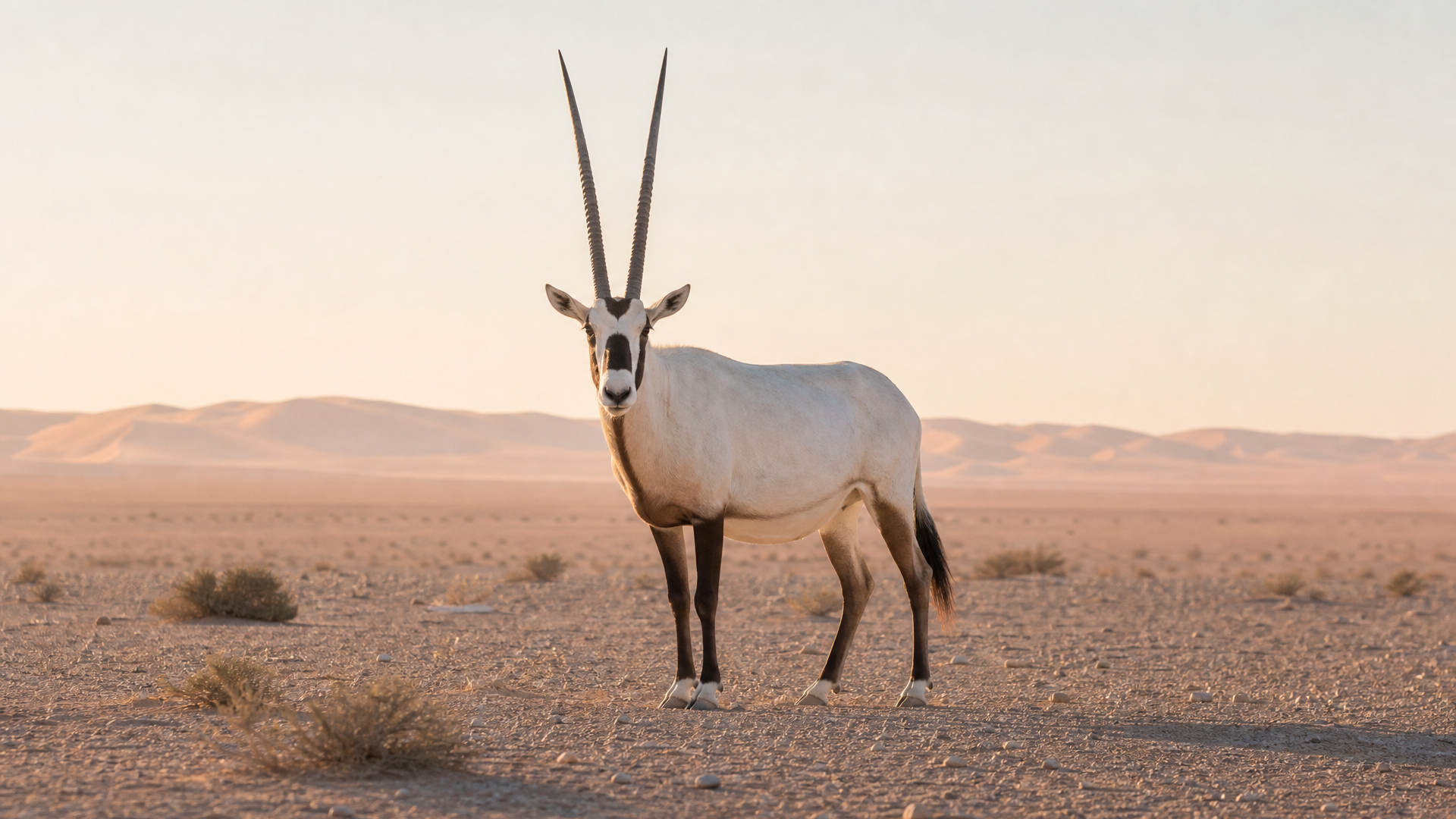
At first light in the Empty Quarter, the sand is still cool enough to hold a track. A pale shape stands where the dune begins to lift, its black face markings sharp against the dawn, its straight horns drawing two fine lines through the air.
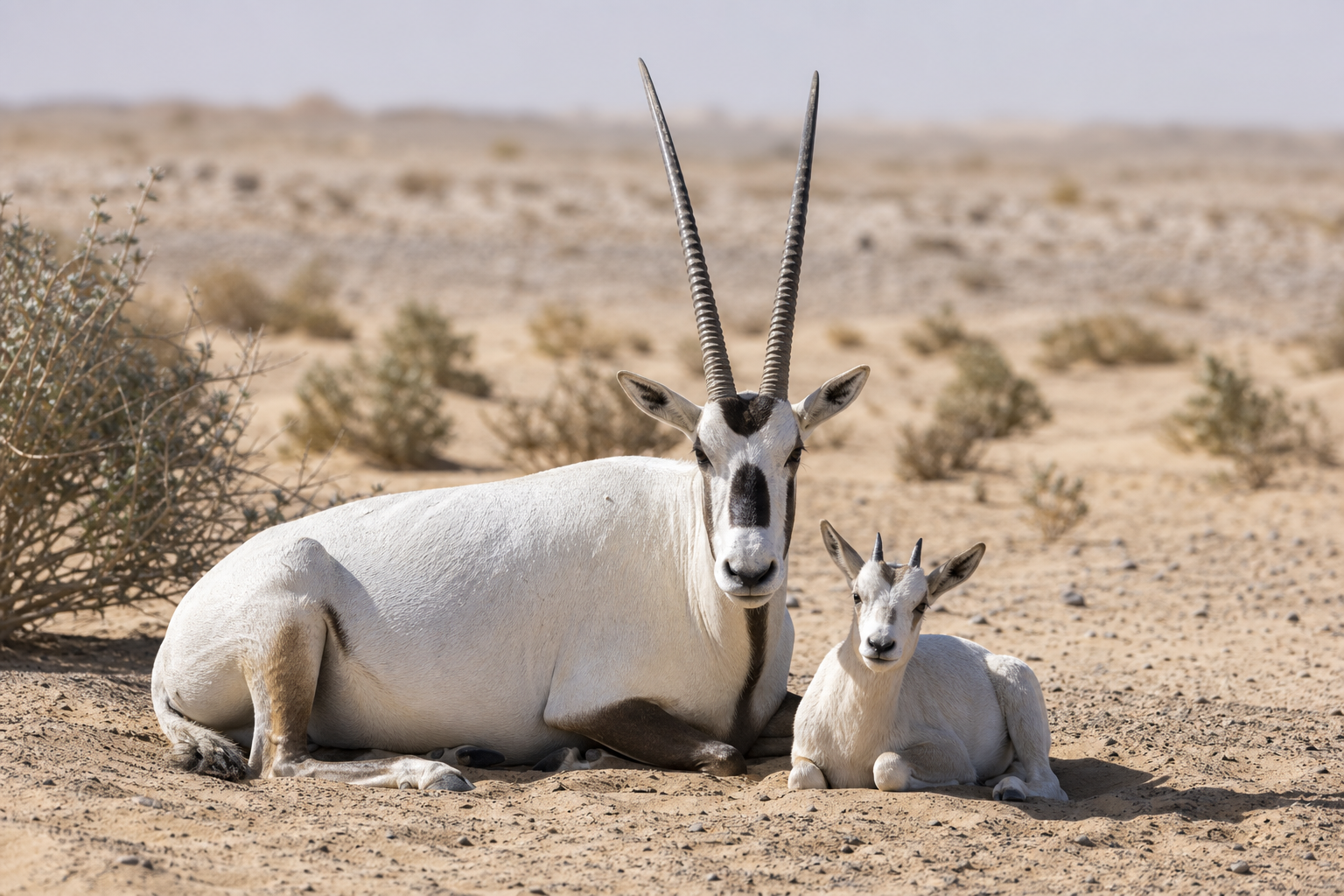
The Arabian oryx looks almost too clean for the place that made it. The coat throws sunlight back. The hooves find firmness on sand that shifts under everything else. It moves with a measured economy, not wasting water, breath, or alarm. In a herd, bodies angle into wind, calves standing close inside a circle of watchful adults. When heat gathers, the animal lowers itself into shallow scrapes, using the desert's own skin for shade. The long horns are beautiful only because they are useful: weapons, signals, and the visible geometry of endurance.
Its return to the wild is one of West Asia's clearest reversals of loss, but recovery remains a guarded thing. Fences, wells, grazing pressure, and old hunting stories still shape the ground around it. The oryx turns its head, and for a moment the desert seems to have remembered its own white shadow.