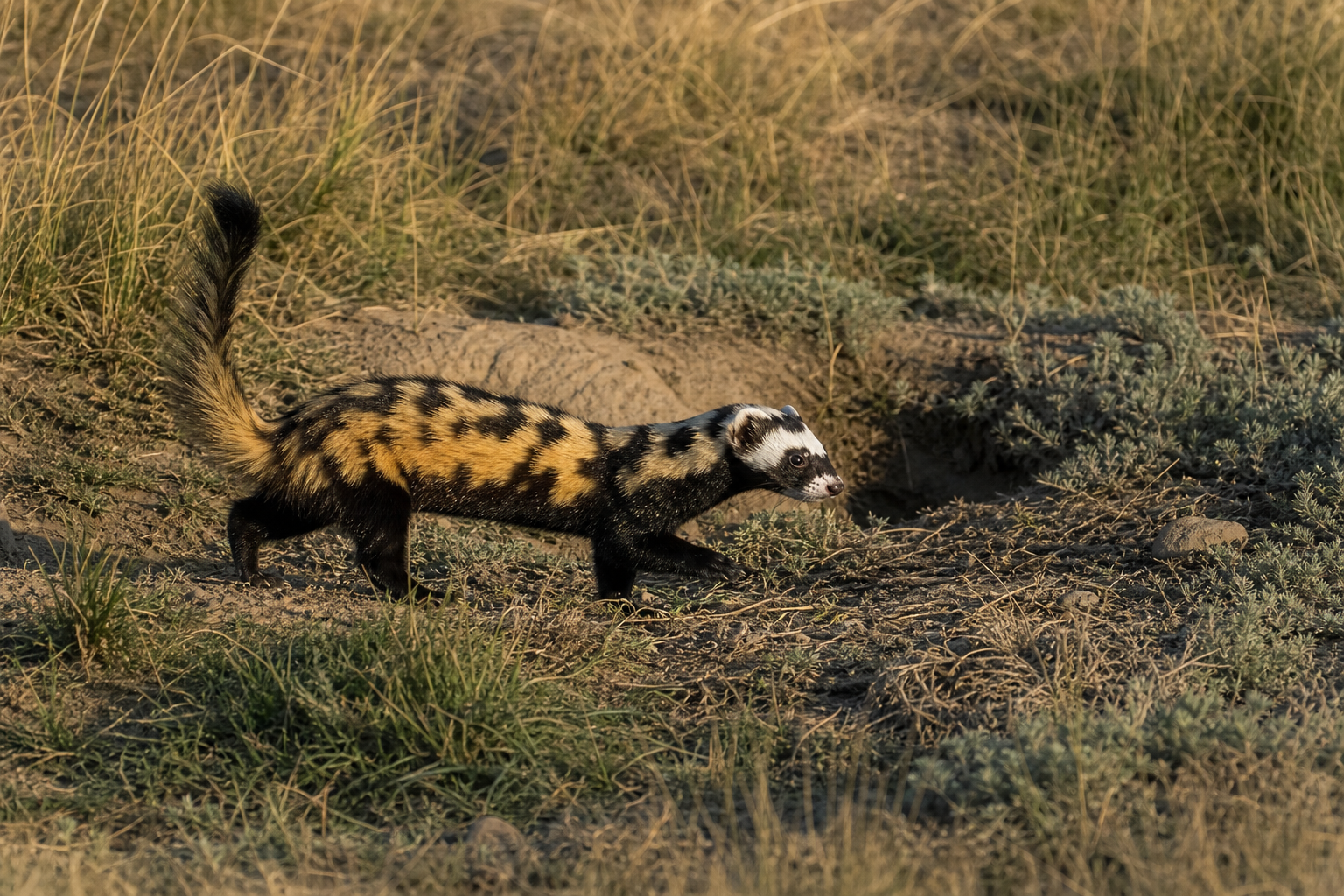
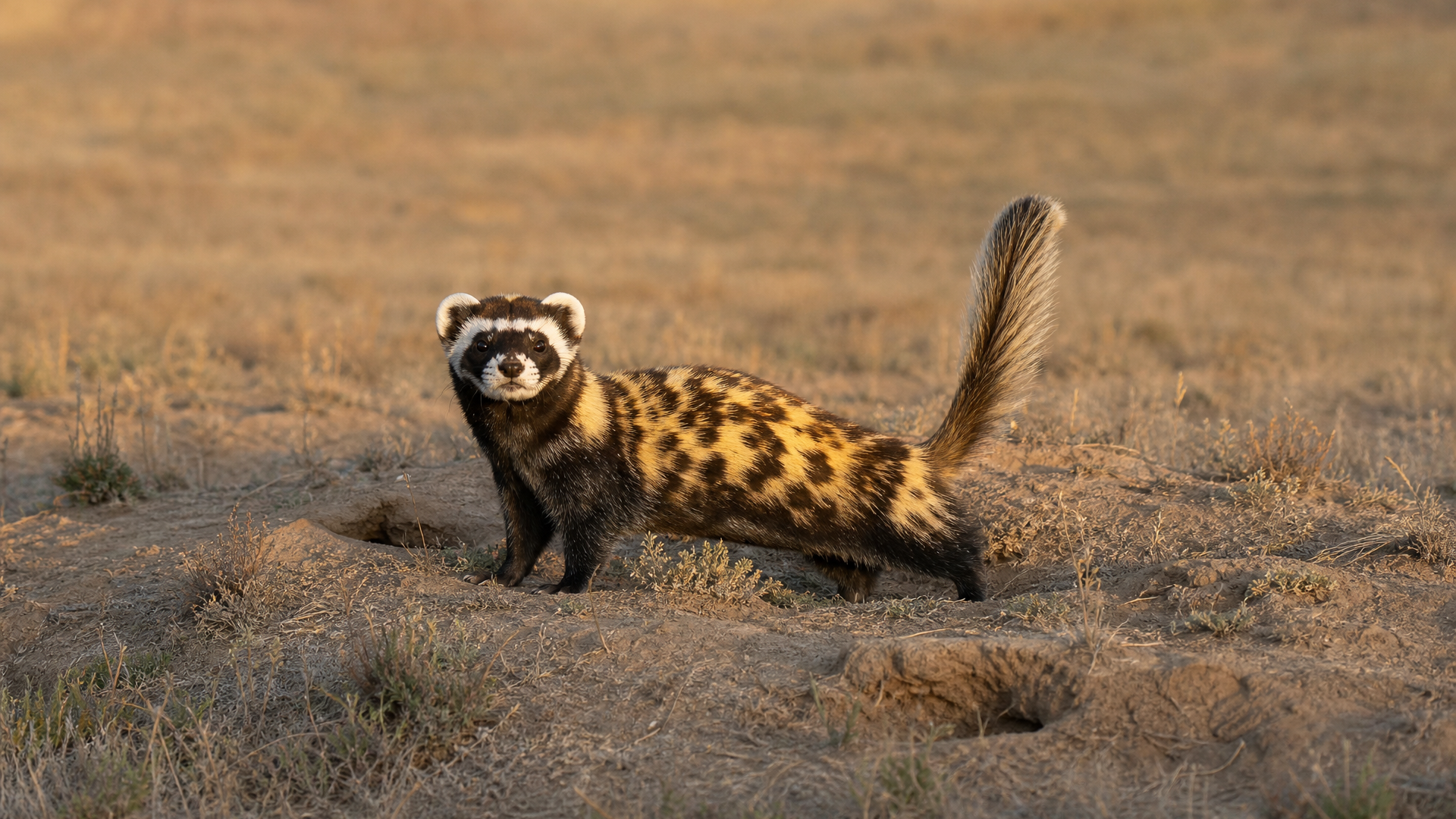
At the edge of a dry pasture in Uzbekistan, the ground is riddled with holes. Larks rise from the weeds. Dust lifts under a low, quick body, and then a masked face appears, bright and banded, too small to dominate the scene and too bold to disappear from it.
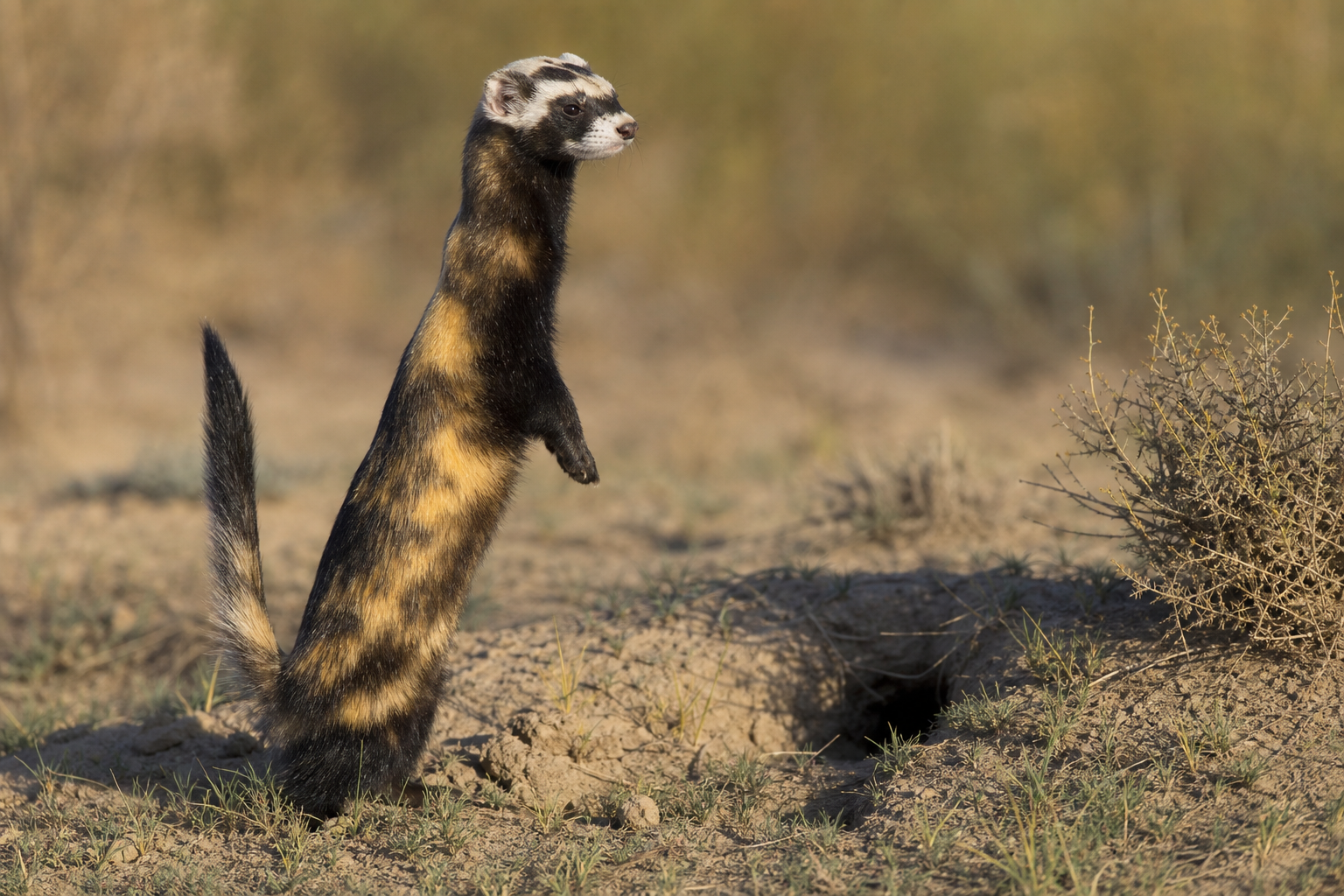
The marbled polecat moves like a question asked at speed. Its body is long and close to the earth, its tail lifted, its coat broken into yellow, brown, white, and black as if shadow and sun have been cut into pieces. It searches burrow mouths, pushes through grass, and pauses upright for a better look before dropping again into motion. When threatened, it can arch, hiss, and turn its scent into a warning stronger than its size. There is comedy in the posture, but not softness. This is a hunter of narrow entrances and sudden decisions.
In Central Asia's dry grasslands and farm edges, the polecat belongs to the underground world of rodents, insects, roots, and abandoned dens. It keeps that hidden life connected to the surface. Plowing, pesticide, prey loss, and persecution press hardest on animals already easy to overlook. The mask vanishes into grass, and the ground keeps moving.