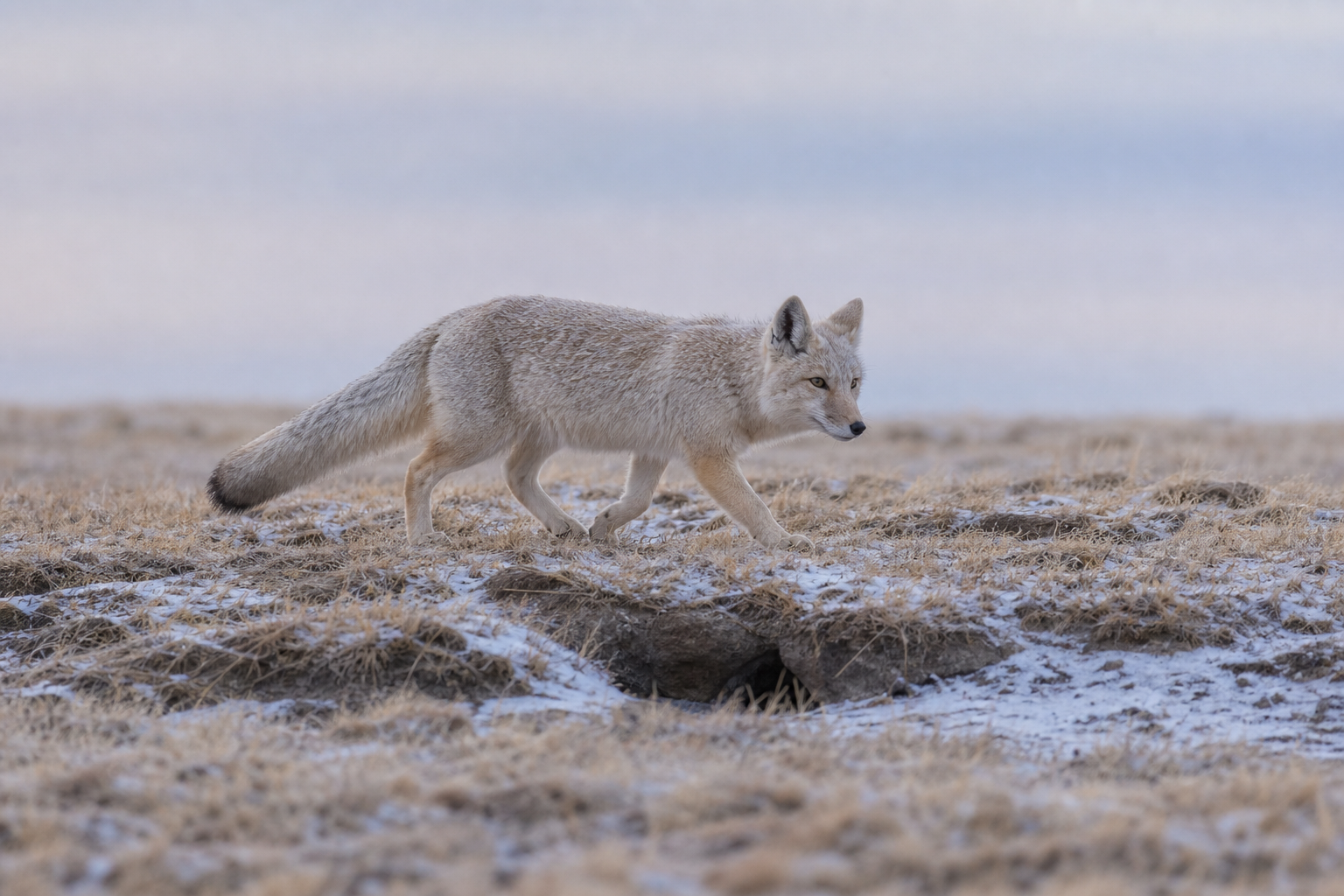
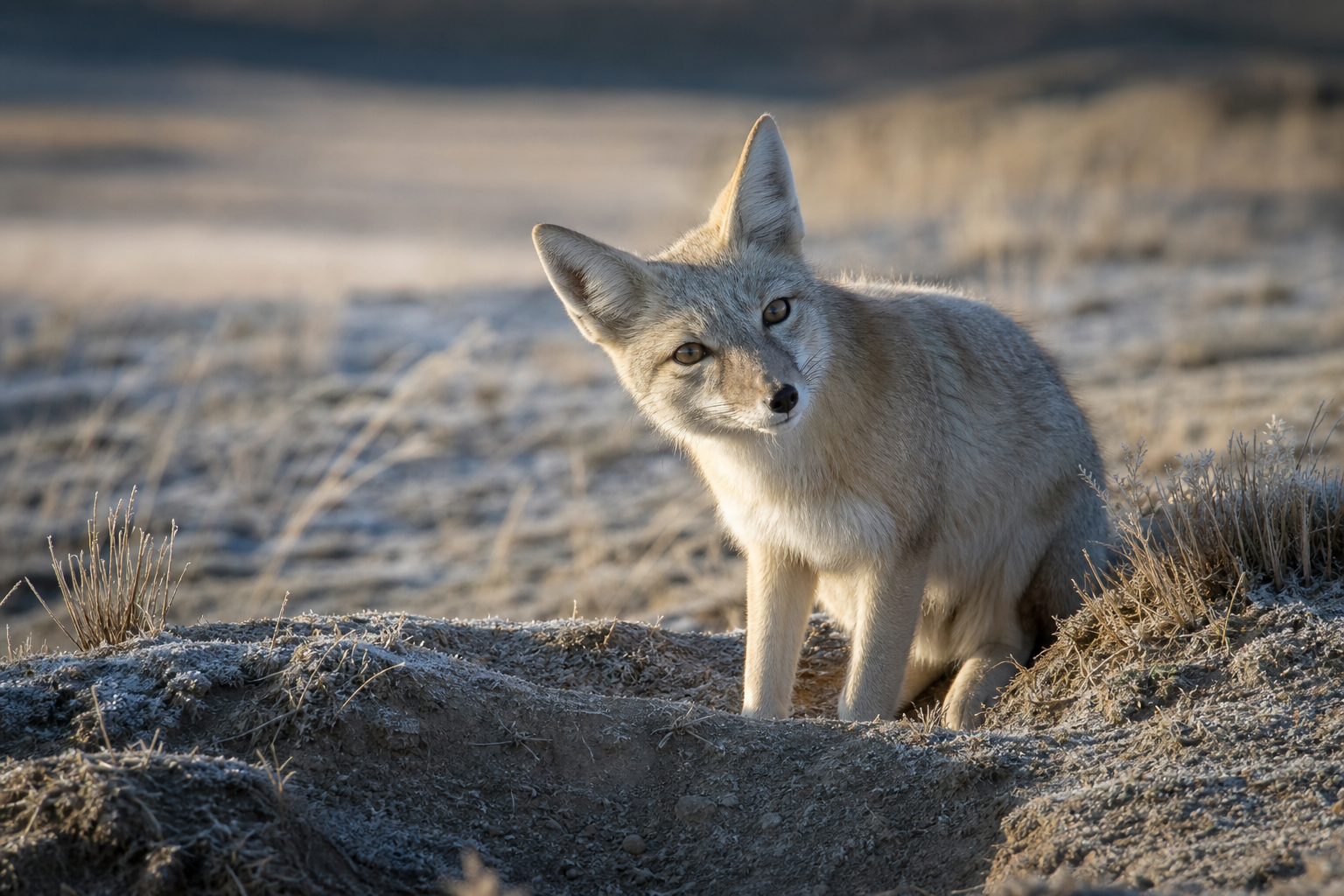
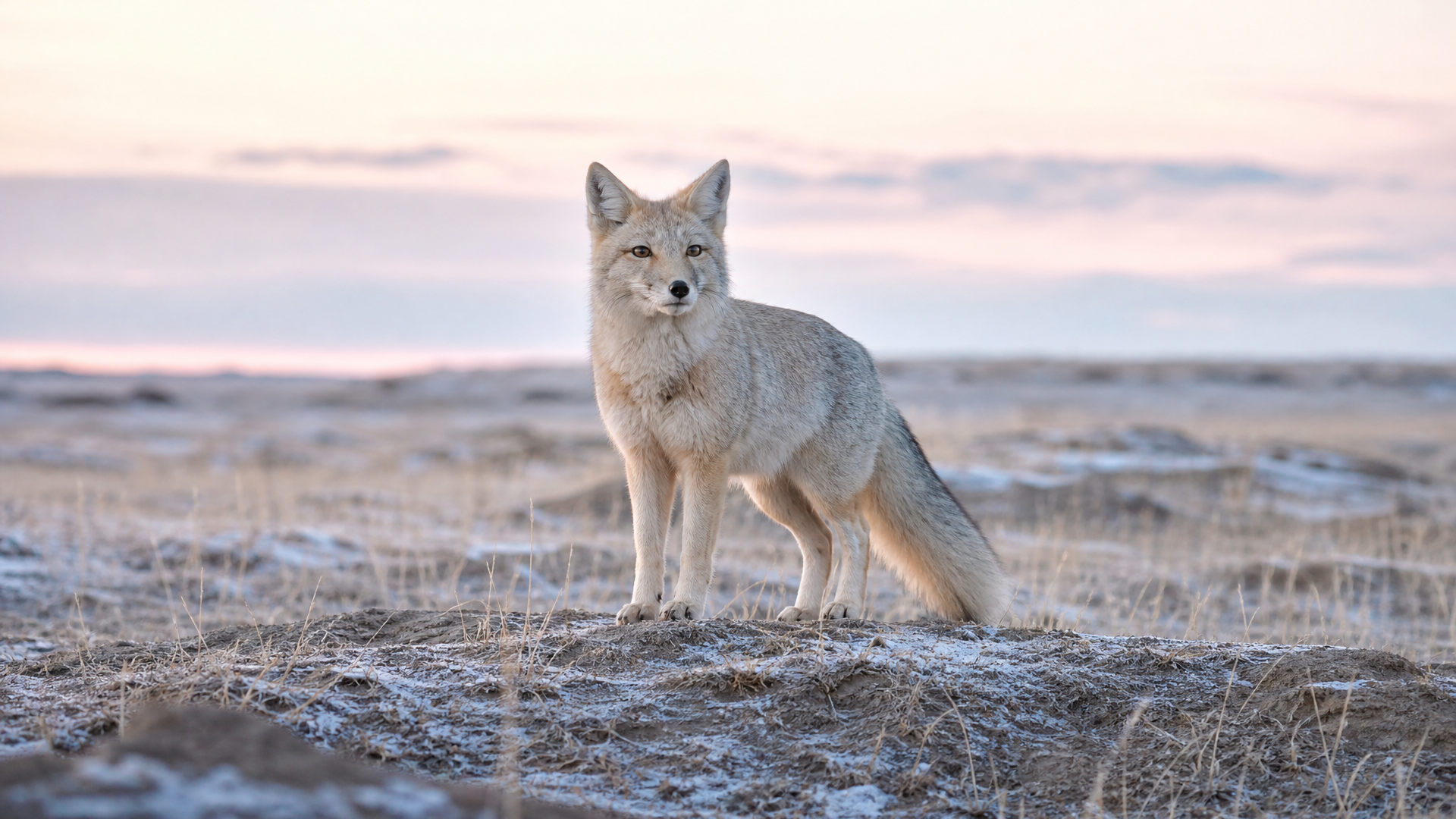
Night thins over the Mongolian steppe, and the first color in the sky is almost silver. A fox moves along a low rise, coat pale against winter grass, ears lifted to sounds too small for the morning. It stops, tilts its head, and the wind seems to hold still.
The corsac fox is light in every sense: light-footed, lightly built, colored for open country where cover is often no more than a fold in the ground. It trots with an easy economy, stopping to listen at burrow mouths, nosing through grass, or turning sharply after a rustle beneath snow crust. Unlike heavier predators, it survives by flexibility, taking what the steppe offers and retreating fast when weather, wolves, or people close in. Its den is a refuge borrowed from earth, a place where the wide world narrows to warmth and breathing.
This fox threads the steppe's small lives together. It follows rodents, insects, carrion, and season, feeding others in turn and keeping the open land alert at ground level. Fur hunting, poisoning, hard winters, and changing grasslands can empty its routes without much noise. At sunrise, the fox slips below the ridge, leaving only a few fine tracks in frost.