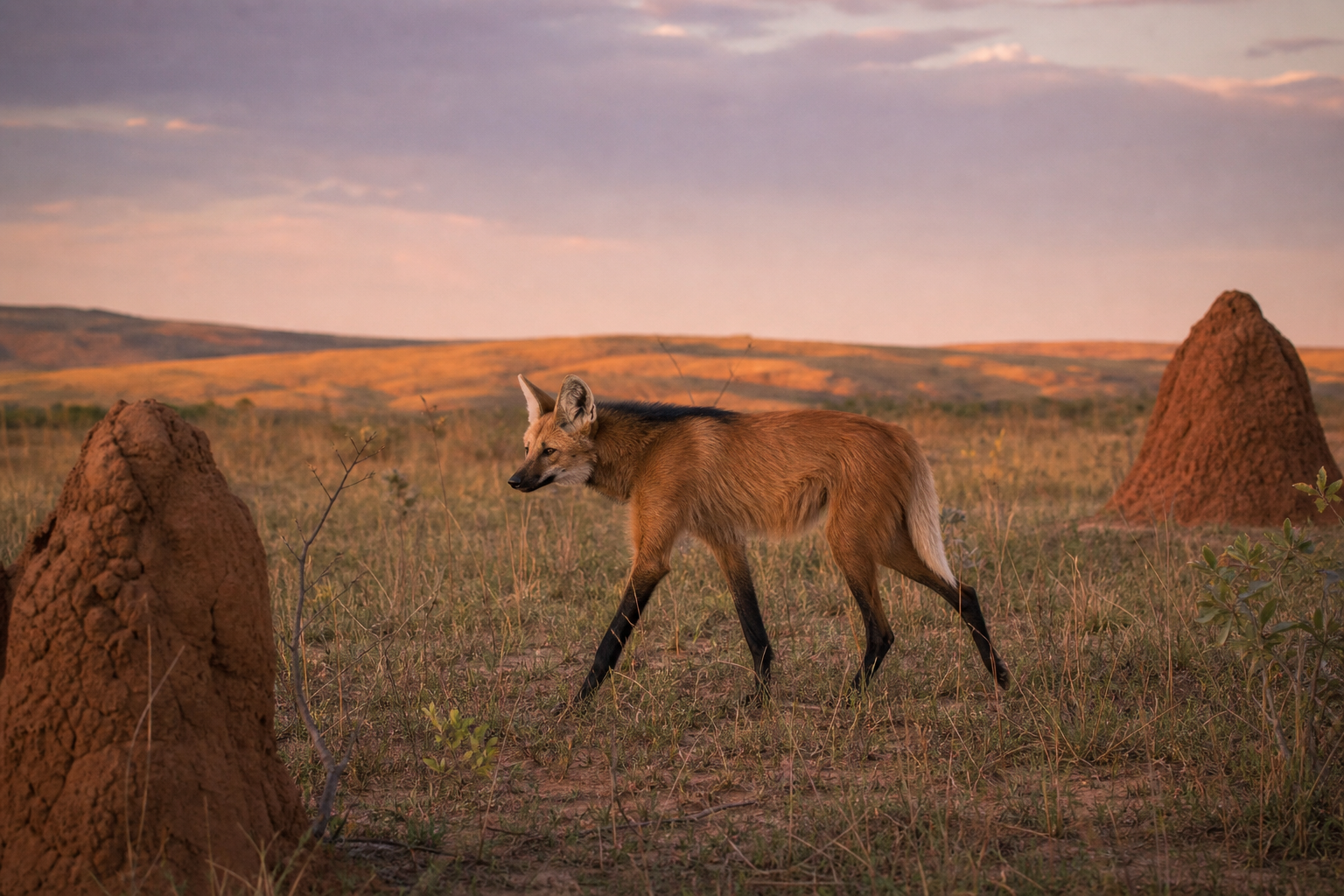
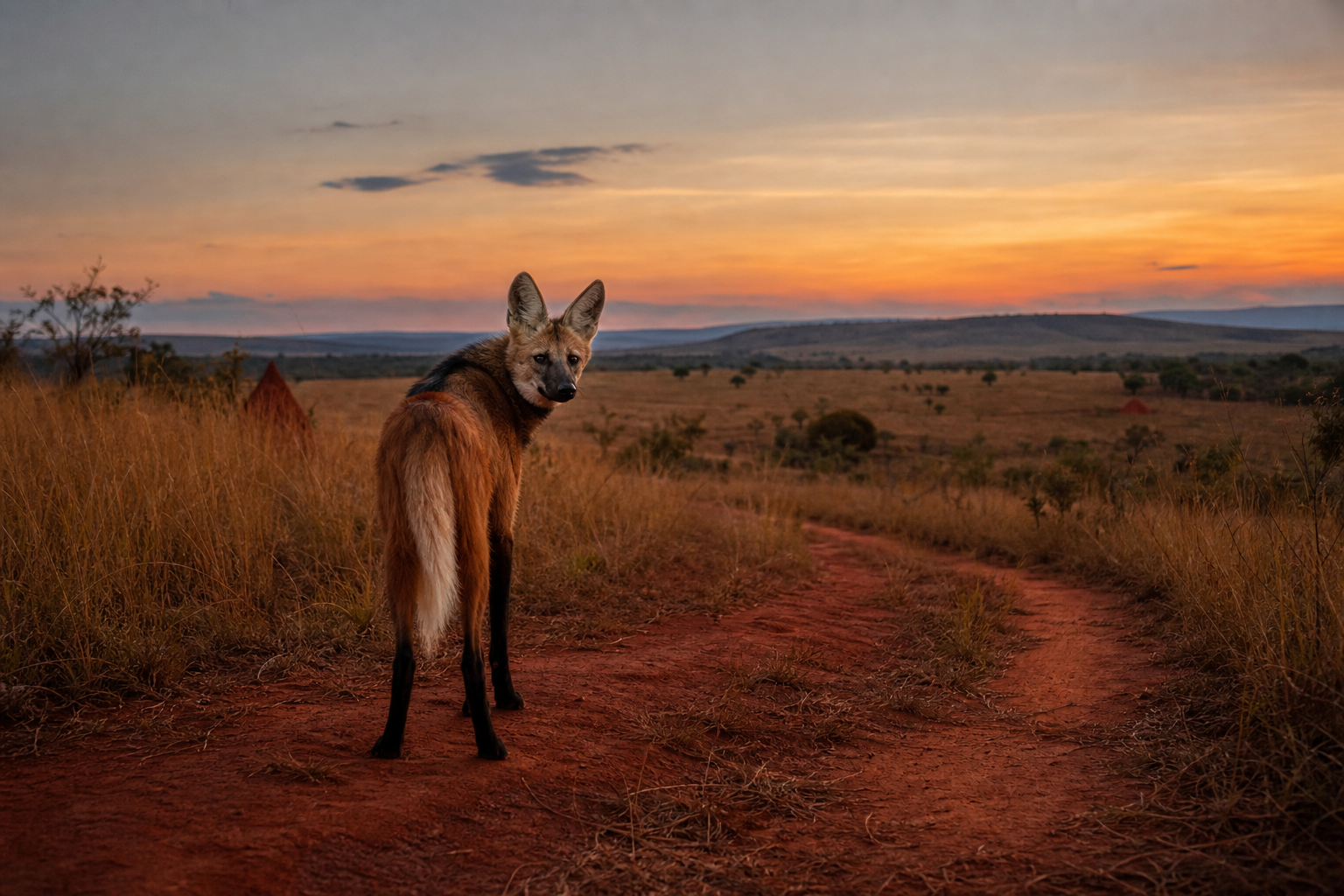
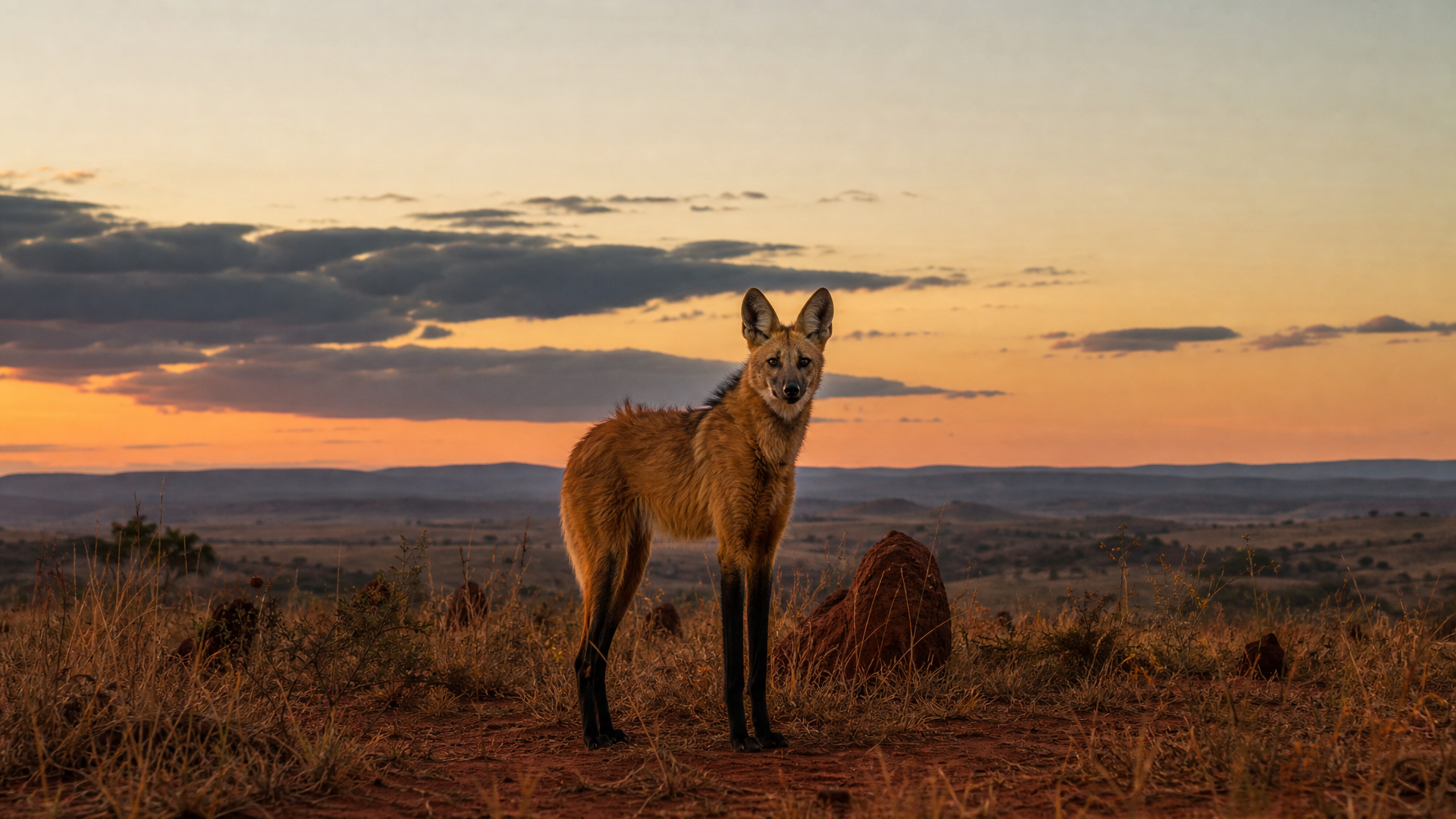
At dusk in Serra da Canastra, the grass turns copper and the termite mounds cast long shadows across the slope. A tall shape appears between them, moving with a loose, careful stride. The ears rise first, black against the fading light, then the long legs carry the animal forward as if the plain itself has grown a watchful silhouette.
The maned wolf is not a wolf in the northern sense of packs and pursuit. It is a solitary presence of open country, built for seeing over grass and moving through space without hurry. The coat burns reddish in low sun; the legs are dark, the muzzle fine, the ears always collecting news. It pauses often, listens, marks a path, and continues. Its voice, a deep roaring bark, can travel across the Cerrado at night, not as a chorus but as a signal from one lone animal to another. It eats what the season offers, and in doing so carries seeds as surely as it follows scent.
This animal belongs to a landscape that is easily mistaken for emptiness. Grasslands become fields, roads cut night routes, fire arrives too hot or too often. Yet in the last light, the maned wolf slips between termite mounds, and the open country briefly has a face.