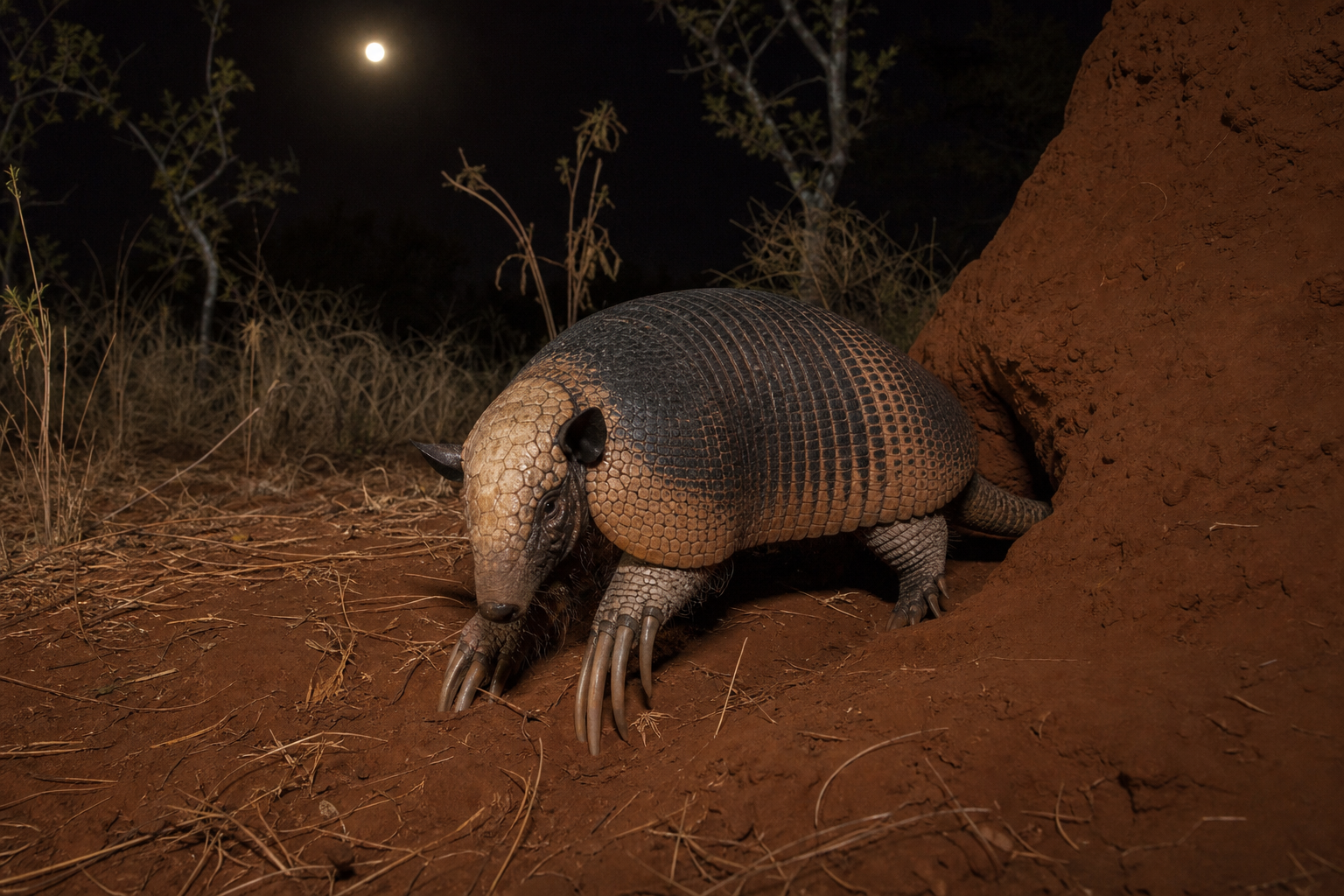
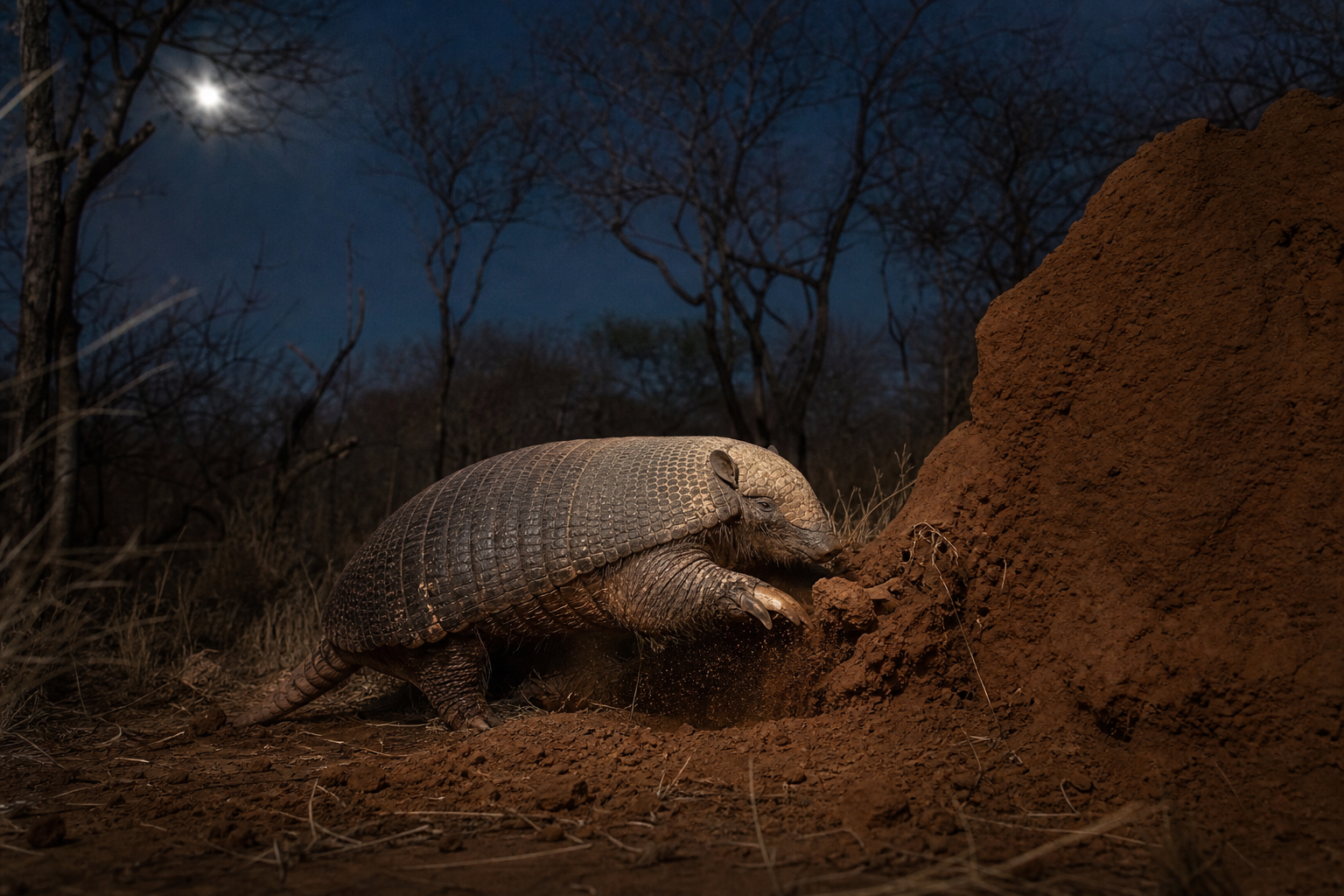
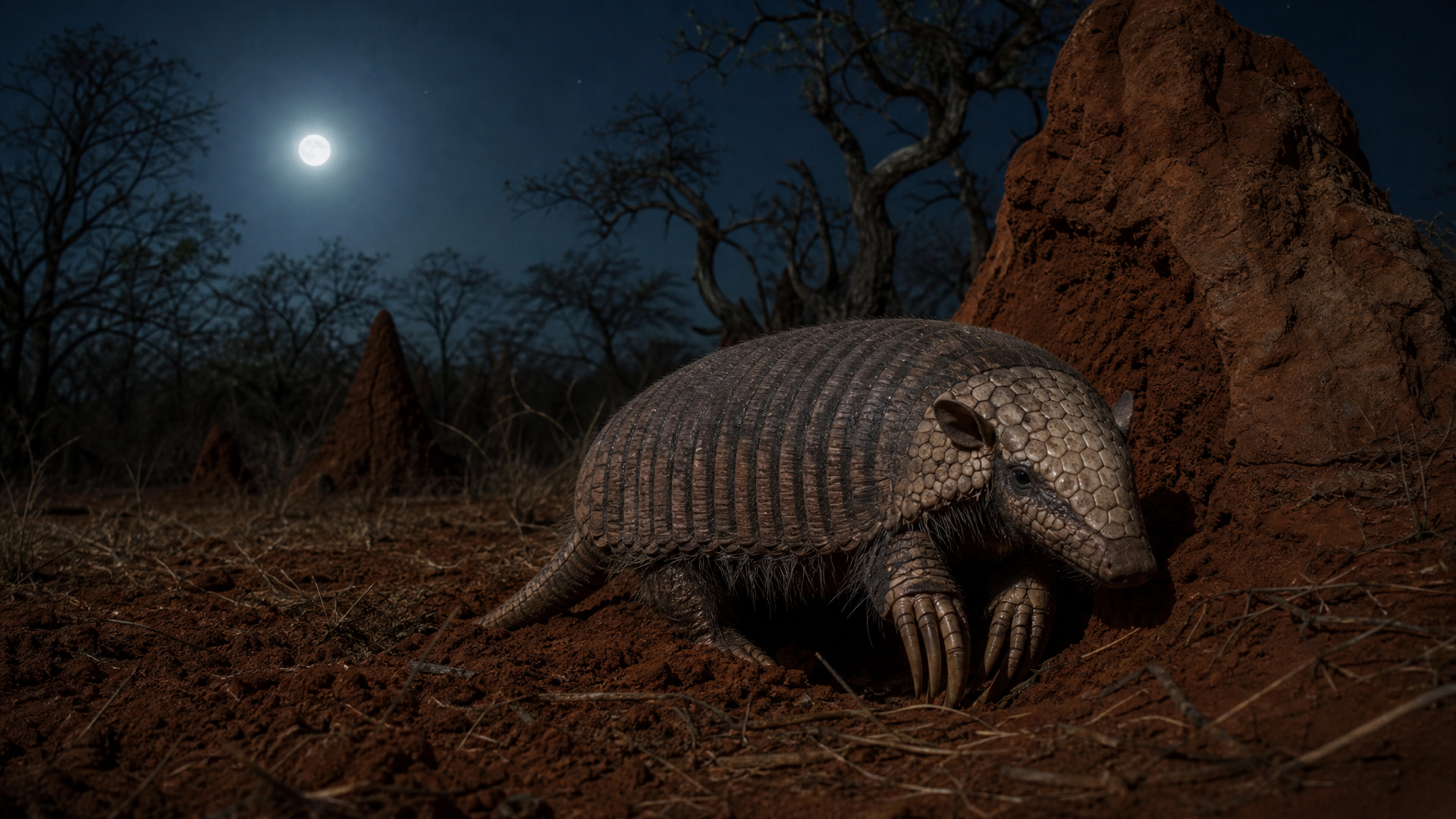
After midnight in the Cerrado, the red earth around a termite mound begins to shift. A blunt head pushes into the moonlight. Claws as long as curved tools rake the soil, and the giant armadillo emerges from its burrow with dust on its armor and a secrecy that makes the open plain feel suddenly inhabited from below.
Few animals leave such large signs while showing themselves so rarely. The giant armadillo moves at night through grass, scrub, and dry woodland, nose close to the ground, following scent to termite galleries, ant nests, and places where the soil gives way. Its digging is not casual disturbance. A burrow can be deep, cool, and used later by many others: small mammals, reptiles, birds, even animals seeking shelter from heat or fire. The armadillo passes through like an engineer who never stays to watch the building fill.
In the Cerrado and Chaco, its work opens rooms in a hard landscape. It turns sealed ground into refuge, and it reads the underground city with claws and smell. Roads, hunting, and the loss of native cover make a hidden life more fragile than it appears. By morning there may be no animal in sight, only a fresh entrance in red soil and the marks of enormous claws.