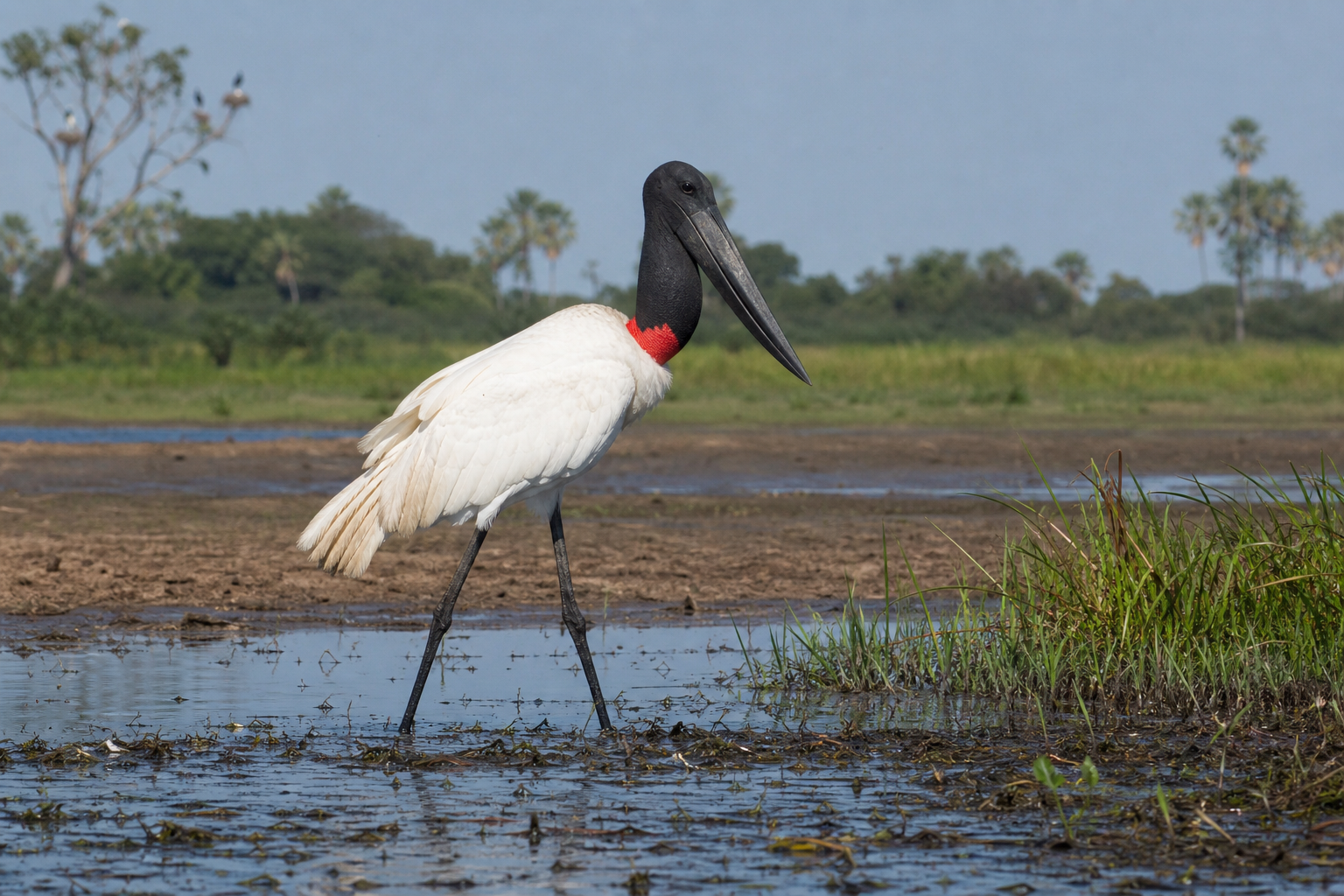
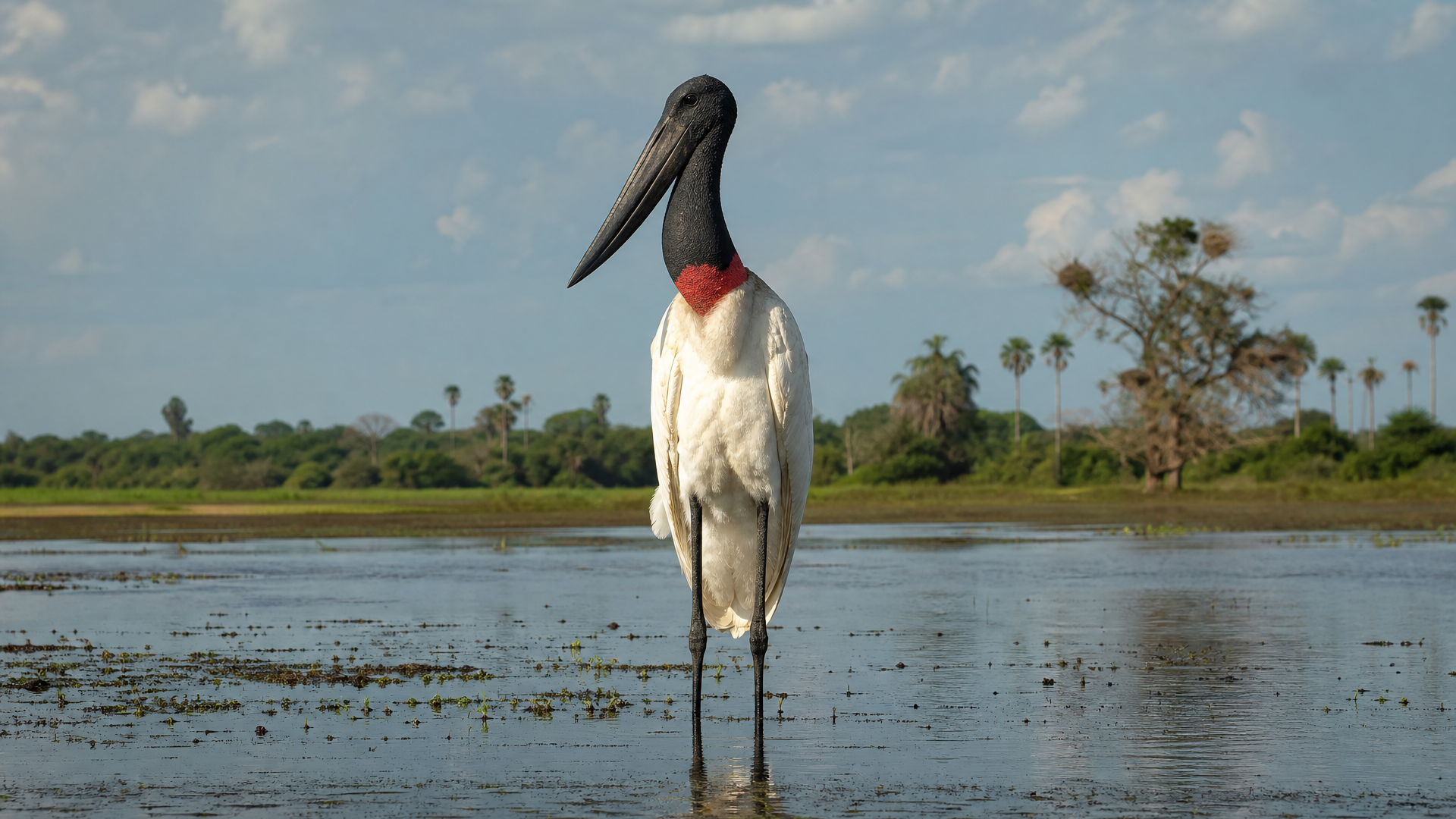
When the flood begins to fall near Porto Jofre, the shallows fill with stranded motion. Fish flicker in warm pools. Snails cling to stems. Frogs call from muddy edges. Above them all stands the jabiru, taller than the reeds around it, black head lowered, white body catching the hard light like a marker on the plain.
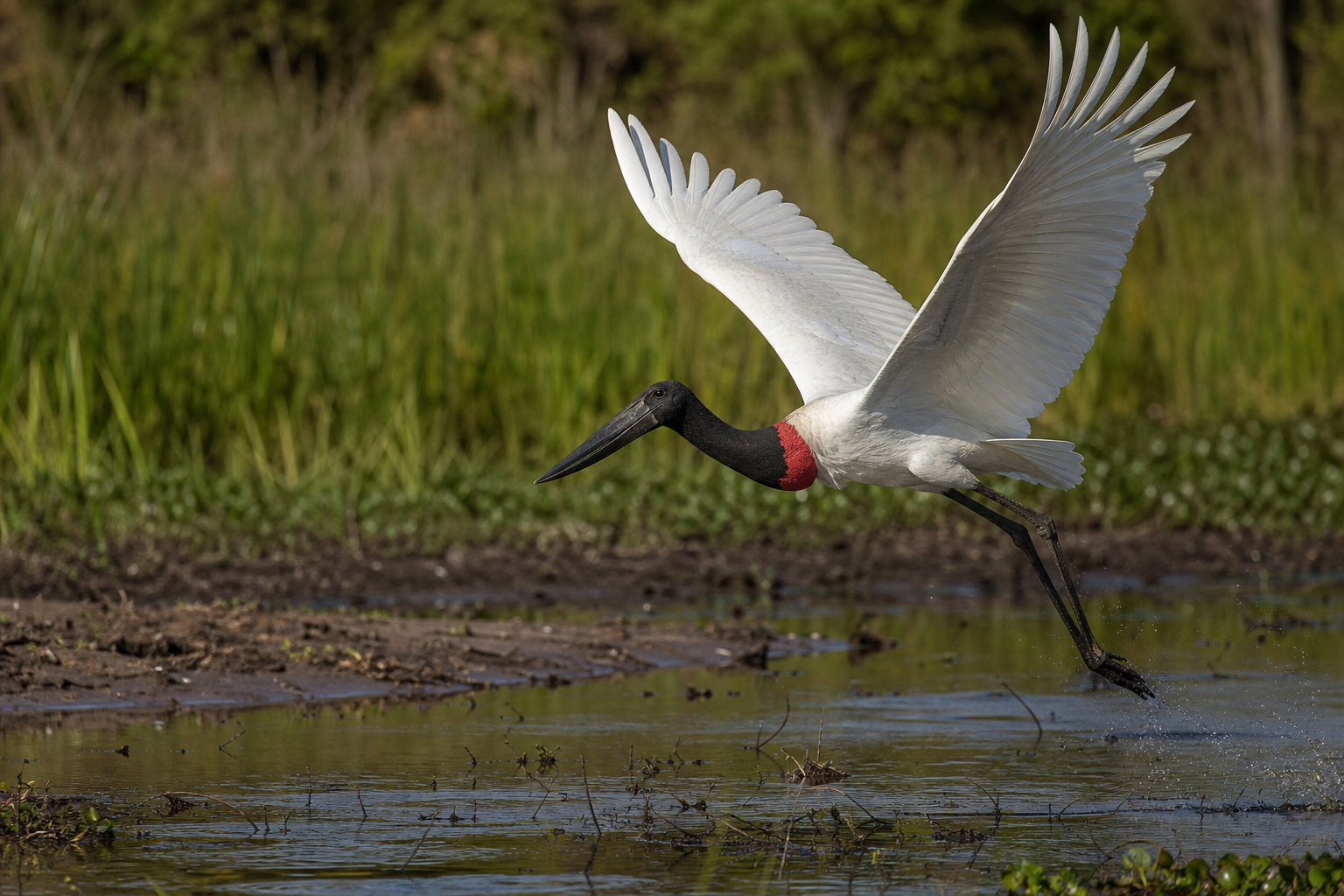
The jabiru hunts with the focus of a spear. It walks slowly, each step placed through water that trembles with small lives. The bill opens and closes with sudden force, then lifts, dripping, before the bird folds the catch away. In flight it becomes another creature altogether: neck out, legs trailing, wings broad enough to make its shadow pass over the marsh like a cloud. On nesting trees, pairs build platforms that can dominate the skyline, returning to them while the Pantanal below changes from open water to grass, mud, and dust.
This bird gives height to the floodplain. It stands where water recedes, taking what the season leaves concentrated in the shallows, while other animals work the same edge from below, beside, and above. Fire can take nesting trees, and altered floods can change the timing of plenty. Still, a jabiru lifts from the marsh on slow wings, carrying the shape of the wetland into the sky.