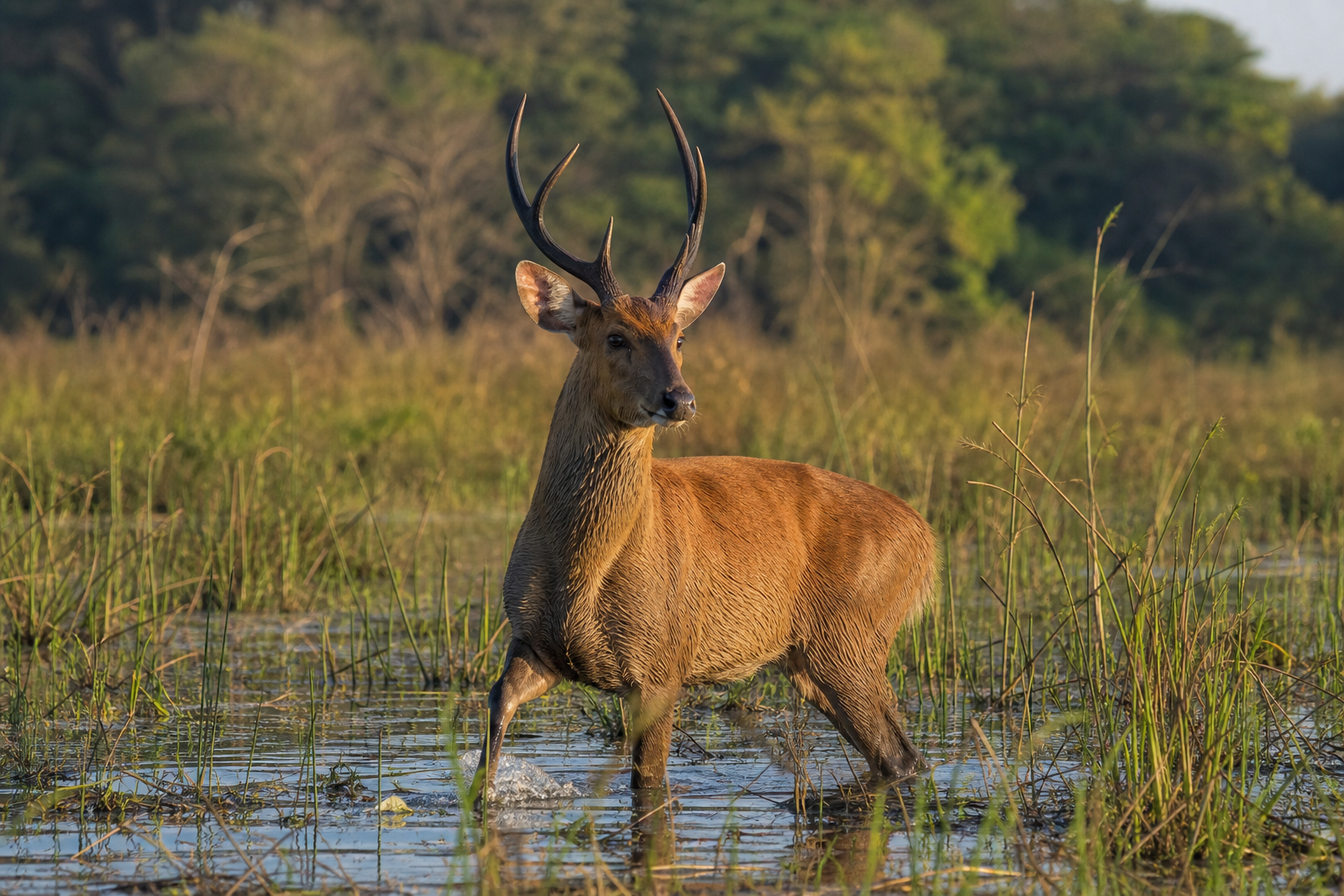
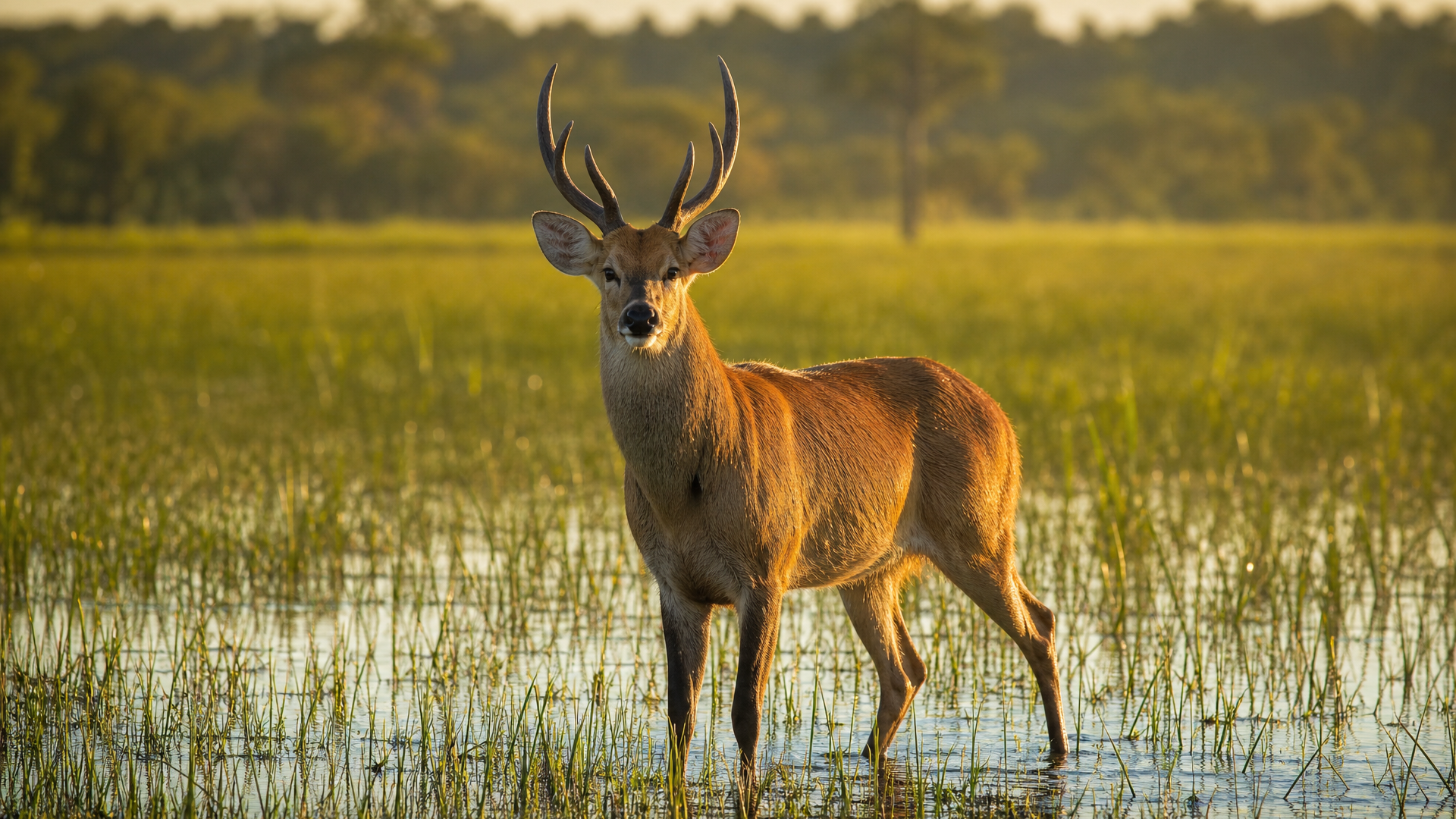
In the upper Paraguay floodplain, the grass stands higher than a person's waist, bright with water at its roots. For a long time there is only wind moving through it. Then antlers appear, forked and dark above the stems, followed by the wet shoulders of a marsh deer stepping carefully through the flood.
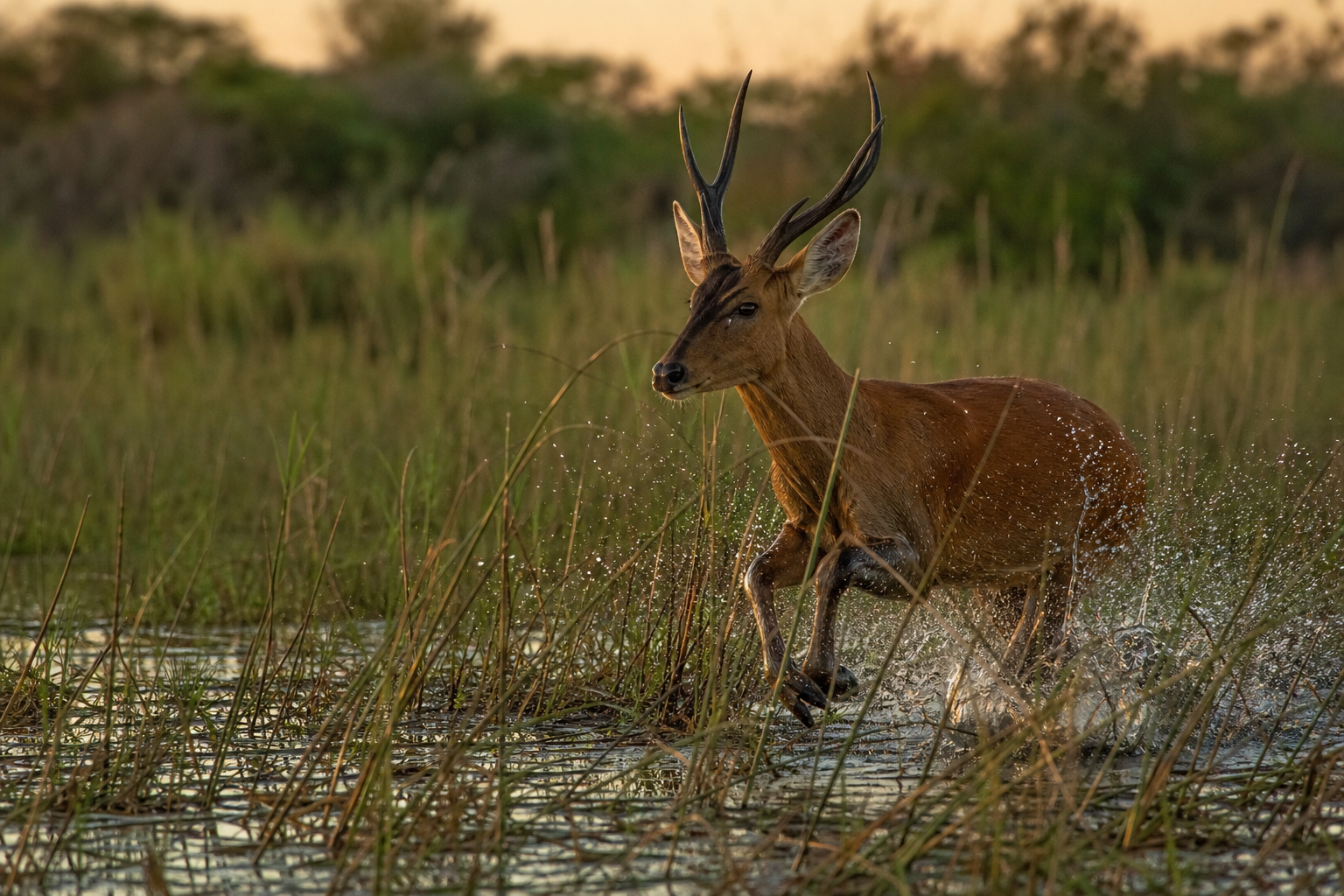
This deer makes depth visible. Its long legs lift through water that hides channels, roots, and soft ground. The hooves spread slightly in the mud, testing each step before weight commits. When it feeds or listens, the body can vanish almost entirely behind reeds, leaving only ears, antlers, and the line of a back moving through gold and green. It is not the deer of open lawns or forest edges, but of a place where land and water keep changing their agreement. A sudden alarm sends it bounding in high, deliberate leaps, water breaking around its legs.
The marsh deer carries the wetland's openness in its body. It uses the season's rise and fall, and in doing so becomes part of the rhythm that predators, insects, plants, and birds also follow. Drainage, disease from livestock, fences, and fire narrow the flooded country it needs. Across the grass, the antlers move on, like branches drifting above a hidden animal.